The Şahinbey Museum of National Struggle is a war and resistance museum that tells the epic defence waged by the people of Antep against the British and French occupation — the defence that earned the city the title "Gazi." Made up of the rooms of a historic Antep house and a 1,100-square-metre cave that extends beneath it, the museum recreates the Defence of Antep underground, with documents and weapons alongside sculptures that bring the daily life of the period to life. Restored by the Şahinbey Municipality, the museum opened under its present name in 2017.
The museum is built on a narrative of resistance rather than a single masterpiece: weapons, documents and photographs combine with re-enactments staged in the darkness of the cave to carry the visitor back to the besieged Antep of the 1920s. This article covers the building's history, the cave's function during the struggle, its standout sections and a discovery guide for visitors. To consider it alongside the city's other specialist museums, the Museums of Gaziantep page is a good starting point.
The Building and the Cave: A Shelter Beneath a Historic Antep House
The museum stands in the historic centre of Gaziantep, on Şehitler Caddesi (Martyrs' Avenue), near the spot where the first martyrs of the War of Independence were buried. Its core is a historic Antep house and its 12 rooms; beneath the structure extends a 1,100-square-metre cave dating from the years of struggle. This cave is what sets the museum apart from an ordinary exhibition space: after touring the documents and objects above ground, the visitor descends into the very underground where the defence was actually carried on.
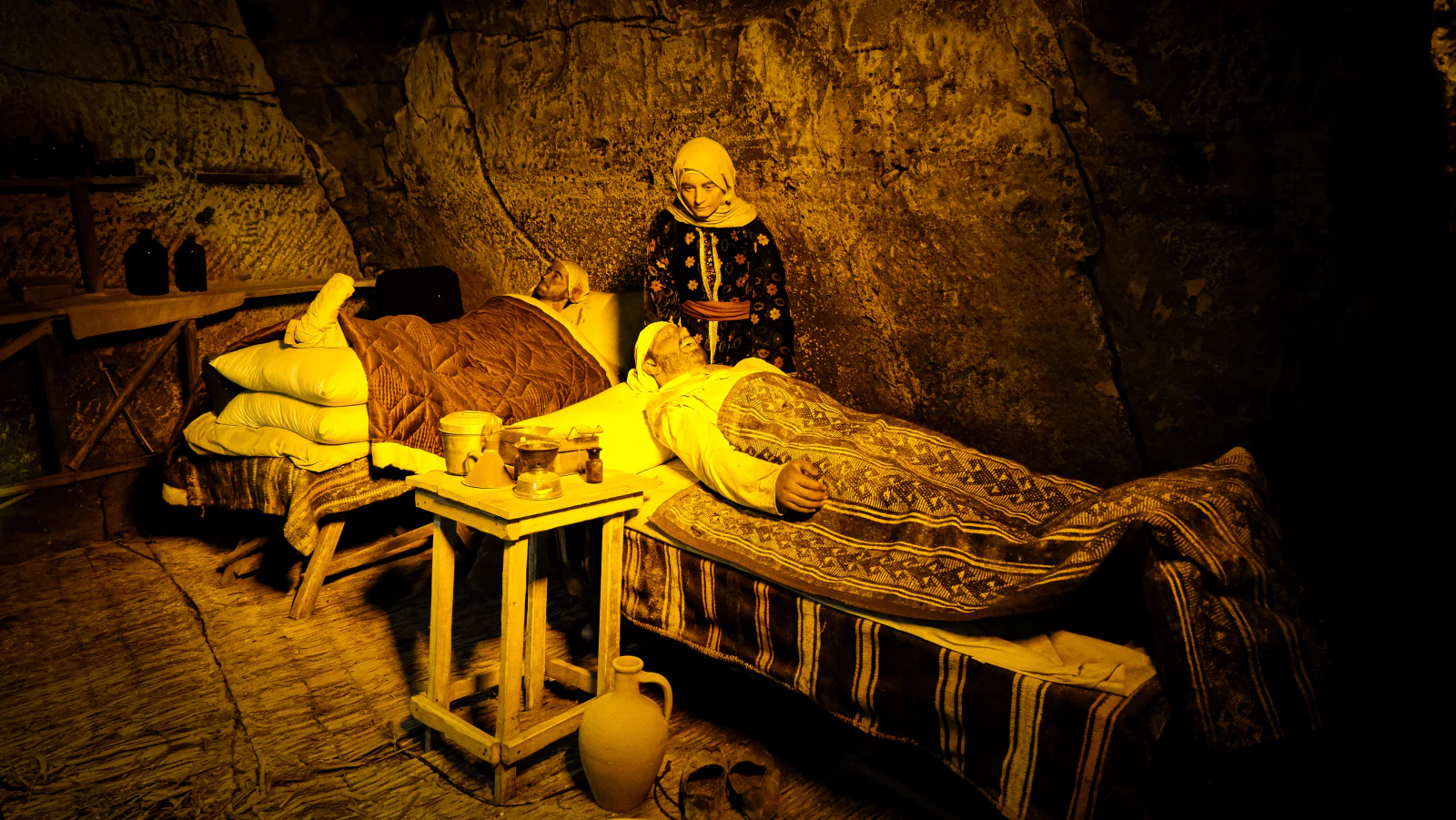
The cave's value lies not only in its size but in its function during the years of the defence. In the besieged city, these underground voids served as a headquarters, shelter, workshop and hospital; in other words, the city's resistance was organised in these caves as much as in its streets. By restoring the building, the Şahinbey Municipality arranged both the house and the cave according to contemporary museum standards, producing a venue able to tell the whole of Antep's eleven-month defence as a single story.
Sections You Must See
The Re-enactment Scenes in the Cave
The museum's most striking section is the re-enactment scenes staged in the cave. As the visitor descends, they encounter sculptures and tableaux depicting the daily life of the years of struggle: people preparing ammunition, carrying the wounded, waiting in the shelter — bringing to life the days when the cave served as a headquarters, a workshop and a hospital. This staging turns the defence from a row of objects in a display case into a scene the visitor walks into. You can read the full story of the Defence of Antep in detail on the War of Independence and the Defence of Antep page.
Weapons and Objects of the Struggle
The collection shows in concrete terms the means by which the defence was sustained. On display are many objects used by the city's people: pistols, hunting rifles, swords, daggers, meat cleavers, pickaxes, shovels and hatchets. What is striking about these objects is that most are not weapons of war but ordinary everyday tools: they are proof that a besieged people turned everything in its hands into a means of defence. The display also includes British and French weapon parts belonging to the occupying forces.
Documents and Photographs
In the rooms of the historic house above ground, documents relating to Gaziantep's defence are presented in chronological order; the photographs of the period make the stages of the eleven-month resistance traceable step by step. This section completes the emotional re-enactments in the cave by grounding the facts behind them — the dates, the names and the developments — in documentary evidence. The story of Şahin Bey, the city's hero who gives the museum its name, and of the other figures of the defence takes on meaning within this frame.
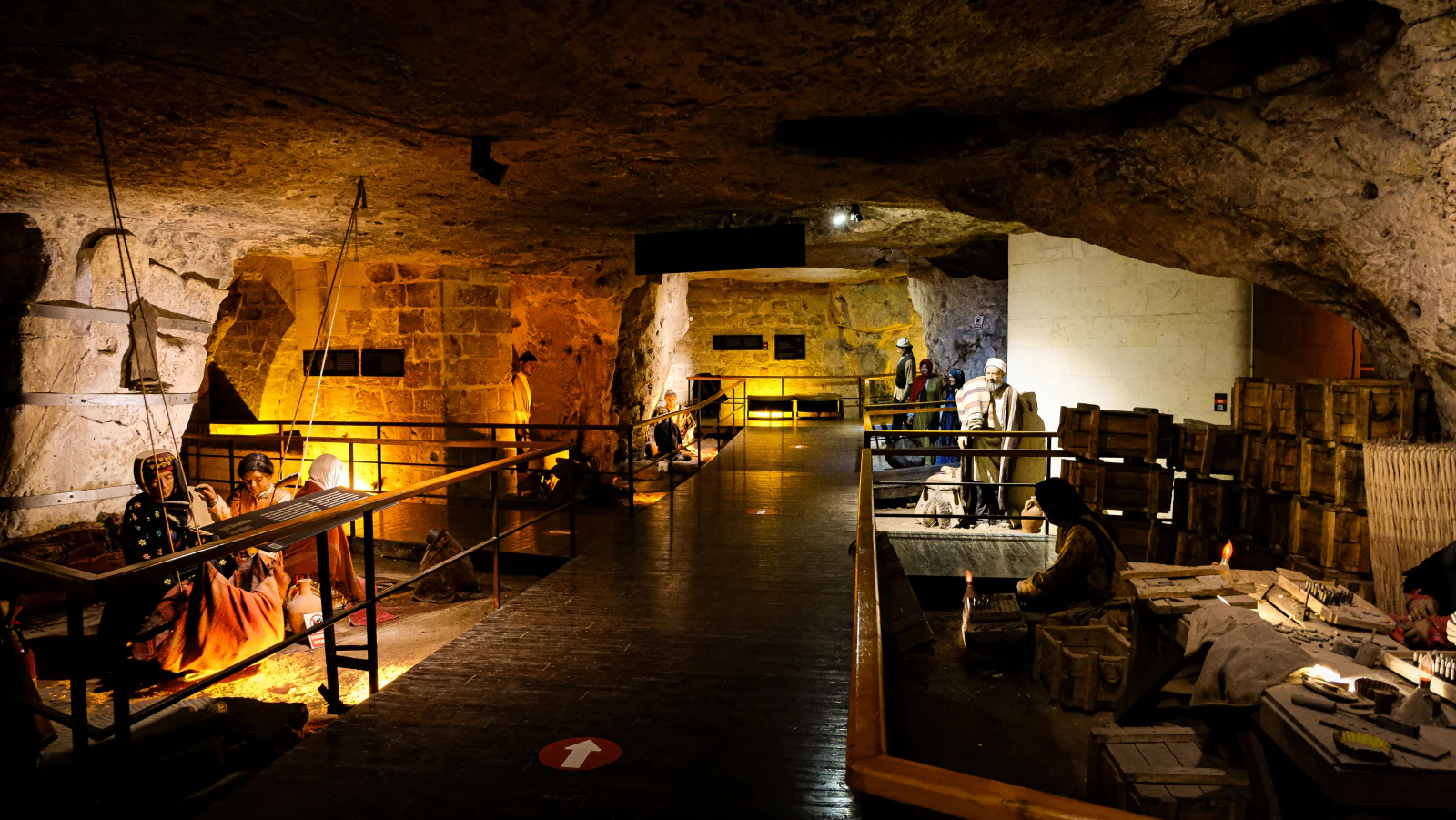
By its scale, the Şahinbey Museum of National Struggle is regarded as one of Türkiye's largest war museums. That scale comes not only from its exhibition area but from the inclusion of the historic cave in which the defence was actually sustained; here the visitor stands inside the very space where an event takes place that, in other museums, is followed only from behind a display case.
A Visitor's Discovery Guide
- Start above ground: Before descending into the cave, study the chronological documents and photographs in the rooms of the house; learning the stages of the defence makes the scenes in the cave far more meaningful.
- Tour the cave slowly: The 1,100-square-metre cave is arranged around its functions as headquarters, shelter, workshop and hospital; move through it considering what purpose each section served.
- Note how ordinary the objects are: Realising that everyday tools such as pickaxes, shovels and meat cleavers became means of defence is the detail that best conveys the conditions of the siege.
- Match it to the history pages: To read what you see in the museum alongside the city's National Struggle history, you can turn to the History section.
Summary and Cultural Value
The Şahinbey Museum of National Struggle is one of the rare museums that does not merely recount the Defence of Antep but displays it inside the very space where it was lived. With a layout that joins the 12 rooms of a historic Antep house to the 1,100-square-metre cave beneath it, it brings document, weapon and re-enactment together in a single experience. Reaching from headquarters to hospital, from workshop to shelter, the cave is the tangible witness of the eleven-month resistance through which the city earned its "Gazi" title. The Şahinbey Municipality's transformation of this structure into a museum is a strong example of Gaziantep's effort to preserve the memory of its own struggle and pass it on to future generations. To read the city's National Struggle period in a wider frame, the The Defence of Antep page is the natural continuation of this narrative.
Frequently Asked Questions
When did the Şahinbey Museum of National Struggle open?
The museum, restored by the Şahinbey Municipality, opened under its present name as the Şahinbey Museum of National Struggle in 2017.
What does the museum tell?
It tells the roughly eleven-month Defence of Antep waged by the people of Antep against the British and French occupation — the defence that earned the city the title "Gazi."
What is special about the museum's cave?
The 1,100-square-metre cave that extends beneath the historic Antep house was used during the years of struggle as a headquarters, shelter, workshop and hospital. Today it is arranged with sculptures and re-enactment scenes depicting daily life.
What objects are on display in the museum?
Objects used by the city's people such as pistols, hunting rifles, swords, daggers, meat cleavers, pickaxes, shovels and hatchets; British and French weapon parts belonging to the occupying forces; and documents and period photographs relating to the defence.
Where is the museum?
It is located in the historic centre of Gaziantep, on Şehitler Caddesi, near the spot where the first martyrs of the War of Independence were buried.