The Bayazhan Gaziantep City Museum is a city museum set in a historic tobacco inn completed in 1909, telling the city's history, economy, crafts, cuisine and natural beauty under a single roof. Built around audio guides, documentary films and mannequin re-enactments, the museum offers a first-time visitor what amounts to a small preview of the whole city. It takes its name from the historic Bayaz Han in which it sits, restored by the Gaziantep Metropolitan Municipality and converted into a museum in 2009.
The museum is built on a narrative rather than a collection of masterpieces: rather than a single famous object, it relies on a curation that conveys Gaziantep's millennia-old story divided into thematic rooms. This article covers the inn's history and architecture, the museum's exhibition logic, its standout sections and a discovery guide for visitors. To consider it alongside the city's other specialist museums, the Museums of Gaziantep page is a good starting point.
Bayaz Han: From Tobacco Inn to City Museum
The building that houses the museum is an Ottoman-era trading inn (han) commissioned by the tobacco merchant Bayaz Ahmet Efendi. Its construction began around 1905 and was completed in 1909; the architects were brought from Aleppo, while the stonework was carried out by the Armenian stone masters of the period. Made up of a spacious inner courtyard and the many rooms arranged around it, the inn was used in its early years as a tobacco inn and warehouse, becoming one of the centres of the city's commercial life.
Over its century of life, the inn bore witness to the city's turbulent history. During the occupation years after the First World War, the British used the building as a headquarters; during the French occupation and the Defence of Antep, part of the structure was turned into a prison. After Bayaz Ahmet Efendi's death in 1919, part of the inn passed to his heirs and part was in time used as a Tekel warehouse. The building's large hall also lives on in the city's memory as one of the places where the first cinema film in Gaziantep was screened.
The building was taken over by the Gaziantep Metropolitan Municipality in 2005; the comprehensive restoration that began that same year was completed in 2009, and the structure opened as the Bayazhan Gaziantep City Museum with the aim of presenting the city's culture and history. Thus an inn that rose on the tobacco trade became a cultural space where the city tells its own story.
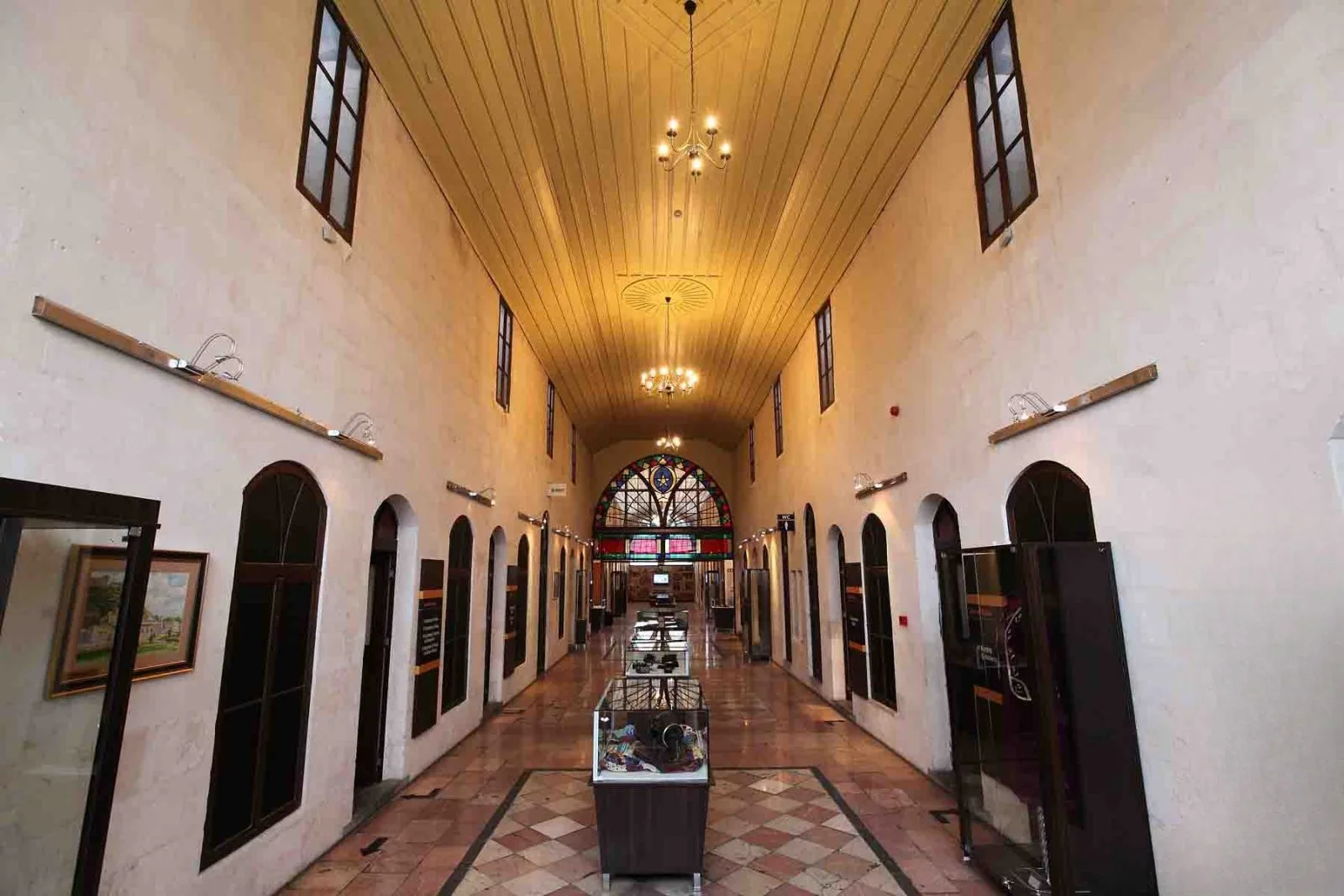
Architecture and Exhibition Logic
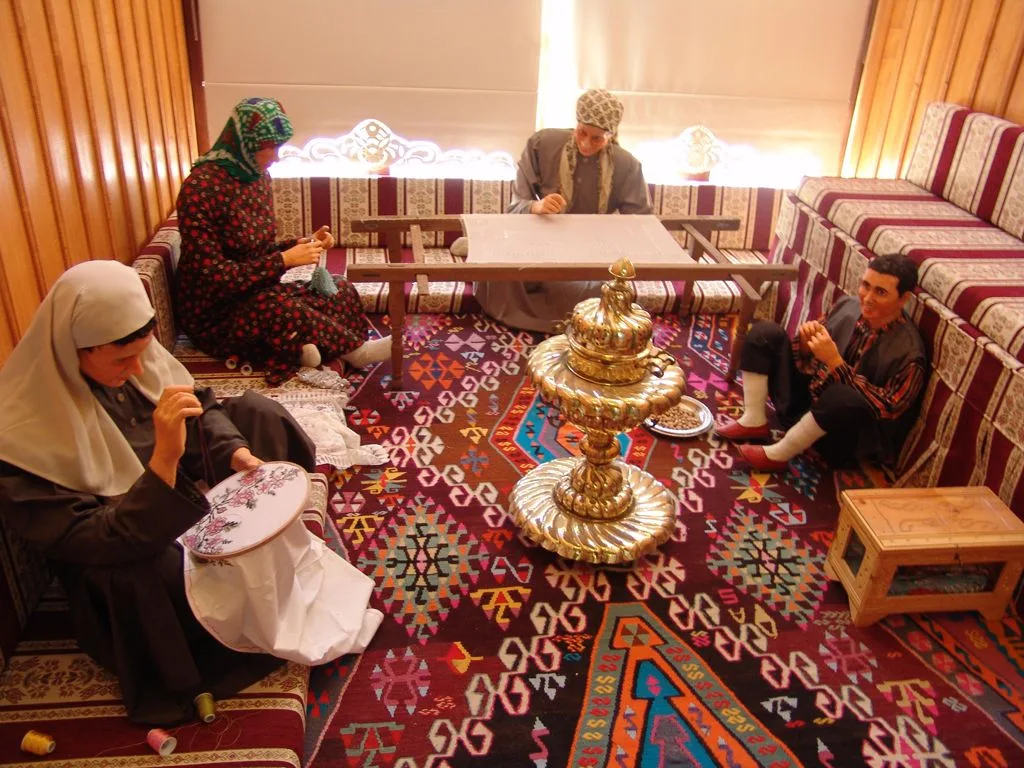
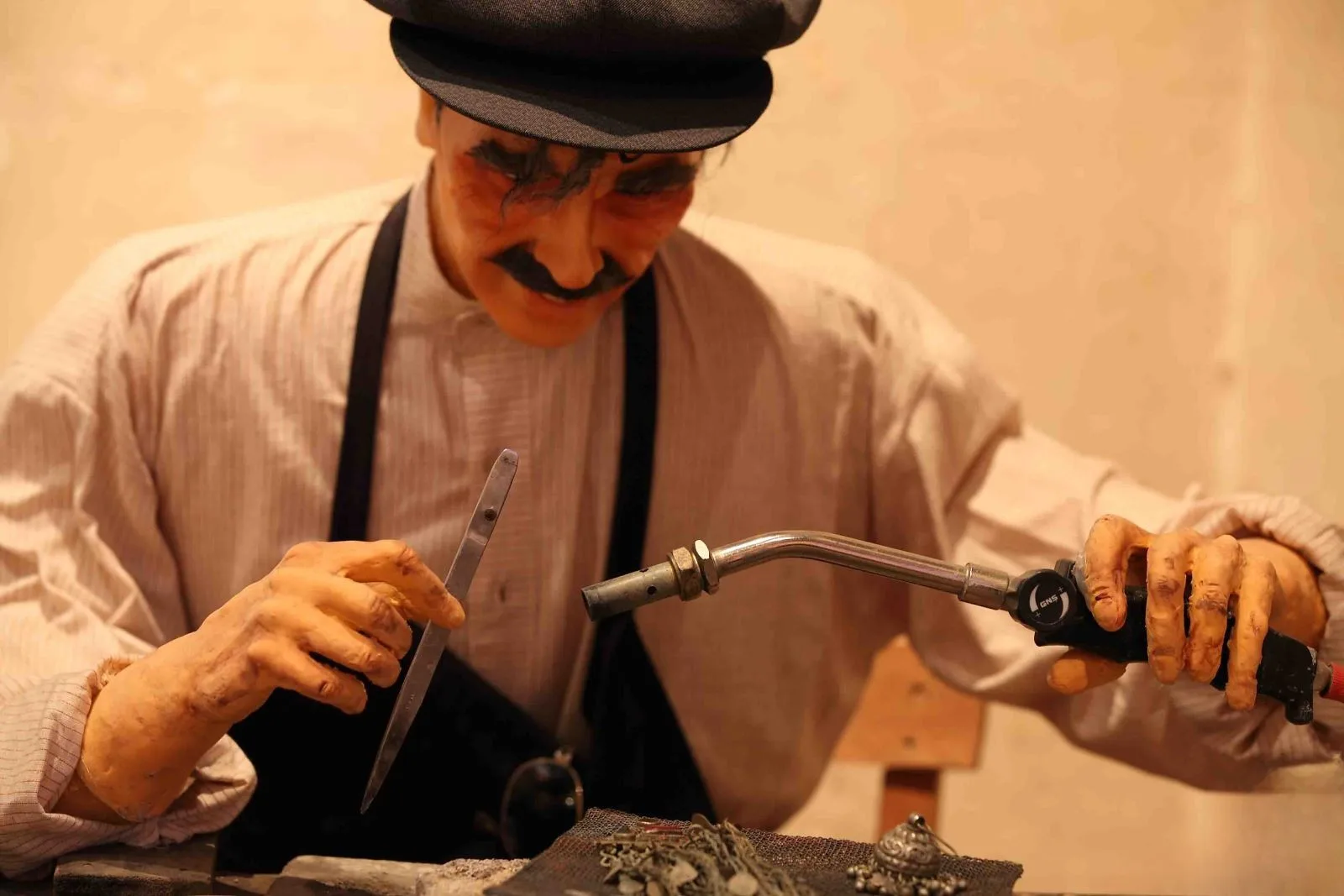
The museum spreads a narrative carrying Gaziantep from antiquity to the present across 23 separate thematic rooms. The exhibition is enriched with the digital tools of contemporary museology: with the electronic audio guide picked up at the entrance, the visitor tours the rooms accompanied by narration in Turkish and English; the rooms contain televisions showing documentary films, along with touch-screen information kiosks and scale models. Handicrafts and scenes of daily life are made tangible through wax mannequins in traditional local dress.
The building is divided by function: the museum's main displays occupy the 23 rooms on the upper floor, while the ground floor and courtyard are set aside as a tourism centre with local souvenirs, a restaurant and a café. This arrangement makes the museum not merely an exhibition space but an attraction where visitors can sit and spend time.
Sections You Must See
The City's History and the 1/1000-Scale Model
The museum's history section carries Gaziantep from antiquity to the present day: the city's founding, the Defence of Antep and the epic of liberation, Atatürk's visit to the city, and the history of local government and the press are all addressed in these rooms. The section's most striking piece is the detailed 1/1000-scale model of the city, which offers a bird's-eye view of the historic urban fabric and gives the visitor a starting map for the rest of their tour. You can read the full story of the Defence of Antep in detail on the War of Independence and the Defence of Antep page.
Handicraft and Craft Rooms
One of the museum's richest sections is devoted to Gaziantep's traditional crafts. Handicrafts such as traditional shoemaking (yemenicilik), mother-of-pearl inlay, kutnu fabric weaving, coppersmithing, silver working, kilim weaving and Antep needlework are displayed and brought to life with mannequins positioned as if working in their workshops. These rooms offer a cross-section of the production culture that once filled the city's bazaars. The place of these crafts in the dowry chest, meanwhile, is explored at the Hasan Süzer Marriage and Life Culture Museum, dedicated to the city's marriage and family life.
Culinary Culture and Natural Beauty
In the culinary section, Gaziantep's world-famous flavours are presented through local products such as baklava-making and Antep pistachios, with a traditional kitchen scene re-enacted. The museum also has display areas devoted to the city's natural beauty, its economy and its sister cities. To explore the city's cuisine in detail, the Gastronomy Atlas is a complementary resource.
Because Bayazhan sums up Gaziantep as a whole — its history, crafts, cuisine and nature — in a single venue, it is an ideal stop for a visitor new to the city to make before setting out on their route. The themes seen here serve as a map for touring the rest of the city; since every craft and every flavour lives on in another corner of the city, the museum acts almost like a table of contents.
A Visitor's Discovery Guide
- Pick up the audio guide: The electronic audio guide at the entrance leads you through the rooms with narration in Turkish and English; it is the best way to see all 23 rooms without missing anything.
- Start with the model: To connect the sections you will tour with the city's real fabric, study the 1/1000-scale city model first; you can then locate each theme you visit on the model.
- Read the courtyard and the floors: The inner courtyard and cut-stone workmanship of the century-old inn are as noteworthy as the museum's contents; as you tour the rooms, remember that the building itself is also an exhibit.
- Match it to real places: By matching the craft and culinary themes you see in the museum with the city's historic bazaar fabric — its coppersmiths, weavers and baklava-makers — you can map out a walking route.
Summary and Cultural Value
The Bayazhan Gaziantep City Museum is a place that transforms a century-old tobacco inn into the city's collective memory. With its 23-room arrangement reaching from history to craft, from cuisine to nature, it brings Gaziantep together in a single narrative and serves above all as a "gateway" for those visiting the city for the first time. From a British headquarters to a prison, from a tobacco warehouse to a museum, the building is a witness that sums up the city's last century on its own. The transformation of Bayaz Han into a museum where the city now tells its own story is one of the finest examples of Gaziantep's tradition of giving its historic buildings new uses. For descending into the city's ancient past, the Ancient Cities page is the natural continuation of this narrative.
Frequently Asked Questions
When did the Bayazhan City Museum open?
The building was taken over and began to be restored by the Gaziantep Metropolitan Municipality in 2005; the work was completed in 2009, and the museum opened that same year as the Bayazhan Gaziantep City Museum.
What was the building originally?
The structure is a trading inn and tobacco warehouse commissioned by the tobacco merchant Bayaz Ahmet Efendi and completed in 1909. Its architects were brought from Aleppo and the stonework was carried out by the Armenian masters of the period. During the occupation years it served as a British headquarters and a prison, and in later years as a Tekel warehouse.
What is in the museum?
The city is told across 23 thematic rooms: city history and a 1/1000-scale model, the Defence of Antep, Atatürk's visit, handicrafts (traditional shoemaking, mother-of-pearl inlay, kutnu, coppersmithing, silver, kilim, Antep needlework), culinary culture, natural beauty and sister cities. Audio guides, documentaries and wax-mannequin re-enactments are used.
Why is it called a "city museum"?
Rather than a single masterpiece, it sums up the city as a whole — its history, crafts, cuisine and nature — in thematic rooms, which makes it a city museum. In this way it offers a first-time visitor a preview of where to go and what to see in the city.
Where is the museum?
It is located in the Şahinbey district, in the historic centre of Gaziantep.