The Hasan Süzer Museum of Marriage and Life Culture tells the story of how people in Gaziantep marry, how families are formed and how social life is organised, all inside a historic Antep mansion. It is not a new building: the same mansion served for years as the Hasan Süzer Ethnography Museum and has reopened with a new subject after a thorough restoration and rearrangement of its galleries. The work began in 2025 through a partnership between Gaziantep Metropolitan Municipality and the Süzer family, was completed in 2026, and the museum opened under its present name on 9 May 2026. The display follows the floors of the mansion, from the cave at basement level to the dowry room at the top, and each floor takes up a different side of marriage and family life in the rooms of the house itself.
Among Gaziantep's museums, this is the one given over to family and everyday life. What follows covers the mansion, its floor-by-floor display and the marriage traditions behind it.
From the Hasan Süzer Ethnography Museum to the Museum of Marriage and Life Culture
The process of preserving the mansion and turning it into a museum began in 1985. The historic Antep house, by then close to ruin, was bought that year by the businessman Hasan Süzer. After its restoration it was donated to the Ministry of Culture and Tourism on the condition that it be used as an ethnography museum. The ethnography collection of the Gaziantep Museum was moved into the mansion, which then opened as a house museum. Under the name Hasan Süzer Ethnography Museum, it spent many years presenting old Antep home life through mannequin scenes.
In 2025 work began on both the fabric and the displays. A full restoration and redisplay led by the Department for the Protection of Cultural Assets of Gaziantep Metropolitan Municipality was carried out in partnership with the Süzer family and completed in 2026. The mansion reopened at a ceremony on 9 May 2026 as the Hasan Süzer Museum of Marriage and Life Culture.
The restoration kept the mansion's historic character intact while the displays were rebuilt around a narrower subject: marriage in Gaziantep, and the family and social life around it. A museum of household objects became a themed museum that guides visitors through the city's marriage traditions step by step.
The Historic Mansion and Hasan Süzer's Legacy
The museum stands on Hanifioğlu Street in the Şahinbey district, in the historic core of Gaziantep, one of the best-preserved pockets of the old city, with its narrow lanes, cut-stone walls and tiled hipped roofs. Built in the early twentieth century, the mansion changed hands several times before 1985. It has all the hallmarks of an Antep house.
The mansion rises three storeys above a cellar cut into the bedrock and is covered by a tiled hipped roof. It has three entrances, two opening onto the main road and one onto a side lane. The large carved door on the façade leads into the central courtyard known in Antep houses as the hayat, paved in coloured stone with fine craftsmanship; this courtyard is where the life of the house takes place. In one corner stands a separate two-storey service block, with a sitting room above and an ocaklık, or hearth kitchen, below. The building has a footprint of 310 square metres, a courtyard of 140 and a cave section of 90.
The basement, carved out of soft limestone bedrock, consists of two spaces that open into one another, one about two metres lower than the other. Here are the jars for grape molasses and olive oil, the storage bays and a water well. The ground floor holds the main ocaklık and the house's own bath, heated from below by smoke drawn from a furnace. On the first floor, a fountain with carved stonework and painted decoration stands in the hall. Two of the rooms on the second floor served as the private quarters of the household.
The mansion owes its survival to the businessman and philanthropist Hasan Süzer. Süzer, who began his business life with the company he founded in Gaziantep in 1952, gave part of what he earned to education and culture, building schools named after members of his family and donating them to the Ministry of National Education. He died in 2005, and his name remains bound to the mansion he gave the city. The new display was prepared with the support of his family.
A Floor-by-Floor Journey Through Marriage Culture
The display follows the plan of the mansion itself, and each floor takes up a different side of marriage and family life:
- Basement, the cave: the rock-cut store where the household kept its provisions.
- Ground floor, marriage through history, the kitchen and the family visit: how marriage changed over time, the kitchen of the house, and the first visit paid to ask for a bride.
- First floor, food, coffee and the wedding: the culture of the table, the coffee at the heart of Antep hospitality, and the wedding ceremony itself.
- Second floor, the evil eye and ritual, the bath and the dowry: protective beliefs, the bridal bath tradition and the making of the dowry.
A separate structure in the courtyard holds a room devoted to the life story of Hasan Süzer. Because the display is arranged this way, the visitor moves through a whole rather than past a row of objects: asking for a bride, the wedding, the dowry and the beliefs that protected a marriage each have a room of their own.
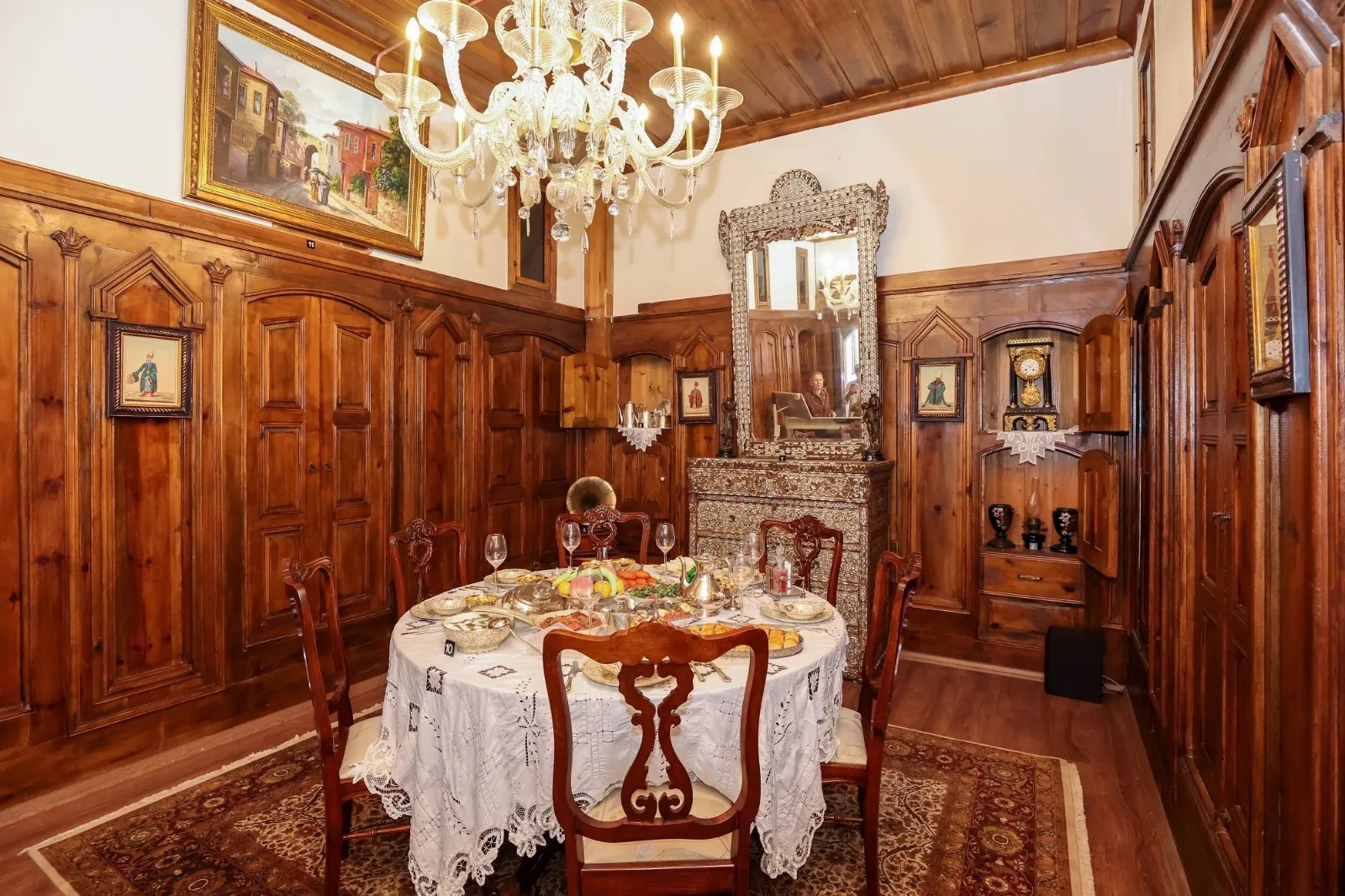
From Family Visits to the Dowry: Marriage Traditions in Gaziantep
The stages that give the rooms their names come from Gaziantep's own way of marrying. In that tradition a marriage is made not by two people but by two families, and every stage has its own name, its own appointed figures and its own rules.
The Family Visit and the Betrothal
The process begins when the groom's family calls on the bride's household; locally this visit is known as dünür (düğür) gezme, the call in which a bride is asked for. If the visits go well, consent is given and the engagement and preparations follow. Because coffee opens every visit, the coffee room is also the setting of these first conversations.
The Henna Night and the Wedding
At the henna night held before the wedding, seven young women carry the henna tray in circles above the bride's head. The bride does not open her hand easily; a gold coin is expected before she does. In Gaziantep henna is applied to the groom as well as the bride. The wedding has its own division of labour: the woman who receives the guests and directs the hospitality is the maşta, and the close relative who covers the tips given throughout the celebration is the toy beyi. These titles show how far a wedding reached beyond the family: it set a whole neighbourhood and its kin networks to work.
The Dowry and Protective Beliefs
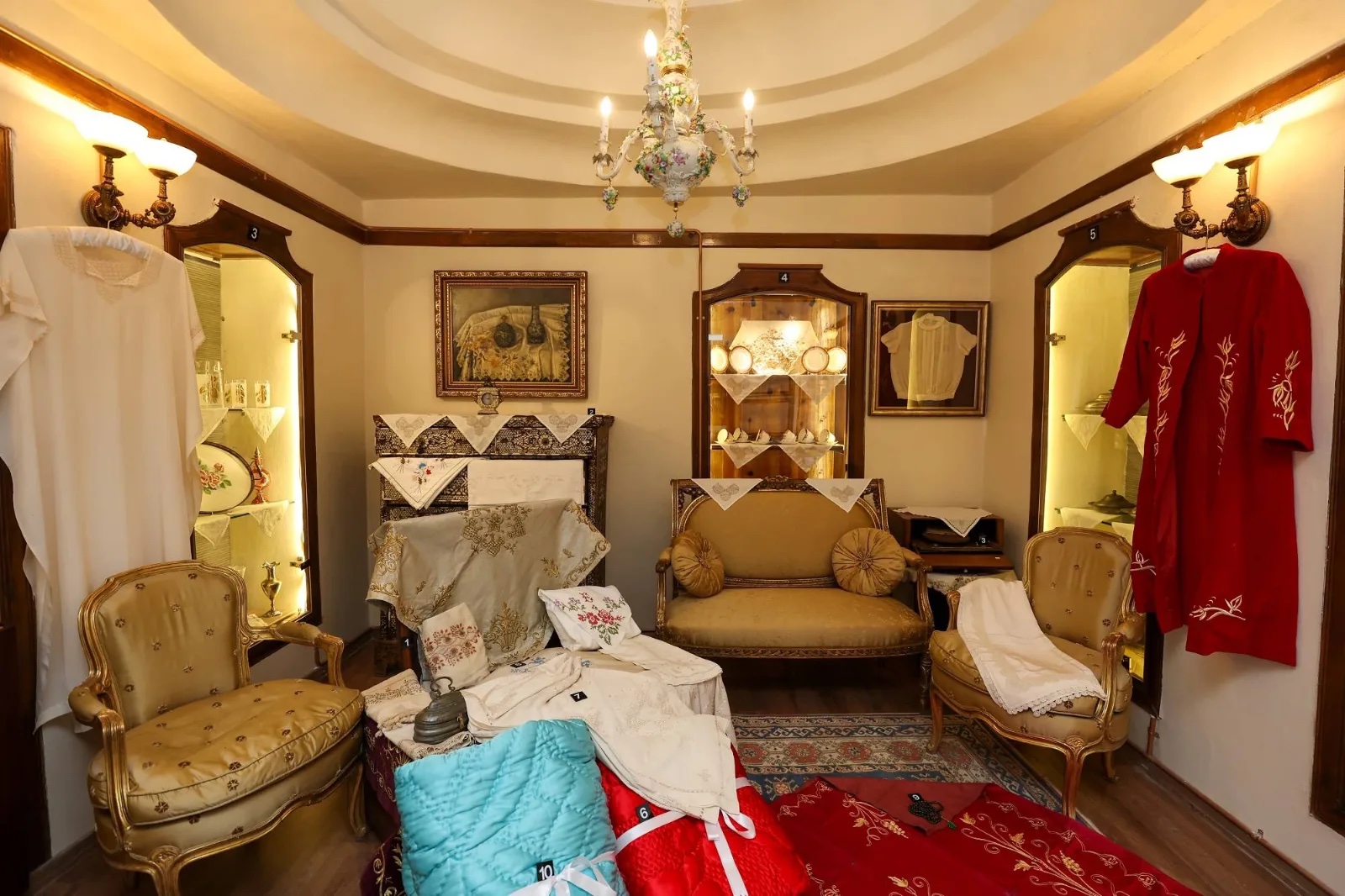
In Gaziantep the dowry is both a preparation and a public display: it takes months to assemble, and laying it out for the guests to see is a ceremony in itself. While it is displayed, wild rue is burned and its smoke fanned over the pieces against the evil eye. As the bride leaves her father's house, water is poured behind her and sugar, raisins, roasted chickpeas and small coins are thrown over her head. Driving a nail into the door of her new home, touching honey to that door and breaking a glass brought from her father's house belong to the same body of wishes and safeguards.
What the chest contains also mirrors the crafts of the city. Copper and silver work, kutnu fabric and Antep işi embroidery, worked white thread on white cloth, turn a dowry chest into a display of the city's handiwork.
The Bridal Bath and Şamşırak
One of the largest gatherings of the wedding week is the bridal bath. In Gaziantep this ceremony has a practice of its own: şamşırak dökme. Şamşırak is a scented mixture of rose water with musk, amber and cinnamon; a stone called mumyan is dropped into it the day before, turning the mixture red. At the close of the bath it is poured over the bride's head, and the woman chosen to pour it must be happily married herself. The rhymed couplets sung at the bath, at the henna night and at the dowry ceremony supply the entertainment side of these gatherings. Anyone who wants to see the city's bath culture as a whole will find the same ceremony from the bathhouse side at the Gaziantep Bath Museum.
The kitchen and dining rooms of the museum open onto the table culture of Gaziantep. The Emine Göğüş Culinary Museum, which treats that side of the same culture in detail, occupies another mansion in the historic centre and takes up the food half of the story.
The Hasan Süzer Memorial Room
The museum brings together two stories: Gaziantep's marriage traditions, and the story of the man who helped save the mansion in which they are now shown. The room in the courtyard building tells the second of these through the life of Hasan Süzer.
A Visitor's Discovery Guide
- Take the floors one at a time: each floor has its own theme, from the store rooms in the basement to the dowry room at the top.
- Treat the building as an exhibit: the coloured stone courtyard, the rock-cut cellar, the ocaklık and the house bath are the real setting of the life being described.
- Follow the room names: the rooms are named in the words of the local tradition, and those words are the key to reading the display.
- Do not skip the courtyard building: the Hasan Süzer memorial room is not in the main house but in the separate structure in the courtyard.
- Plan the historic centre in one go: the mansion is within walking distance of the city's other house museums and the culinary museum, all in the same old quarter.
For a wider view of the social life of the city in the period the mansion represents, see the Bayazhan City Museum page.
Summary and Cultural Significance
The Hasan Süzer Museum of Marriage and Life Culture is the story of a mansion brought back to life a second time. Rescued from ruin by a preservation effort that began in 1985, the building went through a full restoration forty years later, and its displays were rebuilt around the city's marriage traditions, family structure and social customs. Running from the family-visit room to the dowry chest, the display shows how much of social life in Gaziantep once ran through a single wedding.
Frequently Asked Questions
What is the Hasan Süzer Museum of Marriage and Life Culture?
It is a museum that presents Gaziantep's marriage traditions, family structure and social customs inside a historic Antep mansion. The display follows the floors of the mansion, from the cave in the basement to the dowry room on the second floor.
Is this the same place as the former Hasan Süzer Ethnography Museum?
Yes. It is not a new, separate building but the same mansion that served for years as the Hasan Süzer Ethnography Museum, under a new name and a new display.
When did the museum open?
Restoration and redisplay work began in 2025 and was completed in 2026. The museum opened on 9 May 2026 under its new name and with its new display.
What sections does the museum contain?
The basement holds the cave; the ground floor has rooms on marriage through history, the kitchen and the family visit; the first floor has the food, coffee and wedding rooms; the second floor has the evil eye and ritual, bath and dowry rooms. A separate building in the courtyard holds a memorial room telling the life story of Hasan Süzer.
Who was Hasan Süzer?
He was the businessman and philanthropist who bought and restored the mansion in 1985 and donated it to the Ministry of Culture and Tourism on the condition that it be used as an ethnography museum. He is known for the buildings he funded in education and culture.
Where is the museum?
It stands on Hanifioğlu Street in the Şahinbey district, in the historic core of Gaziantep.