The Gaziantep Bath Museum is a thematic museum set inside the 16th-century Pasha Bath (Paşa Hamamı) in the city's historic centre. According to its endowment deed, the building was constructed in 1577 as the hamam unit of a complex (külliye) commissioned by Lala Mustafa Pasha, and it served for centuries as a working Turkish bath; it was restored by the Gaziantep Metropolitan Municipality and turned into a museum in 2015. Today it is one of the rare places that preserves the original architecture of an Ottoman bath — its cold, warm and hot rooms — while bringing traditional bathing customs to life through wax figures and models.
This museum exhibits not a single masterpiece but a living tradition: it reconstructs, within the building's original rooms, the Ottoman bath culture in which washing ceased to be a mere daily need and became a social institution. This article covers the bath's history and architecture, the museum's exhibition logic, its standout sections and a discovery guide for visitors. To see the city's still-living bath tradition in a historic setting you can visit the Naip Bath, and to consider this museum alongside the city's other specialist museums, the Museums of Gaziantep page is a good starting point.
The Pasha Bath: From Complex Hamam to Museum
According to its endowment deed (vakfiye), the building that houses the museum was commissioned in 1577 by Lala Mustafa Pasha, one of the leading Ottoman statesmen of the period, as part of a complex (külliye). Within the Ottoman tradition of planning a mosque, madrasa, inn and bath together, the hamam was an indispensable unit serving the cleansing needs of both religious and communal life. From its founding, this bath functioned as a public market bath (çarşı hamamı) and was known for centuries as the Pasha Bath.
After serving its function for centuries, the structure eventually fell into disuse; it was faithfully restored by the Gaziantep Metropolitan Municipality and opened to visitors in 2015 as the Gaziantep Bath Museum. Thus an Ottoman market bath became a cultural space where Turkish bath culture is passed on to future generations. The restoration preserved the bath's original stonework, domes and spatial layout; rather than being demolished and rebuilt, the historic structure was given a new use.
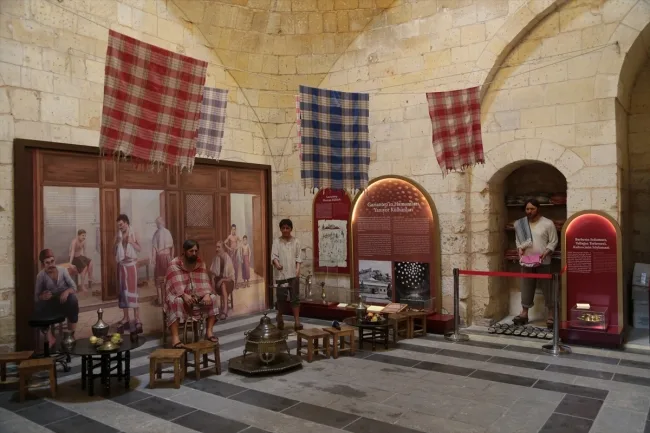
Architecture and Exhibition Logic
The museum displays the three essential spaces of a classical Turkish bath, faithful to the original. The visitor tours the building following the real sequence of a bath visit: first the soğukluk (cold room), the changing and resting area; then the ılıklık (warm room), a transitional space; and finally the hot and humid sıcaklık (hot room) where the washing takes place. This sequential arrangement turns the museum from an exhibition hall into a bath experience the visitor passes through.
The exhibition rests on a logic that combines tangible objects with living scenes. In the rooms, the tools and implements of the Turkish bath tradition — bath bowls (hamam tası), wraps (peştamal), exfoliating mitts (kese), wooden clogs (nalın), soap dishes and bath bundles — are presented in their original spatial context. Traditional bathing customs are made tangible through wax figures and models; in this way the visitor sees not only the objects but also a living bath scene in which those objects were used.
Sections You Must See
The Cold, Warm and Hot Rooms
The backbone of the museum is formed by the three classical sections of a Turkish bath. The soğukluk is the area for undressing, resting and conversation at the entrance; the social side of a bath visit begins here. The ılıklık is a warm transitional room that prepares the body for the heat. The sıcaklık is the heart of the bath: at its centre stands the heated navel stone (göbek taşı), surrounded by water basins (kurna) and private cells (halvet); the light filtering through the small skylights known as "elephant eyes" in the dome gives the steam-filled space its distinctive atmosphere. The museum not only preserves these three spaces but also explains, through re-enactments, the role each played in the bath ritual.
The Haluk Perk Collection
A significant part of the bath tools and implements on display comes from the Haluk Perk collection. This collection brings together the everyday objects of Turkish bath culture: hammered-copper bath bowls, examples inlaid with silver and mother-of-pearl, wooden clogs, exfoliating mitts and wraps, soap dishes and items used in special ceremonies such as the bridal bath. These objects show that the bath was not merely a place of cleansing but a stage for social rituals reaching from birth to marriage.
Wax Re-enactments and Bathing Customs
The most striking aspect of the museum is its staging of traditional bathing customs with wax figures. Everyday and ceremonial scenes — the scrubbing and lathering session, the bridal bath, the new-mother's bath and the groom's bath — are brought to life with figures in traditional local dress. These re-enactments reveal that in Ottoman society the bath was not only a place to wash but a social institution where men and women gathered separately, and where henna nights, matchmaking introductions and post-birth traditions took place. The bath room of the Hasan Süzer Marriage and Life Culture Museum explains in detail the place of the bridal bath in the wedding week and the city's distinctive tradition of şamşırak pouring.
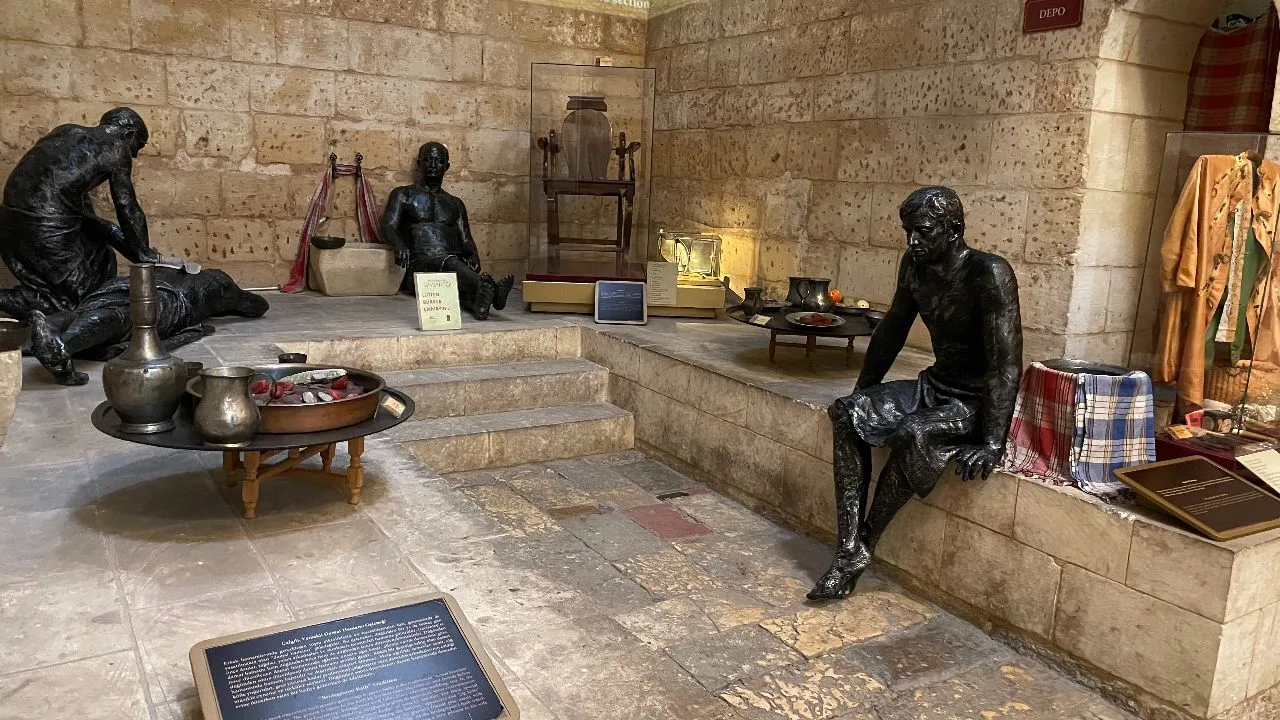
The Gaziantep Bath Museum is devoted not to a single object but to a living culture. The building itself is a 16th-century masterpiece, and the scenes within it are a distillation of the daily life this structure witnessed for centuries. In this way the museum brings together, under one roof, the city's tangible heritage and its intangible cultural heritage.
A Visitor's Discovery Guide
- Follow the bath sequence: Tour the spaces not at random but in the order of a real bath visit — cold room, warm room, hot room — so that you experience the building's architectural logic as it was meant to be.
- Look up at the hot room's dome: Stand over the navel stone and look up at the "elephant-eye" skylights in the dome; the play of light these small openings cast in the steamy space is the signature of classical Ottoman bath architecture.
- Read the re-enactments: The wax scenes are not mere decor; each one narrates a particular bathing custom, such as the bridal bath, the new-mother's tradition or the scrubbing session.
- Examine the objects closely: Note the craftsmanship of the bath bowls, clogs and mitts in the Haluk Perk collection; they show that the bath was also a world of craft and aesthetics.
Summary and Cultural Value
The Gaziantep Bath Museum is a rare example of turning a 16th-century Ottoman market bath into a museum where Turkish bath culture is kept alive. Built in 1577 as a unit of the Lala Mustafa Pasha complex, the Pasha Bath is a cultural asset in its own right, carrying its cold-warm-hot arrangement into the present through its original architecture; the Haluk Perk collection and the wax re-enactments within it recall the daily life this space witnessed for centuries. The transformation of a historic bath into a museum, rather than its demolition, is a strong example of Gaziantep's tradition of keeping its historic buildings alive. It can be visited together with the Bayazhan City Museum, another of the city's historic buildings similarly turned into a museum; for those wishing to descend into the city's ancient past, the Ancient Cities page is the natural continuation of this narrative.
Frequently Asked Questions
When did the Gaziantep Bath Museum open?
The structure was faithfully restored by the Gaziantep Metropolitan Municipality and opened to visitors in 2015 as the Gaziantep Bath Museum.
What was the building originally?
The museum is set inside a historic Ottoman bath that, according to its endowment deed, was commissioned in 1577 by Lala Mustafa Pasha as part of a complex (külliye). The building served for centuries as a public market bath and was known as the Pasha Bath.
What is in the museum?
The cold (soğukluk), warm (ılıklık) and hot (sıcaklık) rooms of a Turkish bath are preserved faithful to the original. Bath tools such as bowls, wraps, exfoliating mitts, clogs and soap dishes from the Haluk Perk collection are displayed, and traditional bathing customs are brought to life with wax figures and models.
Why is it called the "Pasha Bath"?
Because the bath was a unit of the complex commissioned by Lala Mustafa Pasha in 1577, it was known for centuries as the Pasha Bath; the museum preserves this historic name today.
Where is the museum?
It is located in the Şahinbey district, in the historic centre of Gaziantep.