Marrying the shimmer of silk with the softness of cotton, its vertical stripes rippling in the light, kutnu is a singular fabric that has been woven on Gaziantep's handlooms for centuries. Once tailored into caftans in Ottoman palaces and stitched into bridal robes, this lustrous textile is today kept alive in only one place in Türkiye: Gaziantep. Taking its name from the Arabic root for cotton, kutnu is at once the name of a cloth and of a craft rooted deep in the city.
Kutnu is a handwoven fabric with a lustrous surface and vertical stripes, made with silk (or fine artificial silk known as floş) in the warp and cotton yarn in the weft. The meeting of these two threads gives the cloth its defining character: the silk shimmers across the surface while the cotton lends a skin-friendly, breathable hand. Usually woven in warp satin or plain weave, kutnu has an almost living appearance, its bright bands of colour catching and releasing the light as it moves.
Gaziantep's weaving tradition runs deep. By the early 18th century the city was an advanced textile centre; coarse cloth was woven on looms in homes and workshops, and the cullah weavers worked cotton yarn into a fine cotton fabric called bogası and into lining alaca. Cloths particular to Antep, such as kutni, yemeni, turban cloth, alaca, white cloth and darayi, were part of this rich output. Through Antep-Aleppo merchants, cotton textiles were exported as far as Europe, to France and England, making Antep an export city. Kutnu is one of the most elegant fruits of this long-standing loom culture.
What Kutnu Is, and Where Its Name Comes From
The word kutnu derives from the Arabic root kutn, meaning cotton; the English word "cotton" itself shares that same ancestry. The name captures the fabric's very nature: a hybrid weave that joins the durability of cotton with the nobility of silk. Free of synthetic fibres and regarded as skin-friendly, kutnu has for centuries been a sought-after cloth for both everyday and ceremonial dress.
Traces of kutnu weaving in Gaziantep reach back to the 16th century. The tradition is understood to have drawn on the northern Syrian weaving centres of Aleppo, Hama and Homs, before concentrating in Gaziantep and taking on an identity all its own. Standing at a crossroads of the Silk Road geography, the city could bring silk arriving from the east together with local cotton on the same loom, which made it the natural home of this fabric.
Materials and the Weaving Technique
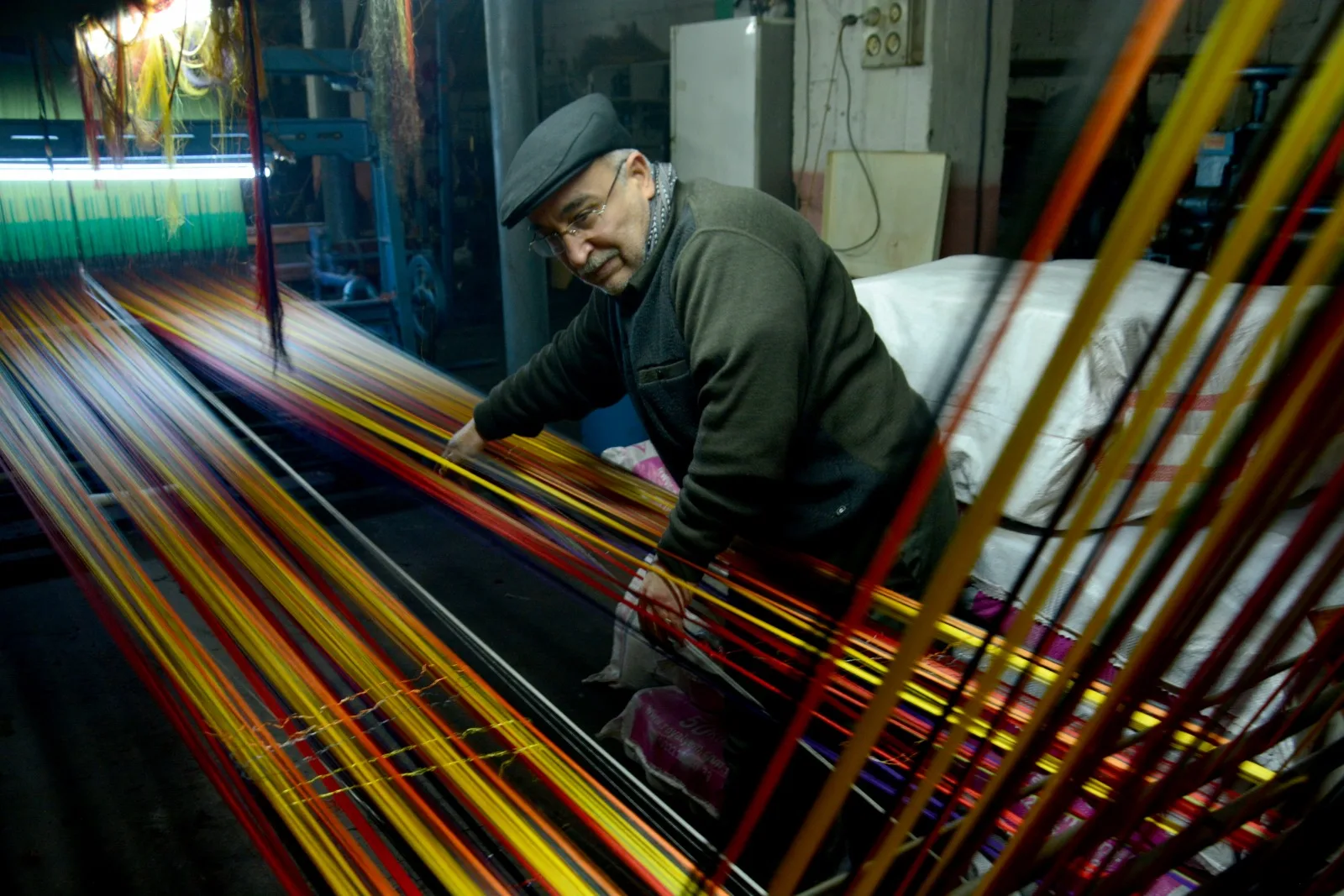
In traditional kutnu the warp threads are fine silk or floş, while the weft is plied cotton. Even the sizing used to give the cloth body and shine is natural: a gum resin obtained from the apricot tree. Production unfolds in many patient stages: preparing the warp, dyeing the yarns in vats heated to high temperatures, drying them, conditioning them so they will not snap, combing and sizing, and then threading the yarns one by one through the loom's heddle and reed.
This last step, the threading, is the heart of the craft. Only the kutnu master who knows a given pattern knows the exact sequence in which the threads must pass through the heddle eyes and reed teeth. A single error throws off the entire striped order of the cloth. Whether the weaving is carried out on a fully manual loom or, in some workshops, on motorised ones, the mind that builds the pattern and the skill that guides the hand always belong to a person.
Warp: silk / floş — Weft: cotton. Handwoven, vertically striped, lustrous-surfaced cloth. More than 60 traditional varieties. Produced in only one place in Türkiye: Gaziantep.
Varieties and Patterns
Kutnu is said to have more than 60 traditional varieties, each known by its own name: mecidiye, hindiye, zencirli, kemha, sultan, darcı, mekkavi, kürdiye, sedefli, kırkalem and çiçekli, among others, describe different colour schemes and stripe compositions. Types are also distinguished by the density of the weave; the closely-set, satin-woven cloths are the most lustrous and the most prized.
The dominant colour is traditionally yellow, and it is this that gives the fabric its natural golden glow, accompanied by stripes of red, purple, green, burgundy, pink, blue and black. These vivid bands make kutnu recognisable from a distance. An aesthetic kin to the bold colour sense of carpet weaving, which shares Gaziantep's textile heritage, reveals itself in the stripes of kutnu too.
From Palace to Bridal Robe: How Kutnu Was Used
In the Ottoman era kutnu was prized highly enough to be called a "palace fabric." Caftans, three-piece garments, robes and şalvar trousers were cut from it for sultans and princes; it was a favourite of the court circle and the wealthy. In and around Gaziantep, however, kutnu entered everyday life far more closely: it was used in bridal and groom's attire, and above all in the magnificent bindallı robes, as well as in cepken jackets, şalvar, entari robes and caftans. A bride's bindallı was often sewn from the family's most precious cloth.
Today kutnu is no longer confined to traditional dress. It finds new life in modern accessories such as scarves, waistcoats, shirts, ties, bags and slippers, and in decorative goods like curtains, cushions, tablecloths and wall hangings.
Geographical Indication and the Craft's Future
Kutnu's belonging to Gaziantep is officially registered as well. Under the name "Antep Kutnu Fabric" it holds a geographical indication as a mark of source, a registration that protects the cloth as something produced only in Gaziantep and by specific methods. In the cultural treasury of Gaziantep, one of Türkiye's richest provinces in terms of geographical indications, kutnu thus occupies a special place.
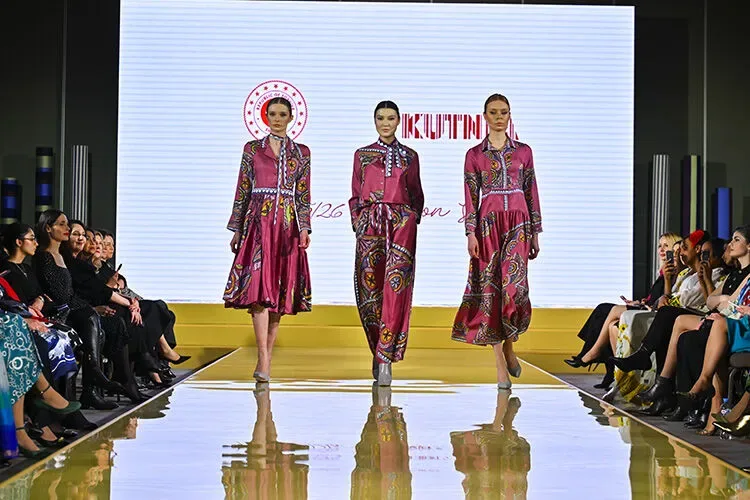
The craft remains fragile, however. As younger generations show less interest in this laborious, patience-demanding work, the number of masters has dwindled over the years. And yet kutnu has gained an unexpected visibility of late: its appearance in the collection of a world-famous fashion house brought this Anatolian cloth onto international runways and drew young designers' attention back to it. This bridge with the design world carries fresh hope that the sound of the centuries-old looms will not fall silent.
Among Gaziantep's handicrafts, kutnu, much like yemeni shoemaking, lives on both as a material product and as a tradition of knowledge handed down. When you hold a bolt of kutnu up to the light, the sheen you see is in truth the light of a mastery gathered over centuries.
Sources
- TÜRKPATENT Coğrafi İşaretler Portalı — Antep Kutnu Kumaşı (Mahreç İşareti, Tescil No. 199, Tescil Tarihi 25.08.2016)
- T.C. Kültür ve Turizm Bakanlığı, Gaziantep İl Kültür ve Turizm Müdürlüğü — Kutnuculuk
- Kültür Portalı — Antep Kutnu Kumaşı
- Çoruh, E. & Binboğa, E. B. (2021). Geleneksel Kutnu Kumaşı Üzerine Deneysel Yüzey Tasarımları. Sanat ve Tasarım Dergisi, (27), 131-143.
- Ocakoğlu, N. (2018). Geleneksel Dokumalarımızdan Kutnu Kumaşının Giysi Tasarımında Kullanılması. İdil Sanat ve Dil Dergisi, 7(52), 1585-1592.
- Kars, R. (2018). XVIII. Yüzyılın İlk Yarısında Ayntablı Tüccarların Faaliyetleri Kapsamında İç Ticarete Konu Olan Emtia. Gaziantep Üniversitesi Ayıntâb Araştırmaları Dergisi, 1(1), 36-48.
Frequently Asked Questions
What is kutnu fabric made of?
Traditional kutnu is woven with silk, or a fine artificial silk called floş, in the warp and cotton yarn in the weft. This union of silk and cotton gives the cloth both a lustrous surface and a breathable, skin-friendly hand. It is known for being free of synthetic fibres.
Is kutnu woven only in Gaziantep?
Yes. This silk handweave is produced in only one place in Türkiye, Gaziantep, and the tradition reaches back to the 16th century. The city's position in the Silk Road geography allowed silk arriving from the east to meet local cotton on the same loom.
Does kutnu fabric have a geographical indication?
Yes. It holds a geographical indication under the name "Antep Kutnu Fabric" as a mark of source. This registration protects the cloth as something produced only in Gaziantep and by specific methods.
What is kutnu fabric used for?
Traditionally it was used in bridal and groom's attire, bindallı robes, cepken jackets, şalvar, entari robes and caftans. Today it is also used in accessories such as scarves, waistcoats, ties, bags and slippers, and in decorative goods like curtains, cushions and tablecloths.
How many varieties of kutnu are there?
Kutnu is said to have more than 60 traditional varieties; mecidiye, hindiye, zencirli, kemha and sultan are among them. Each name describes a different colour scheme and stripe composition. The dominant colour is traditionally yellow, which gives the cloth its natural golden glow.
Where does kutnu come from, and what does its name mean?
The name kutnu derives from the Arabic root "kutn," meaning cotton; the English word "cotton" shares the same ancestry. The tradition is understood to have drawn on the northern Syrian weaving centres of Aleppo, Hama and Homs before taking on an identity of its own in Gaziantep.