A kilim is far more than something to walk upon; it is a quiet language that tells, thread by thread, the life, beliefs and wishes of the woman who wove it. In Gaziantep this language has been spoken for centuries at the looms of nomadic Yörük women, who wove an entire culture from wool, goat hair and the colours of nature. Today the same city is also one of the largest carpet-producing centres on earth. The story of Antep weaving is told exactly where these two worlds meet: the patience of the hand loom and the power of the factory.
To understand Gaziantep's weaving culture, two distinct crafts must be considered together. The first is the flat-woven rug made without any pile, the kilim; the second is the knotted, pile-surfaced carpet. Both are born from vertical warp and horizontal weft threads, but through different techniques. In Antep this tradition survives in two very different forms: in village homes and in today's vast factories alike.
This page treats the city's weaving heritage as a whole: from the hand-woven kilim of the nomadic tradition to the machine-carpet industry that has carried Gaziantep to the very top of the world carpet map. Standing side by side on the same soil, these two stories are also the finest illustration of Antep's transformation from craft to industry.
What Are Kilim and Carpet? The Basis of the Technique
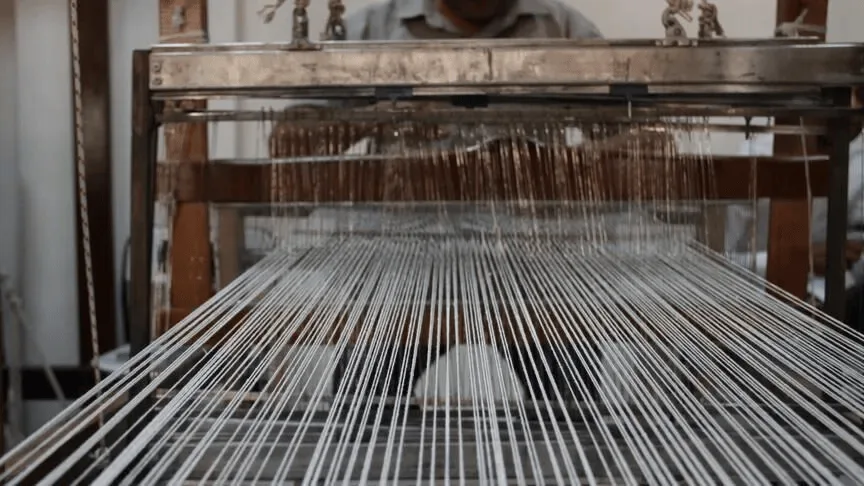
The skeleton of weaving is always the same: the vertical threads stretched on the loom are the warp, and the horizontal threads passed between them are the weft. A kilim is a flat weave formed by these two sets of threads locking tightly together, looking the same on both faces; it has no pile, no fuzzy surface. Patterns form as coloured weft threads turn back within specific warp sections, and small slits are left where colour fields meet, a technique known as slit-weave kilim.
A carpet is different: knots are tied one by one onto the warp threads and their ends are cut to create a soft, piled surface. The more knots, the finer the pattern, the denser and more valuable the carpet. Alongside the kilim, related flat-weave techniques from the same family, cicim, zili and sumak, were also woven in the Antep region; these add an extra patterning thread to warp and weft, producing raised, embroidery-like surfaces.
The Yörük Tradition: Life Woven at the Loom
The roots of Antep weaving reach back to the Oğuz tribes who came from Central Asia to Anatolia and never fully settled, the Yörüks. In nomadic life, weaving was not decoration but necessity: from the goat-hair covering of the tent to the prayer rug, from the saddlebag to the flour sack, from the cushion to the floor spread, almost every part of the home was produced on the loom. Women were the masters of this work, and every piece they wove was a record of the culture they carried.
In this tradition, kilims were often known by the name of the tribe that wove them; a trained eye could read from a pattern which clan and which region a piece came from. Motifs brought from Central Asia were kept alive in Anatolia with only slight changes, so the kilim became a visual memory passed from one generation to the next. Antep and its surrounding villages were important stops along this beater-woven flat-weave tradition.
The Yörük woman did not weave merely a rug; she wove her own world. A kilim added to a young woman's dowry was a signature displaying both her skill and her wishes, which is why no two kilims were ever exactly alike.
The Colours of Nature and the Language of Motifs
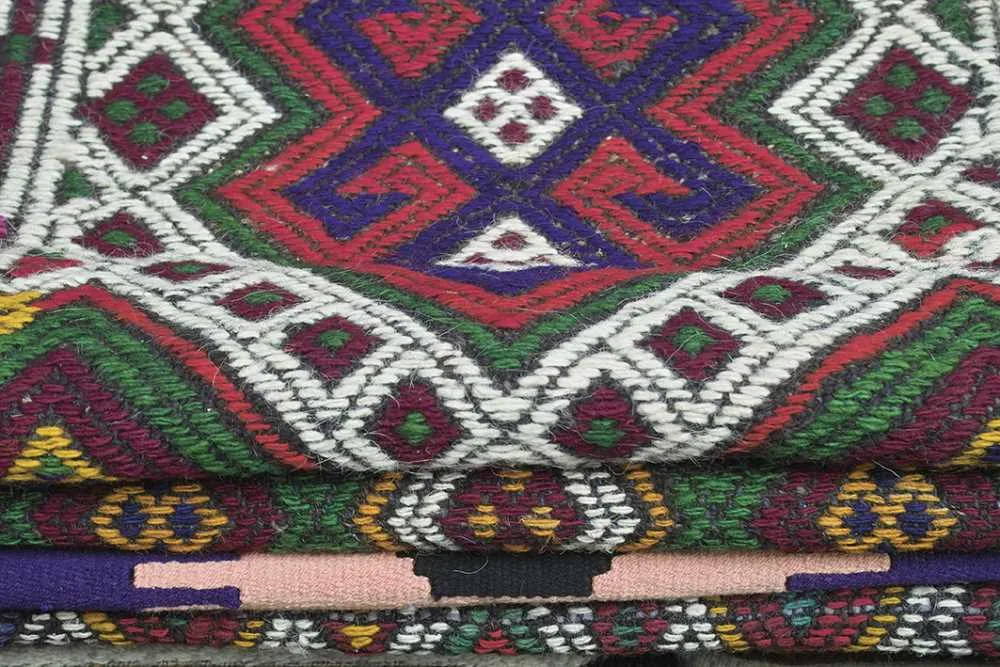
The soul of the Antep kilim lies in its materials and colours. Traditional weaving used animal fibres such as sheep's wool and goat hair, and at times camel, horse or ox hair. The threads were dyed entirely with natural colourants: indigo for blues, walnut husk for browns and blacks, onion skin for yellows, and madder root for reds. The soft tones these dyes give, growing only more beautiful with time, carry a depth that synthetic colours cannot match.
The patterns are never random; each motif is the symbol of a wish or a belief. The elibelinde (hands-on-hips) motif represents femininity, motherhood and abundance, while the koçboynuzu (ram's horn) stands for strength, heroism and fertility. The tree of life, the star, the bird and geometric ornaments are other letters of this symbolic language. Kilims woven in the Antep region are also known by their own names; Baklava Dilimi, Kuş Kanadı (bird's wing), Zincir Göbek, Çarkıfelek and Pençe Göbek are only a few examples of this rich local repertoire.
From Hand Loom to Factory: The Transformation of the Antep Carpet
Gaziantep's weaving adventure began on narrow hand looms. The know-how built up through kutnu, aba, Antep-işi and various cotton-wool weaves gradually evolved into carpet and kilim. It is said that thousands of hand looms once worked in the region, with numbers reaching the thousands; yet as mechanical looms spread, hand-woven kilim weaving declined and the number of looms fell to the hundreds.
That decline became the beginning of another story. First the hand looms were motorised to enable serial production, and then weaving machines were converted in the hands of local craftsmen to produce carpets. Within a few decades Gaziantep made a leap from small workshops to vast industrial plants and became the centre of machine-carpet production.
The Carpet Capital of the World
Today Gaziantep is counted among the world's leading centres of machine-carpet production. The great majority of the carpet made in Türkiye comes out of this city, and the Antep carpet is exported to well over a hundred countries. With over 150 producing firms, thousands of weaving machines and a strong design infrastructure, the city stands as a leader in both production and export.
Yet it would be unfair to reduce Gaziantep's weaving identity to these figures alone. Women still weaving kilims for their own needs in village homes, the weaving courses opened in public education centres, and the workshops striving to keep the tradition alive all keep the pulse of hand weaving beating, even in the shadow of the machines. The city's true wealth lies in its ability to hold both worlds at once.
Where to See It, How It Lives On
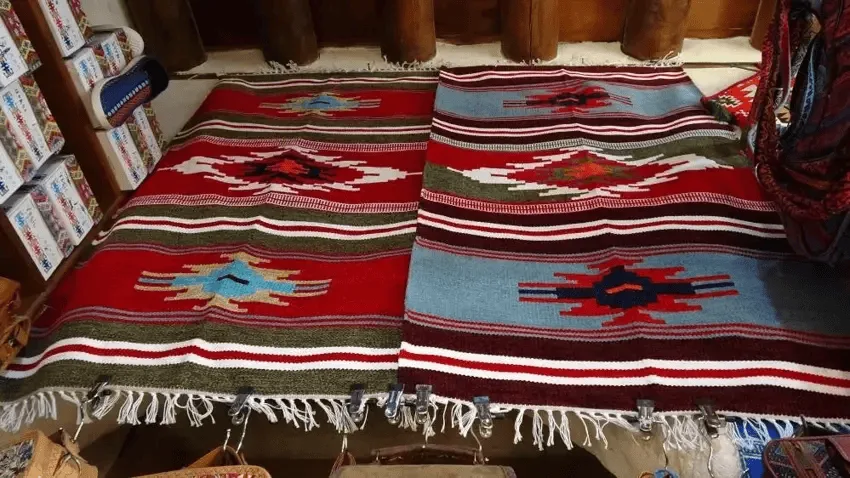
A visitor seeking to trace Antep weaving can find traditional kilim and carpet examples in the city's ethnographic collections; in the floors, spreads and dowry chests of old Antep houses, weaving always held a central place. In the city's bazaars and the venues where traditional crafts are displayed, it is possible to encounter both antique pieces and the masters of today.
This heritage is part of the same cultural fabric as Antep's other crafts. The tradition of fine workmanship born at the loom also reveals itself in the weaving of kutnu fabric and in Antep-işi embroidery. All of these crafts are complementary links in the tradition of Gaziantep handicrafts.
Sources
- TDV İslâm Ansiklopedisi, "Kilim" maddesi.
- Gaziantep İl Kültür ve Turizm Müdürlüğü, "Antep Kilimciliği".
- Kars, R. (2018). XVIII. Yüzyılın İlk Yarısında Ayntablı Tüccarların Faaliyetleri Kapsamında İç Ticarete Konu Olan Emtia. Gaziantep Üniversitesi Ayıntâb Araştırmaları Dergisi, 1(1), 36-48.
- El Sanatlarının Turizme Etkisi: Gaziantep Örneği, BASBED.
Frequently Asked Questions
What is the difference between a kilim and a carpet?
A kilim is a flat-woven rug without pile, looking the same on both faces. A carpet is a piled weave made with knots tied onto the warp threads, giving a soft surface.
Why is the Antep kilim valued?
A traditional Antep kilim is woven on a hand loom from natural wool and hair using natural dyes. The motifs of each piece carry meaning, and since they are usually made one by one by hand, each is unique.
Do kilim motifs carry meaning?
Yes. The elibelinde motif, for example, symbolises femininity, motherhood and abundance, while the koçboynuzu (ram's horn) stands for strength, heroism and fertility. Each motif is the visual expression of a wish or belief.
Which natural dyes are used in kilims?
Traditional weaving uses plant-based dyes such as indigo for blues, walnut husk for browns and blacks, onion skin for yellows and madder root for reds.
Why is Gaziantep known as a carpet city?
Gaziantep carried its hand-loom heritage into machine-carpet production, accounting for the great majority of carpet made in Türkiye and becoming one of the world's leading carpet centres.
Does the hand-woven kilim tradition survive today?
Although industrial carpet production now dominates, women weaving for their own needs in villages, public education courses and traditional workshops continue to keep hand-woven kilim making alive.