A yemeni is a light, heelless shoe with a soft-leather upper and a leather sole, stitched entirely by hand. In Gaziantep the craft is called "koshgercilik" (köşgercilik) and the artisan a "koshger" (köşger). Prized for centuries because it keeps the foot cool in a hot climate and lets the skin breathe, the yemeni is today both a part of traditional dress and one of the city's oldest surviving crafts. The symbolic place of the red yemeni in weddings and henna nights has written this plain-looking shoe deep into Gaziantep's cultural memory.
In the shadow of mass-produced footwear, yemeni shoemaking is one of the last representatives of patiently sustained handwork. A pair of yemeni comes entirely from the master's hands, from the cutting of the leather to the final polish; there is no shaping machine and no assembly stitching line. For this reason every pair carries the mark of the artisan who made it.
In Gaziantep the craft's roots run into the city's deep leather-working tradition. The koshgers who turned tanned hide into footwear were for centuries among the bazaar's liveliest tradespeople, and the yemeni they produced became a product sought by locals and distant markets alike.
What Is a Yemeni?
A yemeni is a light, heelless shoe with an upper of red, black or purple leather and a sole cut from kösele (firm leather). It is built essentially from two main pieces: the sole and the upper. These are stitched together, turned inside out and sewn again along the edges, producing a sturdy form with no visible seam. The absence of a heel and the breathable nature of the leather make the yemeni a comfortable shoe that does not make the foot sweat in a hot climate.
Part of the reason the yemeni was historically considered good for the feet is exactly this natural construction: made entirely of vegetable-tanned leather and natural materials, it lets the foot breathe. In this sense the yemeni is not merely a piece of traditional dress but a clever design adapted to its climate.
The Koshger and the Craft
In Gaziantep the artisan who makes yemeni is called a "koshger" (köşger) and the craft "koshgercilik" (köşgercilik). The word is said to derive from the Persian "keşfger," meaning "one who makes shoes." Mastery is earned only after years of apprenticeship; learning to read the leather, to hold the knife correctly, to shape the shoe on the last and to hand-stitch the seams all take time.
The fact that the craft passes from master to apprentice is both its greatest strength and its most fragile point. The knowledge comes not from books but from years of working side by side in the workshop. In an age where the young turn toward quicker earnings, finding an apprentice willing to commit to this patient learning is the masters' deepest worry.
Materials and Technique
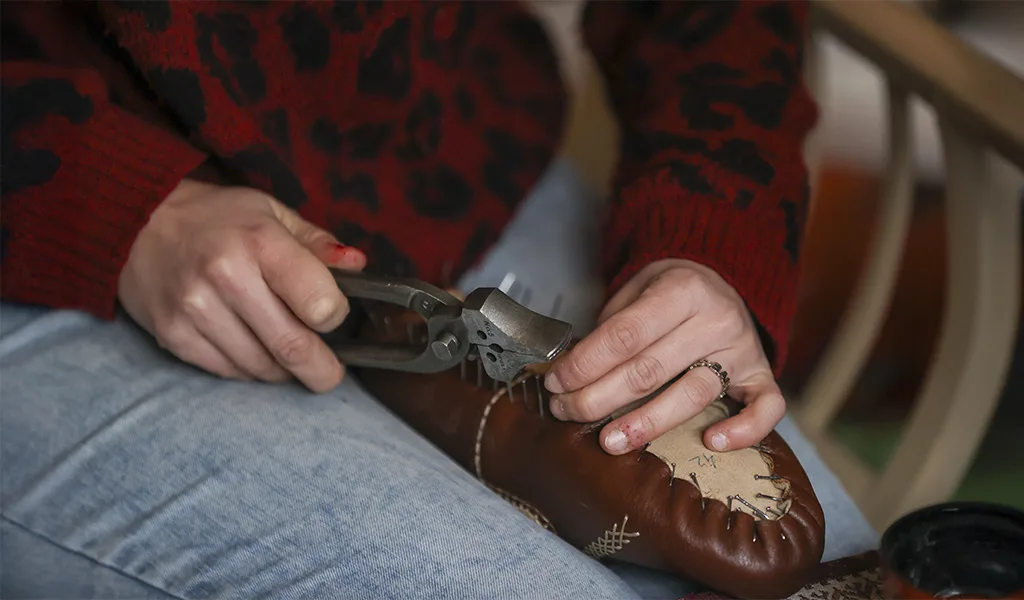
A genuine yemeni is made entirely of natural leather, and several different animal hides are often combined in a single shoe. The sole uses durable water-buffalo leather, the upper tanned goat leather (sahtiyan), the inner lining soft sheepskin, the inner sole cattle or goat hide, and the edges fine kid leather. Each piece is chosen according to the load it must bear and where it touches the foot.
Production begins with cutting the leather to the last. Next come the shaping of the upper, the fitting on the last and the koshger's stitching; the shoe is joined by hand, turned inside out and finally rubbed with a waxed cloth to bring up a shine. The master's tools are simple but demand expertise: hammer, anvil, leather knife, awl and lasts pass from one generation to the next.
Yemeni are named by colour (black, red, purple), shape and size. Models such as the Halebi, the Merkup and the upturned-toe yemeni reflect forms that varied by region and use. Models with toes curling upward were once favoured mostly in the countryside.
Gaziantep's Leather Tradition and History
It is no coincidence that yemeni shoemaking took such deep root in Gaziantep. The city held a developed body of leather-working knowledge well suited to footwear. In the eighteenth century, leather processing was an important branch of animal husbandry in Ayntab; yellow and red sahtiyan were worked and shipped to the markets of Aleppo, Egypt and Kilis. To dye the leather, natural colourants such as oak gall (mazı) and Persian-berry dye (cehri) were used. The thin, coloured leather that forms the face of the yemeni is a product of this long processing tradition.
Accounts of how the yemeni reached the region say its origin was carried by way of Aleppo, and that it spread from there to cities such as Antep, Urfa, Maraş, Diyarbakır, Adana and Antakya. Across this wide geography, Antep became one of the strongest centres of the craft. Records note that around four hundred yemeni makers worked in the city in the 1920s, a figure that shows how much weight the craft once carried in the local economy.
The Red Yemeni and Its Cultural Place
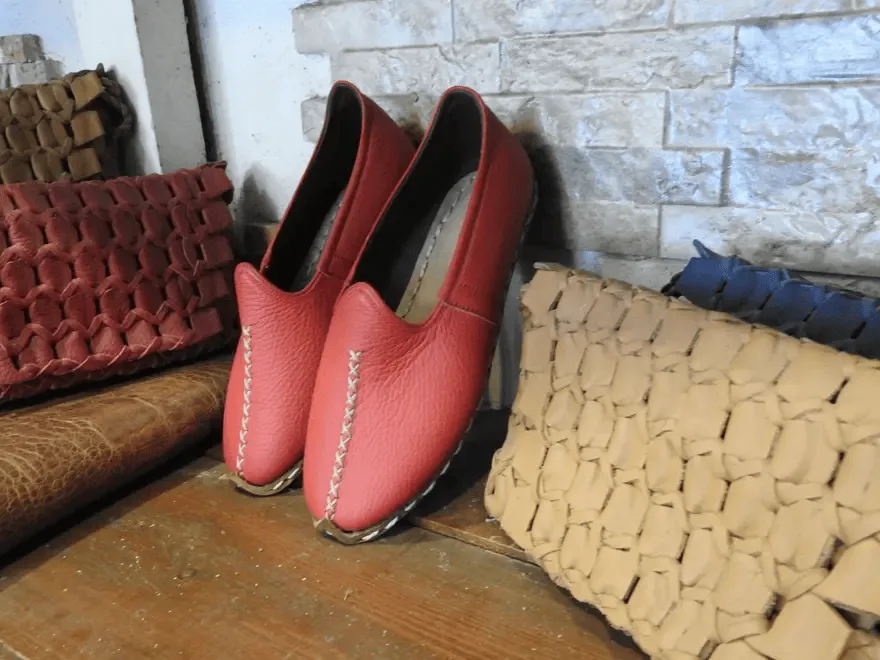
In Gaziantep the yemeni is not only a shoe but also a part of ceremony. The red yemeni in particular has become identified with weddings and henna nights; as a complement to traditional dress, it takes its place on the region's days of joy. The vividness of the red lends this plain shoe a festive meaning and carries it beyond everyday use.
Today the yemeni lives on both with traditional clothing and as a souvenir sought by visitors drawn to natural, handmade goods. Its simple form and its story turn it into a meaningful keepsake to carry home from Antep.
The Craft Today and Where to See It
Yemeni shoemaking is today a craft that is increasingly hard to sustain. With the spread of factory footwear and the difficulty of finding apprentices, the number of masters still doing this work in the city has fallen sharply. Even so, the tradition continues to be handed down by hand, from one generation to the next, in the workshops of a few remaining masters.
For those who wish to see the yemeni made on the spot and buy it from its master, the right address is the city's historic bazaar. The Coppersmiths' Bazaar, although its name evokes copperwork, houses many tradespeople from spice sellers to mother-of-pearl inlayers, yemeni makers and various artisans; the koshgers' workshops live on here too. Yemeni shoemaking remains a still-breathing part of Gaziantep's handicrafts heritage, alongside crafts such as coppersmithing and kutnu fabric.
Sources
- T.C. Kültür ve Turizm Bakanlığı, Kültür Portalı — "Yemenicilik" (Gaziantep)
- Gaziantep Valiliği — "Gaziantep El Sanatları" (Yemenicilik / Deri İşlemeciliği)
- T.C. Kültür ve Turizm Bakanlığı, e-kitap — "Gaziantep İlinde Yemeni Yapımı"
- Kars, R. (2018). "XVIII. Yüzyılın İlk Yarısında Ayntablı Tüccarların Faaliyetleri Kapsamında İç Ticarete Konu Olan Emtia." Gaziantep Üniversitesi Ayıntâb Araştırmaları Dergisi, 1(1), 36-48.
Frequently Asked Questions
What is a yemeni shoe?
A yemeni is a light, heelless shoe with a soft-leather upper and a leather sole, made entirely by hand. Its natural leather lets the foot breathe and keeps it cool in a hot climate. In Gaziantep the craft of making it is called koshgercilik.
Why is yemeni making called the work of a "koshger"?
In Gaziantep the artisan who makes yemeni is called a koshger and the craft koshgercilik. The word is said to come from the Persian "keşfger," meaning "one who makes shoes." Becoming a koshger is a mastery earned only after years of apprenticeship.
What materials is a yemeni made from?
A genuine yemeni is entirely natural leather, often combining several hides: water-buffalo leather for the sole, tanned goat leather (sahtiyan) for the upper, sheepskin for the lining, cattle or goat hide for the inner sole, and kid leather for the edges. The sole is cut from firm kösele leather.
Does the red yemeni have a special meaning?
Yes. The red yemeni is identified with weddings and henna nights in the region and is worn as a complement to traditional dress on days of celebration. The vividness of the red gives this plain shoe a festive significance.
Where can I see and buy a yemeni in Gaziantep?
The best address is the city's historic bazaar. The Coppersmiths' Bazaar, despite its name, also houses the workshops of koshgers, where you can watch the yemeni being made and buy it directly from its master.
Is yemeni shoemaking still practised today?
It is, but it is an increasingly difficult craft. With the spread of factory footwear and the trouble of finding apprentices, the number of masters still doing this work in the city has fallen sharply. Even so, a few masters keep the tradition alive in their workshops.