In Gaziantep's old-city fabric, among the historic buildings at the foot of the castle, a rhythmic hammering rises from early morning: the Coppersmiths Bazaar is waking. On this narrow, stone-paved lane in the Boyacı district of Şahinbey, wedged among the old caravanserais, copper masters keep shaping glowing metal exactly as they have for centuries. This is not merely a place to shop; it is the still-beating heart of Gaziantep's craft memory.
Sooner or later, everyone who lists Gaziantep among places to visit ends up stepping into this bazaar, and it holds a special place within the city's cultural atlas. For the Coppersmiths Bazaar is not kept behind museum glass; it is a living craft street that still produces, shop by shop and hammer by hammer. The cauldrons, bowls and trays you see here come straight from a master's hands, before your very eyes.
What gives the bazaar its colour, sound and scent is Gaziantep's centuries-deep tradition of coppersmithing, a tradition kept alive today by an invisible bridge between the city's most rooted museums and the workshops of this very street.
What and Where Is the Bazaar?
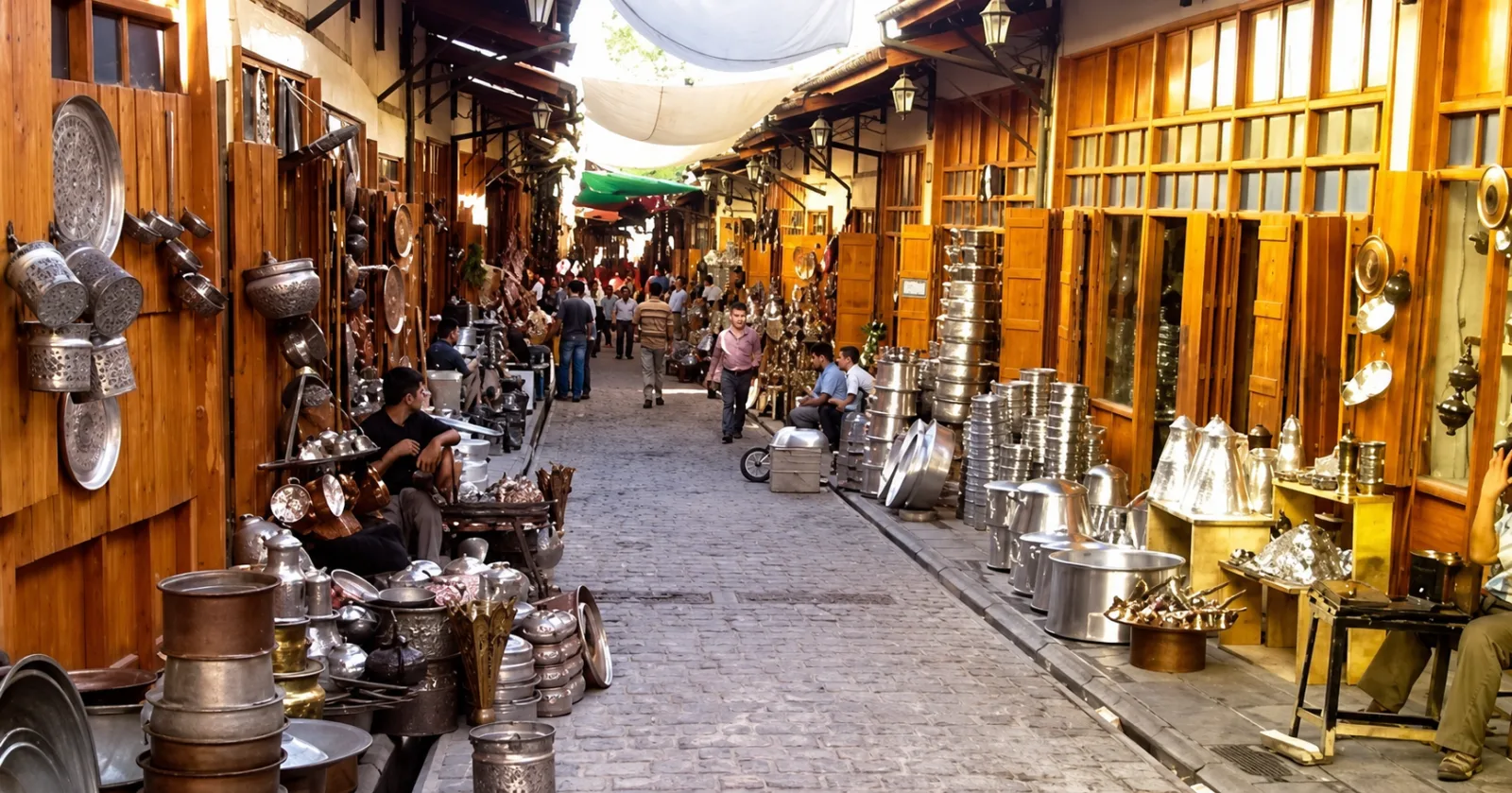
The Coppersmiths Bazaar lies in central Gaziantep, in the Boyacı district of the Şahinbey municipality. Set within the historic city's Hans quarter (the old caravanserai district), it is made up of single-storey shops opening onto narrow, stone-paved lanes. Its location is so central that visitors exploring Gaziantep Castle and the surrounding historic fabric often find themselves, quite unplanned, amid the ringing of the coppersmiths' hammers.
As its name suggests, the bazaar is named for the copper goods sold and made here. Yet the street is not limited to coppersmiths alone; within the same fabric, masters of other handicrafts such as blacksmiths, herbalists, traditional shoemakers and mother-of-pearl inlayers keep their shops side by side. In this sense the Coppersmiths Bazaar offers a miniature cross-section of old Antep's traditional artisan life.
History and Structure
While the bazaar's exact construction date is not pinned down by documents, the present shops are thought to have been built in the 19th century. The roots of the coppersmithing craft that gave the bazaar its name reach far further back; sources converge on a tradition between four and five hundred years old in Gaziantep. Copperwork enjoyed a brilliant age in Anatolia during the Seljuk era, continued to develop under the Ottomans, and Antep's masters came to be counted among the finest practitioners of the craft.
Architecturally, the bazaar largely preserves its traditional character, offering a cross-section of an earlier era. The shops open onto the street through arched entrances and are built of neatly cut hard limestone (known locally as keymıh), with façades finished here and there in timber cladding. The stone paving underfoot, the arches overhead and the surrounding historic caravanserai fabric genuinely carry you into another time.
The most distinctive feature of Antep coppersmithing is that pieces are hammered from a single sheet, without joining methods such as soldering or welding. This makes Gaziantep copper both durable and prized.
What to See: The Craft Up Close
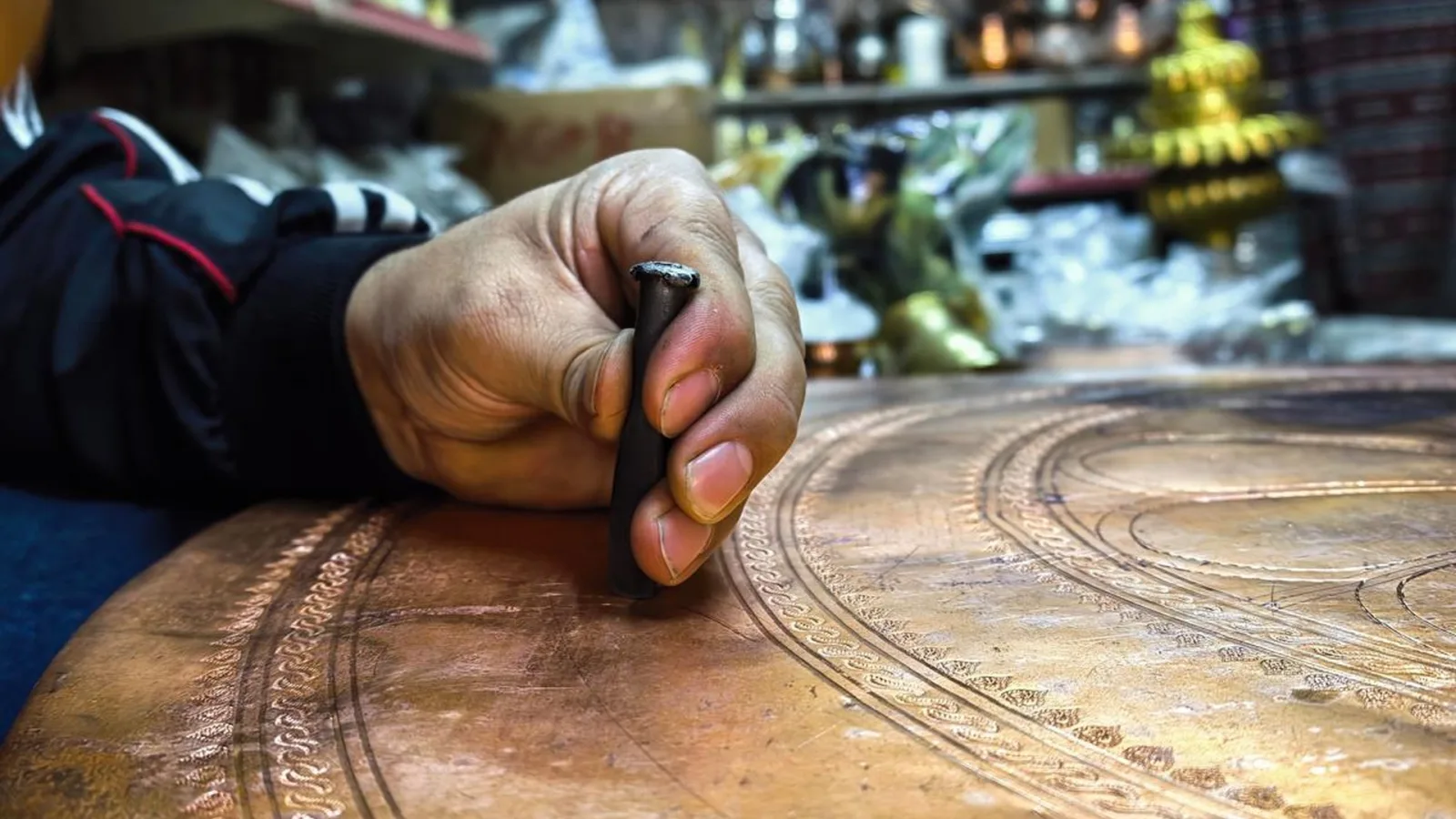
In the Coppersmiths Bazaar the real show happens not in the windows but inside the shops. Masters work the copper by hammering (shaping with a hammer); as the metal hardens and begins to crack, they soften it again over fire in a process called annealing, then hammer it once more. With each cycle the copper, which hardens as it cools, gains both form and strength. The sound of hammer and anvil is the bazaar's unchanging melody.
The 41 different main motifs worked onto the masters' pieces are drawn from Seljuk and Ottoman botanical, geometric and nature-inspired figures. Even more striking is that these motifs are usually applied without any preliminary drawing, directly onto the metal, from the master's memory and the practised habit of the hand.
Among the products that have become emblems of the bazaar are the giant cauldrons, whose base can reach a metre across. Traditionally, the labour-intensive delicacies of Antep cuisine, such as tarhana, bulgur, grape molasses (pekmez), halva and aşure, are cooked in these great copper vessels. For anyone interested in food history, the bazaar is a peerless place to see the very pots behind the city's celebrated gastronomy culture.
Its Place in City Life
For the people of Gaziantep, the Coppersmiths Bazaar is not merely a tourist address but a part of daily life and memory. From the tray destined for a bride's trousseau to the tinned bowl used at home, countless items have been bought here across generations. Mastery handed from father to son is the strongest bond keeping the bazaar alive; even today you can meet craftsmen who have worked the same shop for half a century.
The value of this deep-rooted craft has also been officially recognised: Gaziantep's coppersmithing was also brought under official protection by a geographical indication (Gaziantep Copper Handcraft), applied for in 2010 and registered in 2011. The bazaar has further been included on the city's "Culture Route" as part of efforts to protect the historic fabric, and was honoured with the Achievement Award of the Union of Historical Towns.
The Bazaar Today and How to Visit
Today the bazaar is said to hold close to three hundred shops; some are still producing, while others have turned to selling gift and decorative copperware. Do not rush as you wander: pausing beside a master to watch a cauldron take shape under the hammer is the finest part of the visit. Whether a small coffee pot or an engraved tray to hang on a wall, copperware is among the most authentic souvenirs you can carry home from Gaziantep.
For those who wish to know the history and finest examples of the craft more closely, the bazaar finds its full meaning when visited together with the city's Copper Museum: one is the living workshop of the craft, the other its memory. Planned alongside the surrounding historic buildings, such as the Kemikli Bedesten and Hışvahan, a walking route lets you take in the craft and commercial life of old Antep as a whole.
Frequently Asked Questions
Where is the Coppersmiths Bazaar?
The bazaar is in central Gaziantep, in the Boyacı district of the Şahinbey municipality, within the historic Hans quarter of the old city. It is within walking distance of Gaziantep Castle and the surrounding historic fabric.
How old is the bazaar?
The present shops are thought to date to the 19th century. The coppersmithing tradition that gave the bazaar its name reaches much further back, however; sources agree the craft has a history of between four and five hundred years in Gaziantep.
What is sold in the Coppersmiths Bazaar?
Mainly copper products: hammered cauldrons, trays, bowls, coffee pots and engraved decorative pieces. The same street also has shops of other artisans such as blacksmiths, herbalists and mother-of-pearl inlayers.
What do the motifs on the copperware mean?
Masters work 41 different main motifs drawn from the Seljuk and Ottoman periods. These botanical, geometric and nature-inspired figures are usually applied freehand, directly onto the metal without a preliminary sketch.
Can I visit the Coppersmiths Bazaar and the Copper Museum together?
Yes, visiting them together is recommended. The bazaar is the living workshop of the craft, while the Copper Museum is its memory, presenting the history and finest examples of the tradition; seen together they give a full picture of Gaziantep coppersmithing.
What makes Gaziantep coppersmithing special?
The most distinctive feature of Antep coppersmithing is that pieces are hammered from a single sheet, without joining methods like soldering or welding. This deep-rooted craft was also officially identified with Gaziantep through a geographical indication applied for in 2010 and registered in 2011.