At the foot of Gaziantep Castle, hidden behind the narrow lanes of the old bazaars, a stone courtyard that has witnessed centuries of caravan stops awaits you. Hışvahan is one of the city's oldest hans, taking its name from "hışva," the word for a cotton pod, and once sheltering the weary travellers of the silk and cotton routes. After a careful restoration it has reopened its gates, turning into a lively gathering place where you can dine beneath its black-and-white cut stone, sip your coffee in the courtyard, or spend the night. For anyone who wants to see old Antep and the present day standing side by side in a single courtyard, it is an ideal stop.
In the very heart of Gaziantep's historic trading quarter, woven into the dense fabric of hans and covered bazaars, Hışvahan is one of the loveliest doors opening onto the city's past. Also known as "Hışva (Cotton Pod) Han" or "Lala Mustafa Pasha Han," the building has touched the lives of merchants, innkeepers and travellers across the centuries.
This is not merely an old building; it is a place where the trading spirit of Antep's caravan age can still be felt, where daily life carries on in the shade of stone walls. To visit the han is also to discover the bazaars around it, the neighbouring old caravanserais, and the foot of the castle.
What is Hışvahan, and where is it?
Hışvahan lies in the Şahinbey district of Gaziantep, in the Karagöz Quarter, within the historic Hans district right at the foot of Gaziantep Castle. Surrounded by a covered bazaar, market streets and other hans, this district has been the city's commercial centre for centuries. Departing from the standard Ottoman han plan, the building gathers its rooms along only the southern and northern wings of the courtyard, making it a modest yet striking structure.
Its name gives away its story: "hışva" means a cotton pod. In its early years the han served as a travellers' inn, sheltering cotton traders and those passing along the caravan route. So the stone building where you sip coffee in the courtyard today was once a waystation where camels knelt, bales were unloaded, and weary merchants caught their breath.
History: a past without an inscription but rich in records
It is not easy to say exactly when Hışvahan was built, because the structure has no inscription giving its construction date. Yet there are solid documents about who commissioned it: endowment deeds and Islamic court registers show that it was built by Lala Mustafa Pasha. The han's endowment deed is dated 985 in the Hijri calendar, corresponding to 1577.
Working from these documents, scholars believe the han was built during the years when Lala Mustafa Pasha served as governor of Aleppo and Damascus, roughly in the second half of the 16th century (between 1563 and 1577). The building is remembered as Gaziantep's oldest han, a seniority that gives it a special place within the city's tradition of caravanserais.
Hışvahan did not stand alone; it was the central structure of a larger complex. According to the sources, the complex included a bathhouse to the west, and a covered bazaar, a small mosque and a sesame-oil house (susamhane) to the east. Some of these neighbouring structures were damaged during the years of the War of Independence, while the han itself survived to reach the present day.
Hışvahan is one of the structures that once served the caravan trade in Gaziantep's historic "Hans" quarter. This dense commercial fabric reflects the city's centuries-long role as an important stop on the roads between Mesopotamia and Anatolia.
What to see: architecture and atmosphere
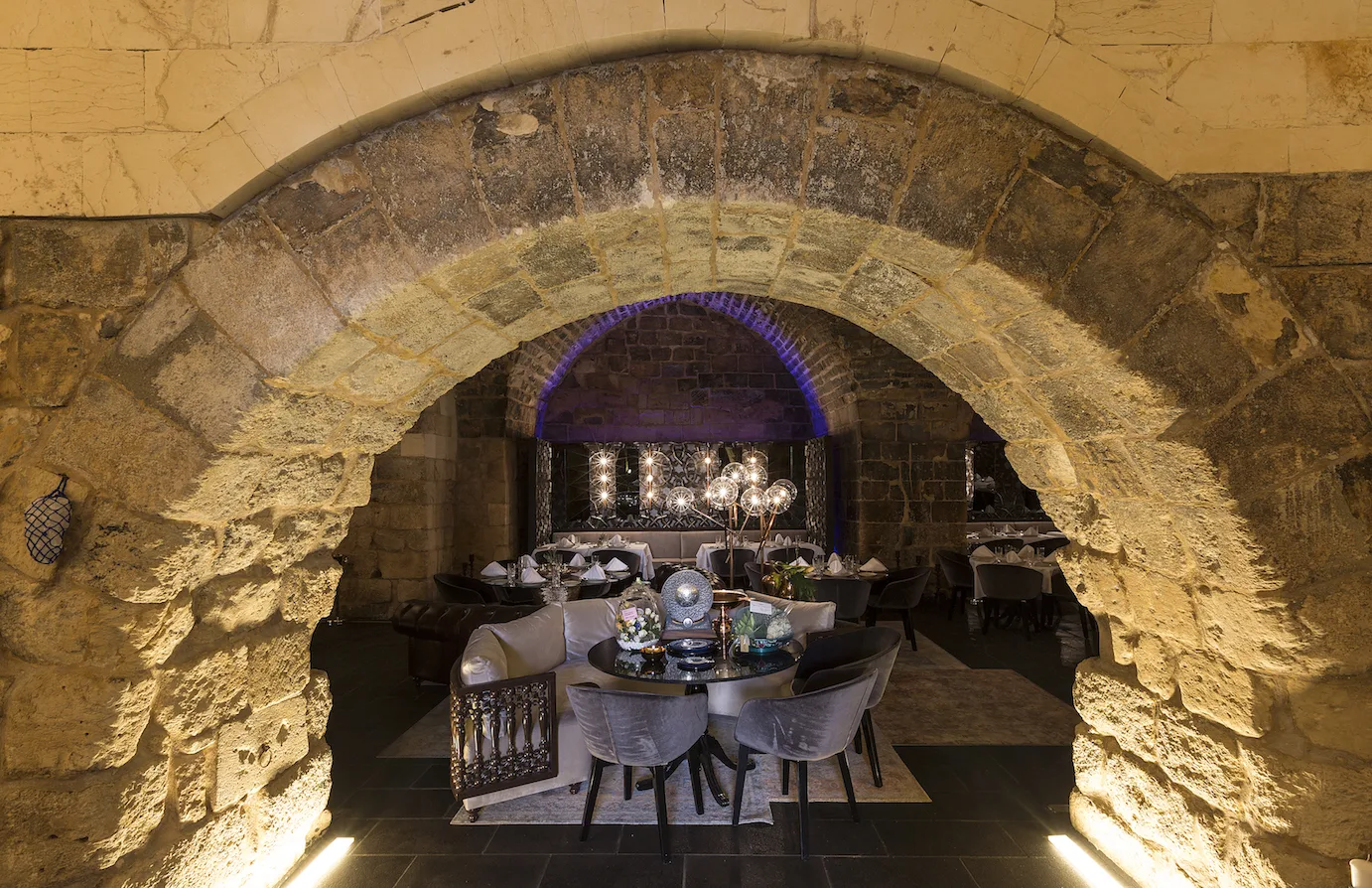
Hışvahan belongs to the group of single-storey hans, which gives it a warmer, more human scale than many of the larger han courtyards. Both black and white cut stone were used in the building. The black stone is especially prominent at the main entrance gate, making the doorway the most ornate and ceremonial feature of the whole structure. This plain yet impressive entrance ushers you into a courtyard from another age.
Unlike classical Ottoman hans, the building arranges its rooms along only the southern and northern wings of the courtyard. The southern sections are single-storey, while the northern wing rises to two floors. A number of rooms open onto the courtyard along the southern wing. The stable section consists of cross-vaulted spaces resting on piers and running in an east-west direction, so the part where pack animals were once kept can still be read in the stonework.
As you wander the courtyard, the calm created by the stone arches, the arcades and the cool shade is immediately felt. The restoration brought traditional regional elements into the space as well: touches unique to Antep, such as copper work and kutnu fabric, bring past and present together in every corner.
Its place in city life
Because Hışvahan sits right in the middle of the district that locals simply call "the Hans," it is an inseparable part of the city's commercial memory. Welcoming cotton and silk traders in the caravan age, the han beat for centuries in time with the pulse of the surrounding bazaars. In the Coppersmiths' Bazaar right beside it, a centuries-old tradition of hand-beaten copper continues to this day; for those who want to get to know this copper culture more closely, the Copper Museum is within walking distance.
The han shares the same urban fabric as the other historic structures of the trading centre. Considered together with the nearby Zincirli Bedesten and Kemikli Bedesten, Hışvahan is one of the best examples of how old Antep's bazaar world was an interlocking network. For the people of Gaziantep, this is both a nostalgic meeting point and a living showcase of the city's deep-rooted trading culture.
Today, and how to visit
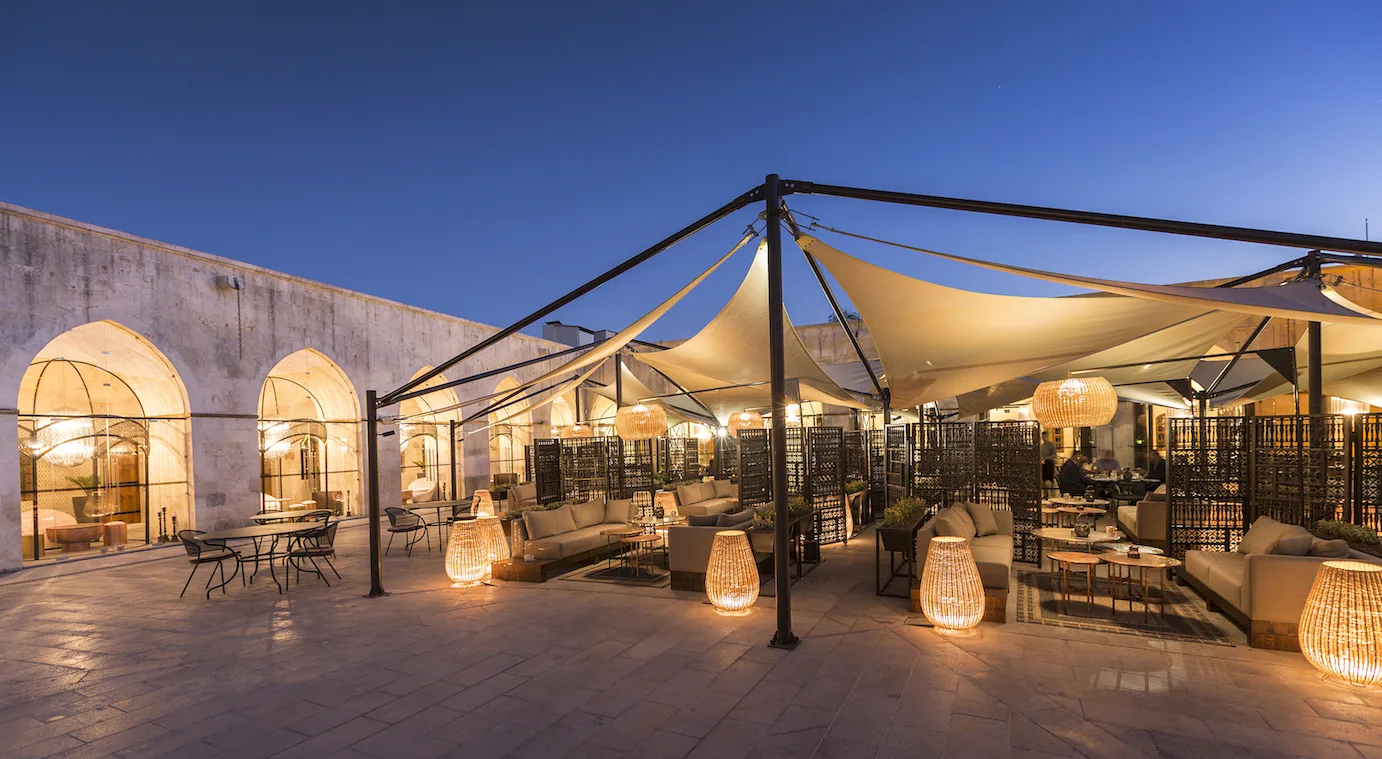
After lying idle for many years, Hışvahan was faithfully restored under the leadership of the Gaziantep Metropolitan Municipality and came back to life in 2016. This careful conservation work was recognised and honoured by the Union of Historical Towns. Today the han has become a lively cultural venue that brings together a restaurant, a cafe and boutique accommodation.
Visitors can sit beneath the arcades of the courtyard and try flavours from the city's kitchen, or rest in the coolness of the historic stone walls over a cup of coffee. Spaces such as the former susamhane section also host events, so Hışvahan today is both a waystation and a gathering place.
When visiting Hışvahan, it is best to explore the whole district as one. You can add the nearby Coppersmiths' Bazaar and Almacı Market to the same walk, and lose yourself in the narrow lanes at the foot of the castle to measure the city's trading history with your own feet. For more historic structures, see our Historic Buildings section, and for the whole cultural world of the city, our Culture Atlas page.
Frequently Asked Questions
Where is Hışvahan?
Hışvahan is in the Şahinbey district of Gaziantep, in the Karagöz Quarter, within the historic Hans district right at the foot of Gaziantep Castle. It sits inside the old trading centre, among the Coppersmiths' Bazaar and the covered bazaars.
When and by whom was Hışvahan built?
The building has no inscription giving its construction date. However, endowment deeds and court registers show that it was commissioned by Lala Mustafa Pasha. The han's endowment deed is dated 1577 (985 in the Hijri calendar), and the structure is thought to have been built in the second half of the 16th century, roughly between 1563 and 1577.
Where does the name Hışvahan come from?
"Hışva" means a cotton pod. The han took this name because in its early years it served as a travellers' inn that welcomed cotton traders and those passing along the caravan route. The building is also known as Lala Mustafa Pasha Han.
What is Hışvahan used for today?
Faithfully restored under the leadership of the Gaziantep Metropolitan Municipality, the han reopened in 2016. Today it serves as a lively cultural venue that combines a restaurant, a cafe and boutique accommodation; its courtyard and former susamhane section also host events.
What else can be seen near Hışvahan?
Because the han sits in the middle of the city's historic trading centre, its surroundings are well worth exploring. The neighbouring Coppersmiths' Bazaar, Almacı Market, and the nearby Zincirli Bedesten and Kemikli Bedesten can all be added easily to the same walk. For copper culture, the Copper Museum is also within walking distance.
Why is Hışvahan important for Gaziantep?
Hışvahan is regarded as one of the city's oldest hans and a long-established trading structure in Gaziantep's historic Hans quarter. It was once the central structure of a larger complex; in this respect it is a living witness both to Antep's trading life in the caravan age and to its traditional architecture.