In the very heart of Gaziantep's historic bazaar quarter stands a stone building that has been raising and lowering its shutters for three centuries: Zincirli Bedesten, the "Chained Covered Bazaar." Named for the heavy chains once used to lock its gates at night, this roofed marketplace was commissioned in 1718 by Darendeli Hüseyin Paşa. It has lived many lives, surviving fire, serving as a courthouse and even a butchers' hall, before reopening as a lively trading hall that today smells of spices, handicrafts and souvenirs, beloved by locals and travelers alike.
Zincirli Bedesten is one of the most visited and still genuinely functioning members of Gaziantep's family of historic buildings. As one of the covered bazaars that carry the city's centuries-old trading tradition into the present day, it is not merely a shopping spot but a living stage of history you can walk straight into.
In this guide you will discover what a bedesten is, who built this one and when, the curious story behind its name, its stone architecture, and what is sold inside its halls today. Within Gaziantep's Culture Atlas, it is one of the best places to feel the pulse of the old city.
What is Zincirli Bedesten and where is it?
A bedesten is one of the most characteristic commercial structures of Ottoman urban culture: a covered marketplace, usually built of stone and protected by heavy gates, where valuable goods could be traded in safety. Zincirli Bedesten is exactly that, a self-contained world of commerce sheltered from the heat and bustle outside, with rows of shops lining a broad, vaulted hall.
The building stands in the historic bazaar quarter of Şekeroğlu, in the Şahinbey district. It lies along Gaziantep's "Culture Road," where the city's old caravanserais, fountain-houses (kastels) and covered markets are tightly interwoven, within walking distance of the centre. Other historic bedestens and hans surround it, so a visit to Zincirli Bedesten really means stepping into the trading heart of old Antep.
History: the work of Darendeli Hüseyin Paşa
The original name of Zincirli Bedesten is Hüseyin Paşa Bedesteni, and it was commissioned in 1718 by Darendeli Hüseyin Paşa. In keeping with the custom of the era, it was built as a charitable foundation (vakıf): the rental income from its shops was intended to sustain a mosque and other pious institutions. Its endowment deed of 1719 records 80 shops, a sign of just how large a trading centre the building was meant to be from the very start.
Over a life spanning more than three hundred years, the bedesten has accumulated many layers. At one point an upper storey was added and used as a courthouse. The fire of 1957 destroyed this added top floor entirely, leaving the structure badly scarred. When it reopened in 1965 its function had changed: for a time it served the livestock and butchery trade and became popularly known as the "Meat Hall" (Et Hali).
The most common explanation for the name "Zincirli" (Chained) is that its gates were once secured at night with heavy chains. Another account holds that chains hanging at intervals along its exterior caught the eye, so the bazaar came to be known this way over time. Locally it is also called "Kara Basamak Bedesteni."
Architecture and highlights
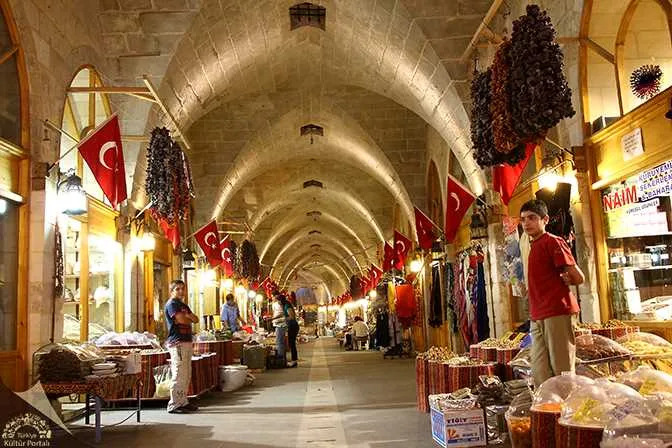
Zincirli Bedesten has a roughly L-shaped plan, formed where two wings, running east-west and north-south, intersect. Built entirely of stone, covered and single-storeyed, it reflects the plain but durable aesthetic of classical bedesten architecture. It has five gates; the inscription above the southern gate was penned by Kusuri, one of the noted calligraphers of the period.
Inside, the 73 shops opened to use after restoration line the hall, each a modest but warm space ranging from roughly 10 to 25 square metres. The high vaulted interior softens and carries daylight inward, and together with the stone floor worn smooth over centuries, it gives visitors a genuine sense of travelling back in time. The building's most striking quality is the calm, authentic atmosphere created by its understated stonework.
Its place in city life
For centuries, Gaziantep's position on the Silk Road made it a city of trade and craft. Its bedestens, hans and kastels are that commercial identity rendered in stone. Zincirli Bedesten is precisely a part of this story: from its founding until the fire of 1957 it served as one of the city's busiest trading centres, a place whose shutters Antep's tradesmen raised at dawn and chained shut at dusk for generations.
Today the building is, for the people of Gaziantep, not just a place to shop but a living part of the city's historic fabric. Continuing the old bazaar tradition, it is, alongside the city's gastronomy and craft culture, one of the stops that most directly conveys to visitors Antep's identity as a city that "produces and sells."
The bedesten today and how to visit
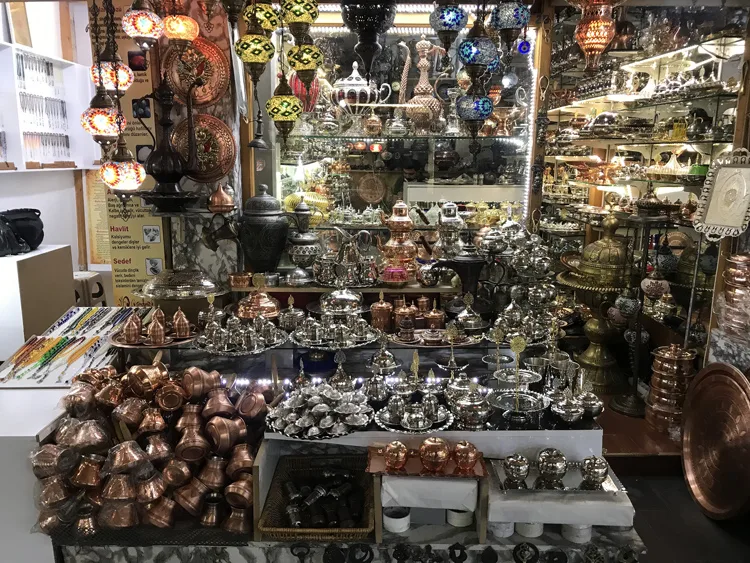
After a comprehensive restoration completed by the regional foundations directorate in 2008, Zincirli Bedesten now operates as a lively, tourism-oriented bazaar. Its shops offer spices, local products, handicrafts, traditional souvenirs and woven goods. Filled with Antep's colourful spice stalls and handmade wares, this authentic setting is an ideal stop for photography enthusiasts and souvenir hunters alike.
Because the bedesten sits in the same quarter as the old city's other historic structures, you can combine your visit with nearby stops. A walk planned together with landmarks such as the nearby Kemikli Bedesten and Hışvahan lets you explore the whole trading heart of old Antep. The city's museums and other historic buildings are also well worth adding to your route.
Frequently Asked Questions
Who built Zincirli Bedesten and when?
The bedesten was commissioned in 1718 by Darendeli Hüseyin Paşa. Its original name is Hüseyin Paşa Bedesteni, and it was built as a charitable foundation whose income supported pious institutions. Its 1719 endowment deed records 80 shops.
Why is it called "Zincirli" (Chained) Bedesten?
According to the most common explanation, its gates were secured at night with heavy chains, giving it the name. Another account points to chains that hung along its exterior. Locally it is also known as "Kara Basamak Bedesteni."
Where is Zincirli Bedesten, and in which district?
The building is in the Şahinbey district of Gaziantep, in the historic bazaar quarter of the Şekeroğlu neighbourhood, along the Culture Road and within walking distance of the city centre.
What is sold in Zincirli Bedesten today?
After its 2008 restoration the bedesten became a tourism-oriented bazaar selling spices, local products, handicrafts, woven goods and traditional souvenirs. It contains roughly 73 shops.
What are the architectural features of Zincirli Bedesten?
It is a single-storey, covered structure built entirely of stone. It has a roughly L-shaped plan formed by intersecting east-west and north-south wings, and five gates. The inscription above its southern gate is the work of the calligrapher Kusuri.
Did Zincirli Bedesten suffer a fire?
Yes. A fire in 1957 completely destroyed the added upper storey, which had for a time been used as a courthouse. The bedesten reopened in 1965 and was later restored by the regional foundations directorate in 2008.