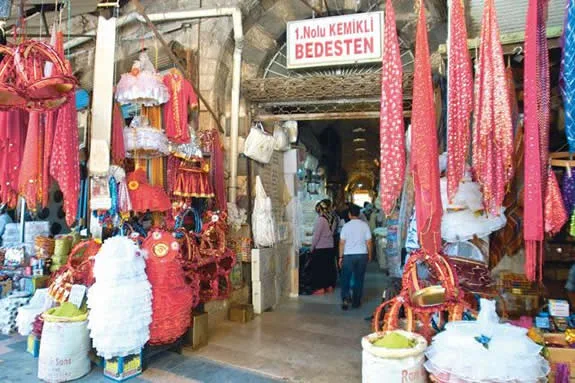
Walking through Gaziantep's narrow bazaar lanes, amid the ring of coppersmiths' hammers and the scent of spices, you come upon a plain yet commanding cut-stone building: Kemikli Bedesten, the "Bone Bazaar." The name sounds odd, but it hides a real story. One of only two bedestens to survive from a city whose trade once revolved around five of them, Kemikli Bedesten is living history, a covered market that still rolls up its shutters and does business every day.
A bedesten is a particular kind of covered market found at the heart of Ottoman cities: a stone-walled hall where valuable goods were bought, sold and safely stored. In a city like Gaziantep, which stood for centuries at the crossroads of the Silk Road and regional trade, bedestens were far more than shopping arcades; they were where the city's economic pulse beat. Kemikli Bedesten is one of the last surviving representatives of that tradition.
Today, set within the old bazaar fabric and surrounded by historic hans and trade lanes, the bedesten draws visitors with both its architecture and the curious tale behind its name.
What It Is and Where It Stands
Kemikli Bedesten is a covered bazaar in Gaziantep's Şahinbey district, within the city's historic market quarter, near Şehitler Caddesi. It sits within walking distance of the centre and is ringed by traditional hans, coppersmiths' lanes and spice sellers.
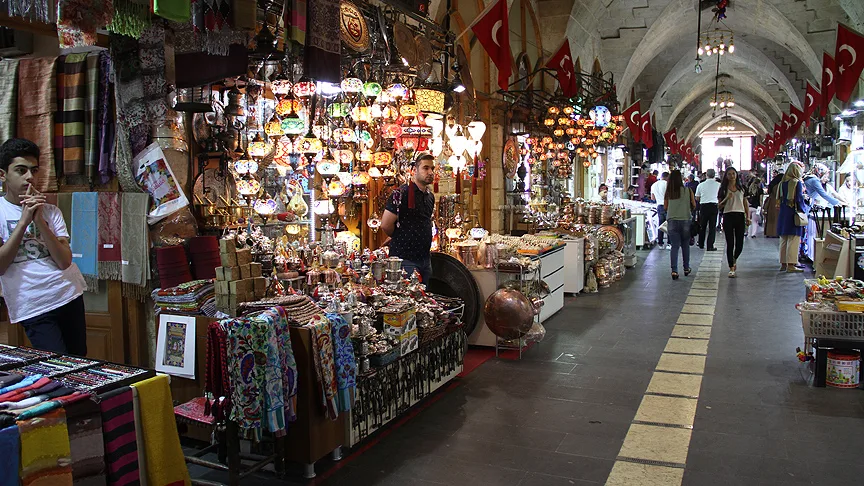
Built of cut stone on a rectangular plan, it consists of two sections, each roughly 15 by 60 metres, and houses 72 shops in total. It has entrances on its eastern and western sides. One of its most striking features is its unusual oval-shaped roof, a detail rarely seen in the city's other markets.
The Secret in Its Name and Its History
The bedesten was commissioned in the 19th century, in 1865, by Mufti Hacı Osman Efendi. Its proper name is in fact Mecidiye Bedesteni. So where does the odd name "Kemikli," meaning "with bones," come from?
As the story goes, when the foundations were being dug, bones came up out of the ground, and locals spontaneously began calling the building "Kemikli Bedesten," the Bone Bazaar. While its official name gradually faded from memory, this colourful folk name has survived to this day. That small story sets the bedesten apart in the bazaar memory of Gaziantep.
Though its official name is Mecidiye Bedesteni, the nickname "Kemikli," born from the bones unearthed during the foundation dig, is the one that stuck. Anyone who knows the bedesten by this name is, in a way, keeping that old excavation story alive.
What's Worth Seeing: The Architecture
Kemikli Bedesten is a solid, functional late-Ottoman structure with no taste for ornament. Its thick cut-stone walls keep the interior cool in the summer heat and sheltered in winter, an ideal architectural solution for a bedesten where valuable goods were stored.
Its two long, corridor-like sections, lined on either side with shops, reflect the classic bedesten layout. The unusual oval roof is the most distinctive architectural detail that sets it apart from other examples in the city. Walking inside, beneath the stone vaults covering the shops, you can still feel the atmosphere of a centuries-old trade.
Its Place in City Life
Gaziantep was once a trading hub with five bedestens, a city whose identity was shaped by commerce. Most of those bedestens vanished over time, and only two have come down to us intact and still functioning: Zincirli Bedesten and Kemikli Bedesten. In this sense, Kemikli Bedesten is one of the two living witnesses to the city's trading tradition.
The bedesten is surrounded by Gaziantep's oldest bazaar fabric. A few steps away lie the Coppersmiths' Bazaar, where masters still swing their hammers, and the colourful stalls of Almacı Market. This whole bazaar complex sits at the centre of local daily life and artisan culture, and the bedesten is an inseparable part of that living fabric.
Today and How to Visit
Kemikli Bedesten still functions as a busy market. Its shops are mostly home to jewellers, towel and textile sellers and trousseau (dowry-goods) merchants, along with a range of stalls offering everything from regional products to souvenirs. In this way the bedesten is not merely a historic monument but a living space where trade still goes on.
The best way to experience it is alongside the historic bazaars that surround it. On the same walk you can see its neighbour Zincirli Bedesten, the coppersmiths' lanes and the old hans. For a fuller outing, building a route through Gaziantep's historic buildings is the finest way to discover the city's market spirit in all its layers.
Frequently Asked Questions
Why is it called Kemikli Bedesten (the Bone Bazaar)?
As the story goes, bones came up out of the ground while the foundations were being dug, so locals began calling it "Kemikli Bedesten," the Bone Bazaar. Its actual name, however, is Mecidiye Bedesteni.
When and by whom was Kemikli Bedesten built?
The bedesten was built in the 19th century, in 1865, by Mufti Hacı Osman Efendi.
Where is Kemikli Bedesten located?
It is in Gaziantep's Şahinbey district, within the city's historic bazaar quarter near Şehitler Caddesi, an easy walk from the centre.
What is sold in the bedesten today?
Its shops are mostly home to jewellers, towel and textile sellers and trousseau-goods merchants, along with regional products and souvenirs.
How many bedestens survive in Gaziantep?
Gaziantep once had five bedestens; only two have survived intact and still in commercial use: Kemikli Bedesten and Zincirli Bedesten.
Are Kemikli Bedesten and Zincirli Bedesten close to each other?
Yes, both stand in the same historic bazaar quarter within walking distance, and can be seen on the same outing along with the coppersmiths' bazaar and the old hans.