In the narrow streets of Gaziantep, the rhythmic hammer-blows that rise at dawn are the messengers of centuries. This is the sound of a copper sheet, annealed in glowing fire, being transformed in a master's hands into an ewer, a coffee pot or a vast cauldron. Coppersmithing is one of Gaziantep's deepest-rooted crafts: a tradition of mastery passed from generation to generation, holding together the heat of the metal, the weight of the hammer and the worth of patience. In the city this craft is still kept alive in working workshops, within a genuine trading bazaar.
The art of working copper and giving it the identity of a household, kitchen or decorative object is as old as humanity itself. Gaziantep has been counted for centuries as one of the strongest centres of this art in Anatolia. The copper objects produced in the city are not merely everyday utensils; with the motifs worked into them, they are also carriers of culture.
What sets Gaziantep coppersmithing apart from its counterparts is the purity of its approach to the material. Here, forming a copper vessel does not mean soldering pieces together; it means heating a single mass of copper and hammering it into a whole. This single-piece philosophy is the signature of Gaziantep workmanship.
What Kind of Craft Is Coppersmithing?
Coppersmithing is the craft of transforming copper, by melting or hammering, into usable vessels, tools and decorative objects. The principal techniques of working copper include hammering, casting, spinning and engraving. The oldest and most arduous of these is hammering: copper, softened by annealing in glowing fire, is slowly brought to the desired form under hammer-blows. Among the finest masters of this demanding method, the coppersmiths of Gaziantep have always stood in the front rank.
Single-Piece Workmanship
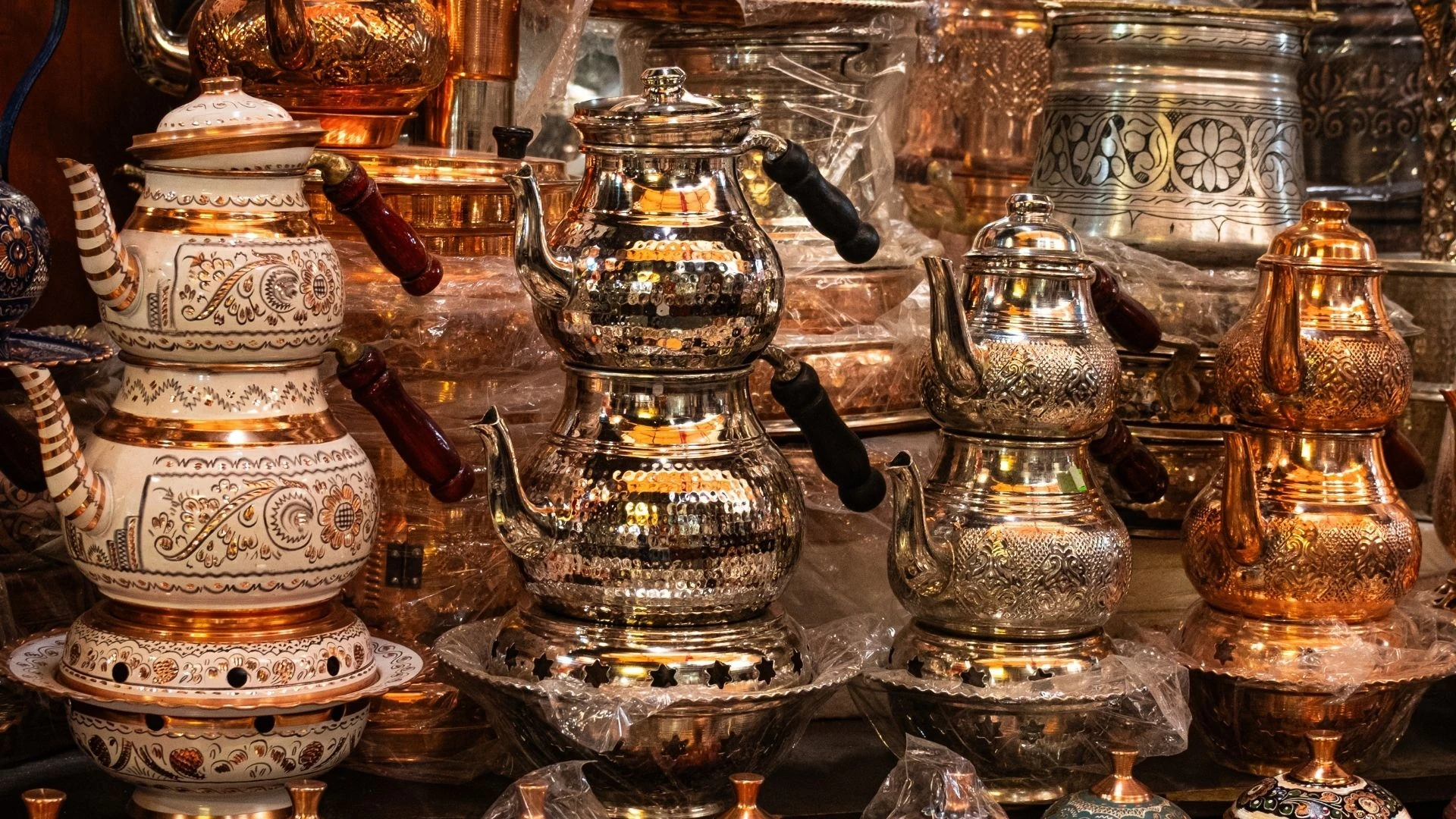
The most distinctive feature of Gaziantep work is that the product is made from a single piece. Joining methods such as soldering or welding are not used; the mass of copper is expanded through repeated hammering and takes its final shape as one whole. The body, handle and rim of a vessel all emerge from the same piece. This requires both great skill and long labour.
Tinning and Ageing
Because copper can be unsafe when in direct contact with food, the inner surfaces of vessels are traditionally tinned, giving a bright, silvery surface fit for use. On decorated pieces an ageing process may be applied: the worked surface is coated with black paint, then cleaned once dry, so that the recessed areas remain black while the raised work stands out. In this way a new copper object takes on the patina of a centuries-old piece.
One Hammer, One Steel Chisel and the Motifs
The distinguishing quality of Gaziantep copper handicraft lies not only in its single-piece construction but in the way its motifs are worked. The master works the surface of the vessel with a single hammer and a single steel chisel. In the technique known as "çalma," motifs are formed by removing small pieces from the main material; every stroke deepens the pattern a little further.
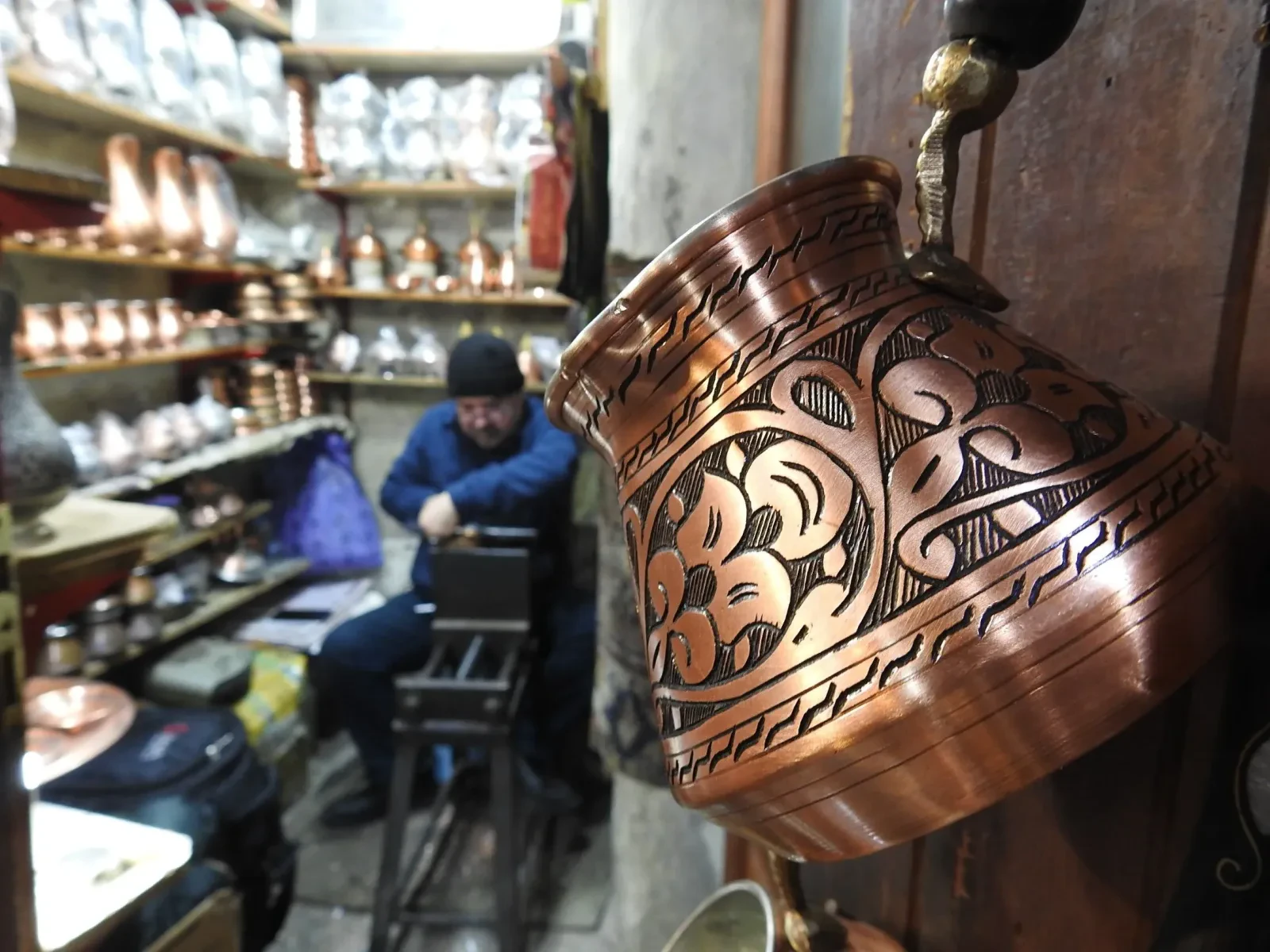
This craft draws on a core repertoire of forty-one main motifs. Most of the patterns are nourished by the Seljuk and Ottoman motifs kept alive in the region for many years; depictions of nature and geometric ornament also spread across the surfaces. A master may, if he wishes, add his own original designs. Working a single piece with such care can take weeks, sometimes months.
"Gaziantep Copper Handicraft" is registered as a mark of origin with the Turkish Patent and Trademark Office. The application was made on 19 July 2010 by the Gaziantep Coppersmiths' Chamber, and registration followed on 5 June 2012 (Registration No. 159). The registration defines the distinguishing features as the product being made in a single piece without soldering, and being worked with one hammer and one steel chisel.
A Trade Passed Down Through Centuries
In the past, the craftsmen working copper and iron in Gaziantep operated in their own bazaars, under their own order. In the early eighteenth century the coppersmiths obtained their raw material from the mines of Anatolia. The craft's concern to preserve this order is reflected in the records of the period: in 1702 the coppersmiths' guild complained that old and new copper brought in from outside was being sold secretly, and it was decided that incoming copper should be distributed and sold within their own bazaar, through the hand of the guild head (the şeyh).
In this period copper was a valuable commodity traded across a wide geography. The Maraş–Tokat–Aleppo–Hijaz line and the İstanbul–Konya–Bursa routes were among the roads named in Antep's copper trade. In the second half of the nineteenth century, the copper goods produced in Gaziantep became an important article of commerce, carrying the city's name well beyond the surrounding regions.
Master and Apprentice: Knowledge Passed in Silence
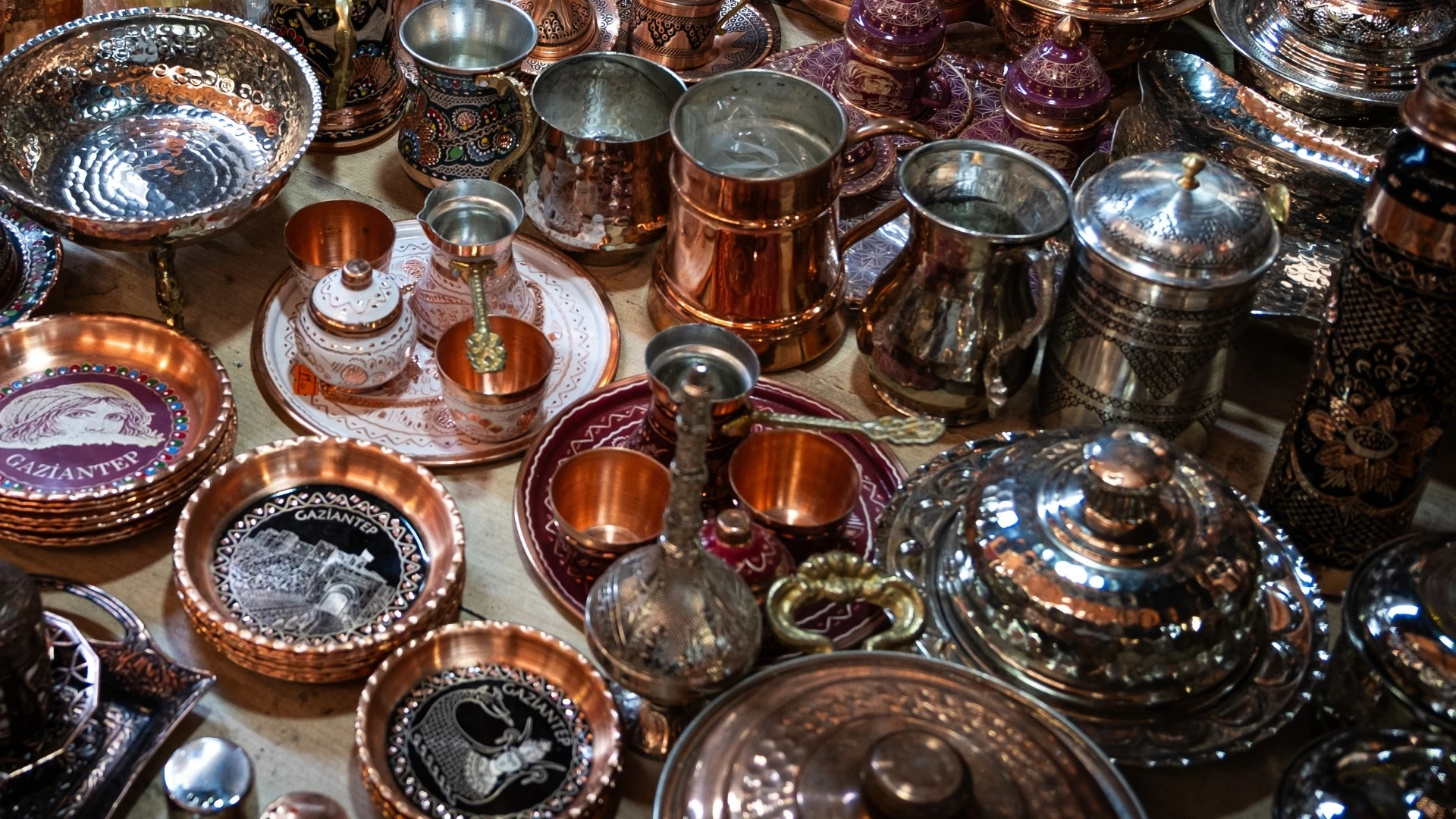
Coppersmithing is a craft learned not from books but from the master's hand. For years the apprentice learns at his master's side, by watching and by trying: at what temperature copper is annealed, at what angle the hammer should fall, which stroke will open up the pattern. This patient process is the one true way the trade has been handed down through the generations.
Yet this handwork-based craft has become difficult to sustain today. The toil of handwork and the spread of mass-produced metal goods make it hard to find young apprentices to take up the trade. Even so, masters with more than half a century behind them continue to keep the tradition alive at their benches in the bazaar.
Copper Today and Where to See It in Gaziantep
The heart of coppersmithing in the city is the Coppersmiths' Bazaar, which has served the same function for centuries. Here the shops stand side by side; on one side hammer-blows ring out, while on the other finished ewers, coffee pots, samovars, trays and decorative pieces are displayed. The bazaar is not merely a place to shop but an open workshop where production can be watched live.
For those who wish to see the works of past masters gathered together, the Copper Museum is an important stop. Built on a private collection, the museum displays a great many copper objects from earlier periods, such as plates, ewers, cauldrons, bowls, trays and pitchers. The giant "masere cauldrons," reaching a metre across at the base and still used in kitchens to boil tarhana, grape molasses and bulgur, are a reminder that this craft is not merely decorative but a genuine part of everyday life.
Coppersmithing is an inseparable part of Gaziantep's rich tradition of crafts, which stretches from weaving to goldsmithing. For visitors to the city, witnessing the birth of a copper vessel is among Antep's most authentic experiences.
Sources
- Turkish Patent and Trademark Office (TÜRKPATENT), Geographical Indications — Gaziantep Copper Handicraft (Mark of Origin, Registration No. 159; application 19 July 2010, registration 5 June 2012)
- T.C. Kültür ve Turizm Bakanlığı, Kültür Portalı — Gaziantep Bakır El İşlemeciliği
- Kars, R. (2018). XVIII. Yüzyılın İlk Yarısında Ayntablı Tüccarların Faaliyetleri Kapsamında İç Ticarete Konu Olan Emtia. Gaziantep Üniversitesi Ayıntâb Araştırmaları Dergisi, 1(1), 36-48.
Frequently Asked Questions
What distinguishes Gaziantep coppersmithing?
Its most distinctive feature is that the product is made from a single piece without soldering, and worked using a single hammer and a single steel chisel.
Does Gaziantep copper handicraft have a geographical indication?
Yes. "Gaziantep Copper Handicraft" is registered as a mark of origin, applied for by the Coppersmiths' Chamber (application 2010, registration 2012, Reg. No. 159).
Why is tinning done?
Because copper can be unsafe in direct contact with food, the inner surfaces are tinned, providing a bright surface that is safe to use.
Where is coppersmithing kept alive?
Production continues live in the centuries-old Coppersmiths' Bazaar, while the works of past masters are displayed at the Copper Museum.
What copper objects are produced?
Ewers, coffee pots, samovars, trays and decorative pieces, as well as the giant "masere cauldrons" used to boil tarhana, grape molasses and bulgur.
How long does making a copper vessel take?
It varies with the intensity of the work; shaping a single piece can take days, and the careful working of motifs can take weeks or even months.