The Emine Göğüş Culinary Museum, opened in 2008, is Türkiye's first culinary museum, telling the story of Gaziantep's world-famous food culture through the rooms of a historic Antep mansion, with wax figures and traditional utensils. The museum reveals not only what the city eats but how it prepares, preserves, shares and ritualises its food as a whole way of life. In this sense it gathers in one place the centuries of accumulated heritage behind Gaziantep's admission to the UNESCO Creative Cities Network in the field of gastronomy in 2015.
The building that houses the museum is itself an exhibit: a house built in 1904 that carries all the refinements of traditional Antep mansion architecture. The scenes, tools and dishes displayed here were not brought to the city from elsewhere; they are a native heritage drawn from Gaziantep's own table, its own fields and its own larder. You can discover the city's entire culinary heritage in the Gastronomy Atlas, and see the collection the museum belongs to on the Gaziantep museums page.
This article covers the museum's historic building and the story of Emine Göğüş whose name it bears, the logic of its displays, the re-creations that must be seen, and a discovery guide for visitors.
Architecture and the History of the Building
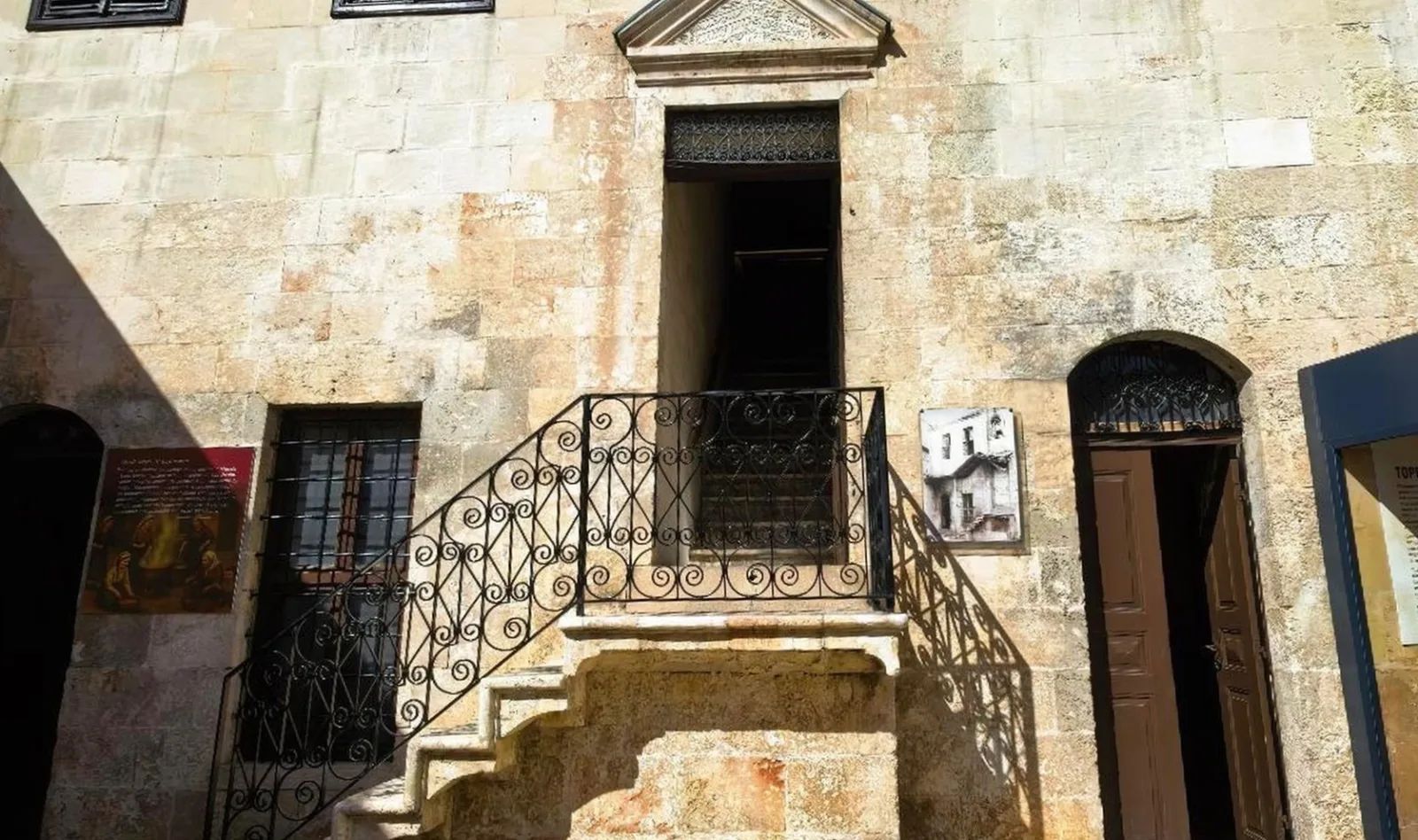
The museum occupies a two-storey traditional Antep house built in 1904, also known locally as the Kethüdazade (Göğüş) İbrahim Efendi Mansion. The building was restored by the Gaziantep Metropolitan Municipality and opened as a culinary museum in 2008. The mansion's inner courtyard, called "Abı Hayat," reflects the fabric of the traditional Antep house; in this section there is a small pool built to bring coolness during the hot summer months. A tour of the museum should begin by reading this original architecture before moving on to the scenes.
One of the mansion's best-loved details is the double-ring knocker on its ornately worked entrance door. When the door was struck with the thin ring it meant the arriving guest was a woman, and when struck with the thick ring it meant a man — so it was understood which member of the household should open the door even before it was opened. This small detail shows that the architecture of the house was shaped not only by aesthetics but also by privacy and etiquette.
The museum takes its name from Emine Göğüş. The mansion is the house where Ali İhsan Göğüş, one of Türkiye's first Ministers of Tourism and Information, was born; the estate was donated to the Gaziantep Municipality by Ali İhsan Göğüş, who asked that the museum bear only the name of his mother, Emine Göğüş. In this way the building unites a family's memory with the city's shared food culture.
Display and Curation
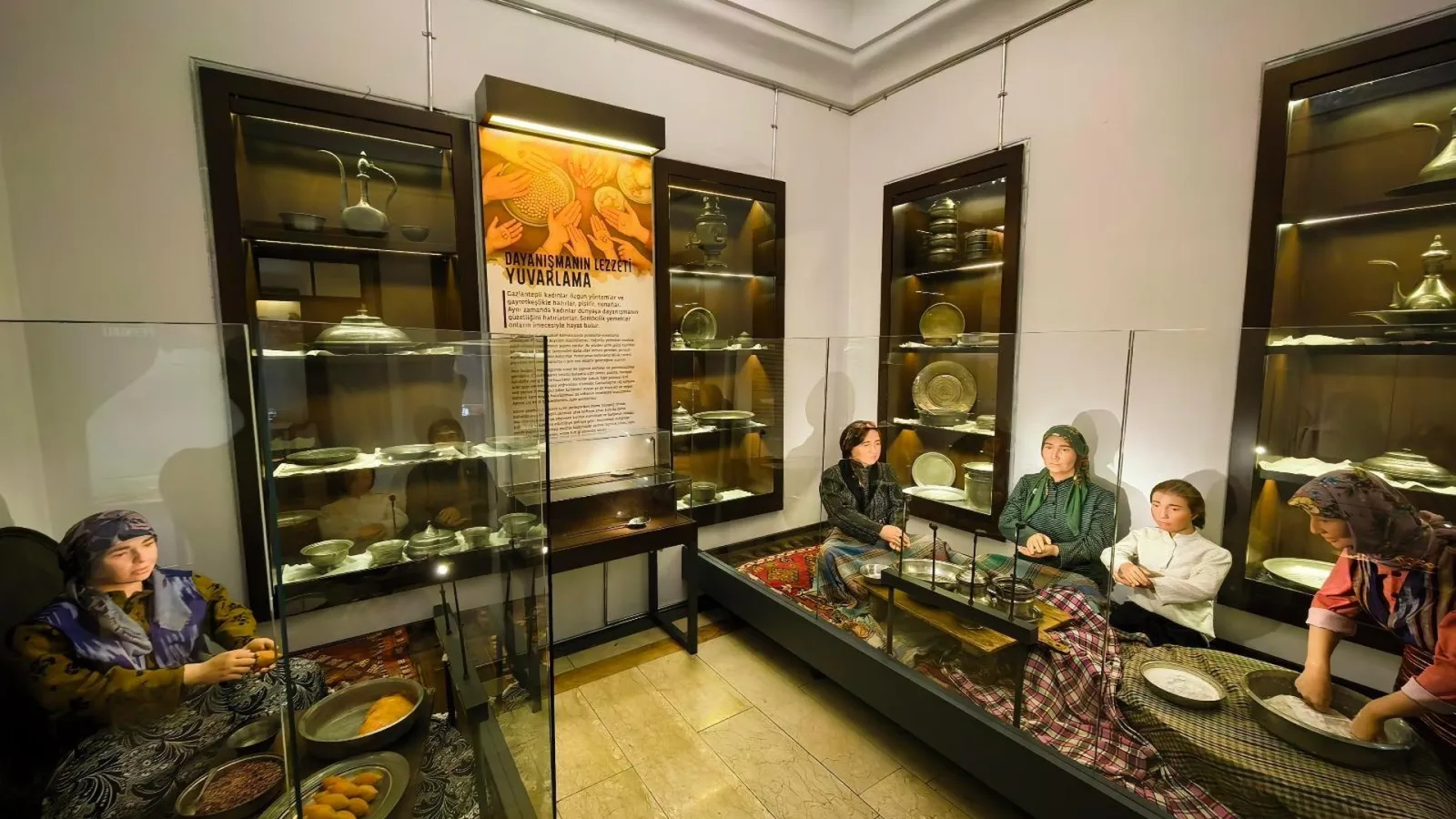
The museum presents Gaziantep cuisine not as a dry row of display cases but as a living culture. The rooms across the two floors of the mansion are arranged through scenes brought to life with wax figures in regional dress, the kitchen tools and utensils used in the past, photographs of dishes and explanatory panels. (The figures here are not mummies but wax models.)
The display is divided into roughly fifteen sections that address the different layers of the city's culinary life: the hearth and cooking culture, beverage traditions, the basic components of the cuisine (grains, legumes, meat, vegetables, spices and fruits), preserving-and-storing (winter provision) customs, special-occasion dishes, hospitality, the sahre (picnic) tradition and the order of the table. The upper floor holds display cases of kitchen and table ware, together with a memorial room devoted to the house's son, Ali İhsan Göğüş. This arrangement shows the visitor why Gaziantep cuisine is not merely a collection of recipes but a whole form of social life.
Re-creations You Must See
Preparing Yuvalama
One of the museum's most striking scenes re-creates the preparation of yuvalama, one of Antep's most prestigious holiday dishes, with wax figures in regional dress. Fine rice flour — obtained by milling rice that has been soaked overnight and then dried — is pounded together with lean lamb until it reaches a paste-like consistency and rolled into tiny grains, a process that represents the side of Gaziantep cuisine built on patience and handwork. The secret of the delicate texture that gives the dish its name lies in rolling the rice-based mixture into grains one by one, by hand.
Around the Tandır and the Winter Provision Tradition
Another re-creation presents the scene of a family gathered around the tandır (clay oven) on winter nights; with winter foods such as bastık, pestil and walnuts being shared, this scene reflects Gaziantep's culture of preparing for winter (winter provisioning) and the way the table becomes a meeting place. The preserving-and-storing section makes visible the year-round labour that keeps an Antep larder stocked.
Menengiç and Beverage Culture
In the beverage section, traditional menengiç coffee — made by roasting and grinding the fruits of the wild pistachio (menengiç) tree — and Antep's deep-rooted coffee rituals are re-created. The foldable coffee-roasting tools on display show concretely how this drink was prepared. Regarded as the signature of Gaziantep's beverage heritage, menengiç is an inseparable part of the city's hospitality culture.
The Sahre (Picnic) Tradition
One of the museum's distinctive sections is devoted to the sahre, Antep's tradition of countryside outings and picnics. This area displays the table tools and utensils that families carried on their visits to vineyards and orchards; the scene shows that in Gaziantep eating was not only an indoor affair but a ritual shared in the midst of nature.
Most of the dishes and rituals re-created in the museum still live on at Gaziantep's tables today. It is possible to taste the flavour world of the same culture across a wide range, from Antep desserts to kebabs.
A Visitor's Discovery Guide
- Look at the building first: The mansion's "Abı Hayat" inner courtyard, its cooling pool, its stonework and its double-ring door knocker are exhibits just as important as the museum itself; get to know the building before moving on to the scenes.
- Read the scenes in order: The sections are arranged with a logic that runs from raw ingredient to cooking and on to the table; following this flow makes it easier to grasp the cuisine as a whole.
- Don't skip the memorial room upstairs: The room devoted to Ali İhsan Göğüş explains why the museum bears this name and how a family's memory was given as a gift to the city.
- Add it to the old-city route: The museum is right on the southern skirt of Gaziantep Castle, in the historic city centre; it can comfortably be visited on the same day as an old-city walk that takes in the castle, the surrounding bazaars and the historic bathhouses and inns.
- Combine it with a gastronomy tour: After touring the museum, experiencing the city's baklava makers, kebab houses and morning spreads turns what you have seen into taste.
Summary and Cultural Value
The Emine Göğüş Culinary Museum holds a symbolic importance as the first institution in Türkiye to make Gaziantep's food culture the subject of a museum. By treating food as a whole — not only on the plate but in the field, the larder, around the tandır, at the sahre picnic and in the guest room — it explains most clearly why the city is considered a "city of gastronomy." For every visitor who wants to come to know Gaziantep through its cuisine, it is a starting point to be seen before it is tasted.
Frequently Asked Questions
Why is the Emine Göğüş Culinary Museum important?
It stands out as Türkiye's first culinary museum. It is the first institution to present Gaziantep's food culture as a way of life, from preparation to the table.
Who was Emine Göğüş?
The museum was founded in the mansion where Ali İhsan Göğüş, one of Türkiye's first Ministers of Tourism and Information, was born, at his wish and in the name of his mother, Emine Göğüş.
What is on display at the museum?
Kitchen scenes brought to life with wax figures (preparing yuvalama, around the tandır, menengiç-and-coffee, the sahre tradition), traditional kitchen tools and utensils, winter provisioning and table culture are presented in roughly fifteen sections.
In which building is the museum housed?
It occupies a traditional Antep house built in 1904, also known as the Kethüdazade (Göğüş) İbrahim Efendi Mansion; it was restored by the Metropolitan Municipality and converted into a museum in 2008.
Where is the museum?
It is located in the Karagöz neighbourhood of the Şahinbey district, right on the southern skirt of Gaziantep Castle, in the historic city centre.