 Vegetarian
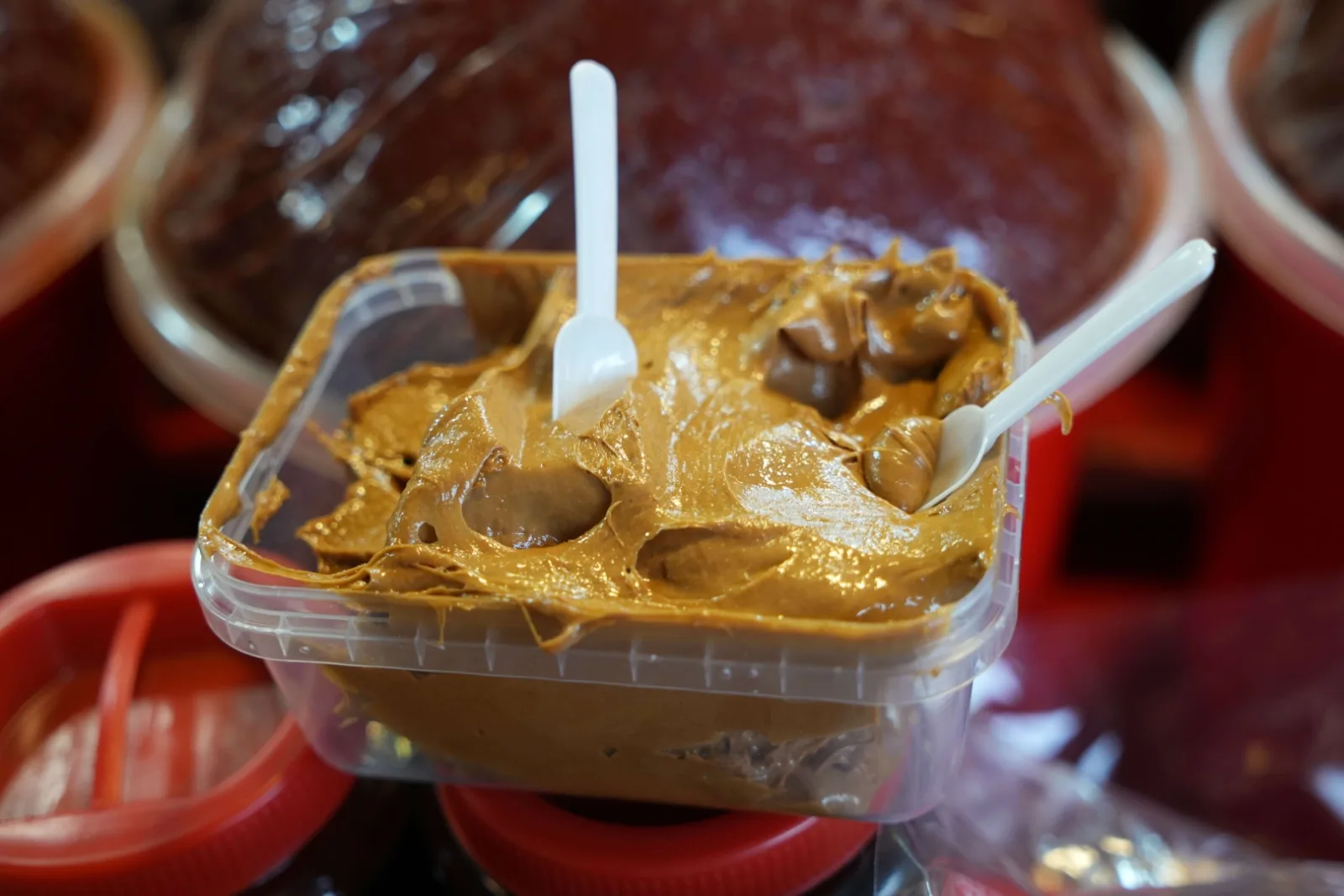
Pekmez is a thick, dark grape molasses made by boiling down grape must for hours until the water cooks off. Gaziantep's registered product, Antep Pekmezi, is not fluid but amber-coloured and of a solid, paste-like consistency, with a very high dry-matter content; it is made from the local Dökülgen grape. Prepared at the autumn grape harvest, this molasses is a deep-rooted Antep food eaten by stirring it with tahini, spreading it on bread, or diluting it with water into a syrup-like tonic drink — a high-energy staple of the winter months.
The identity of pekmez springs from a single idea: carrying the essence of the grape into winter. The must pressed from grapes at harvest is clarified with a mineral earth, boiled down in copper cauldrons, and turned into a keeping, sugar-dense food. Woven into Gaziantep's deep-rooted vineyard tradition, pekmez is one of the staples of the city's winter provisioning and of its morning table; the tahini-and-pekmez pairing is one of the region's most beloved breakfast and energy foods.
What Is Pekmez and How Is It Made?
Pekmez is a traditional Gaziantep product obtained by boiling the must (juice) of ripe grapes for hours so that the water cooks off and a dense, sugar-rich essence is gathered. The character of Antep Pekmezi comes from the length of the boiling and the high dry-matter content: in its registered form it is not a flowing dark liquid but an amber-coloured, paste-like solid. Because the natural sugar of the grape is concentrated, it is used both as a sweetener and as a nourishing food; it is naturally rich in minerals such as iron, calcium and potassium.
Core Components
- Dökülgen Grape: The local grape variety specifically named in the registration of Antep Pekmezi. Thanks to its high sugar content and character, it is well suited to producing a dark, dense molasses; this grape largely determines the colour, taste and consistency of the pekmez.
- Grape Must (Şıra): The fresh grape juice extracted by crushing and pressing the harvested grapes. This must is the sole raw material of pekmez; as it boils, the water cooks off, the sugar concentrates, and it gradually darkens into molasses.
- Clarifying Earth (Ak Toprak / Pekmez Toprağı): A pale, lime / calcium-carbonate-based mineral earth used to clarify the must; it is not an animal product. It settles the cloudiness in the must so the pekmez turns clear, and it is the only non-grape component in the tradition.
From the Grape Harvest to Pekmez
Making pekmez begins in autumn with the grape harvest (bağ bozumu). The gathered grapes are crushed to release their must; in the traditional method the grapes are pressed by treading them underfoot ("tepikleme"), and the must that runs off is strained. The must is left to settle for a while with the mineral ak toprak so that it clarifies; the sediment sinks and the clear part on top is drawn off. This clear must is then boiled for hours in copper cauldrons at the traditional hearth ("mahsere"); as the water cooks off it darkens and turns amber. For Antep Pekmezi the boiling continues until the molasses reaches a solid, paste-like consistency, and the pekmez is set into containers in this dense form.
The History and Cultural Origins of Pekmez
Gaziantep is a historic grape and vineyard region, and pekmez is a centuries-old preservation method built upon that vineyard culture. Turning the perishable fresh grape — by boiling it down and cooking off the water — into a sugar-rich winter food that keeps for a long time is a practice carried out in the region for generations. In this sense pekmez is not merely a sweetener but a deep-rooted way of carrying the harvest into winter without letting it go to waste.
At the Village Hearth, Through Imece
Pekmez is traditionally prepared at village and neighbourhood hearths ("mahsere"); gathering the grapes, extracting the must and the long boiling are often carried out through imece (communal cooperation), with neighbours and especially women working together. The long hours spent at the cauldrons during the harvest season turn pekmez from a mere food into a seasonal ritual. This production, with knowledge passed from generation to generation, sits at the heart of Gaziantep's winter-provisioning tradition.
Antep Pekmezi is registered by TÜRKPATENT as a Geographical Indication (Mahreç İşareti / mark of origin-type GI) under No 509 ("Antep Pekmezi / Gaziantep Pekmezi"); the registration was made on 24.07.2020 on behalf of the applicant Gaziantep Commodity Exchange (Gaziantep Ticaret Borsası). The registration specifies that the product is made from the Dökülgen grape, in the Gaziantep region, by the traditional method, and that it is an amber-coloured, solid paste-like molasses.
The Pekmez Tradition and Ritual in Gaziantep
In Gaziantep, pekmez is a winter-pantry classic; alongside pestil and sucuk it is one of the cornerstones of winter provisioning (kış hazırlığı). In the cold months it is regarded as a high-energy food; in folk tradition pekmez is spoken of as a strengthening "source of healing" (şifa kaynağı), eaten heartily for energy in winter — this is not a medical claim but a traditional belief carried in the region for generations. The most beloved form of pekmez is tahin-pekmez: stirred together with tahini, it takes its place on the table as a classic Antep breakfast and energy food.
How It Is Consumed
The best-known way of eating pekmez is to stir it with tahini and dip bread into it; the rich, faintly bitter taste of the tahini balances the dense sweetness of the pekmez. Pekmez is also spread directly on bread, stirred into yogurt or milk, and eaten by the spoonful. The solid, paste-like Antep Pekmezi can also be diluted with water to a syrup-like consistency and drunk as a beverage; this diluted form is especially loved as an energising winter drink in the cold months.
Why You Should Try It
A spoonful of Antep Pekmezi carries the essence of the grape to the palate in its most concentrated form: this dark, amber-coloured, almost paste-like molasses is the grape harvest set aside for winter. Stirred with tahini, the tahin-pekmez balance it creates is the filling, energising classic of Gaziantep mornings. The truest way to taste it is on a winter morning, with tahini and fresh bread or as a syrup diluted with water, together with the city's deep-rooted vineyard and winter-provisioning culture. While discovering pekmez, you may also look at the region's other traditional drinks: Grape Must Drink, Mulberry Syrup and Menengiç Coffee.
Frequently Asked Questions
What is pekmez and how is it made?
It is a thick, dark grape molasses made by boiling grape must for hours until the water cooks off; the registered Antep Pekmezi is an amber-coloured, paste-like solid molasses made from the Dökülgen grape.
How is pekmez consumed?
Its most beloved form is tahin-pekmez, stirred together with tahini; it is also spread on bread, stirred into yogurt, eaten by the spoonful, or diluted with water and drunk like a syrup.
Does Antep Pekmezi have a geographical indication?
Yes. Antep Pekmezi is registered with TÜRKPATENT under Geographical Indication No 509 (24.07.2020, Gaziantep Commodity Exchange); the registration specifies the Dökülgen grape and the amber, paste-like solid molasses form.
Why is pekmez considered a winter energy food?
Because the grape's sugar is concentrated by boiling, it is a high-energy, mineral-rich food; in the region, alongside pestil and sucuk, it is regarded as part of winter provisioning and as a strengthening food eaten in winter.