 Vegetarian
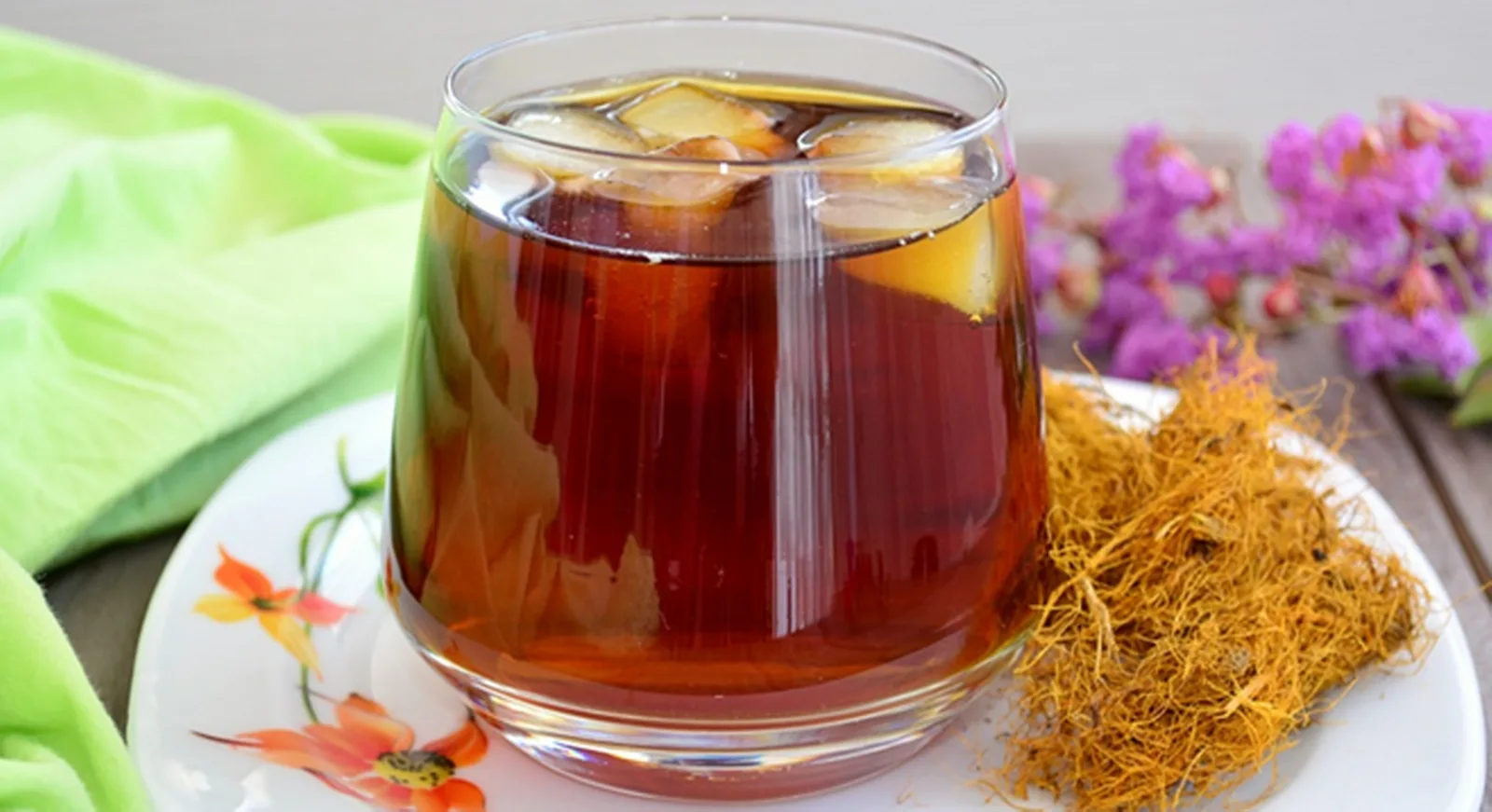
Licorice sherbet (meyan şerbeti) is a dark, ice-cold Gaziantep drink extracted from licorice root steeped in water. It is lightly perfumed with cinnamon, clove and rose water; the registered Antep recipe adds no sugar — the sweetness comes entirely from the licorice root itself. With its cola-black colour, natural foam and balanced bittersweet taste, it is the cooling drink of hot summer days and Ramadan evenings.
The identity of this drink springs from two things: the distinctive taste of licorice root — faintly bitter yet turning honey-sweet — and the figure of the meyancı (vendor) who carries it through the streets. With a gleaming urn on his back and metal cups clashing in his hand, the meyancı wandering the neighbourhood is one of the living symbols of Antep street culture. Licorice sherbet is a part of the city's deep-rooted sherbet tradition that has been formally placed on record through registration.
What Is Licorice Sherbet and What Is It Made From?
Licorice sherbet is a cold traditional sherbet made by steeping licorice root (Glycyrrhiza glabra) in water and drawing its essence into the liquid. The root's fibres and powder are steeped in water; the water is passed through the root repeatedly to concentrate it and then filtered. Its character comes not from an added sweetener but directly from the licorice root itself, which is why the registered Antep recipe uses no sugar. The result is a dark, cola-black, naturally foaming, balanced bittersweet drink — when well made, it is not bitter but poised between a faint root taste and sweetness.
Core Components
- Licorice Root: The base of the sherbet is the root of the Glycyrrhiza glabra licorice plant. Drawn into water, this root gives both the drink's dark colour and its natural sweetness, which arrives without any added sugar.
- Spices and Rose Water: The sherbet is lightly spiced with cinnamon and clove; rose water is added on top to lend a delicate fragrance. These touches enrich the taste without overpowering it.
- Ice: Licorice sherbet is always served ice-cold. The chill both sharpens the taste and makes it a true cooler against the summer heat; because no sugar is added, it never feels heavy.
The Meyancı Tradition
The figure who turns licorice sherbet into a symbol on the streets of Antep is the meyancı. The meyancı carries the chilled sherbet in an ornate brass urn (güğüm) on his back or shoulder — in the registration text, a leather skin (tuluk) is also named. He announces his arrival by clashing two metal cups together to produce a ringing sound; this jingle is the herald that the meyancı has come to the neighbourhood. Pouring the sherbet into the cup from a height to raise the foam is both a display of skill and the drink's signature. With the urn on his back, the ringing cups and the foamy sherbet poured from on high, the meyancı is a figure etched into the street memory of a summer Antep.
The History and Cultural Origins of Licorice Sherbet
Licorice sherbet is part of the centuries-old sherbet tradition of the Anatolian and Ottoman table. Sherbet is a family of cooled drinks made by drawing the taste and fragrance of various fruits, flowers, spices or roots into water; licorice sherbet is the root-based branch of this family. Licorice root has long been valued as a soothing and digestive plant, and when steeped in water it turns into a sweet, refreshing drink. There is no single documented inventor or precise starting date for this drink; licorice sherbet has reached the present as a continuously and unbrokenly sustained regional sherbet tradition.
Within the Sherbet Tradition
In traditional sherbet culture, such drinks carried the meaning both of everyday coolness and of hospitality and offering. Licorice sherbet is the branch of this culture that stepped out onto the street, mingling with the daily life of the people through its travelling vendor. Being root-based, drinkable as sweet without any added sugar, and refreshing, it became a drink especially sought after in the hot season. In Antep, licorice sherbet is remembered both as a street flavour and as the taste of a longing for the past.
"Antep Meyan Şerbeti" (Antep Licorice Sherbet) is registered by TÜRKPATENT with a Geographical Indication (Mahreç İşareti) (application 20.07.2017, registered 01.07.2019; No 441). The registration sets out the licorice root species used, the drink's components, the flavourings such as cinnamon, clove and rose water, the fact that no sugar is added, its dark colour and its ice-cold service. This record formally protects the regional identity of licorice sherbet that has become identified with Gaziantep.
The Licorice Sherbet Tradition and Ritual in Gaziantep
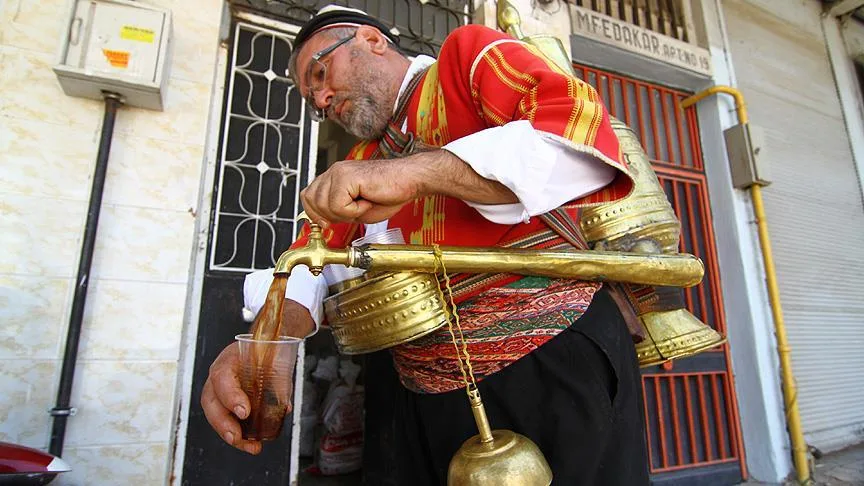
In Gaziantep, licorice sherbet is above all the drink of summer and of Ramadan. On hot summer days the ringing cups of the meyancı are heard in the streets; the ice-cold, foamy sherbet is drunk on one's feet. During the month of Ramadan it is one of the cooling drinks preferred to break the fast at iftar. Offering licorice sherbet as sebil — that is, free of charge — on religious days, at funerals and especially around the Thursday and Friday prayers is also a deep-rooted custom; in this respect the drink has become a part of the culture of sharing and charity as well.
The Sebil Tradition and the Meyancı's Call
The meyancı walks the neighbourhood clashing his stacked metal cups together; as he gives out the sherbet free of charge — paid for by a benefactor and dedicated to the souls of the departed — he traditionally calls out:
"Sebil illah, Hasbetten illah…
Hasan Hüseyin Efendimizin ruhu şad ola,
Hayır sahibinin hayrı kabul ola… Sebil haa!" Roughly: "A free offering, purely for the sake of God; may the souls of our masters Hasan and Hüseyin rejoice; may the benefactor's charity be accepted — sebil!"
The call shows that sebil is not merely a refreshment but part of a tradition of shared charity and prayer, tied to the memory of Hasan and Hüseyin.
How It Is Drunk
Licorice sherbet is a drink taken ice-cold, in one go. The meyancı raises the foam by pouring the sherbet from the urn into the cup from a height; in this foamy, cold state it is most prized when drunk on one's feet. The taste spreads across the palate first as a faint root coolness and then as a sweetness that comes of its own accord. Because no sugar is added, it does not feel heavy; it has a plain but characterful drink that refreshes in the heat.
Why You Should Try It
A cup of licorice sherbet carries Gaziantep's summer streets and deep-rooted sherbet culture straight to the palate: the meyancı's ringing cups, the foam poured from a height, and a sugar-free yet sweet, ice-cold sip. This drink is a distinctive experience, root-based and naturally sweet, not easily met with elsewhere in the world. The truest way to taste it is on a summer day in Antep, from the hand of the meyancı, before the foam has even settled. If you wish, you can round out Antep's beverage culture together with the city's other traditional drinks — Menengiç Coffee, Mulberry Syrup and Grape Must Drink.
Frequently Asked Questions
What is licorice sherbet and what is it made from?
It is a dark, ice-cold Gaziantep drink made by extracting licorice root (Glycyrrhiza glabra) into water, lightly perfumed with cinnamon, clove and rose water; its registered recipe adds no sugar, and the sweetness comes from the root itself.
What is the meyancı tradition?
The meyancı is the vendor who carries the cold sherbet through the streets in an ornate brass urn (or a leather skin) on his back; he announces his arrival by clashing two metal cups together and pours the sherbet from a height to raise its foam.
Does licorice sherbet have a geographical indication?
Yes. "Antep Meyan Şerbeti" is registered by TÜRKPATENT with a Geographical Indication (No 441, registered 01.07.2019); the registration specifies the licorice root, the flavourings, the absence of added sugar, its dark colour and its ice-cold service.
When and how is licorice sherbet drunk?
It is preferred especially in the summer months and at iftar during Ramadan; it is most prized when drunk on one's feet while ice-cold and foamy on top. Offering it as sebil — free of charge — on religious days is also a deep-rooted custom.