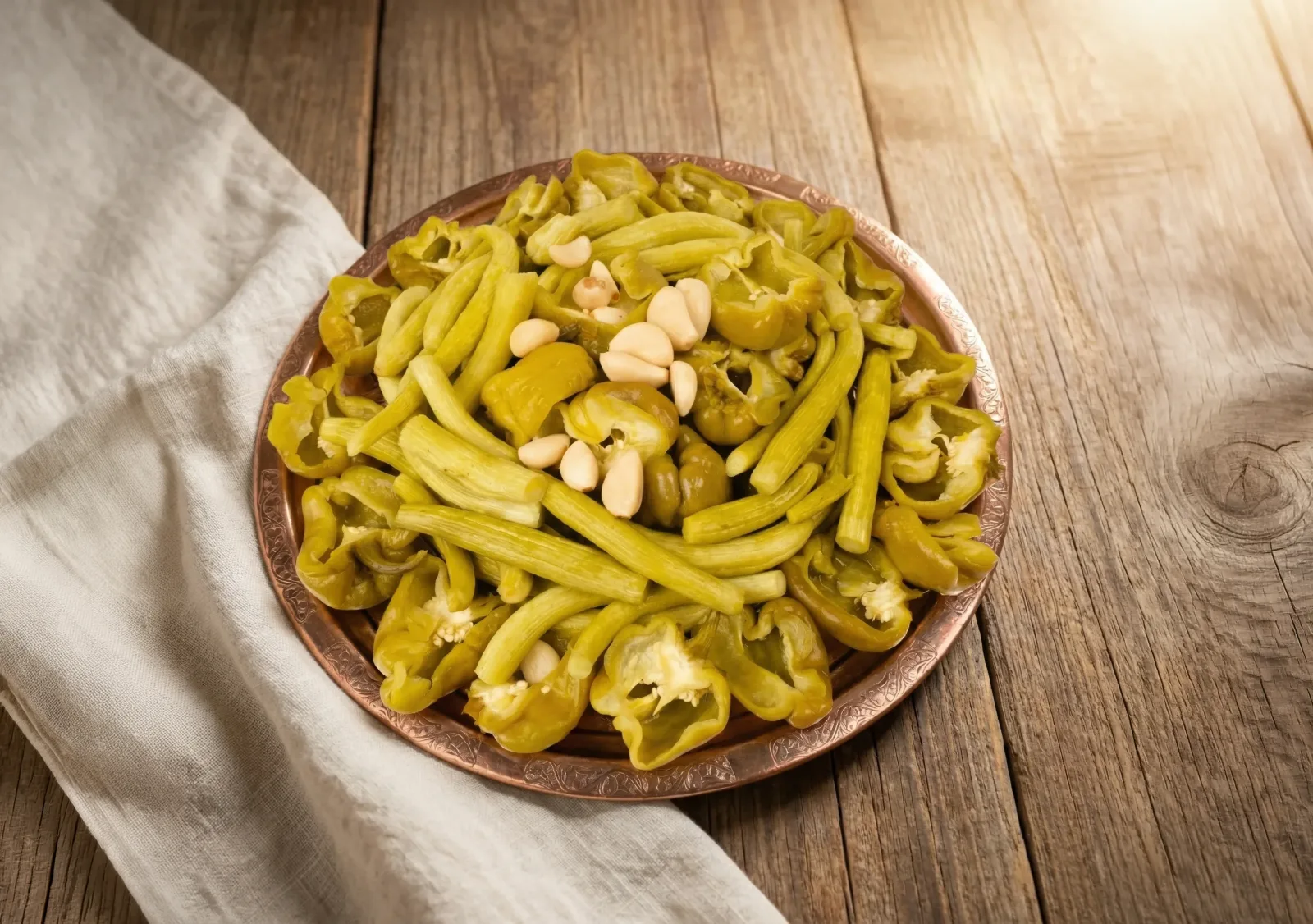
Acur pepper pickle (Acur Biber Turşusu) is a traditional Gaziantep pickle in which the local acur and peppers are brined together in the same jar. Here "acur" is not a salad cucumber; it is a gourd of the melon family — the Armenian-cucumber gourd (Cucumis melo var. flexuosus) — long, slim and fuzzy-skinned. When the crispness of the acur meets the aroma of the pepper in a vinegar-and-salt brine, the result is a deep-rooted companion of the Antep table. As a single registered product, it is recorded as a geographical indication with TÜRKPATENT under the name "Gaziantep Acur-Biber Turşusu."
Acur pepper pickle draws its identity from the harmony of its two main ingredients: the firm, crisp texture of the melon-family acur and the distinctive taste of the pepper. In Antep, a pickle (turşu) is not merely a preservation method but a layer of flavour that balances the table — a sour-salty counter-taste set beside meaty, rich and spiced dishes. Acur pepper pickle is one of the registered, locally rooted examples of this tradition.
What Is Acur Pepper Pickle?
Acur pepper pickle is a pickle obtained by cleaning and cutting the locally grown acur and peppers to size, then leaving them to ferment together in a brine made of salt, vinegar and water. As its name suggests, it has two main components: acur and pepper. In the official registration these two are treated not as separate products but as a single whole; this is why the registered name takes the form "Gaziantep Acur-Biber Turşusu" — hyphenated, a single product. Its character comes from the firm crispness the acur keeps in the brine, together with the aroma and gentle bite the pepper provides.
Defining Characteristics
- Acur (the gourd): The main body of the pickle is the melon-family acur. Its firm, crisp texture, which does not break down even in brine, gives the pickle its body and a characteristic mouthfeel; in this respect acur differs from a cucumber pickle.
- Pepper: The peppers that accompany the acur add a distinctive aroma, colour and gentle bite to the pickle. The mild taste of the acur and the more pronounced flavour of the pepper form a balanced whole in the jar.
- Brine (salt, vinegar, water): The acur and pepper are set together in a brine based on salt, vinegar and water. This brine serves both as a preservative and as the source of the pickle's sour-salty character; fermenting over time, the pickle reaches its distinctive taste.
What Is Acur?
Acur is a gourd of the melon family grown in and around Gaziantep; its botanical name is Cucumis melo var. flexuosus. Although it is often likened to a cucumber, acur is botanically not a salad cucumber but a variety of melon; it is recognised by its long, slim, slightly curved body and its fuzzy, ribbed skin. It is harvested young, before it ripens; thanks to its crisp texture and mild taste it is eaten fresh, stuffed, and pickled alike. The two best-known uses of acur in Antep cuisine are its pickle and Firik Stuffed Acur. This crisp, resilient texture of the acur is the main feature that makes it ideal for pickling.
History and Geographic Origins of Acur Pepper Pickle
Acur pepper pickle is a product of Gaziantep's deep-rooted pickle and market-garden culture. In the region acur is traditionally grown in gardens and market gardens and is plentiful in season; this abundance made it a natural habit both to eat acur fresh and to pickle it for keeping through the winter. Pickling it together with pepper added both flavour and visual richness, and over time acur pepper pickle settled in as a well-known pickle of the region.
The Product of a Preservation Tradition
Making pickles is a deep-rooted way, in Antep, of carrying summer's abundance into winter. Acur and pepper gathered in season are laid into brine and made keepable for months; thus the garden produce of summer turns into the sour-salty companion of the table in the cold months. Acur pepper pickle is a locally specific, generation-to-generation form of this practical preservation tradition. Because the melon-family acur has a firm texture, it stands the long brining process well, and this is why it stands out as the main ingredient of this pickle.
This product is registered as a geographical indication with TÜRKPATENT under Geographical Indication No 1057. Its official registered name, treating acur and pepper as a single whole, takes the form "Gaziantep Acur-Biber Turşusu" (hyphenated, a single product). The registration protects the regional identity of the product, which has become identified with Gaziantep.
Acur Pepper Pickle in Gaziantep Cuisine
In Gaziantep cuisine, the pickle is the balancing element of the table; it serves as a sour-salty counter-taste beside meaty, rich and spiced main dishes. Acur pepper pickle is a deep-rooted player of this role. The firm, crisp acur that comes out of the jar, and the pepper fermented alongside it, refresh the palate after a heavy dish and add both taste and colour to the table. In this respect the pickle is seen as an indispensable accompaniment of the Antep table.
How It Is Eaten
Acur pepper pickle is most often served alongside the main dish, on a small plate. The flavours it most frequently accompanies are pickles made with regional peppers such as İslahiye Pepper and meaty main dishes; the plate of pickles is rarely missing, especially at kebab and rice tables. It also takes its place in a corner of the meze plate, as an element of sour-salty balance. Served together with its brine, the pickle is a refreshing companion that balances the weight of a hot dish; at tables where regional flavours such as Araban Garlic are pronounced, this balance comes even more to the fore.
Why It Matters
Acur pepper pickle represents both the protection of a locally specific ingredient (acur) and the keeping alive of a deep-rooted preservation tradition. The geographical-indication registration makes visible the identity of this pickle, which has become identified with Gaziantep, and supports local production. A jar of acur pepper pickle is, in fact, a small but concrete summary of the city's market-garden culture, its pickling tradition and its sense of balance at the table; this is why, within Antep cuisine, it is not merely a side flavour but a registered regional value.
Frequently Asked Questions
What is acur pepper pickle?
It is a traditional Gaziantep pickle made by brining and fermenting the local acur together with peppers in a brine based on salt, vinegar and water.
What is acur — is it a cucumber?
Acur is a gourd of the melon family (Cucumis melo var. flexuosus); it is not a salad cucumber. With its long, slim, fuzzy-skinned body and its firm, crisp texture, it is ideal for pickling.
Does acur pepper pickle have a geographical indication?
Yes. It is registered with TÜRKPATENT Geographical Indication No 1057; its official registered name, treating acur and pepper as a single product, is "Gaziantep Acur-Biber Turşusu."
What is acur pepper pickle eaten with?
It is usually served alongside the main dish on a small plate; it is eaten especially at kebab and rice tables, on the meze plate and beside meaty dishes, as an element of sour-salty balance.