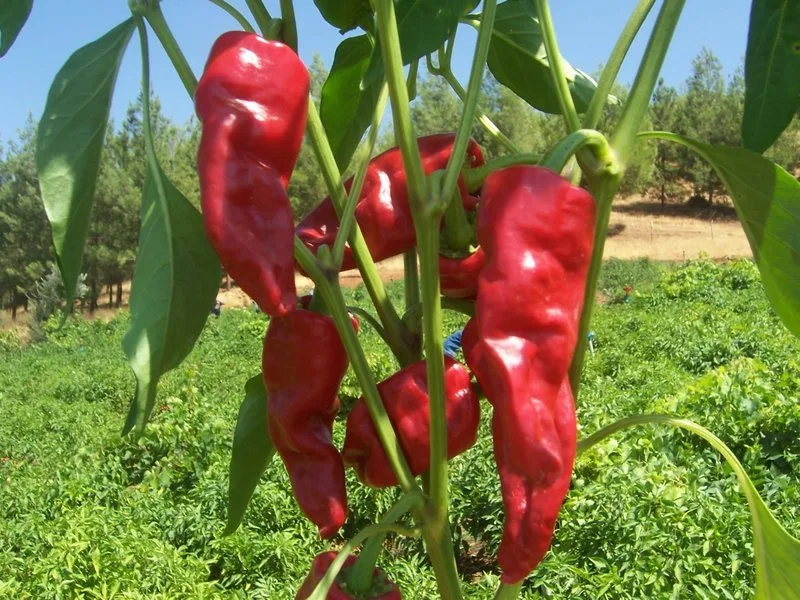
İslahiye pepper (İslahiye Biberi) is a red pepper grown mainly in the İslahiye and Nurdağı districts of Gaziantep. Used both as a table pepper and as a paste pepper, it makes the region a major red-pepper production area, and it is the raw material behind the region's pepper paste. İslahiye pepper is registered as a TÜRKPATENT Designation of Origin (No 991), recorded in 2022; the registration is held by the Gaziantep Chamber of Commerce.
The identity of İslahiye pepper is inseparable from the soil in which it grows: the climate, water and earth of the İslahiye–Nurdağı plain are reflected directly in the pepper's colour, its fleshy body and its aroma. Green when fresh and turning flag-red when ripe, the pepper enters the kitchen both straight at the table and, after drying, processed into paste, flakes and powder. In this respect İslahiye pepper is one of the foundational raw materials feeding the red tone and the spiced character of Gaziantep cuisine.
What Is İslahiye Pepper?
İslahiye pepper is a pepper variety grown in the region — above all in the İslahiye and Nurdağı districts of Gaziantep — that turns red as it ripens. Produced across the wide pepper fields of the area, it is both eaten fresh at the table and dried to be turned into products such as pepper paste, pepper flakes and pepper powder. It owes its character to the geography in which it grows: the region's hot, dry summer climate determines the pepper's colour intensity, the thickness of its flesh and its aroma. İslahiye pepper is known for carrying a medium level of heat; this balance makes it suitable both for direct consumption and for paste making.
Defining Characteristics
- Colour: Green when fresh, the pepper reaches a vivid, flag-red tone as it ripens. This deep red colour is one of the most sought-after qualities in paste and pepper flakes.
- Balance of Heat: İslahiye pepper carries a medium level of heat; it is neither bland nor sharp enough to tire the palate. This balance makes it suitable for a wide range of kitchen uses.
- Dual Table and Paste Use: The pepper is valued both fresh as a table pepper and as a paste pepper. Reaching both the table and dried products from a single crop makes the region's pepper culture versatile.
- Fleshy Body: The fleshy, full body of the ripe pepper gives a good yield in drying and paste making; this structure is one of the reasons the pepper is preferred for paste production in the region.
The İslahiye–Nurdağı Pepper Belt
İslahiye and Nurdağı, to the west of Gaziantep, are known for their fertile plains reaching towards the foothills of the Amanos mountains. These two districts are the heart of the region's red-pepper production and together form a "pepper belt." The pepper grown in the fields is first valued as a table pepper at harvest, and then a large part of it is dried and processed into paste, flakes and powder. The region's climate conditions support air circulation between the plants and help the pepper grow healthy and full. The registration of İslahiye pepper as a Designation of Origin also formally recognises the pepper's inseparable bond with this geography.
History and Geographic Origins
İslahiye pepper takes its name from the district in which it grows and is part of Gaziantep's deep-rooted tradition of pepper cultivation. The İslahiye and Nurdağı plains have long stood at the centre of red-pepper production; this production has shaped both the region's agriculture and its culinary culture. The pepper being so firmly established in the area has made it not merely an agricultural crop but also a symbol of the region's identity.
A Flavour Defined by Geography
The quality of İslahiye pepper is directly tied to the geography in which it grows. The region's soil, water and hot summer climate shape the pepper's colour intensity, its fleshy body and its aroma. It is precisely this geographic bond that forms the basis of the pepper's registration as a Designation of Origin: a Designation of Origin is the type of geographical indication expressing that a product owes all its qualities to a particular locality and cannot be produced with the same characteristics outside that geography. İslahiye pepper being so tightly bound to the İslahiye–Nurdağı area earned it this type of registration.
İslahiye pepper is registered with the Turkish Patent and Trademark Office (TÜRKPATENT) as a Designation of Origin under No 991; the registration took place in 2022 (05.01.2022) and the holder of the registration is the Gaziantep Chamber of Commerce. The product is recorded in the processed and unprocessed fruits and vegetables product group. Only this official registration information is relied upon on this page.
İslahiye Pepper in Gaziantep Cuisine
İslahiye pepper enters Gaziantep cuisine both in its fresh form and through its dried products. On the region's tables the pepper can be eaten directly, but its most widespread use is being dried and processed into paste, pepper flakes and pepper powder. The red colour and the spiced character of Antep cuisine come largely from these processed pepper products; İslahiye pepper is the raw material at the head of this chain.
Which Dishes Use It?
The most important kitchen product of İslahiye pepper is the pepper paste obtained from it; this paste forms the taste and colour base of many Antep dishes, from kebabs to stews. The products obtained by drying the ripe pepper, together with other dried pepper products such as dried stuffing pepper, form the foundation of the regional pantry. Pepper also stands out in spicy, colourful appetizers; for example spicy paste (acılı ezme) is a flavour in which the region's pepper and spice culture is reflected directly.
Why It Matters
İslahiye pepper is one of the foundational raw materials feeding the red tone and the spiced character of Gaziantep cuisine. As a registered Designation of Origin product it represents both the region's agricultural identity and its culinary heritage; it stands at the head of a product chain reaching from paste to pepper flakes. In this respect İslahiye pepper is not merely a field crop but an invisible yet decisive source of flavour behind the Antep table.
Frequently Asked Questions
What is İslahiye pepper and where is it grown?
It is a red pepper grown in the İslahiye and Nurdağı districts of Gaziantep; the region is a major production area for table and paste red pepper.
Does İslahiye pepper have a geographical indication?
Yes. It is registered with TÜRKPATENT as a Designation of Origin under No 991; the registration took place in 2022 and is held by the Gaziantep Chamber of Commerce.
Why is İslahiye pepper known as a paste pepper?
The ripe pepper's deep red colour and fleshy body are very well suited to drying and paste making; in the region a large part of the pepper is processed into pepper paste.
Is İslahiye pepper hot?
It carries a medium level of heat; it is neither bland nor sharp enough to tire the palate. This balance makes it suitable for both table and paste use.