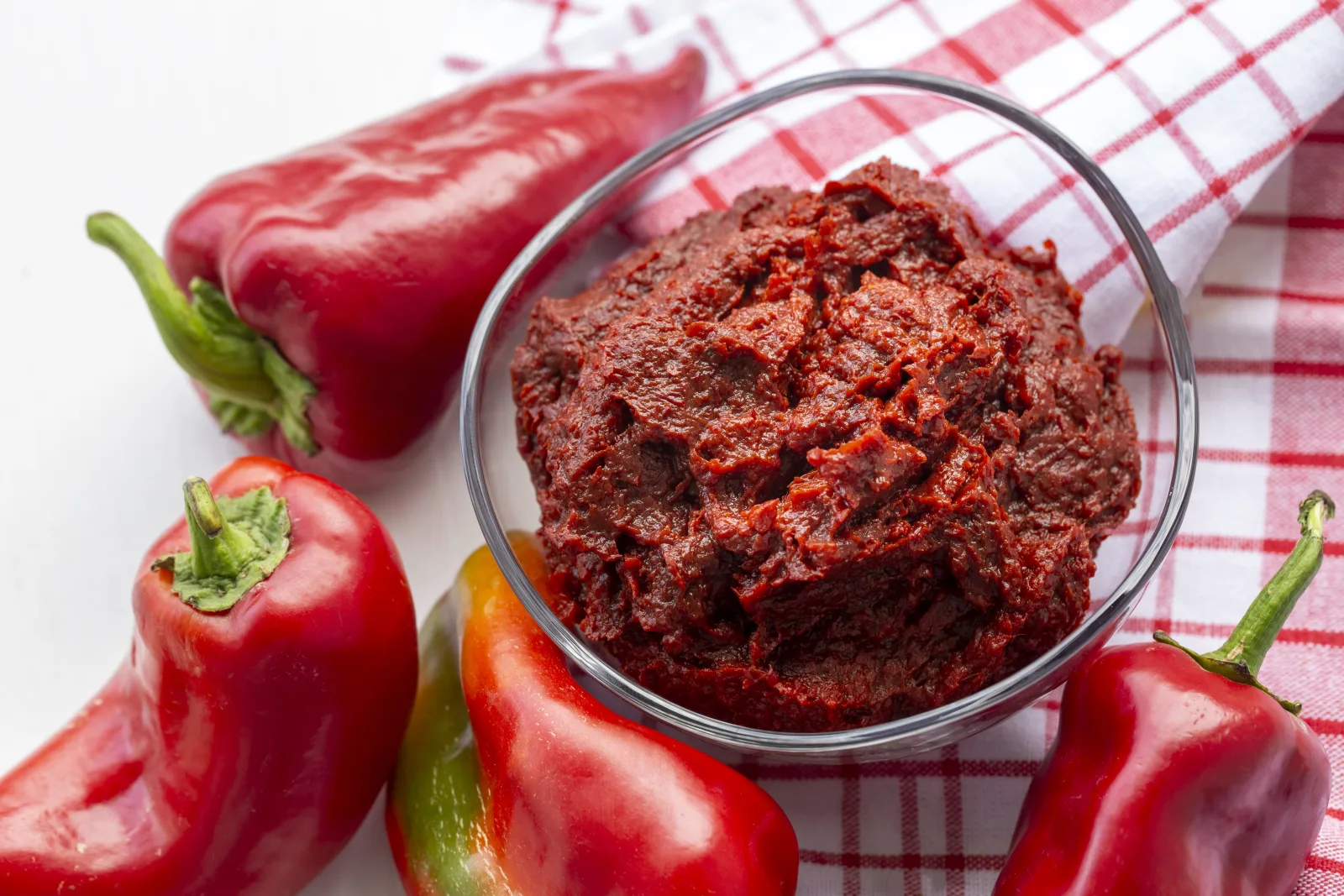
Pepper paste (Antep Biber Salçası) is the deep-red backbone of Gaziantep cooking — red peppers met with salt and thickened, in the Antep tradition, under the sun. Under its official name, it is a geographical indication product registered by TÜRKPATENT as a Geographical Indication (Mahreç İşareti). It comes in two main types, sweet and hot; from kebaps to dolmas, from ezme to soups, this paste sets the taste and colour of much of the city's cooking.
The identity of pepper paste springs from a plain essence: ripe red pepper, salt, and the sun that concentrates them. In Antep, the paste is a staple that most households prepare in bulk at the end of summer and keep through winter to lend depth to their dishes. In this sense, pepper paste is not merely an addition; it is one of the foundational flavours on which Gaziantep cuisine is built.
What Is Pepper Paste?
Pepper paste is a red paste made by cleaning and crushing ripe red peppers, blending them with salt, and thickening them until most of their water has gone and they reach a dark, dense consistency. In the Antep tradition this thickening is mostly done under the sun; the pepper pulp is spread out in wide vessels and left in the sun through the day, where it both concentrates and gains its distinctive deep flavour. The result is a full-bodied ingredient that, even in small amounts, gives a dish a strong red colour and pepper aroma.
Defining Characteristics
- Red Pepper: The essence of the paste is the ripe red pepper grown in the region. Whether that pepper is sweet or hot directly determines the type and character of the paste.
- Salt: Salt both balances the taste and helps preserve the paste; it is one of the two basic components of the traditional paste.
- Sun-Thickening: The signature of the Antep method is the slow thickening of the pepper pulp under the sun. This method gives the paste its dense consistency, its dark red colour and its distinctive aroma.
- Sweet and Hot Types: Broadly, pepper paste falls into two types: sweet (mild) and hot. Which one is used depends on the dish being made and on the taste of the table.
Sweet and Hot
In Antep cuisine pepper paste is known in two main forms. Sweet pepper paste is made from red peppers that carry no heat; it gives a dish colour, body and a mild, slightly sweet pepper depth without adding any burn. Hot pepper paste is made from hot peppers and adds a clear heat to a dish. Many Antep homes and tables keep both types; the cook uses one, or both together, according to the heat a dish is meant to have. This twofold structure lets the same paste serve as the base for both gentle and fiery dishes.
History and Geographic Origins
Pepper paste is a product of Gaziantep's deep-rooted red-pepper farming and paste-making tradition. The city's hot, sunny climate suits both the abundant growing of red pepper and the turning of that pepper into paste under the sun. Preparing paste in bulk at the end of summer, when the pepper is at its ripest, and keeping it for winter, is a settled culinary custom passed down through generations in Antep.
The İslahiye–Nurdağı Pepper Belt
Behind Antep pepper paste lies a strong red-pepper growing region in Gaziantep. Much of this production takes place in the pepper belt that covers districts such as İslahiye above all, along with Nurdağı; the region stands out for red-pepper cultivation. The sweet and hot varieties grown in the area supply the raw material for both main types of the paste. This strong agricultural foundation makes pepper paste a product specific to Gaziantep and bound up with its region; İslahiye Pepper, grown in the same belt, is a separate registered product that shows this geography's deep-rooted bond with the pepper.
"Antep Biber Salçası" is registered by TÜRKPATENT as a Geographical Indication (Mahreç İşareti) (Registration No 1222, registered 2022). This registration formally safeguards the product's link to a defined geographic boundary and the requirement that its production take place within that boundary. Gaziantep, in turn, has been part of the UNESCO Creative Cities Network as a City of Gastronomy since 2015; pepper paste is one of the cornerstones of this rich culinary heritage.
Pepper Paste in Gaziantep Cuisine
In Gaziantep cuisine, pepper paste is one of the foundational flavours beneath almost every hot dish. It does not merely give a dish colour; it also adds depth, body and the concentrated aroma of pepper. The "red" character of Antep cooking comes largely from this paste; a spoonful melting in a pot can set the tone of a dish from the start.
Which Dishes Use It?
Pepper paste appears across a very wide part of the Gaziantep table. It is used in everything from the mince of kebaps to the pans of stews, from the filling of dolmas and wraps to cold appetizers. For example, Spicy Paste (acılı ezme), a hot, dense appetizer, draws its red colour and character largely from pepper paste. The paste also holds an important place in the dolma tradition; in dishes such as Nakışlı Dolma, known for its colourful filling, pepper paste lends the filling both colour and flavour. Alongside these, soups, meatballs and many stews owe a part of their taste to this paste.
Why It Is Essential
Pepper paste is an ingredient that makes a large difference in a small amount in Gaziantep cuisine. On its own it can give a dish its deep red colour, its full body and the concentrated aroma of pepper; with its sweet type it lays the base of gentle tables, with its hot type of fiery ones. Much of the reason Antep cuisine has such a distinct identity lies in this paste, kept ready in every home and added with skill to dishes. In short, pepper paste is an essential basic ingredient that carries the colour and character of Gaziantep's dishes.
Frequently Asked Questions
What is pepper paste?
It is a red paste made by blending ripe red peppers with salt and thickening them, in the Antep tradition, under the sun; it is one of the basic ingredients of Gaziantep cuisine.
What is the difference between sweet and hot pepper paste?
Sweet pepper paste is made from peppers that carry no heat and gives a dish colour and depth without any burn; hot pepper paste is made from hot peppers and adds a clear heat to a dish.
Does Antep Biber Salçası have a geographical indication?
Yes. "Antep Biber Salçası" is registered by TÜRKPATENT as a Geographical Indication (Mahreç İşareti) (Registration No 1222, 2022); it is a geographical indication product whose production must take place within the defined geographic boundary.
Which dishes use pepper paste in Gaziantep cuisine?
It is used in many dishes, from kebaps to dolmas and wraps, from appetizers such as spicy paste to soups and meatballs; it gives a dish its red colour, body and pepper aroma.