 Vegetarian
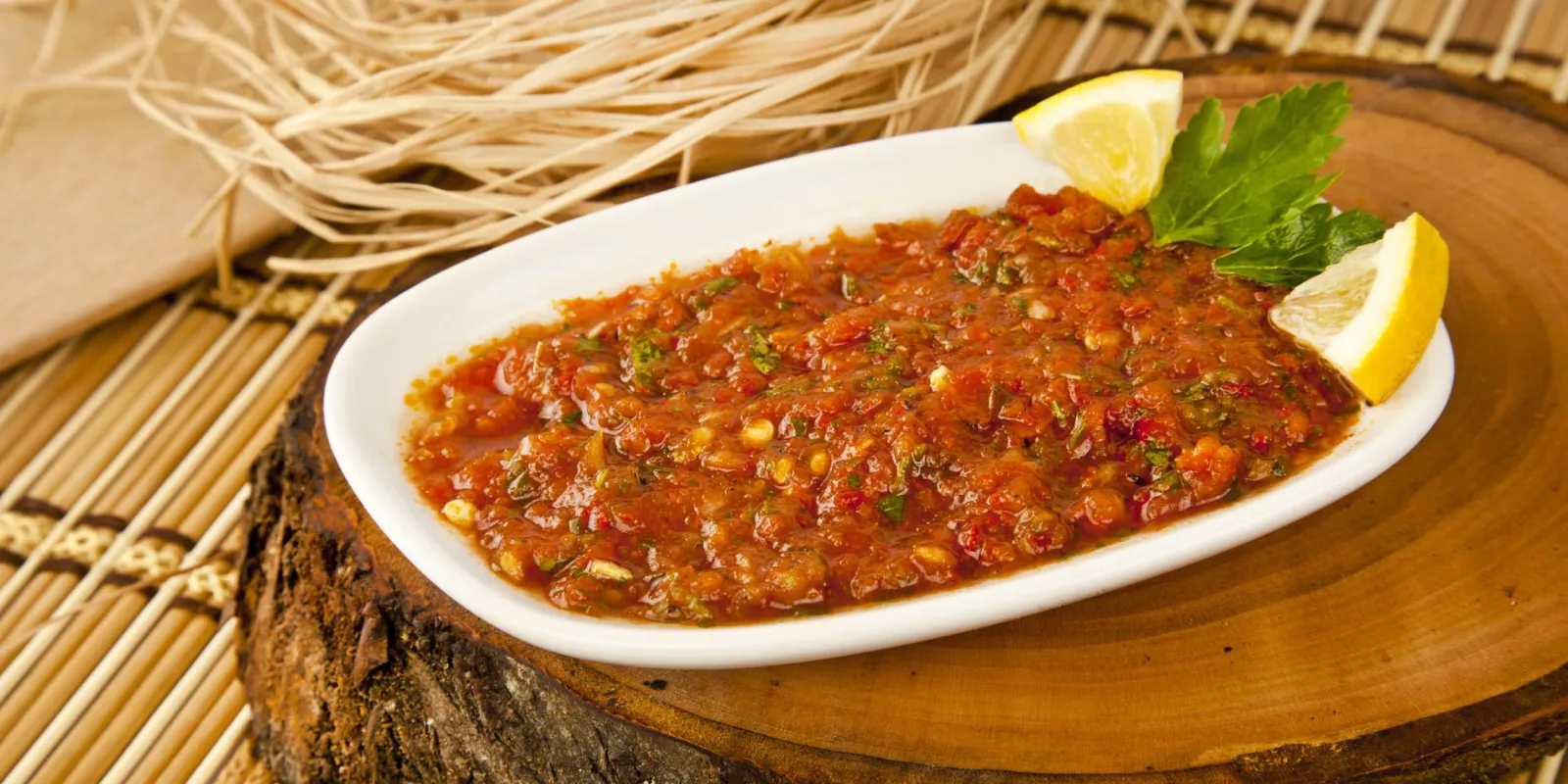
Spicy paste (in Turkish acılı ezme, literally "spicy crushed [meze]") is a cold Gaziantep meze in which tomato and pepper are finely hand-chopped and blended with onion, garlic, parsley, red pepper paste, pomegranate molasses and isot, then served alongside kebab. Although "ezme" comes from the verb "to crush," its texture is not a smooth purée but a chunky, finely chopped relish. With heat and sourness walking side by side, it is an indispensable part of the Southeastern Anatolian meze table and, especially, of Gaziantep's kebab culture.
The identity of spicy paste lies in the taste that arises from a sharp balance of plain ingredients: the sweetness of tomato, the heat of pepper, the sourness of pomegranate molasses and the deep, smoky redness of isot. Though it carries no geographical indication of its own, this meze is a living, beloved element of Antep's rich meze tradition and kebab table, serving as a sharp companion that refreshes and balances a hot kebab beside it.
What Is Spicy Paste (Acılı Ezme) and What Is in It?
Spicy paste is a cold meze made by finely chopping fresh vegetables and spices with a knife and kneading them together. Although its name means "crushed," it is not a smooth purée ground in a machine; in its traditional form the ingredients are diced by hand with a knife, giving it a chunky, slightly juicy, crisp texture — the texture of a relish rather than a paste. Its character comes from the heat of hot pepper walking together with the sourness of pomegranate molasses, and from the smoky redness that isot lends.
Core Components
- Tomato and Red Pepper Paste: The body of the meze is built from finely chopped ripe tomato and red pepper paste (hot or mild); together these give the ezme its red colour and its full base.
- Hot Pepper and Isot: The heat comes from finely chopped fresh hot/long green pepper and dried red pepper flakes. Gaziantep's signature is the use of isot (Antep pepper) — sun-dried after roasting, smoky and deeply sweet-hot.
- Onion, Garlic and Parsley: Finely chopped onion or spring onion, crushed garlic and plenty of chopped parsley give the ezme its freshness and aroma.
- Pomegranate Molasses and Lemon: The main souring agent is pomegranate molasses (nar ekşisi), a signature of Antep cuisine; lemon juice is sometimes added too. This sourness balances the heat of the meze and cuts the fat of the kebab.
- Olive Oil, Dried Mint and Sumac: Olive oil drizzled over the top, dried mint rubbed in, salt and sumac form the spice-and-aroma layer that completes the ezme.
Chopped, Not Blended: the Antep Signature
What sets spicy paste apart in Antep is that it is most often prepared not as a smooth purée but as a meze finely chopped with a knife. The ingredients are not ground into mush in a food processor; they are diced piece by piece, visibly, and kneaded by hand. Beyond this chopped texture, the Antep signature is the sourness of pomegranate molasses, the smoky heat of isot and the contribution of sumac. This balance lifts the ezme out of being merely "a hot sauce" and turns it into a multi-layered meze in which heat, sourness and sweetness walk together.
The History and Cultural Origins of Spicy Paste
Spicy paste is not the invention of a single city but a shared meze of Southeastern Anatolia. It appears in similar forms across the cuisines of the region — Gaziantep, Şanlıurfa, Adana and Hatay alike — each locality lending it its own signature through its particular balance of pepper, paste and sourness. Spicy paste should therefore be treated not as a uniquely Gaziantep invention but as a regional meze that Antep cuisine has adopted and ripened with its own balance of pomegranate molasses, isot and sumac.
The Meaning of Its Name
The word "ezme" derives from the verb "ezmek" (to crush or grind something by pressing); "acılı" is an adjective formed from "acı" (hot, spicy) with the suffix "-lı," meaning "containing heat, spicy." So "acılı ezme" literally means "spicy crushed meze." "Spicy Paste" is therefore a loose gloss of the name: in practice the ingredients are not reduced to a mush but finely chopped with a knife, so the meze's real texture is not a smooth purée but chunky and crisp — closer to a relish than a paste.
Spicy paste carries no geographical indication of its own; it is an unregistered meze shared across many cities of Southeastern Anatolia. No invented registration is claimed for it on this page. One important distinction: despite the similar name, spicy paste should not be confused with "Antep Fıstık Ezmesi" (Antep pistachio paste) — pistachio paste is a separately registered sweet product made from Antep pistachios. Spicy paste, by contrast, is a savoury, hot, cold vegetable meze; the two share only the word "ezme" in their names.
The Spicy Paste Tradition and Ritual in Gaziantep
In Gaziantep, spicy paste is one of the opening mezes of the kebab and köfte table. Beside hot, charcoal-grilled meat, a plate of cold, hot-and-sour ezme; this contrast forms the basic logic of the Southeastern meze table. The heat of the ezme and the sourness of pomegranate molasses refresh the palate between heavy, fatty bites of meat, cut the fat and prepare it for the next bite. In this respect spicy paste is not merely a starter but a companion of the kebab that one returns to throughout the meal.
How It Is Eaten
Spicy paste is most often served as a cold meze beside charcoal-grilled meat dishes such as Onion Kebab. It is eaten scooped up with lavaş or thin flatbread, or smeared onto a bite; the heat and sourness of the ezme balance the fat and weight of the grilled meat. Beside a hot kebab the cool ezme is set out together with raw onion and parsley. The same meze also takes its place at the breakfast table in the region's cuisine, as a spicy and reviving flavour.
Why You Should Try It
A spoonful of spicy paste carries the heat–sourness–sweetness balance of the Southeastern Anatolian meze table straight to the palate: the sweetness of tomato, the sharp heat of pepper, the sourness of pomegranate molasses and the smoky depth of isot all come together. In Antep, the truest way to taste it is beside a charcoal-grilled kebab, with lavaş and raw onion and parsley, eaten cool. Trying it at the same table alongside other Antep mezes such as Muhammara and Gavurdağı Salad is the best way to see the richness of the city's meze culture all at once.
Frequently Asked Questions
What is spicy paste and where is it from?
It is a cold, spicy meze in which tomato, pepper, onion and parsley are finely chopped and blended with pomegranate molasses, red pepper paste and isot. It belongs not to a single city but to the shared cuisine of Southeastern Anatolia, Gaziantep included.
Is spicy paste a smooth purée?
No. Although its name means "crushed," in its traditional form the ingredients are finely chopped with a knife; this gives it a chunky, crisp texture — a relish rather than a smooth purée.
Is spicy paste the same as Antep pistachio paste (Antep Fıstık Ezmesi)?
No, they are completely different. Antep Fıstık Ezmesi is a registered sweet made from Antep pistachios; spicy paste is a savoury, hot, cold vegetable meze. The only thing they share is the word "ezme" in their names.
What is spicy paste eaten with?
It is mostly eaten as a cold meze beside charcoal-grilled meat dishes such as kebab and köfte, scooped up with lavaş. Its heat and sourness cut the fat of the meat and refresh the palate.