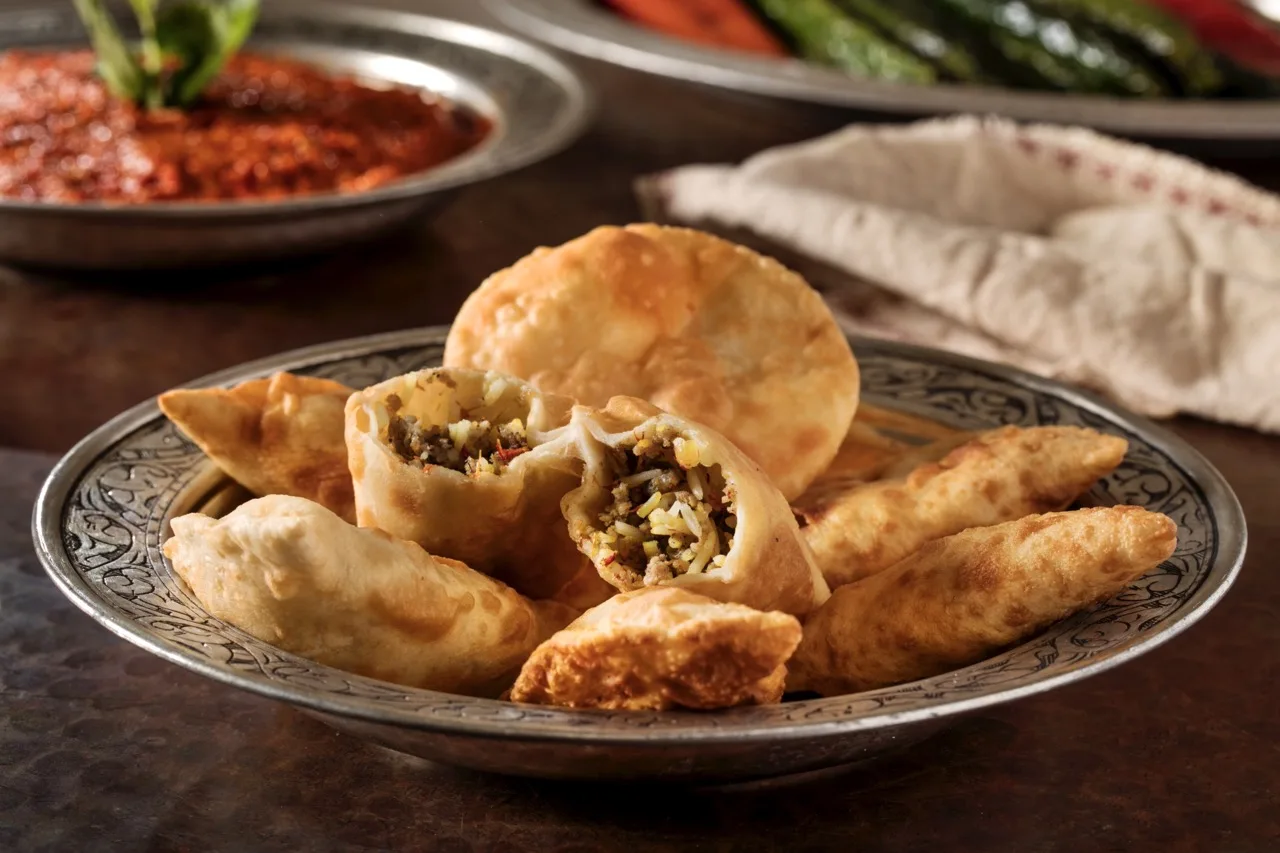
Rice pastry (pirinçli börek) is a registered Gaziantep pastry in which a filling of rice and sheep mince is wrapped in thin dough, folded into a crescent (half-moon) shape, and then deep-fried in oil and served hot. Being fried rather than oven-baked, and its crescent form, set it apart from Antep's other pastries. About 8–10 cm long, these small pastries are known for a crisp exterior and a soft, spiced interior. Because sheep mince is a core component of the filling, rice pastry is a meat dish.
The identity of rice pastry springs from three distinguishing features: the frying technique, the crescent shape, and the full-bodied filling where rice meets sheep mince. The filling is placed in a thin, foldable dough; once the pastry is closed into a crescent, it is fried in hot oil until it forms a golden, crisp crust. The Gaziantep rice pastry was registered as a geographical indication by TÜRKPATENT in 2024.
What Is Rice Pastry and What Is in It?
Rice pastry is a pastry made by filling a thin dough — kneaded from flour, yoghurt, egg, grape vinegar, salt, olive oil and water — with a rice-and-sheep-mince filling, closing it into a crescent and deep-frying it in oil. It stands out for its crisp outer crust and, inside, the softness of the rice and the spiced richness of the mince. Its texture is at its best when served hot.
Core Components
- Dough: Flour, yoghurt, grape vinegar, egg, salt and olive oil are kneaded with water into a thin, foldable dough. This pliable dough lets the pastry take its crescent shape and form a crisp crust when fried.
- Rice and Sheep Mince: The body of the filling is formed by rice together with sheep mince. The rice gives the filling softness and substance, while the sheep mince — as the core component of the filling — gives the pastry a meaty, satisfying identity.
- Onion and Spice: Dried onion, salt and black pepper enliven the filling; clarified butter or butter adds softness and aroma. The regional spice "haspir" (safflower) may also be used in the filling.
- Optional Additions: Some preparations add Antep pistachio kernels and almond kernels to the filling; these enrich its texture but never overshadow the main flavour of the rice and mince.
Another point that separates rice pastry from Antep's other pastries is its cooking technique: it is not an oven-baked pastry but a fried one, cooked in hot oil. This frying gives it a golden, crisp crust, while the crescent shape makes it instantly recognisable by sight.
The History and Cultural Origins of Rice Pastry
Rice pastry has a long history in Gaziantep cuisine. As one of the deep-rooted examples of Antep pastry-making — where dough craftsmanship meets spiced meat fillings with fine skill — it has been a flavour passed from generation to generation. The pairing of rice and sheep mince makes the pastry both filling and a treat fit for festive and guest tables.
The Fried-Pastry Tradition
Rice pastry belongs to a branch distinct from Gaziantep's oven-baked pastries: the fried pastries. Closing the thin dough into a crescent and frying it in hot oil gives the pastry both its characteristic shape and its crisp crust. This technique calls for the pastry to be eaten hot and fresh; it is at its most flavourful served straight after frying.
The Gaziantep Rice Pastry (Gaziantep Pirinçli Böreği) was entered into the TÜRKPATENT geographical indications register as a Geographical Indication (Mahreç İşareti) with No 1545 in 2024. The registration safeguards the thin dough, the rice-and-sheep-mince filling, the crescent shape and the deep-frying technique, and ensures that production remains tied to Gaziantep.
The Rice Pastry Tradition and Ritual in Gaziantep
In Gaziantep, rice pastry — a pastry served hot — takes its place at tables where guests are hosted and at pastry counters. Its small, crescent form makes it a flavour eaten on its own as well as offered several at a time as a table treat. It is preferred eaten right after frying, while the crust is still crisp.
How It Is Served
Rice pastry is served piping hot after coming out of the oil; it is arranged on the plate with its crescent shape and golden crust. The rice-and-mince filling makes the pastry a filling treat in its own right. Like the other examples of the same Antep pastry tradition, rice pastry gives its best flavour while fresh and hot.
Its Place in the Cuisine
Rice pastry is a meaty representative of Gaziantep's rich pastry and dough tradition. Against the meat-free lightness of cheese and vegetable pastries, rice pastry carries the richness of sheep mince; in this sense it is the choice for those seeking a more filling pastry at the Antep table. Alongside hot pastries, it completes the wholeness of Antep cuisine together with the table's other dough dishes and regional flavours such as börek soup.
Why You Should Try It
Rice pastry is a distinctive flavour from the fried branch of Gaziantep pastry-making, safeguarded by registration. The crispness of the thin dough, the softness of the rice and the spiced richness of the sheep mince come together in a small, crescent-shaped pastry. This fried texture — unlike the oven-baked pastries — and the crescent form make it instantly recognisable at the Antep table. The truest way to taste it is in the city where it was born, fresh from the hot oil, crisp and hot.
Frequently Asked Questions
What is rice pastry and where is it from?
It is a registered Gaziantep pastry in which a rice-and-sheep-mince filling is wrapped in thin dough, folded into a crescent shape, deep-fried in oil and served hot.
Is rice pastry baked in the oven?
No. Rice pastry is not an oven-baked pastry but a fried one, cooked in hot oil; this is why it has a crisp exterior and a crescent shape.
What is in rice pastry?
A thin dough based on flour, yoghurt, egg and vinegar; a filling of rice, sheep mince, dried onion, salt, black pepper and clarified butter; optionally Antep pistachio and almond.
Does rice pastry have a geographical indication?
Yes. The Gaziantep Rice Pastry was registered as a Geographical Indication (Mahreç İşareti) with No 1545 by TÜRKPATENT in 2024.