The world-famous flavor of Gaziantep's cuisine lives not only in the hands of its masters but also in a craft that ripens under the sun. Spice and paste production is a body of knowledge born from the city's hot, dry climate and handed down through generations. Red peppers gathered from the fields thickening on trays, sun-dried peppers turning into chili flakes and isot, the careful balance of spices struck in every home: all are part of the invisible mastery that made Gaziantep a city of gastronomy. On this page we tell the story of Antep's paste and spice tradition, its ingredients, its technique, and the identity crowned by a registered geographical indication.
What makes Gaziantep a gastronomic capital is not only its famous dishes but the pantry culture that underpins them. The city has a winter-provisioning tradition strong enough to earn it the name "dry-goods storehouse"; the knowledge that brings peppers, tomatoes, eggplants and countless spices together with the sun and preserves them year-round is a craft in its own right. Paste-making and spice work are among the foundational skills that give the city's cuisine its color, aroma and character.
This craft lives less in large workshops than on the rooftops, courtyards and wide trays of family homes. The knowledge is passed not in words but hand to hand: sensing when the pepper has ripened, knowing how to set a tray to the sun, reading the consistency of paste by eye and by touch, are the fruit of years of apprenticeship.
Antep's Paste Tradition: A Craft That Thickens in the Sun
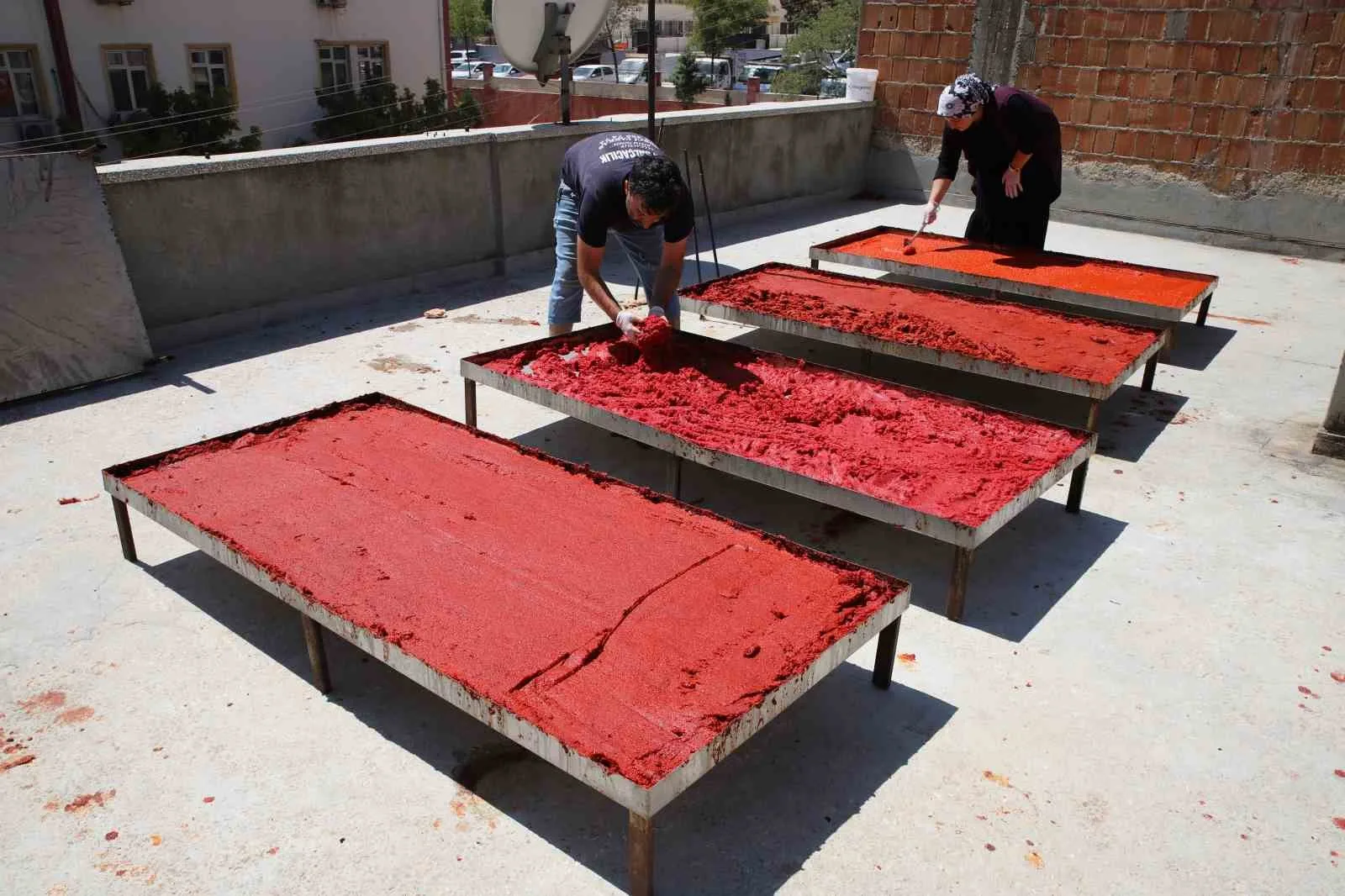
Gaziantep paste departs from the boiling method common elsewhere in the world. The dominant technique here is the "sun paste": red peppers gathered from the fields are sorted, washed and ground; the resulting purée is spread onto copper or steel trays, or sometimes stretched plastic sheets, laid out on rooftops and balconies. A measured amount of salt is added, which both prevents souring and helps set the consistency.
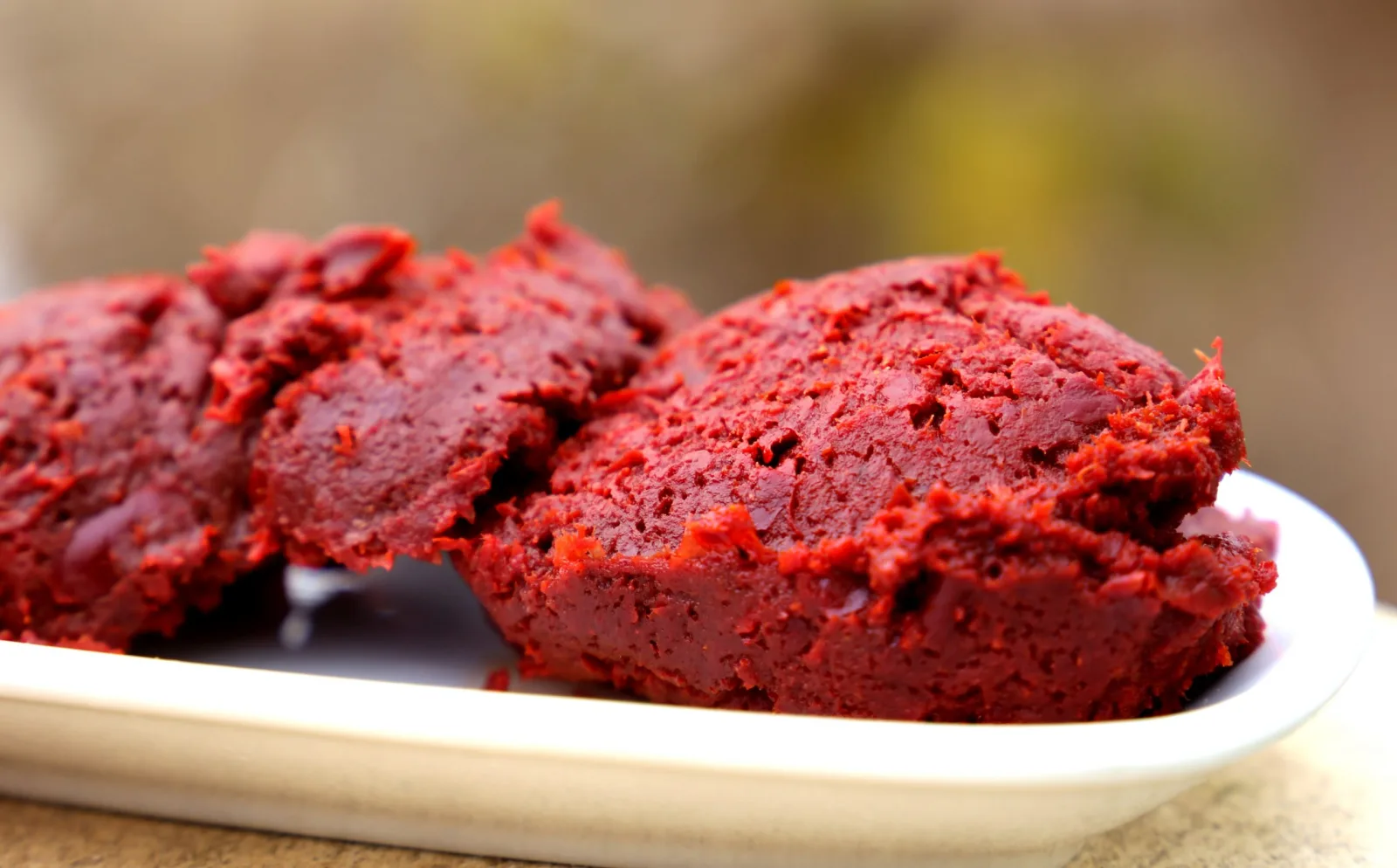
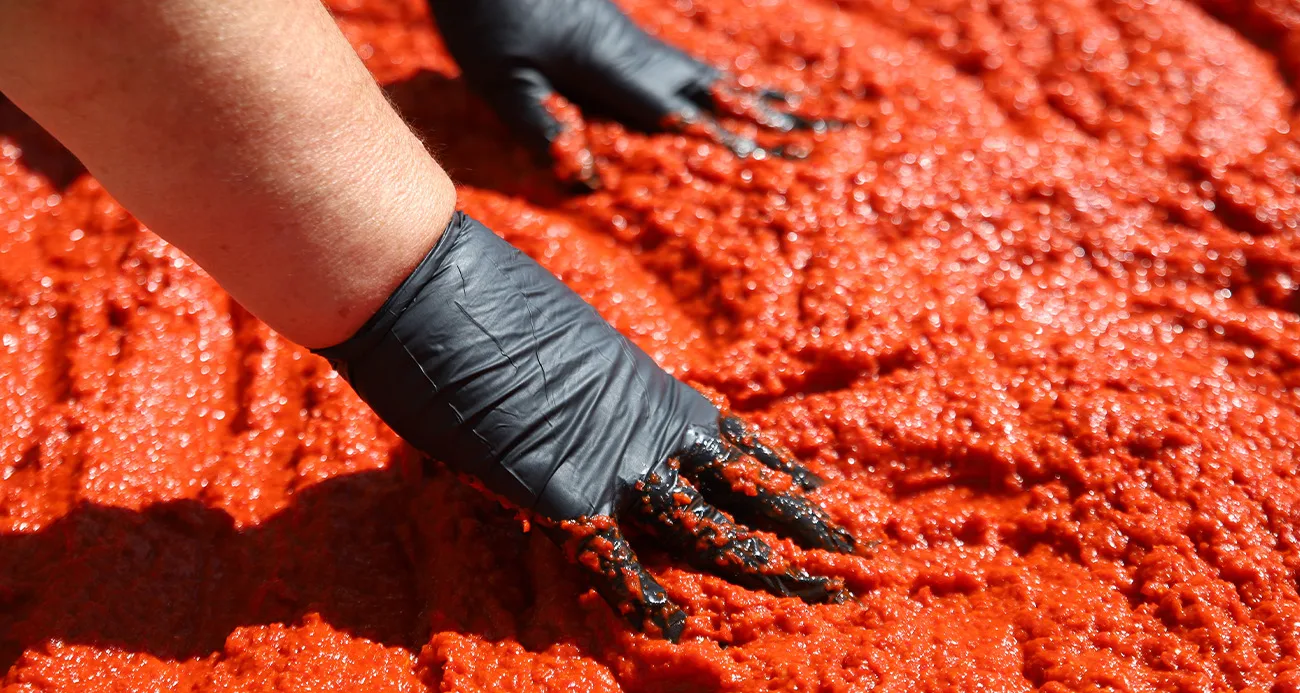
What follows is a matter of patience. The trays sit under the sun for days; stirred every couple of hours, the paste slowly releases its water and thickens. After several days it reaches a glossy, dense and aromatic consistency. This method concentrates the pepper's flavor and color without resorting to anything artificial, and it is precisely this natural thickening that makes Gaziantep paste distinctive.
Chili Flakes and Isot: Spice Cooked by the Sun
The sibling of paste is the family of dried-pepper spices. After harvest, ripe red peppers are spread under the sun and left for days, turned regularly so every side dries evenly. Gaziantep's dry, moisture-free heat offers an ideal drying environment for this work.
The dried peppers are crushed and sieved into chili flakes of varying coarseness. Isot is the most characteristic member of this family: passing through a special processing and resting stage, the pepper turns from deep red to almost black and takes on a faintly smoky, profound taste. With the recognizable smoke note it lends to meat dishes, kebabs and mezes, isot is one of the signatures of the regional kitchen. The contrast between the bright red of chili flakes and the deep smoke of isot reveals the finesse of Antep's spice mastery.
Both are made from sun-dried red peppers. Chili flakes are brighter, sharper and a vivid red; isot, owing to the way it is processed, has a dark, almost brown-black color and a marked smoky taste.
The Balance of Spice and Its Place in Antep Cuisine
The fame of Gaziantep cuisine is closely tied to the careful selection of ingredients and the right balancing of spice. The city's hundreds of dishes -dozens of kinds of meatballs, pilafs, stuffed vegetables and halvas- are unthinkable without this command of spice. In the city's historic bazaars, the spice sellers, with their colorful stalls and scents, are living witnesses to this culture.
Paste and spice are not only a source of flavor on the Antep table but also its memory. For a dish to carry that unmistakable Antep taste, it most often depends on the right paste and the right spice finding their way into it. In this sense, spice and paste production is the invisible infrastructure that holds up the city's entire gastronomic identity. To get to know the raw material itself more closely, you can visit the Pepper Paste page.
Imece: The Community That Keeps a Craft Alive
In Antep, preparing paste and winter provisions is rarely the work of a single household. In August, September and October, neighbors and relatives come together; each day the peppers, paste and produce of one home are prepared collectively. This form of solidarity, called imece, shares out demanding, labor-intensive work while carrying the craft's knowledge from one generation to the next.
This shared labor lifts paste-making out of the realm of mere cooking and turns it into a social tradition. Young hands learn beside the experienced ones how to sort peppers, measure salt and set a tray to the sun. Thus the craft survives not through a written recipe but through shared effort.
Geographical Indication and a Registered Identity
Antep's paste tradition has also been registered with an official identity. Gaziantep/Antep Pepper Paste is registered within the geographical indication system as a mark of origin (mahreç işareti). The registration safeguards the link between the product's particular qualities and the geographical boundaries of Gaziantep, and the requirement that all production stages be carried out within those boundaries.
According to the registration records, Antep Pepper Paste is produced from the conical red peppers grown in the region, which turn a bright red when ripe; its composition includes red pepper and rock salt, and lemon or sweet-lime juice may be used to regulate acidity. By protecting a body of knowledge sustained in homes for centuries, this registration aims to carry the craft of paste-making into the future.
Gaziantep/Antep Pepper Paste is registered with TÜRKPATENT as a mark of origin (Registration No. 1222; application 2018, registration 2022). The applicant body is the Gaziantep Commodity Exchange.
Today: Where the Tradition Continues
Paste and spice production continues today both in homes and through regional producers. A visitor arriving in Gaziantep in late summer can still experience peppers drying on rooftops, spices arrayed in every color in the bazaars, and the distinctive scent of isot. Like the city's other handicrafts, this craft sustains Gaziantep's identity as a living heritage.
If you would like to explore Antep's world of crafts more broadly, visit the Crafts category, and for the city's culinary culture, the Gastronomy section. This store of paste and spice is the quiet foundation that nourishes the whole Antep table, from sweet traditions such as the Art of Baklava to its meat dishes.
Sources
- Türk Patent ve Marka Kurumu (TÜRKPATENT), Coğrafi İşaretler Portalı — Gaziantep/Antep Biber Salçası (Mahreç İşareti, Tescil No: 1222).
- T.C. Kültür ve Turizm Bakanlığı, Gaziantep İl Kültür ve Turizm Müdürlüğü — İlimize Ait Tescillenmiş Coğrafi İşaretli Ürünler.
- Kars, R. (2018). XVIII. Yüzyılın İlk Yarısında Ayntablı Tüccarların Faaliyetleri Kapsamında İç Ticarete Konu Olan Emtia. Gaziantep Üniversitesi Ayıntâb Araştırmaları Dergisi, 1(1), 36-48.
Frequently Asked Questions
Why is Gaziantep paste made in the sun?
Gaziantep's dry, moisture-free heat is ideal for thickening pepper naturally on trays rather than boiling it. This "sun paste" method concentrates the pepper's color and aroma.
What is the difference between isot and chili flakes?
Both are made from sun-dried red peppers. Chili flakes are bright and vivid red; isot, due to special processing, is dark, almost black, with a faintly smoky taste.
Is Antep Pepper Paste a registered geographical indication?
Yes. Gaziantep/Antep Pepper Paste is registered with TÜRKPATENT as a mark of origin, requiring all production stages to take place within Gaziantep's geographical boundaries.
What role does the imece tradition play in paste-making?
Imece is when neighbors and relatives prepare each household's paste together in turn. It both shares the labor-intensive work and passes the craft's knowledge between generations.
In which season are paste and spices prepared?
Peppers and other winter provisions are generally prepared in August, September and October, when the peppers ripen.
What is Antep Pepper Paste made from?
It is made from locally grown conical red peppers that turn bright red when ripe; its composition includes rock salt, and lemon or sweet-lime juice may be used for acidity.