In Gaziantep, baklava is not merely a dessert but a craft handed down from one generation to the next. On vast marble counters, in workshops where flour dust hangs in the air, sheets of yufka are rolled to the thinness of a rose petal with metre-long pins by masters who have given years to the trade. Baklava making demands an intimate knowledge of the right dough, the rhythm of the rolling pin, and the language of Antep pistachio and pure butter. This page looks past the sweet on the plate to the mastery, technique and master-apprentice tradition that bring it into being.
The dessert that introduced Gaziantep's culinary identity to the world has developed in the city as a discipline distinct from cookery in its own right. Here, the person who makes baklava is not simply called a confectioner; he is a craftsman. For the secret of fine baklava lies not in a single recipe but in the skill of the hand that rolls the yufka, the eye that reads the heat of the oven, and the palate that knows the consistency of the syrup. This knowledge is not learned from a book but through an apprenticeship that lasts for years in the workshop.
The city's baklava workshops wake in the early hours to the sound of the rolling pin. That rhythmic tapping is a sign that, in Gaziantep, a craft is still carried on by hand, with patience and with mastery.
Baklava Making as a Craft
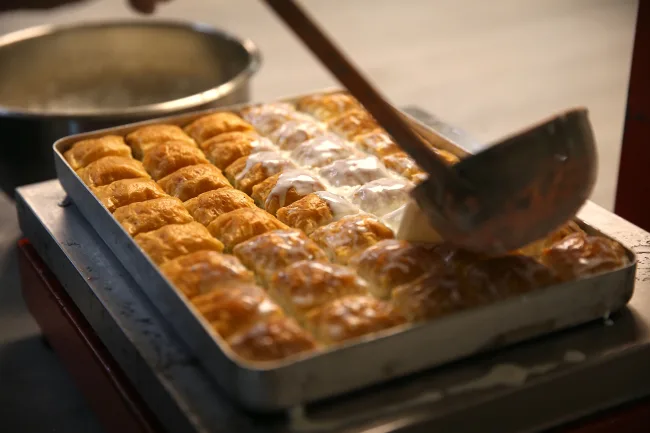
Baklava making is considered the finest edge of dough work. What sets it apart from ordinary pastry is the thinness the yufka must reach: a master's hand turns the dough into a sheet so transparent that one could read a newspaper through it. Traditionally, dozens of layers of yufka go into a single tray of baklava, and masters generally regard forty thin layers as the ideal. Each of these layers is rolled out one by one, brushed with pure butter and laid one upon another. The result must be a texture that dissolves in the mouth, crisp yet never drowned in fat. The laid tray is slid into a stone oven fired with oak wood and baked at around 180°C for forty to forty-five minutes, the tray turned again and again under the master's watchful eye; as baking proceeds the cuts between the diamonds are opened once more. Reading the right colour of the oven and the exact point of doneness is a mastery won only over years.
Baklava making also demands a command of materials. The moisture balance of the dough, rolling the yufka with starch so the layers do not stick, the floor heat of the oven, and whether the syrup is poured over hot or cooled baklava: these are all decisions a master has internalised over years. In this respect, baklava making takes its place among Gaziantep's crafts, a skill-based trade much like coppersmithing or kutnu weaving.
The Language of the Ingredients: Pistachio, Pure Butter and Yufka
Three core ingredients define the character of Gaziantep baklava. The first is the Antep pistachio, known for its dark green colour and intense aroma; it is this pistachio that lends the famous deep green tone to the lower layer of the baklava. The second is pure butter, which gives the baklava its distinctive taste and fragrance. The third is the yufka, where mastery is truly put to the test.
The coming together of this trio is no accident. The pistachio's harvest season, the purity of the butter and the consistency to which the dough is rolled are all bound to one another. For the masters, choosing the ingredients is the unseen but decisive first step of the craft; good baklava begins, before it even reaches the counter, with the selection of the right pistachio and the right butter.
In Gaziantep, the yufka is rolled with slender pins, known as oklava, that are about a metre long. The master wraps the dough around the pin and rolls it back and forth across the counter, thinning the sheet little by little. The rhythm and pressure of this motion rest entirely on the control of the hand; the same thinness can be achieved not by machine but only by a hand seasoned over years.
The Master-Apprentice Tradition
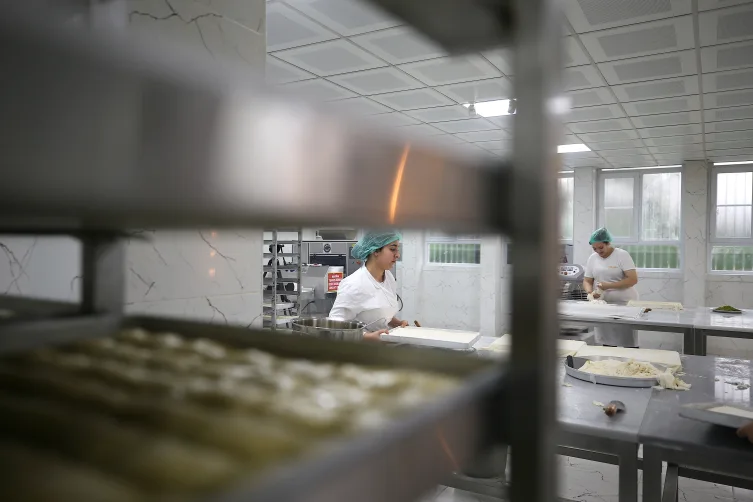
In Gaziantep, baklava making is a craft kept alive in its purest form through the master-apprentice relationship. The apprentice, who enters the workshop while still a child, first cleans the counter, sorts the pistachios and watches his master. As the years pass he learns first to brush the butter, then to lay the layers of yufka, and finally to roll the yufka with the oklava. Rolling the yufka is the most difficult and the last-reached rung of the apprenticeship; for a master to roll yufka as fine as gauze, a near-lifetime of work is often required.
There is no written recipe in this transfer of knowledge. The moment the dough is "ready", the correct consistency of the syrup, the colour at which the oven is prepared: all of these are learned by eye, by hand and through trying again and again. This is precisely why, in Gaziantep, baklava has become a family trade, with some workshops carrying their knowledge under the same roof for generations.
Geographical Indication and Protected Heritage
The accumulated knowledge of Gaziantep baklava making has also been brought under official protection. The phrase "Antep Baklavası" is registered in Türkiye as a geographical indication. Beyond this, Antep Baklavası was registered as a geographical indication by the European Union in 2013, making it the first product from Türkiye to gain this protection within the EU.
This registration formally recognises that the baklava is tied to a specific production area, namely the province of Gaziantep, and to particular production techniques. A geographical indication is not merely a protection of a name; it is also a guarantee of a craft standard reaching from the thinness of the yufka to the variety of the pistachio, and from the use of pure butter to the method of production.
Seeing and Keeping Baklava Making Alive in Gaziantep
Today, baklava making is one of Gaziantep's most vibrant crafts. In the city's long-established baklava workshops it is possible to watch the rolling of the yufka from behind glass and to observe the oklava masters at work. For those who wish to know the dessert itself and its varieties more closely, the baklava page is the gastronomic companion to this one.
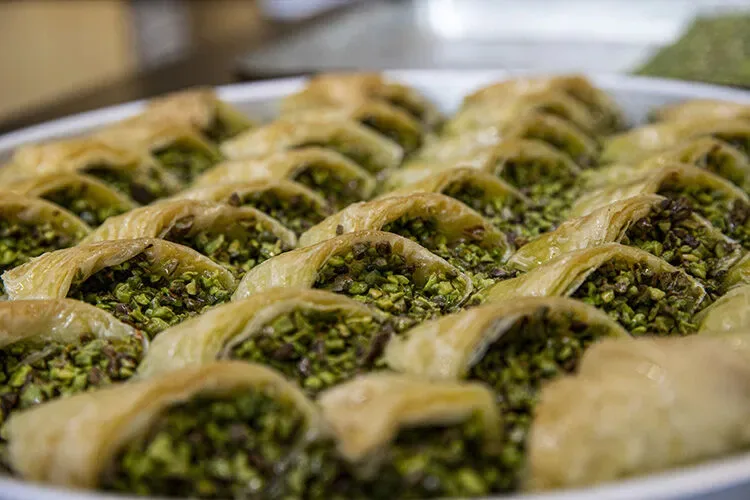
This craft has also grown into a living industry today: thirty years ago a workshop might make twenty or thirty trays a day in a handful of varieties, whereas today, with improved techniques, the same workshops can produce hundreds of trays and many more varieties daily. In busy periods such as Ramadan and the religious holidays, the workshops run around the clock in three shifts, and baklava is sent from Gaziantep to every corner of Türkiye.
For those who wish to see the story and historical development of the craft gathered in one place, the Baklava Museum is a special stop displaying the tools, production stages and cultural background of baklava making. These places keep baklava making alive not only as something to be tasted but as a heritage to be understood and handed on.
Sources
- Türk Patent ve Marka Kurumu (TÜRKPATENT), Coğrafi İşaretler Portalı — Antep Baklavası (Tescil No: 95, Mahreç İşareti).
- T.C. Dışişleri Bakanlığı Avrupa Birliği Başkanlığı — "Antep Baklavası Avrupa Birliği'nde Coğrafi İşaret Olarak Tescil Edildi" (2013).
- European Commission, Official Journal of the European Union C 229/43 (2013) — "Antep Baklavası / Gaziantep Baklavası" PGI application.
Frequently Asked Questions
Why is baklava making considered a craft?
Because fine baklava is made not with a single recipe but with the skill of a hand that can roll yufka as thin as gauze, an eye that reads the oven's heat and a palate that knows the syrup's consistency. As these skills are acquired only through years of apprenticeship, baklava making is regarded as a specialism and a craft distinct from cookery.
How many layers of yufka go into Gaziantep baklava?
Traditionally a tray of baklava contains dozens of thin layers, and masters generally regard about forty thin layers as ideal. Each layer is rolled out one by one, brushed with pure butter and laid one upon another.
What is an oklava and why is it important in baklava making?
The oklava is the slender, long rolling pin used to roll out yufka; in Gaziantep it is about a metre long. The master wraps the dough around it and thins it by rolling it across the counter. Because the right pressure and rhythm depend entirely on the control of the hand, the oklava is the most decisive tool of the craft.
Does Gaziantep baklava have a geographical indication?
Yes. "Antep Baklavası" is registered as a geographical indication in Türkiye, and in 2013 it was also registered as a geographical indication by the European Union. Antep Baklavası is the first product from Türkiye to gain this protection within the EU.
How is the knowledge of baklava making passed on?
The knowledge is transmitted through the master-apprentice relationship rather than a written recipe. The apprentice enters the workshop at a young age; he first cleans the counter and sorts pistachios, then learns to brush the butter and lay the yufka, and finally to roll the yufka with the oklava. Rolling the yufka is the last rung of the apprenticeship to be reached.
Where can I see the craft of baklava making in Gaziantep?
In the city's long-established baklava workshops it is possible to watch the rolling of the yufka and the oklava masters at work. To see the craft's tools, production stages and cultural background gathered together, the Baklava Museum is a special stop.