In Gaziantep's old urban fabric, amid the slopes of the Tepebaşı quarter, rises a monument that at first glance looks nothing like a mosque. With its grand high-drum dome, finely cut stonework and cross-shaped mass, Kurtuluş Mosque is often called "Gaziantep's own Hagia Sophia." For these walls carry a story far beyond that of a mosque: the building was originally raised as the Surp Asdvadzadzin (St. Mary) Cathedral, once the largest Armenian sanctuary in the city. Stacking the layers of church, depot, prison and mosque into a single structure, this multi-layered memory makes it one of the most extraordinary historic buildings in Antep.
Wandering through Gaziantep, you grow used to walking in the shadow of minarets and domes — but Kurtuluş Mosque stops you on first sight. Its façade speaks the language of a cathedral rather than that of a classical Ottoman mosque; with its tall, majestic dome and massive stone walls, it strikes a wholly distinct note in the city's skyline. This contradiction is no accident: the building was designed not as a mosque, but as a church.
Rising among the narrow lanes of Tepebaşı, in one of the most densely lived-in quarters of old Antep, this monument is one of the most tangible witnesses to the city's multicultural past. Open today as a mosque, its stones still carry the traces of another faith and another community.
What It Is and Where to Find It
Kurtuluş Mosque stands in the historic Tepebaşı quarter of Gaziantep's Şahinbey district, at the heart of the old city center. Although it serves as a mosque today, it was in fact built at the end of the 19th century as an Armenian Apostolic cathedral under the name Surp Asdvadzadzin (Mother of God / St. Mary).
Covering roughly 1,100 square meters and reaching close to 30 meters in height, the building looms as a monumental presence above the stone houses around it. Because of the elegance of its dome and the craftsmanship of its façade, locals often call it "Gaziantep's own Hagia Sophia" — for like that famous structure in İstanbul, it too carries a multi-layered memory of one place of worship transformed into another.
History: Layers from Cathedral to Mosque
The building's roots reach back to an older Mother of God church long used by the Armenians of Gaziantep. As the old sanctuary became inadequate over time, a decision was taken in the last quarter of the 19th century to raise a new and far grander cathedral in its place; construction, hampered by the upheavals and epidemics of the era, stretched over years of effort. The main body of the structure was completed around 1892–1893, and the cathedral was opened for worship in the years that followed.
Its design is attributed to the architect Sarkis Balyan, of the renowned Balyan family that served the Ottoman court, while the stonework is credited to the master builder Sarkis Taşçıyan. This explains why the building is so grand and technically ambitious; it came from among the most accomplished hands of its time.
1915 and After: A Silenced Sanctuary
The cathedral lost its function as a place of worship after the deportation of its community in 1915. Over the following decades the building was put to very different uses: a military depot, a temporary shelter, and for a long stretch a prison. The bars added to its windows still bear witness to these difficult years of incarceration. For roughly half a century it was known not as a sanctuary, but as a jail.
The Name "Kurtuluş"
"Kurtuluş," meaning liberation, the building's present name as a mosque, is a word that holds a special place in Gaziantep's national memory. The city earned the honorary title "Gazi" after the Defense of Antep, and many surrounding neighborhoods, streets and structures carry names commemorating that victory. The building was restored and converted into a mosque in the mid-1980s, opening for worship as Kurtuluş Mosque in 1986.
What's Worth Seeing: Architecture and Details
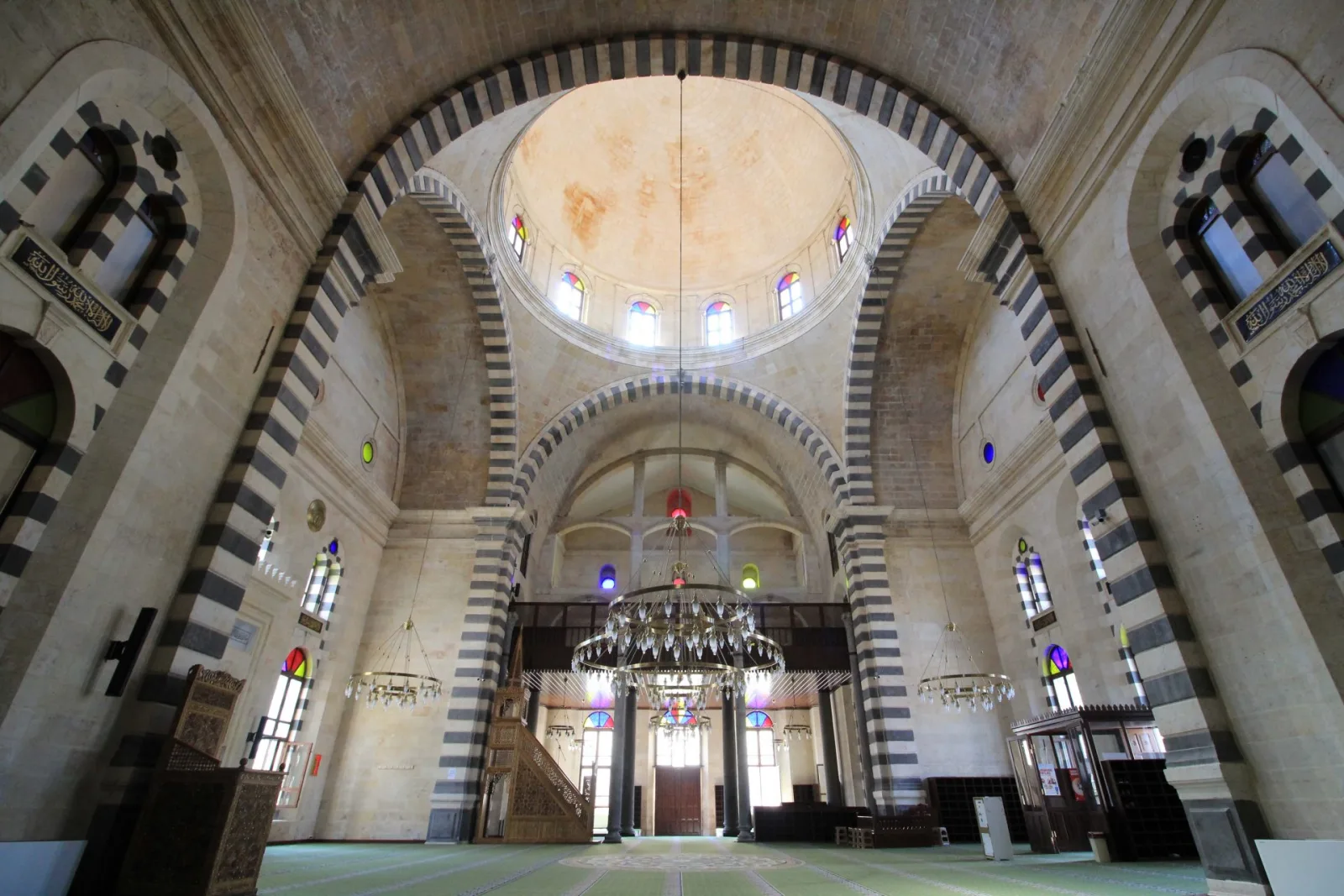
What makes Kurtuluş Mosque remarkable is the "dual identity" written into its architecture. Even though it now functions as a mosque, the plan of a cathedral can still be read in its bones.
Cross Plan and High Dome
Unlike a traditional mosque layout, the building is set on a cruciform scheme; the interior is divided into sections by rows of columns set perpendicular to the mihrab. The high-drum dome covering it draws light down dramatically, lending the space an airy, soaring feeling. Marrying the Antep–Aleppo stone tradition of the region with the dome system of church architecture, this solution makes the structure visually unique.
From Bell Tower to Minaret
Perhaps the most striking detail is the minaret. When the building was converted into a mosque, the upper part of the original four-cornered bell tower was removed and the remaining shaft was turned into a single-balcony minaret; in later years a second minaret was added. A visitor who looks carefully at the mosque's minaret is, in fact, tracing the outline of a church's bell tower.
A Bell from Brazil
The cathedral's original bell is impressive in its own right: weighing a full ton, it was cast across the seas in Brazil and brought to Antep. Today the bell is preserved not in the building but in the Gaziantep Museum, a concrete keepsake of the structure's church past.
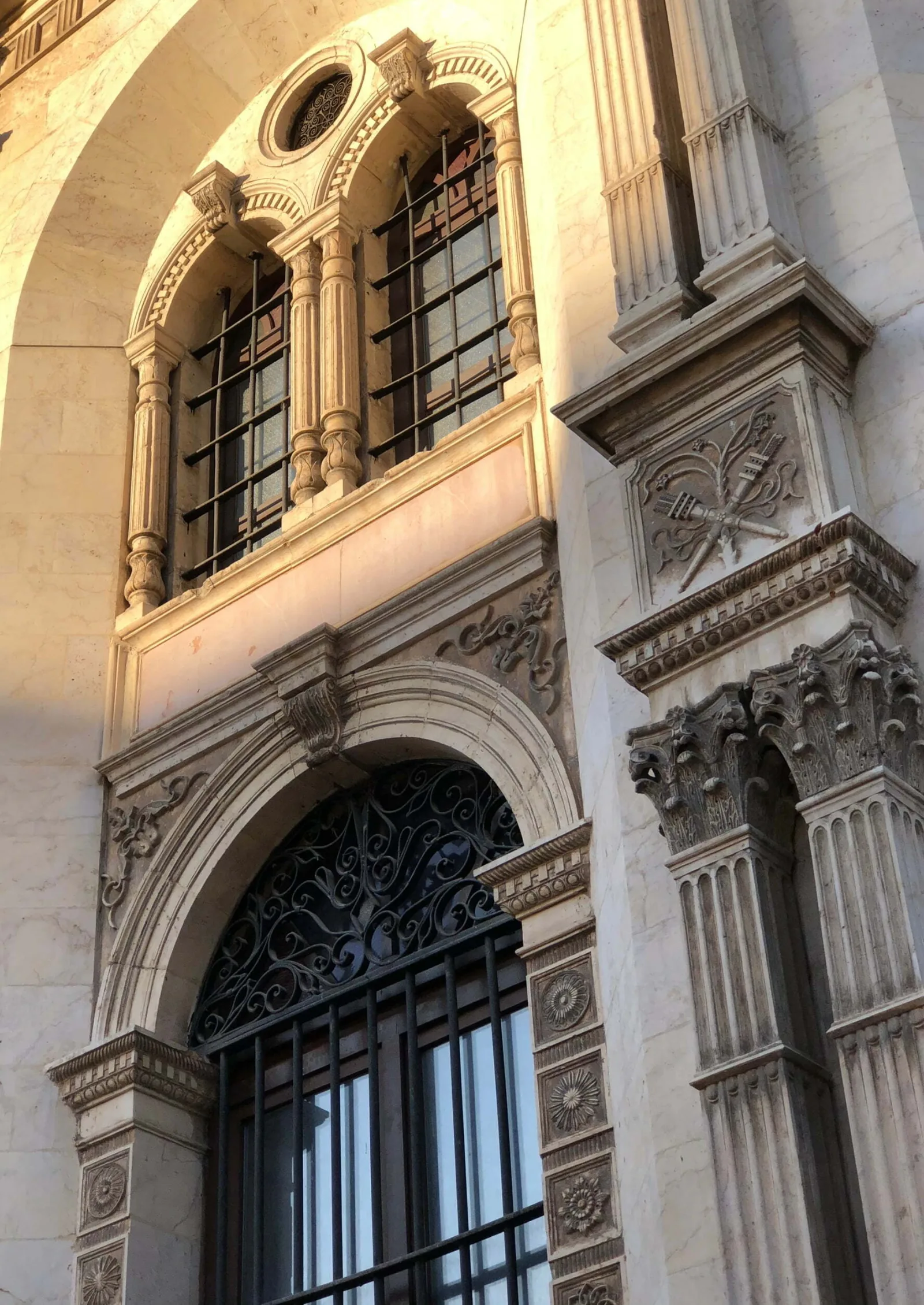
Just like the Hagia Sophia in İstanbul, Kurtuluş Mosque is remembered for its overlapping historical layers, a sanctuary transformed into another sanctuary. With its monumental dome and cathedral silhouette, it more than earns the comparison.
Its Place in City Life
For the people of Gaziantep, Kurtuluş Mosque is not merely a place of prayer but a visible emblem of the city's multi-layered identity. Set right in the heart of old Antep's fabric of narrow streets, kastels, hans and stone houses, the building recalls the rich past of a city that for centuries hosted different communities side by side.
Its silhouette can be seen from many points in the city center and has become a landmark of the Tepebaşı quarter. For travelers exploring Antep's historic fabric, this building is a striking stop that shows how many different eras and faiths can be traced within a single stone wall.
Today and How to Visit
The structure suffered serious damage in the earthquakes of February 6, 2023; one of its minarets toppled onto the dome, causing the dome to collapse and the walls to be harmed. A comprehensive restoration followed. After painstaking work in which the original stone was preserved and the walls were reinforced with steel cables, the building reopened for worship in May 2025.
An active mosque today, it is open to visitors outside prayer times; guests need only observe the etiquette appropriate to a place of worship. After visiting Kurtuluş Mosque, those who wish to see the other layers of Antep's religious architecture will find meaningful stops nearby. The city's other former Armenian sanctuary, Aziz Bedros Church, offers a similar multi-layered story. Likewise Boyacı Mosque, a small but distinctive sanctuary also adapted over time, is another historic mosque to add to a walk through the old city. Those eager to see the cathedral's one-ton bell should make their way to the city's museums.
Kurtuluş Mosque is more than a building; it is a living memory stone that tells how Gaziantep carries its different faiths, eras and stories under a single roof.
Frequently Asked Questions
What was Kurtuluş Mosque originally?
It was built in the late 19th century as an Armenian Apostolic cathedral called Surp Asdvadzadzin (Mother of God / St. Mary), and was later converted into a mosque.
Where is Kurtuluş Mosque located?
It stands in the historic Tepebaşı quarter of Gaziantep's Şahinbey district, within the old city center.
Why does the mosque's minaret look unusual?
Because the minaret was converted from the building's original bell tower; during the conversion the upper part of the tower was removed to form a single-balcony minaret, and a second minaret was added later.
Why is Kurtuluş Mosque called Gaziantep's Hagia Sophia?
Like the Hagia Sophia in İstanbul, it earns the comparison through its multi-layered history of a sanctuary transformed into another sanctuary and its monumental, cathedral-like domed silhouette.
Where is the mosque's original bell?
The one-ton bell, cast across the seas in Brazil, is today preserved not in the building but in the Gaziantep Museum.
Is Kurtuluş Mosque open to visitors?
Yes. Damaged in the earthquakes of February 6, 2023, it reopened for worship in 2025 after a comprehensive restoration and can be visited outside prayer times while observing the etiquette of a place of worship.