Among the narrow lanes of Gaziantep's old quarters, gathered around a single courtyard, stands one of the city's most complete Ottoman building groups, with its mosque, kastel, madrasa and bath: the Sheikh Fethullah Mosque and Complex. Founded in the middle of the sixteenth century, this complex ranks among the masterpieces of Gaziantep's religious architecture thanks to its colourful stone decoration and a fan-shaped vaulted ceiling seen in no other mosque; what is more, its courtyard cemetery is a place of memory where heroes of the Defence of Antep are buried.
The Sheikh Fethullah Mosque and Complex is one of those stops you should not skip while exploring Gaziantep's historic buildings. Set within the old walled fabric of the city, in one of the central quarters of the Şahinbey district, the complex was conceived not as a stand-alone mosque but as a functional whole that gave life to an entire neighbourhood.
Made up of a mosque, kastel, madrasa, bath and dervish lodge, this ensemble is among the finest examples of how an Ottoman complex brought worship, learning, water and daily life together in a single place. In this respect the building offers a privileged window onto the city's past within the Gaziantep Culture Atlas.
What and Where Is the Sheikh Fethullah Complex?
The complex lies in the old settlement core of Gaziantep, in the quarter popularly known as "Şıh," which takes its name from the building's founder. Today within the boundaries of the Şahinbey district and a short walk from the city centre, this location shows that for centuries the structure lived not merely as a house of worship but as the very heart of its neighbourhood.
A külliye (complex) is a group of complementary buildings gathered under a single endowment. According to its waqf deeds, the Sheikh Fethullah Complex consisted of a mosque, a zawiya (dervish lodge), a madrasa, a bath, a kastel (an underground water structure), a courtyard cemetery and a house. Worship, scholarship, hygiene and the supply of water were all resolved around one courtyard.
History: Who Built It, and When?
The complex was founded in the second half of the sixteenth century by Sheikh Fethullah, son of Sheikh Abdüllatif. Sources generally date the complex to the mid-sixteenth century (the 1550s); as no dated building inscription survives, no exact year of completion can be given. Among the earliest written evidence concerning the complex are two waqf deeds dated 1559 and 1564, together with an imperial decree of 1583, documents that show the building was sustained by a strong endowment system from its earliest years.
Over the centuries the complex was repaired many times. The bath was restored in several periods, while the mosque too was repaired in different periods (a documented recent example being the 1974 repair). This continuity is itself proof that the building never lost its importance for the people of Gaziantep.
Mosque, dervish lodge, madrasa, bath and kastel. Their survival side by side makes this one of the rare examples in Gaziantep that carries the integrated form of an Ottoman complex into the present day.
Architecture and What to See
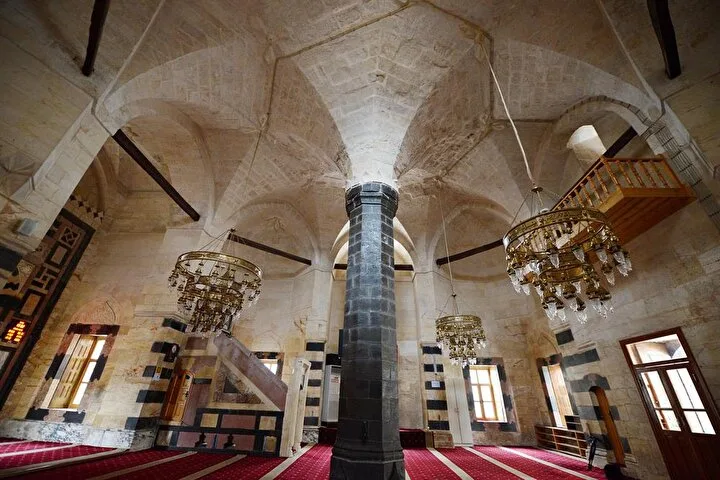
What truly makes the building unique is the covering system of the prayer hall. From an octagonal stone pillar rising at the centre of the space, vaults linked by hanging arches spread out like an opening fan. This developed system is remembered as a rare example in Turkish-Islamic architecture, not seen at this level of maturity in any other mosque.
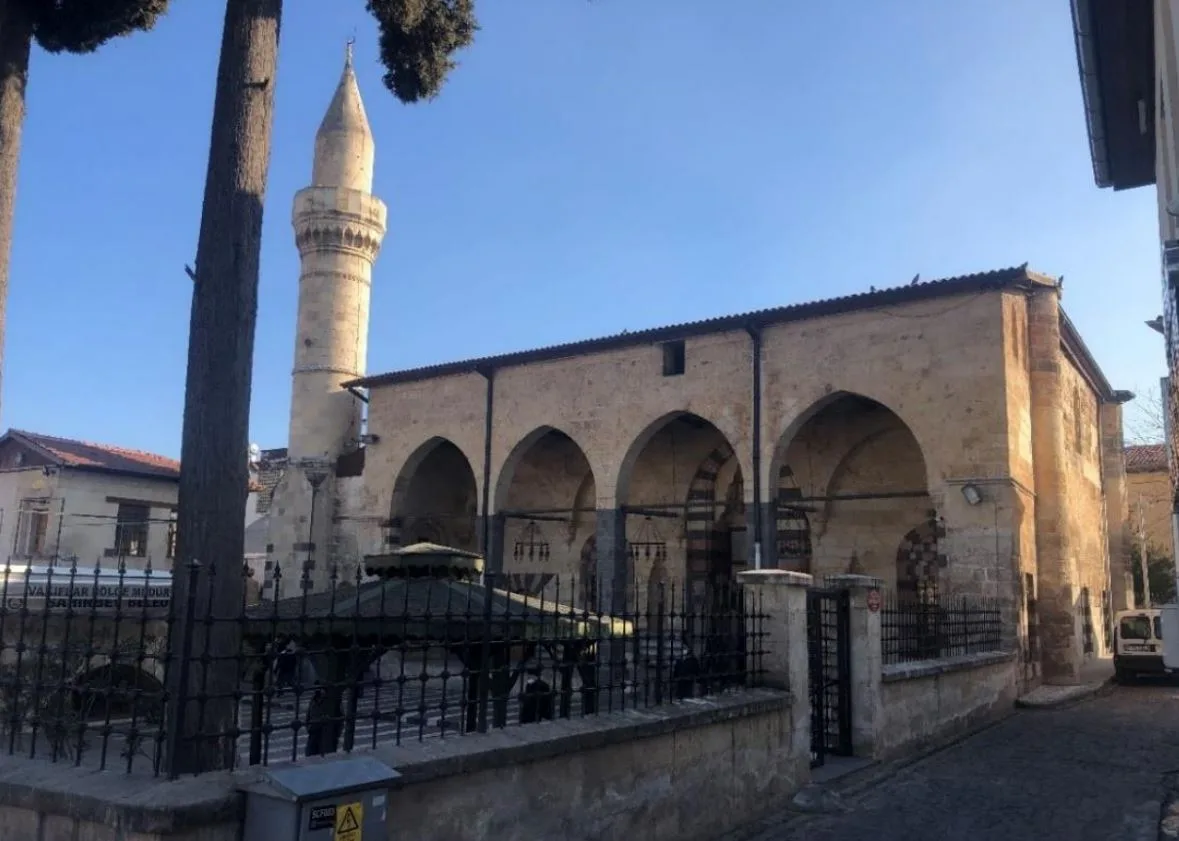
Another striking feature of the mosque is the colourful stonework of its facades. The decoration achieved by alternating stones of different colours reflects the region's historical ties to Mamluk art, while the covering system carries echoes of Seljuk architecture. The single-balconied, squat-proportioned minaret also lends a distinctive character to the building's silhouette.
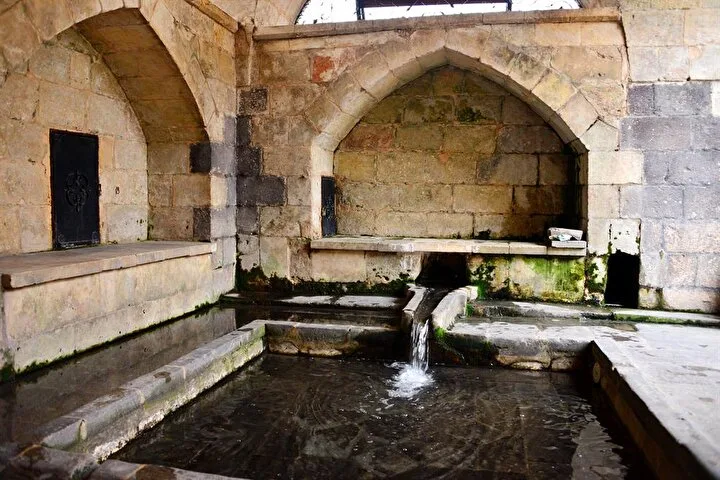
The Sheikh Fethullah Kastel in the courtyard is part of an entirely separate story. The kastel is one of Gaziantep's characteristic underground water structures: water carried from its source through livas (water channels) collected in these subterranean chambers and was then made available for public use. Only a portion of the kastels known to have been built in the city up to the sixteenth century survive today, and the Sheikh Fethullah Kastel is one of them. Those who wish to see this cool, stone-vaulted space can also discover more about Gaziantep's kastels.
Its Place in the City's Memory and Karayılan's Tomb
For the people of Gaziantep, the Sheikh Fethullah Complex is not only an architectural work but also a place of memory. The courtyard cemeteries that wrap around the mosque from the east and south hold the tomb of Sheikh Fethullah himself along with many other graves; locals call this area "Şıh Ocağı."
The best-known resident of this cemetery is Karayılan, one of the legendary figures of the Turkish War of Independence. The grave of this folk hero, martyred during the Defence of Antep, lies in the same courtyard alongside other martyrs, binding the building to the city's story of independence. The complex also played an important role during the days of the Defence of Antep, and after the war it was repaired and reopened for worship. Those curious about this heroic chapter of Gaziantep's past can read the full story on the War of Independence and the Defence of Antep page.
The Mosque Today and How to Visit
The complex still lives on today as an active mosque open for worship. Its proximity to the city centre makes it an easy stop for those exploring Gaziantep's historic fabric on foot. The kastel in the courtyard, the colourful stone facades and the unique vaulted prayer hall can all be seen in a single visit.
Like many of Gaziantep's historic structures, the Sheikh Fethullah Mosque was affected by the earthquakes of February 2023 and has been taken into a restoration programme. When the doors are open to visitors, quietly watching the fan-vaults from inside is an experience in itself.
After visiting the complex, you can turn your route towards the city's other treasures: discovering the nearby museums, the covered bazaars of the old town, or Gaziantep's world-famous cuisine will round off a day spent in this ancient city.
Frequently Asked Questions
Where is the Sheikh Fethullah Mosque?
The mosque is in the Şahinbey district of Gaziantep, close to the city centre, in the old quarter popularly known as 'Şıh'.
When was the Sheikh Fethullah Complex built?
The complex was founded in the mid-sixteenth century (the 1550s); as no dated building inscription survives, no exact year can be given. The earliest documents are two waqf deeds of 1559 and 1564 and an imperial decree of 1583.
What buildings make up the complex?
According to its waqf deeds it is an integrated Ottoman complex made up of a mosque, a dervish lodge, a madrasa, a bath, a kastel and a courtyard cemetery.
Is Karayılan really buried here?
Yes, Karayılan, the folk hero martyred during the Defence of Antep, rests in the complex's courtyard cemetery alongside other martyrs.
What architectural feature makes the mosque special?
The fan-shaped vaulted ceiling spreading from an octagonal stone pillar at the centre of the prayer hall is a rare covering system not seen at this level of maturity in any other mosque.
What is the Sheikh Fethullah Kastel?
The kastel is one of Gaziantep's characteristic underground water structures in the courtyard; a cool, stone-vaulted space where water carried through livas channels was collected and made available to the public.