The Gaziantep Pistachio Museum is a thematic museum devoted to the Antep pistachio, the city's emblematic product, and is regarded as the first of its kind in the world. Rather than a collection of masterpieces, it is curated to tell the whole story of a single product — from its history to its harvest, from its varieties to its oral memory. Designed in the shape of a pistachio by the Gaziantep Metropolitan Municipality, the building opened to visitors in 2018 and sets out to convey the production of the Antep pistachio through visuals, folkloric material and audio narration systems.
The museum stands in the Fidanlık neighbourhood of the Şahinbey district, within a park surrounded by pistachio trees. This article covers the building's design and founding, the museum's exhibition logic, its nine thematic sections and a discovery guide for visitors. To consider it alongside the city's other specialist museums, the Museums of Gaziantep page is a good starting point.
Building, Architecture and Founding
The museum's most striking feature reveals itself before you even step inside: the structure is designed in the shape of a pistachio, with an architecture that interprets the form of the Antep pistachio itself. This choice is more than a visual game; the building becomes a symbol of the product told inside, setting the museum apart from other cultural venues at first glance.
Built by the Gaziantep Metropolitan Municipality, the museum opened to visitors in 2018. The aim was to make visible the place of the Antep pistachio in the city's history and economy, and to introduce the product both to local visitors and to tourists coming to the city. Being the first and only example of its kind in the world places the museum in a special position among thematic museums; soon after it opened, it was also honoured with a national "Living Museum" award for its contribution to the city's cultural heritage.
Exhibition Logic
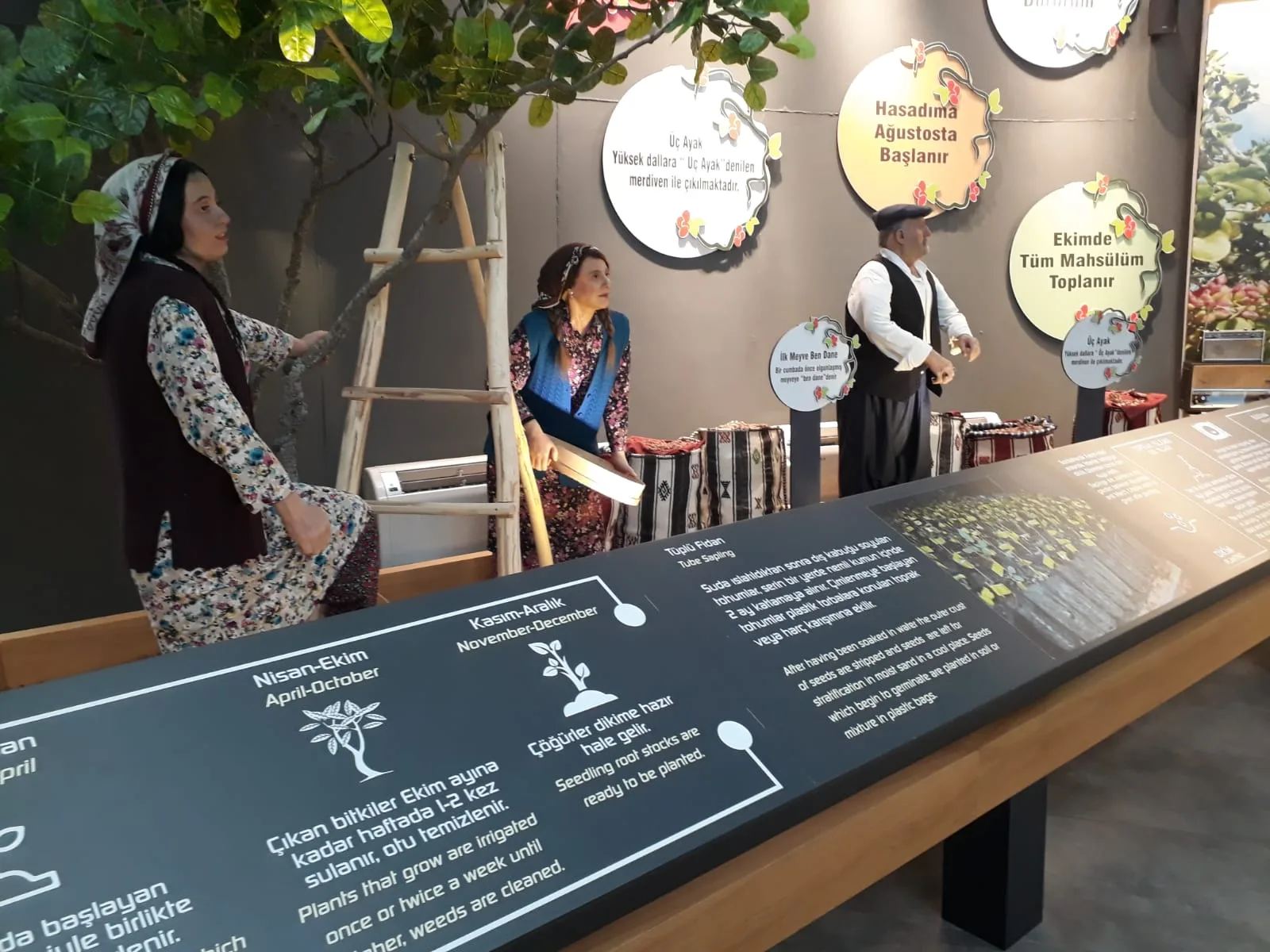
The museum is built on a narrative rather than classic display-case museology: it leads the visitor through the journey of the Antep pistachio from field to table. The exhibition is enriched with the tools of contemporary museology: production and harvest scenes are brought to life with fixed and semi-mechanical wax figures, and each section is supported by audio narration systems. In this way technical stages such as the cultivation, grafting and shelling of the pistachio become comprehensible through tangible scenes.
This curation makes it possible to read the museum like an encyclopaedia of a single product: while one section addresses the botanical identity of the pistachio, another tells of its place in cuisine and daily life. To explore the cultural and gastronomic depth of the Antep pistachio in detail, the Antep Pistachio page is a complementary resource.
Sections You Must See
The museum spreads the story of the Antep pistachio across nine main sections. Each section highlights a different aspect of the product, and together they form a complete narrative.
History, Geography and Botanical Identity
The first sections descend to the product's roots: the history of the Antep pistachio, the regions where it grows and the plant family it belongs to are addressed. Here the visitor grasps that the pistachio is not merely a flavour but the product of an ancient farming culture bound to a particular geography and climate. These sections map out the geographical and historical ground that ties the Antep pistachio to the city.
Technical Processes: Grafting, Harvest and Shelling
The museum's most instructive sections are devoted to the production stages of the pistachio: the technical aspects of cultivation along with the harvest and shelling processes are told through scenes brought to life with wax figures. Stretching from the graft made onto the wild terebinth tree, to the harvest where the branches are shaken and gathered, to the shelling stage where the husk is removed, this process makes visible the labour-intensive journey the pistachio undergoes before it reaches the table.
Varieties, Nutritional Value and Uses
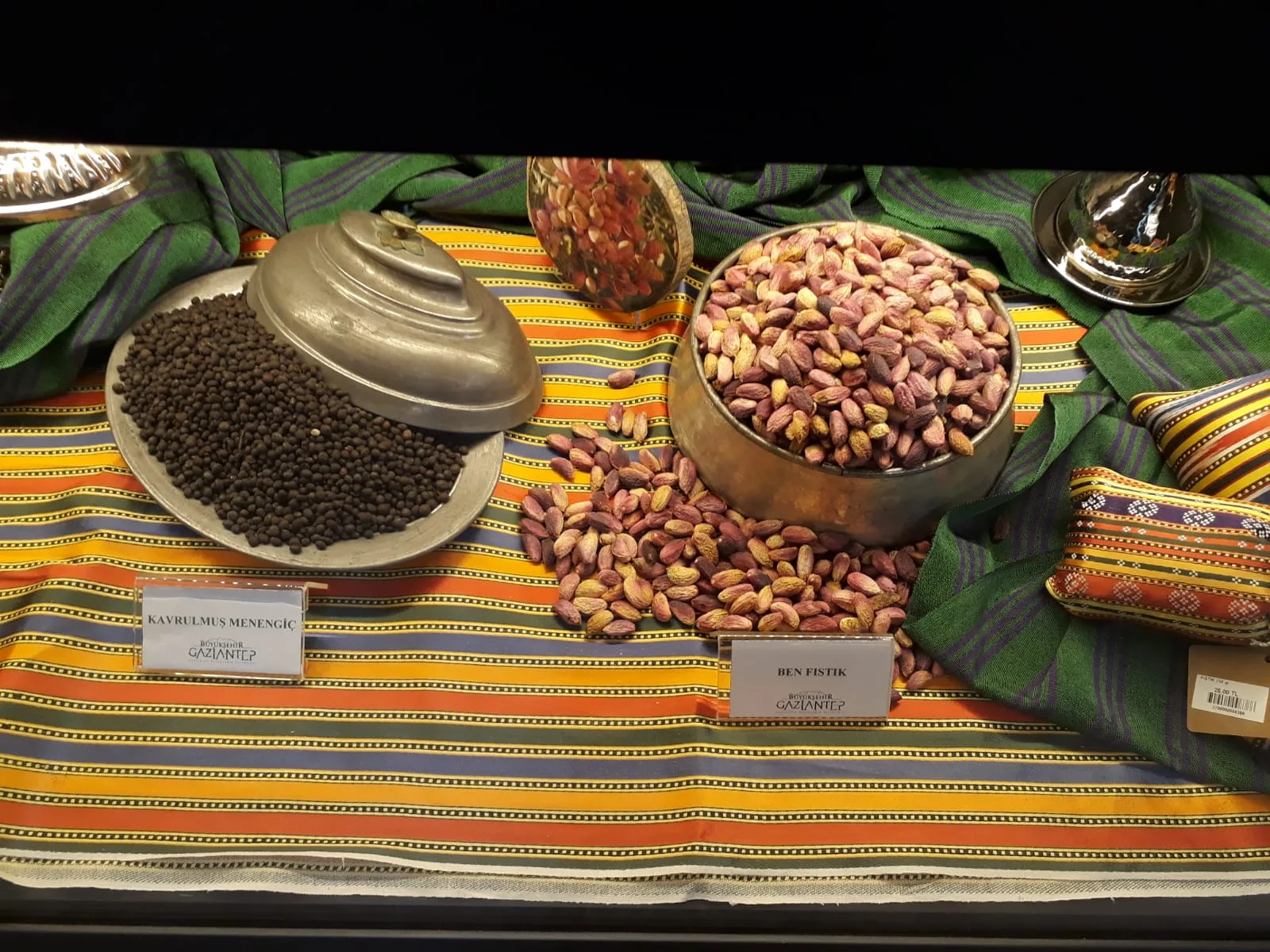
Another group of sections focuses on the product itself: the pistachio varieties grown in the region, the pistachio's nutritional values and its broad range of uses are displayed. Here it emerges that the Antep pistachio is not merely a snack but a raw material that plays a leading role in many corners of Gaziantep cuisine, from baklava to ice cream, from sweets to savoury flavours. You can read in detail about the dessert tradition in which the pistachio takes pride of place on the Baklava page.
Oral History
The final section is the museum's most original part: oral knowledge and accounts about the Antep pistachio are presented to the visitor through digital systems. By recording the experiences that live on in the memory of producers and people steeped in this culture, not only the agricultural but also the social and cultural dimension of the product is carried into the future.
The fame of Gaziantep cuisine rests largely on the Antep pistachio; yet the farming culture behind this product remains in the shadow of the flavour on the table. Because the Pistachio Museum makes precisely this unseen labour visible — the grafting, the harvest, the shelling and the knowledge passed down through generations — it is a uniquely fitting starting point for a visitor who truly wants to understand the city's gastronomy.
A Visitor's Discovery Guide
- Read the building from outside: Before you begin your tour, examine the pistachio-shaped building from the outside; the structure itself is the first exhibit of the product told within.
- Follow the narration: Tour the sections accompanied by the audio narration systems; watching the technical stages — especially grafting and shelling — alongside the narration completes the meaning of the scenes.
- Keep the order: The nine sections build a narrative from the pistachio's history to its oral memory; touring the sections in sequence is the best way to grasp the product's journey from field to table as a whole.
- Match it to the table: By matching the variety and use themes you see in the museum with the city's baklava-makers and confectioners, you can map out a gastronomy route.
Summary and Cultural Value
The Gaziantep Pistachio Museum is one of those rare venues that celebrates a product identified with a city's identity in its entirety, from its architecture to its content. With its pistachio-shaped building, its nine thematic sections and its scenes brought to life with wax figures, the museum lifts the Antep pistachio beyond being a mere snack or ingredient and tells it together with the ancient farming culture behind it. Being the first of its kind in the world is a powerful example of Gaziantep's tradition of introducing its own heritage in creative and original ways. To explore the city's gastronomic identity as a whole, the Gastronomy Atlas is the natural continuation of this narrative.
Frequently Asked Questions
When did the Gaziantep Pistachio Museum open?
The museum was built by the Gaziantep Metropolitan Municipality and opened to visitors in 2018.
Why is the museum shaped like a pistachio?
The building is designed in the shape of a pistachio, with an architecture interpreting the form of the Antep pistachio, the city's emblematic product; in this way the structure itself becomes a symbol of the product told inside.
How many sections are there and what do they cover?
The museum consists of nine main sections: the pistachio's history, the regions where it grows, its plant family, its technical aspects, the harvest and shelling processes, pistachio varieties, nutritional values, uses and oral history. Scenes are brought to life with fixed and semi-mechanical wax figures and supported by audio narration systems.
Why is the museum regarded as special?
It is a thematic museum devoted to the Antep pistachio, regarded as the first and only example of its kind in the world; soon after it opened it was also honoured with a national "Living Museum" award.
Where is the museum?
It is located in the Fidanlık neighbourhood of the Şahinbey district, within a park surrounded by pistachio trees.