The Museum of Islamic Science History is a history-of-science museum that tells, through instrument replicas, the discoveries and inventions of Muslim scholars who lived between the 8th and 16th centuries in medicine, chemistry, physics, astronomy, cartography and navigation. Rather than a single masterpiece, it brings together 103 instrument replicas belonging to 54 scholars; the museum is designed to draw the visitor into the atmosphere of the workshops where these inventions were first conceived. Housed in an early 19th-century stone school building, it was arranged by Şahinbey Municipality and opened to visitors in 2014.
This article covers the building's history and architecture, the museum's exhibition logic, its sections from medicine to astronomy, and a discovery guide for visitors. To consider it alongside the city's other specialist museums, the Museums of Gaziantep page is a good starting point.
From a Stone School to a Science Museum
The building that houses the museum is a school building whose construction was completed in the early 19th century. The stone building once used as a school, located within the Şahinbey Municipality Service Complex, was taken in hand to be converted into a museum. The numerous, tall windows that dominate all three of its floors are the most defining feature of the façade; by carrying abundant daylight to the workbenches, these windows give the interior an atmosphere of its own.
The exterior is built of cut stone, while at the corners and over the window arches splinters of kara taş (black basalt) are used alongside the cut stone, creating the two-toned texture characteristic of Gaziantep's traditional stonework. Work on the building began in 2012; once it had been given its museum function, it opened to visitors in 2014. The arrangement was carried out with Şahinbey Municipality's own resources and financing from the Silk Road Development Agency.
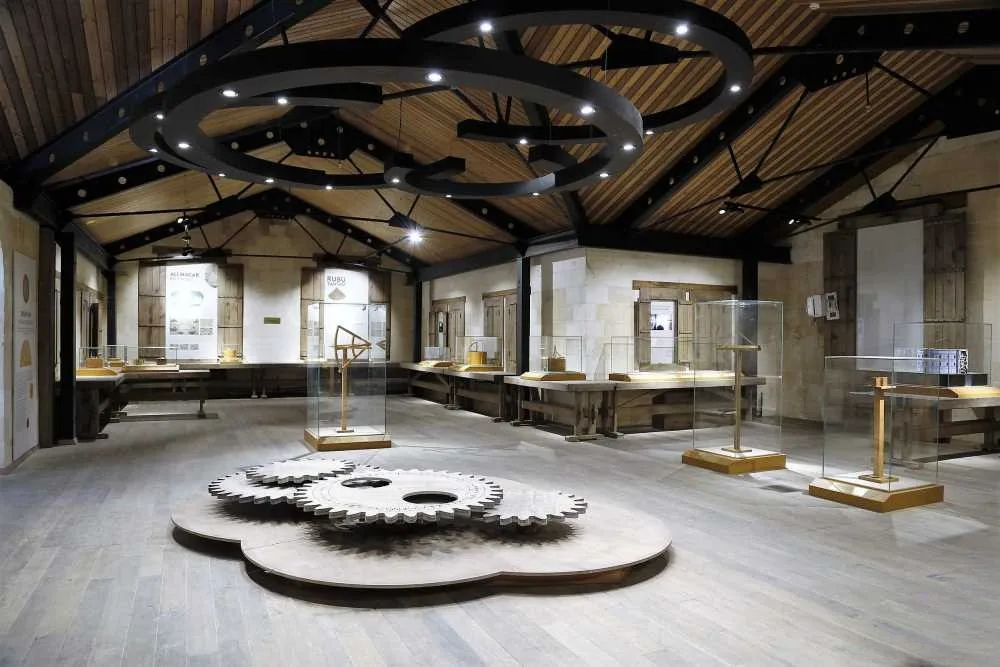
A striking choice in the museum's design grows out of the fact that Muslim explorers and inventors mostly worked in modest conditions, with limited means, in a workshop setting: the school building has been arranged to give the visitor the feeling of a historic workshop, with the workbenches designed to look like aged wood. In this way science ceases to be a distant object behind glass; the visitor steps into the environment in which the instruments were born.
Building and Exhibition Logic
The museum is arranged across four halls: a basement, ground, first and second floor. The basement and ground floor hold office areas, a library and presentation rooms, while the main exhibition areas are distributed across the upper floors. The first floor displays exhibits in chemistry and medicine, while the second floor presents Islamic civilisation's works in navigation, cartography and astronomy.
The exhibition is enriched with the interactive applications of contemporary museology. The visitor does not merely look at a replica; they grasp how an instrument works by trying it. A scent unit in the chemistry section, mechanisms that show the calculation of the distance of the stars in the physics-astronomy section, and an application that compares old maps with modern ones in the cartography section all make this experience possible. This arrangement aims to help most school-age visitors understand abstract scientific concepts in a concrete way.
Sections You Must See
Medicine and Chemistry
The medicine and chemistry section spread across the first floor brings together the work the Islamic world carried out on disease, medicine and matter. Replicas referencing the work of scholars who left their mark on medicine and pharmacy, such as al-Biruni, are displayed here. One of the standout pieces of the chemistry section is the scent unit, through which the visitor experiences the culture of distillation and the separation of substances with their senses. This section lays bare the roots of the experimental tradition that underlies modern chemistry and pharmacy.
Physics and Astronomy
The physics-astronomy section on the second floor traces the effort to observe and measure the heavenly bodies. Replicas connected to the legacy of names such as Ibn al-Haytham, known for his work in optics and mathematics, and Taqi al-Din, prominent in observation and mechanics, are found here. Observation instruments such as the sundial, astrolabe and armillary sphere, along with a camera obscura mechanism, show in concrete form how light and the sky were measured. The interactive application that calculates the distance of the stars is the section's most popular stop.
Cartography and Navigation
Also on the second floor, the cartography and navigation section is devoted to the effort of Islamic geographers to put the world on paper and read the seas. The comparative application that overlays old maps onto modern ones reveals just how accurate the coast and land lines drawn centuries ago were. This section is a reminder that science advanced not only in the laboratory but also on the open sea and along the line of the horizon.
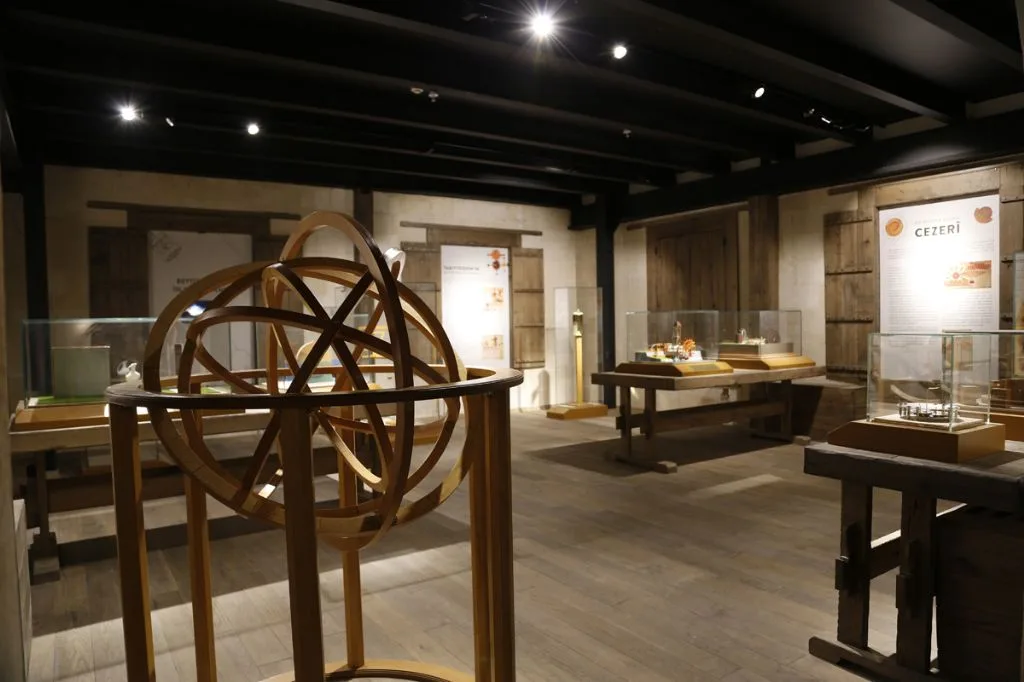
By turning the work of scholars whose names most of us have only heard into tangible instruments, the Museum of Islamic Science History carries the history of science from abstract knowledge into concrete experience. For students and families in particular, it is a stop that lets concepts from physics to medicine be discovered almost like a game, adding a different breath to the city's usual archaeology and ethnography route.
A Visitor's Discovery Guide
- Notice the workshop atmosphere: The aged wooden benches and the light filtering through the tall windows are part of the museum's atmosphere; as you look at the instruments, picture the modest working environment in which they were born.
- Stop at the interactive stations: Mechanisms such as the scent unit, the star-distance calculation and the comparative map application are designed to be tried; experience them rather than merely looking.
- Read the floors in order: By touring first the medicine and chemistry on the first floor and then the physics-astronomy, cartography and navigation sections on the second, you can follow the links between fields of knowledge.
- Come with children: With its design that makes abstract scientific concepts concrete, the museum is one of the city's most instructive stops for school-age visitors.
Summary and Cultural Value
The Museum of Islamic Science History adds another link to Gaziantep's tradition of giving its historic buildings new uses, by bringing a school building back to a function close to the spirit of a school. Making visible, through 103 instrument replicas, the knowledge produced between the 8th and 16th centuries in medicine, chemistry, physics, astronomy, cartography and navigation, the museum turns the history of science from a tour past display cases into a workshop experience. For those touring the city's archaeological and ethnographic museums, this stop is a complementary one that reminds the visitor that Gaziantep is a city not only of the past but of the idea. To see the city's other specialist museums, the Hasan Süzer Marriage and Life Culture Museum and the Bayazhan City Museum, which sums up the whole city, can be regarded as its natural continuation.
Frequently Asked Questions
When did the Museum of Islamic Science History open?
Work on the building began in 2012, and the museum was arranged by Şahinbey Municipality and opened to visitors in 2014. The arrangement was carried out with the municipality's own resources and financing from the Silk Road Development Agency.
What was the building originally?
The structure is a stone building constructed in the early 19th century and once used as a school. Its tall windows dominating all three floors, its cut-stone façade and the kara taş splinters used at the corners and over the window arches reflect Gaziantep's traditional stonework.
What is displayed in the museum?
It displays 103 instrument replicas belonging to 54 Muslim scientists who lived between the 8th and 16th centuries, in medicine, chemistry, physics-astronomy, cartography and navigation. It includes mechanisms such as a sundial, astrolabe, armillary sphere and camera obscura, along with interactive applications like the scent unit and a map comparison.
Who is the museum suitable for?
Because it makes abstract scientific concepts concrete through interactive mechanisms, it is suitable for visitors of all ages, and especially for students and families. The workshop atmosphere is both instructive and enjoyable to explore.
Where is the museum?
It is located in the Şahinbey district, within the Şahinbey Municipality Service Complex, in the centre of the city.