The Udma Cheese Museum is a thematic museum set beneath the domes of one of Gaziantep's oldest double baths, telling the history, making and cultural meaning of Antep cheese. Built around fermentation elements, production vessels, cheese models and simulation displays, the museum presents a single flavour as a gateway into the table culture of a whole city. It takes its name from "udma", a word found in Kâşgarlı Mahmud's thousand-year-old dictionary, the Dîvânu Lugâti't-Türk, describing the curdling of milk into cheese; it was opened to visitors by the Gaziantep Metropolitan Municipality in 2022.
The museum is built on a narrative woven around a single product rather than a single masterpiece: it tells the transformation of milk into cheese, the place of that transformation in the city's culinary memory, and how a historic bathhouse came to host this story. This article covers the building's past, the museum's exhibition logic, its standout sections and a discovery guide for visitors. To consider it alongside the city's other specialist museums, the Museums of Gaziantep page is a good starting point.
From Double Bath to Cheese Museum
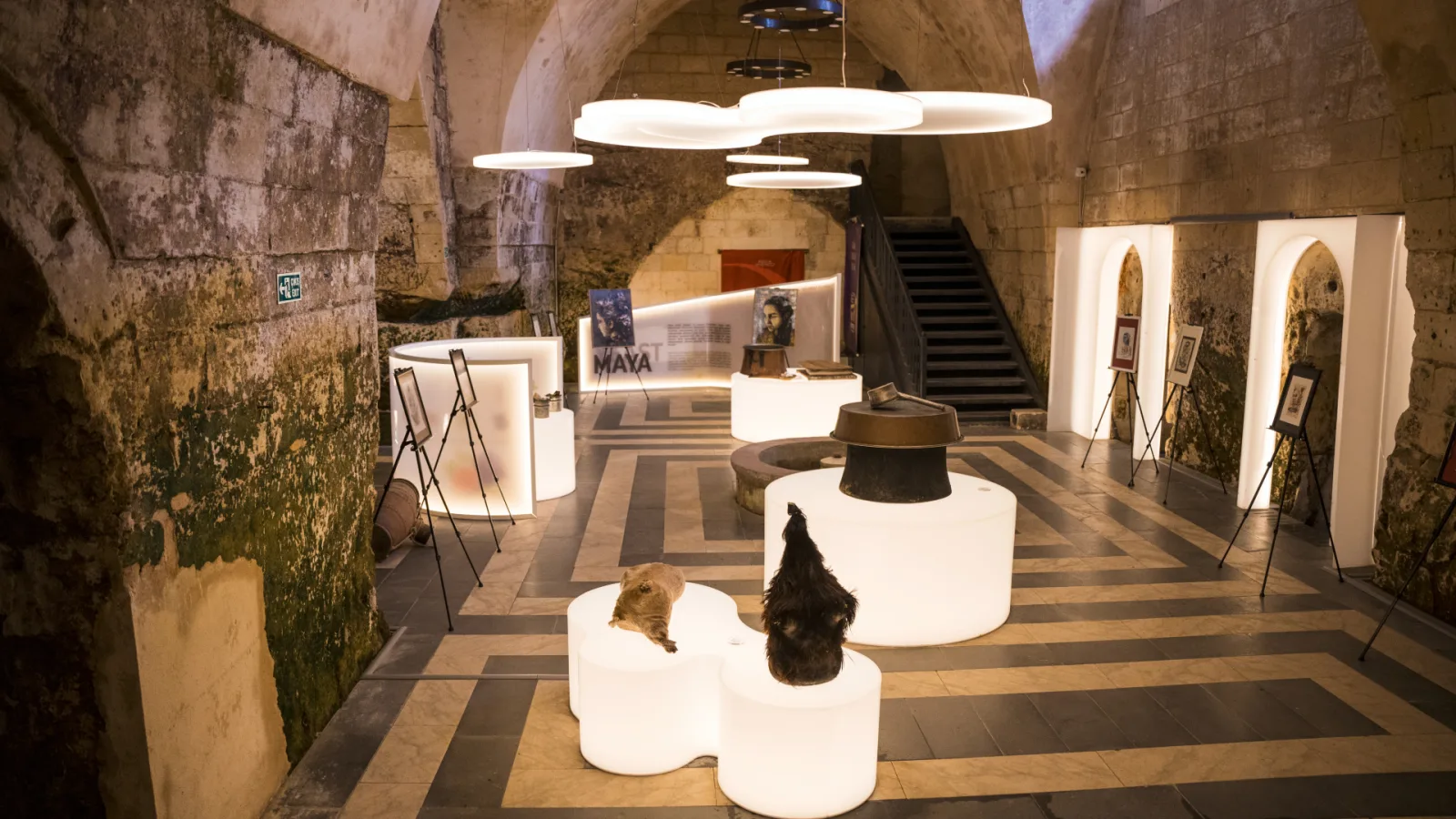
The building that houses the museum is one of Gaziantep's oldest double baths (çifte hamam); it stands in the Kozluca quarter in the city's historic centre, within the bounds of the Şahinbey district. A double bath is a traditional Ottoman bath type with separate sections for women and men, arranged around domed hot and cold halls. Used for centuries as a place of cleansing and gathering, the structure was restored so that its original architectural fabric was preserved, and given a new function within the city's cultural life.
The building opened as the Udma Cheese Museum in 2022, under the Gaziantep Metropolitan Municipality. The thick stone walls and domed halls of the bath offer an almost ready-made setting for displaying a product such as cheese, which calls for a cool and steady environment. Thus a centuries-old bathhouse was turned into a museum where the city tells the story of its cheese culture, adding a new example to Gaziantep's tradition of giving its historic buildings new uses.
The Name "Udma" and Its Meaning
The museum's name reaches back to one of the oldest written sources of the Turkish language. The word udma appears in the Dîvânu Lugâti't-Türk, the dictionary compiled by Kâşgarlı Mahmud in the 11th century (around 1074), and describes the curdling of milk into cheese — that is, the work of fermenting milk. This thousand-year-old word gives the museum not merely a name but a context as deep-rooted as the very origins of cheese-making in Anatolia.
The choice also sums up the museum's central idea: cheese is not a latecomer to the city's table but the product of knowledge and tradition built up over centuries. The museum reads this tradition through Antep cheese and places it in a special position among the hundreds of cheese varieties unique to Türkiye. To explore the making, varieties and table role of Antep cheese in detail, the Antep Cheese page is a complementary resource.
Sections You Must See
From Milk to Cheese: Fermentation and Production Vessels
At the heart of the museum are the displays that tell of the birth of cheese. The exhibition areas are enriched with fermentation elements, traditional production vessels and milk-processing tools; the visitor follows the stages reaching from the gathering of milk to its curdling and finally its taking the form of cheese, through tangible objects. This section is like a workshop scene showing how a piece of culinary knowledge is handed down from one generation to the next.
Cheese Models and Simulations
The museum conveys the visual and tactile world of cheese through cheese models and simulation displays. While the different shapes and textures of Antep cheese are made visible through models, the simulations re-enact the production process step by step, making it easier for the visitor to grasp the logic of the craft. This arrangement presents cheese not merely as a product on a plate but as a culture of making.
Workshops and a Living Tradition
The museum hosts workshops in which traditional cheese-making is taught hands-on. These events turn the knowledge on display into a demonstration, letting visitors experience cheese-making as a living tradition. In this way the museum is more than a static exhibition space; it becomes a place of learning where the visitor can witness the process. This section complements the Emine Göğüş Culinary Museum, which addresses the same culinary culture within a broader frame.
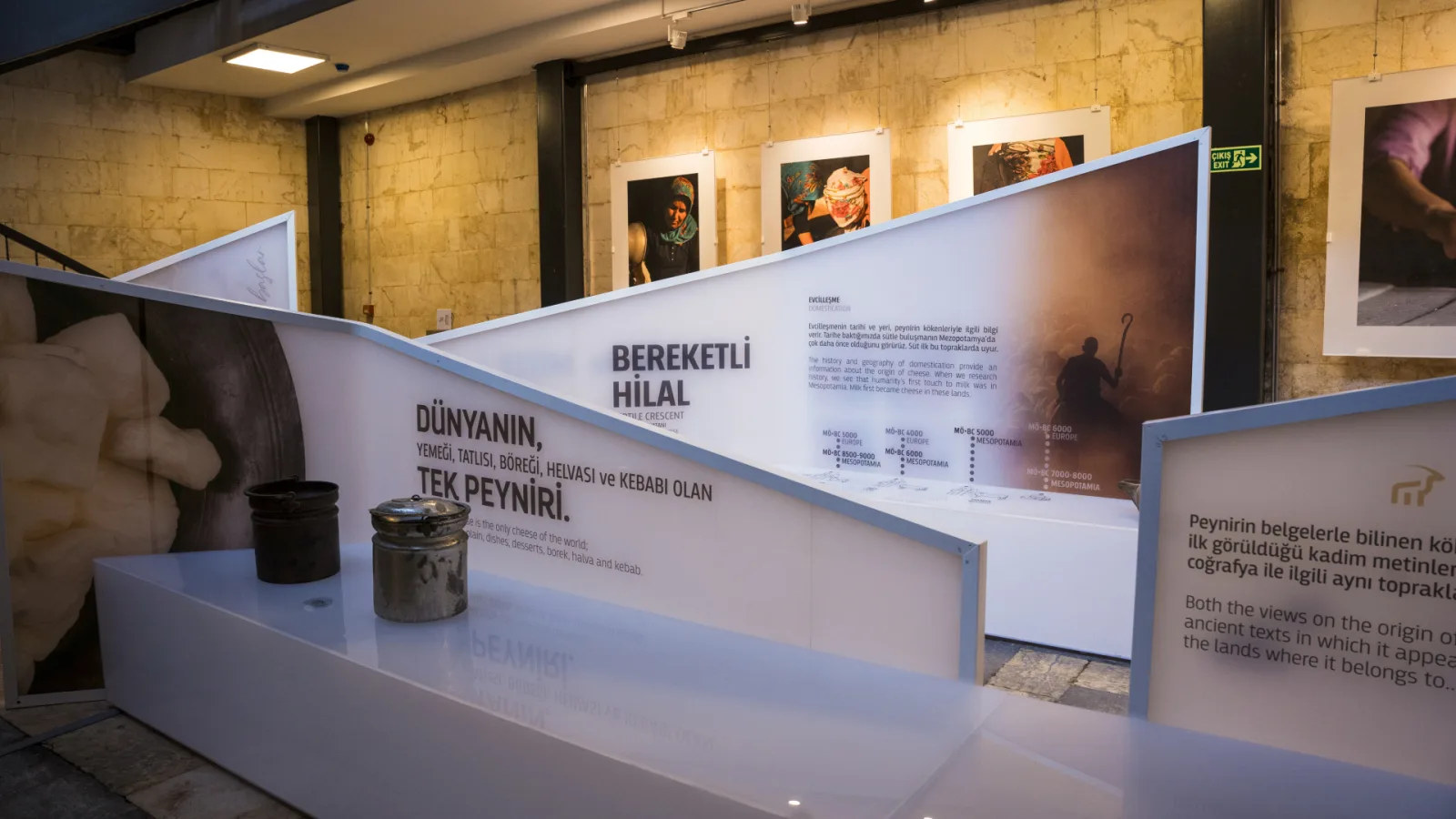
The Udma Cheese Museum is a specialist museum that reads Gaziantep's rich cuisine in depth through a single product. The fermentation vessels and production scenes seen here make visible the body of knowledge behind a flavour you will meet at the city's breakfast table and in its cheese-filled pastries; the museum thus ties a single plate to the story of a culture.
A Visitor's Discovery Guide
- Start with the building: As soon as you enter, read the domes, stonework and hot-and-cold halls of the double bath; the structure itself is an object as noteworthy as the exhibition.
- Follow the process: Tour the displays reaching from fermentation vessels to cheese models in the order of milk's transformation into cheese; this sequence makes the exhibition easy to read like a story.
- Don't miss the workshops: When they are held, the cheese-making workshops are the best way to see the tradition hands-on; they bring the knowledge on display to life before your eyes.
- Match it to the table: By matching the cheese varieties you see in the museum with the city's breakfast culture and its cheese-based flavours, you can map out a tasting route.
Summary and Cultural Value
The Udma Cheese Museum is a specialist museum unique to Gaziantep that organises the city's culinary memory around a single product — Antep cheese. By turning a historic double bath into a space where cheese culture is told, it both preserves a building and makes a tradition visible. Its taking its name from a thousand-year-old Turkish word is a deliberate nod to the deep-rooted past of cheese-making in Anatolia. With its arrangement reaching from fermentation vessels to workshops, the museum tells of Gaziantep's standing as a city of gastronomy not through a showcase of masterpieces but through a culture of production. To discover the city's cuisine in full, the Gastronomy Atlas is the natural continuation of this narrative.
Frequently Asked Questions
When did the Udma Cheese Museum open?
The museum was opened to visitors in 2022 by the Gaziantep Metropolitan Municipality, in one of the city's oldest double baths.
What does "udma" mean?
Udma is a thousand-year-old Turkish word found in Kâşgarlı Mahmud's 11th-century dictionary, the Dîvânu Lugâti't-Türk, describing the curdling of milk into cheese.
What building is the museum in?
The museum is set in one of Gaziantep's oldest double baths, located in the Kozluca quarter of the city's historic centre. The structure was restored and converted into a museum.
What can be seen in the museum?
The exhibition features fermentation elements, traditional production vessels, cheese models and simulation displays that tell the making of Antep cheese; traditional cheese-making workshops are also held from time to time.
Where is the museum?
It is located in the Şahinbey district, in the historic centre of Gaziantep.