 Vegetarian
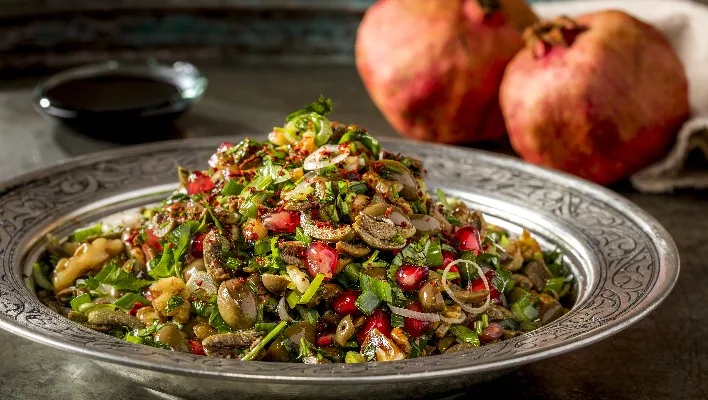
Olive salad (zeytin piyazı) is a cold Gaziantep meze in which crushed green olives meet walnuts, spring onion and parsley, dressed with pomegranate molasses, olive oil and isot (chili flakes). The "piyaz" in its name means, in Antep cuisine, a salad built from onion and herbs and sharpened with pomegranate molasses; so olive salad is this Antep-style onion-and-herb salad logic built around olives. It contains no meat, broth or animal ingredient of any kind, which makes it both a vegetarian and a vegan meze.
The identity of olive salad springs from a plain harmony: the salty, oily taste of crushed, pitted green olives, the richness of walnuts, the bite of spring onion and the sweet-sour balance of pomegranate molasses. Behind it lies the deep-rooted olive economy of Gaziantep and southeastern Anatolia; the Nizip district in particular is a major centre of olives and olive oil for the region. This meze is a plain but beloved part of the city's cold-meze tables and of its olive-based breakfast culture.
What Is Olive Salad (Zeytin Piyazı) and What Is in It?
Olive salad is a cold Antep meze made by pitting and coarsely chopping crushed green olives, then mixing them with walnuts, spring onion and parsley and seasoning with pomegranate molasses, olive oil and isot. Its character comes not from any costly or complex ingredient but from the meeting of crushed olives and walnuts and from the sweet-sour balance that pomegranate molasses brings. That it is made with green olives rather than black, and with crushed (cracked) rather than whole olives, is the distinguishing mark of the meze.
Core Components
- Crushed Green Olives: The base of the meze is the region's (Antep, Nizip and around) crushed green table olives. The olives are cracked, pitted and coarsely chopped; green olives are used, not black. Their salty, faintly bitter taste forms the backbone of the meze.
- Walnuts: Coarsely broken walnuts add fullness and a faintly oily texture to the olives. The pairing of olives and walnuts is the defining duo that sets this meze apart from an ordinary olive salad.
- Spring Onion and Parsley: Finely chopped spring (green) onion and parsley give the "piyaz" its onion-and-herb character, lending the meze freshness and bite.
- Pomegranate Molasses, Olive Oil and Isot: The dressing is built with pomegranate molasses (nar ekşisi), olive oil and isot (the regional chili flakes). The pomegranate molasses provides the sweet-sour balance (lemon can be used in its place); the olive oil binds; the isot adds a mild heat and colour. Garlic is optional; some versions also add a little tomato paste, roasted kapya pepper, dried mint or sumac.
What "Piyaz" Means
The word "piyaz" comes from the Persian piyāz (onion) and is attested in Turkish from at least the 1330s. While in western Anatolia "piyaz" mostly evokes a white-bean salad with vinegar and onion, in Gaziantep "piyaz" carries a quite different sense: here piyaz is a salad built from onion and herbs and sweetened with pomegranate molasses — it has nothing to do with white beans. So olive salad is not a bean dish but the Antep-style onion-and-herb salad formula built around olives. Although "olive salad" is a reasonable English rendering of zeytin piyazı, it slightly loses the regional nuance the word "piyaz" carries, which is why the Turkish name is kept prominent.
The History and Cultural Origins of Olive Salad
Olive salad is part of the regional meze tradition of Gaziantep and southeastern Anatolia; it is one application, built around olives, of the onion-and-herb, pomegranate-molasses salad logic known as "Antep style." The origins of the meze rest on the region's deep-rooted olive economy: Gaziantep's Nizip district in particular is a major centre of olive and olive-oil production, and "Nizip Olive Oil" itself holds a geographical indication. In a land where olives are plentiful and everyday, turning crushed olives into a meze with onion, walnuts and pomegranate molasses is a natural home practice.
A Regional Home Meze
Olive salad is not an "invention" with a single documented creator or date, but a home and table meze born of the region's olive culture. Similar olive salads appear across the wider olive belt that takes in Antep and Hatay; in this respect it belongs not to one city alone but is a shared folk flavour of the region where olives grow. Its preparation is also tied directly to the season in which olives are cracked and cured; it appears more often on tables when fresh crushed olives are plentiful.
Olive salad does not carry a geographical indication under its own name. Among the related products of the region, however, Gaziantep Green Olive Pastry and "Nizip Olive Oil" are registered with geographical indications. So while some of the olive-based products around olive salad are registered, the meze itself is unregistered. No invented registration is claimed for olive salad on this page; the meze is treated as one form of Antep's living olive and meze culture.
The Olive Salad Tradition and Ritual in Gaziantep
In Gaziantep, olive salad is a plain part of the cold-meze tables and of the olive-based breakfast culture. Once made, it is left to rest a little and served cold; during this time the pomegranate molasses, olive oil and isot seep into the olives and walnuts, letting the flavours meld. Plenty of bread, pide or lavaş comes alongside it.
How It Is Eaten
Olive salad is above all a cold meze: it takes its place among the other small plates at a rakı-and-meze table or at a richly varied breakfast spread. Because it is an olive-based flavour, it sits very well within Antep's abundant breakfast culture, served at the morning table alongside cheese and other kinds of olives. At the same time, like the region's other piyaz salads, it goes well beside kebabs and grills; it is eaten with bread, pide or lavaş. It easily shares a table with other Antep mezes such as Mung Bean Salad and Spicy Paste.
Why You Should Try It
A spoonful of olive salad carries Gaziantep's olive culture and its sense of "piyaz" straight to the palate: the salty taste of crushed green olives, the fullness of walnuts, the bite of spring onion and the sweet-sour balance of pomegranate molasses all come together. Without an elaborate preparation or a showy presentation, the honest flavour of plain ingredients comes to the fore. With its meat-free, fully plant-based makeup it also appeals to everyone at a large table; the truest way to taste it is on an Antep table, with bread or pide, cold and alongside the other mezes.
Frequently Asked Questions
What is olive salad and which olives is it made with?
It is a cold Gaziantep meze in which crushed green olives are mixed with walnuts, spring onion and parsley and dressed with pomegranate molasses, olive oil and isot. It is made with crushed green olives, not black ones.
Is the "piyaz" here a white-bean piyaz?
No. In Gaziantep "piyaz" means a salad built from onion and herbs and sweetened with pomegranate molasses; it differs from the western white-bean piyaz with vinegar. Olive salad contains no beans.
Does olive salad have a geographical indication?
It has no geographical indication under its own name. While related products of the region such as Gaziantep Green Olive Pastry and Nizip Olive Oil are registered, olive salad itself is an unregistered but deep-rooted Antep meze.
How and when is olive salad eaten?
It is served as a cold meze; it is eaten at the meze table, at the olive-based breakfast, and beside kebabs and grills. It is best eaten with bread, pide or lavaş.