 Vegetarian
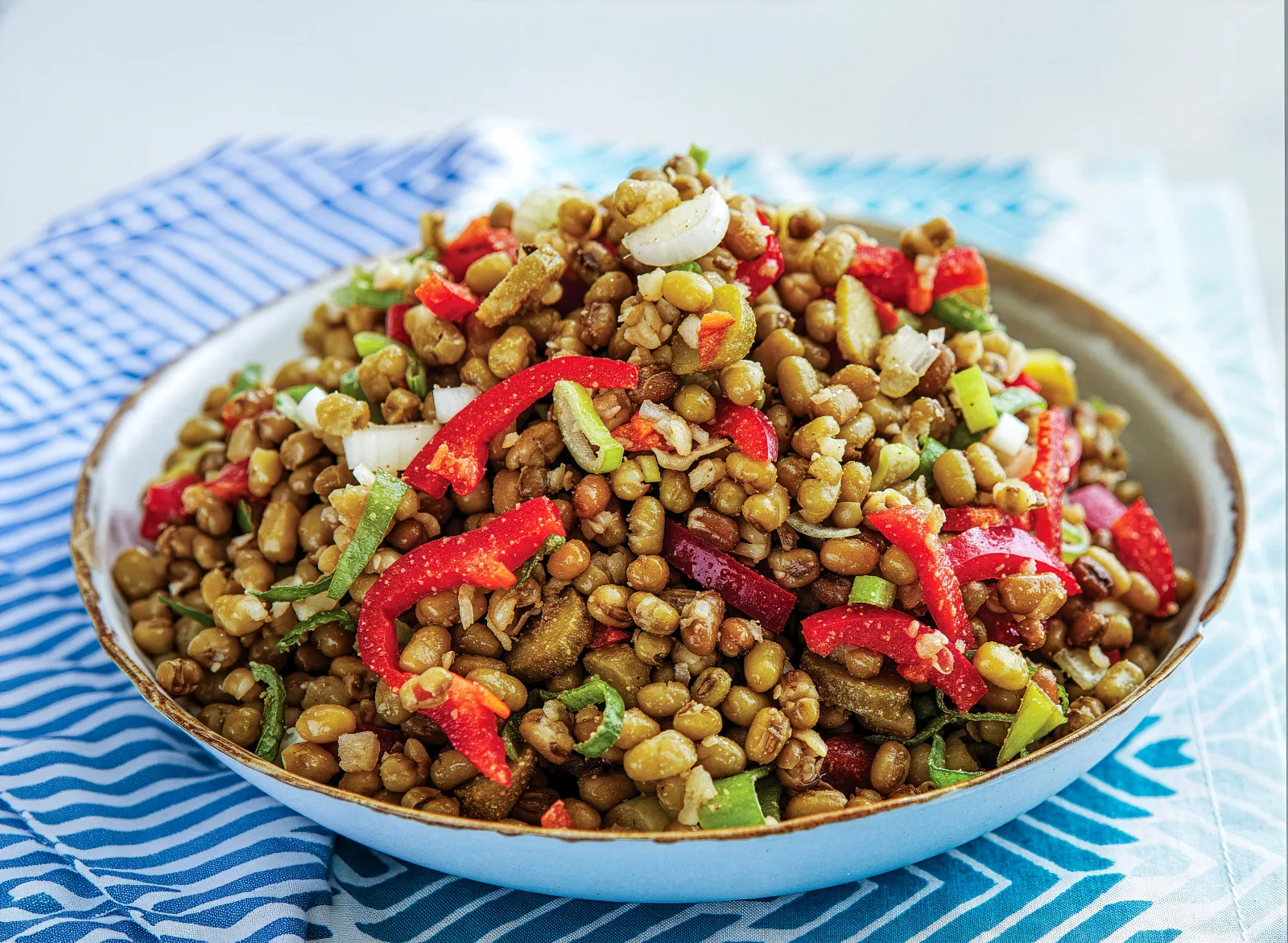
Mung bean salad (maş piyazı) is a Gaziantep meze in which boiled, cooled mung beans are dressed cold with plenty of spring onion, parsley, pomegranate molasses, olive oil and isot (red pepper flakes). The "maş" in its name is the mung bean, a small green pulse; "piyaz" describes, in Antep, a spring-onion-and-herb salad sweetened with pomegranate molasses. So mung bean salad is, at its simplest, "mung beans prepared in this onion-salad piyaz style." Made with olive oil and containing no meat or meat broth, it is both vegetarian and vegan.
Mung bean salad is a cold, light and filling member of Gaziantep's rich meze and vegetable-dish culture. The soft yet intact texture of the mung beans, the sharpness of spring onion, the freshness of parsley and the sweet-sour balance of pomegranate molasses come together. Rich in protein and fibre, this plant-based meze is officially registered in Gaziantep and is among the city's geographical-indication flavours. It should not be confused with mung bean soup, a hot pulse soup; mung bean salad is a meze served cold.
What Is Mung Bean Salad (Maş Piyazı) and What Is in It?
Mung bean salad is a Gaziantep meze made by boiling mung beans in plain water, draining them, and — once cooled — seasoning and dressing them cold. Its character comes not from heavy cooking but from the lively, sweet-sour balance the fresh ingredients and the pomegranate molasses give to the cooled beans. The mung beans are first boiled in plain water alone, with no meat or meat broth added; once drained and cooled they meet the other components of the meze. It is a plain but filling dish, served cold.
Core Components
- Mung Beans: The body of the meze is the mung beans, boiled in plain water, drained and cooled. The mung bean is a small green pulse that softens when boiled but holds its shape without falling apart, giving the meze a full texture.
- Spring Onion: The defining element that makes mung bean salad a "piyaz" is the generous addition of fresh (spring) onion. The onion brings a sharp, fresh taste to the plate and is the source of the word "piyaz" in the dish's name.
- Parsley: Finely chopped fresh parsley gives the meze a green freshness and lightness; together with the onion it defines the herby character of the plate.
- Pomegranate Molasses: The sweet-sour balance of the meze is set by pomegranate molasses (nar ekşisi). When unavailable, unripe-grape verjuice (koruk) or lemon can be used; but the signature of the Antep-style piyaz is pomegranate molasses.
- Olive Oil and Isot: The olive oil drizzled over the dish binds the components together, while isot (or red pepper flakes) adds a mild sweet-hot note and colour. Salt completes the seasoning.
- Optional Additions: At some tables fresh garlic may be added; for garnish and taste, walnut pieces and pomegranate seeds may be scattered on top. The core of the meze contains no tomato or pepper paste, no tahini and no meat.
What "Piyaz" Means
The word "piyaz" comes from the Persian piyāz (onion). While in western Türkiye "piyaz" usually means a white-bean salad dressed with olive oil and vinegar, in Gaziantep "piyaz" means something quite different: a spring-onion-and-herb salad style in which plenty of onion and parsley are sweetened with pomegranate molasses. That is why, in Antep, mung bean salad means "mung beans prepared in this onion-and-pomegranate piyaz style"; it should not be confused with the western white-bean piyaz. The English name "Mung Bean Salad" used for the dish reflects this logic accurately.
The History and Cultural Origins of Mung Bean Salad
Mung bean salad is a dish with old roots in Antep home cooking. The mung bean is a cheap, nourishing pulse that keeps for a long time, drawing on the long history of dried pulses in Anatolian cuisine; in Antep it has been an ingredient of both hot dishes and cold mezes. Dressing boiled mung beans cold with onion, parsley and pomegranate molasses is a natural extension of the city's light, fresh meze tradition that foregrounds vegetables and pulses with little oil.
A Light Snack Before the Hamam
A tradition widely told in Antep about mung bean salad is that it is seen as a light snack eaten before going to the hamam (public bath). It is locally recounted that, on days when people were going to the hamam, mung bean salad was preferred as a light and nourishing plate that does not weigh the stomach down. This account is treated as a local tradition that shows which moments of daily life the meze accompanied in the city; the lightness and the filling quality of the dish fit this local custom.
Mung bean salad is registered as a geographical indication by TÜRKPATENT under the name "Gaziantep / Antep Maş Piyazı". The type of registration is a mark of source (mahreç işareti), the registration number is 878 and the registration date is 02.09.2021. This record makes mung bean salad one of the geographical-indication-protected regional products bearing the name of Gaziantep.
The Mung Bean Salad Tradition and Ritual in Gaziantep
In Gaziantep, mung bean salad takes its place at the table as a meze and a side dish served cold. It is served at room temperature or chilled; unlike mung bean soup, a hot pulse soup, mung bean salad is never served hot. Rich in protein and fibre, this plant-based plate finds a place both alongside main courses and among the dishes of a meze spread.
How It Is Eaten
Mung bean salad is most often served alongside mains and kebab as a cooling, light companion. It comes to the table among the dishes of a meze spread, together with other cold flavours; it shares the same table with pomegranate-molasses Antep mezes such as olive salad. It is usually eaten scooped up with bread; thanks to its light yet filling nature it can also be eaten on its own as a snack. For those curious about the hot version of the same pulse, mung bean soup and a similar plant-based dish, purslane stew, are separate plates.
Why You Should Try It
A spoonful of mung bean salad carries Gaziantep's cold-meze culture and its fresh, pulse-forward cuisine straight to the palate: the full texture of the mung beans, the sharpness of the spring onion, the freshness of the parsley and the sweet-sour balance of the pomegranate molasses all come together. Without an elaborate preparation or a showy presentation, the honest flavour of the pulse and the fresh ingredients comes to the fore. Moreover, this meat-free dish made with olive oil is a filling way for those on a plant-based diet to share in the taste of the Antep table.
Frequently Asked Questions
What is mung bean salad and what is in it?
It is a Gaziantep meze in which mung beans boiled in plain water and cooled are dressed cold with spring onion, parsley, pomegranate molasses, olive oil and isot; it contains no meat or meat broth.
What does "piyaz" mean — is this the western white-bean piyaz?
No. "Piyaz" is Persian for onion; in Gaziantep it means a salad style in which plenty of onion and parsley are sweetened with pomegranate molasses. It differs from the western white-bean piyaz dressed with olive oil.
Does mung bean salad have a geographical indication?
Yes. It is registered by TÜRKPATENT under the name "Gaziantep / Antep Maş Piyazı" as a mark of source; the registration number is 878 and the registration date is 02.09.2021.
Are mung bean salad and mung bean soup the same thing?
No. Mung bean salad is a plant-based meze served cold; mung bean soup is a separate, hot soup and can be made with meat or meat broth.