 Vegetarian
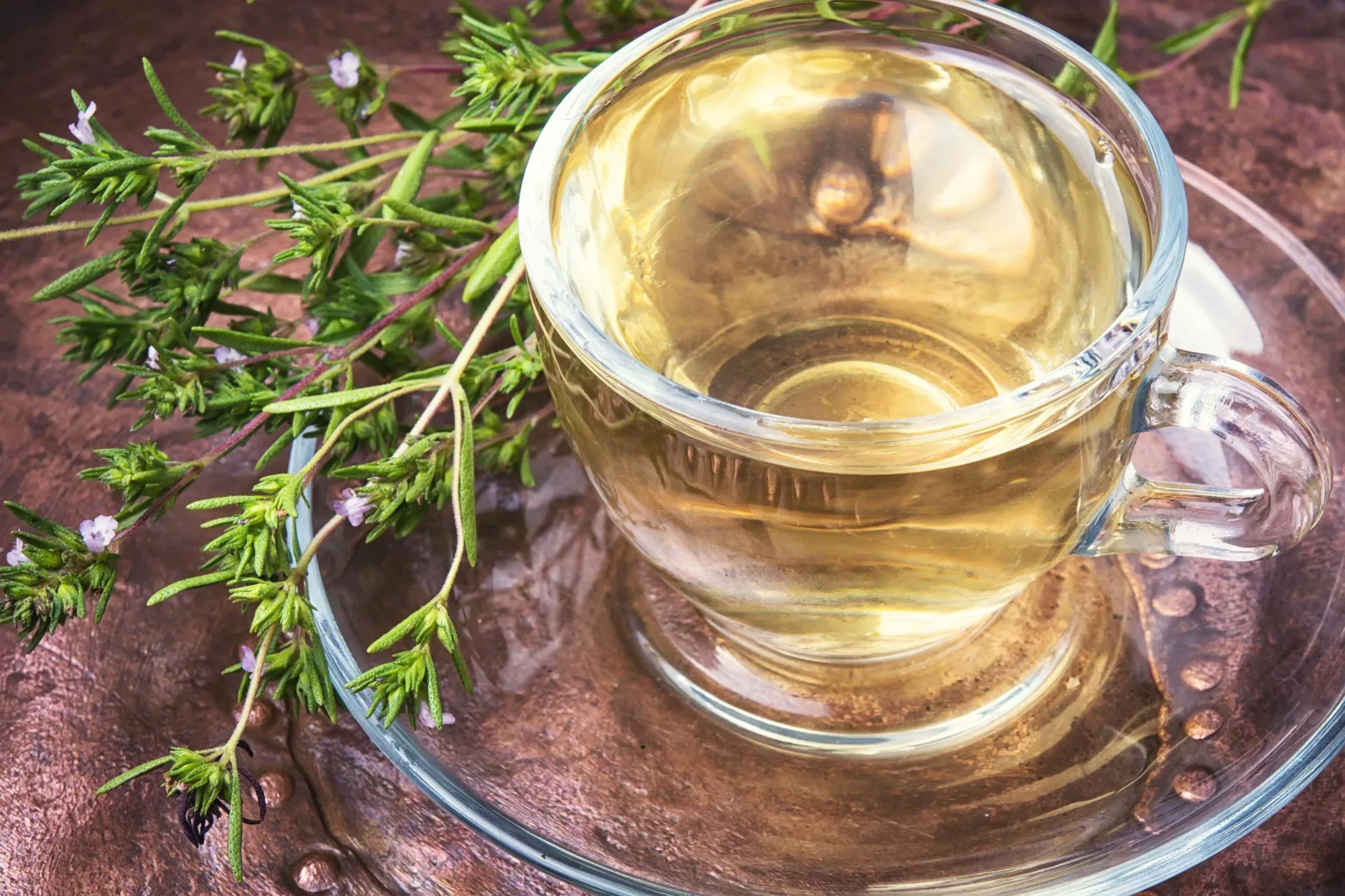
Zahter tea (zahter çayı) is an aromatic, thyme-scented Gaziantep herbal tea made by steeping the dried zahter herb in hot water. Called "zahter" in the Antep dialect, this herb is botanically Thymbra spicata, a wild thyme of the za'atar group. The tea is prepared from nothing but the dried leaves and flowering sprigs of the herb; it brews light and gives off a distinctive thyme-like aroma. This brewed expression of the city's deep-rooted zahter culture was registered as a geographical indication for Gaziantep in 2022.
The identity of zahter tea springs from the strength of a single herb: the aroma that zahter — its scent concentrated as it dries — releases into hot water. Behind it lies the deep history of zahter, one of Gaziantep's most recognised flavours. This herb is, above all, the crown of the famous Antep zahter breakfast; the tea is the plain, brewed expression of that same deep-rooted herb. In 2015 Gaziantep was admitted to the UNESCO Creative Cities Network as a City of Gastronomy, and zahter became one of the emblematic tastes of that culinary heritage.
What Is Zahter Tea?
Zahter tea is a plain, aromatic herbal tea made by placing the dried zahter herb in hot water and letting it steep. Its character comes not from any added ingredient but from the thyme-like aroma the herb concentrates as it dries and from its light, refreshing taste. When brewed it yields a pale, clear drink; the aroma is strong while the taste stays gentle. It is usually drunk hot, plain, though it can also be served with a little sugar, honey or lemon if desired.
Core Components
- Dried Zahter (Thymbra spicata): The single essential ingredient is the dried leaves and flowering sprigs of the herb. Harvested in spring, usually around May, the zahter is dried; as it dries its aromatic oils concentrate, and they release the thyme-like aroma once steeped in hot water.
- Hot Water: The hot water poured over the zahter draws out the herb's aroma and volatile oils to form the tea. The strength of the brew depends on the amount of herb and the steeping time.
- Optional Sweetener: The tea can be drunk plain or, to taste, sweetened with a little sugar, honey or a slice of lemon. These do not change its essence; the herb's own aroma always stays to the fore.
What Zahter Is — and Its Link to Za'atar
The herb called "zahter" in Antep is the local cognate of the Arabic word za'atar; locally it is also known as karabaş kekik, sater or zater. There is a nuance here: za'atar is a flavour and herb category spanning several species of the mint family (Lamiaceae) across the Eastern Mediterranean; it is not a single plant. The zahter of Antep is one particular member of that family, Thymbra spicata. In Levantine cuisine "za'atar" more often points to a different species (frequently Origanum syriacum). So Antep zahter and Levantine za'atar are herbs that share the same name and play the same role, botanical siblings rather than one and the same. This distinction is also what explains why zahter tea carries a flavour specific to Antep.
The History and Cultural Origins of Zahter Tea
The origins of zahter tea must be sought in the history of the herb itself. Zahter is a deep-rooted herb of Gaziantep and of the Southeast and Eastern Mediterranean; it sits at the centre of the region's food culture. Where the herb is most clearly the crown of the city is, without doubt, the famous Antep zahter breakfast; the tea is that same deep-rooted herb steeped in hot water. Here honesty is owed: the true bearer of the heritage is the herb. There is no documented founding date or originator for who "invented" zahter tea; the herb's presence in the region, by contrast, is very old. The 2022 geographical indication, likewise, does not mark the birth of the drink but the administrative recognition of an existing tradition.
Zahter Tea vs Zahter Honey
Because more than one registered Gaziantep product is associated with zahter, one confusion should be cleared up at the outset. Zahter tea, the subject of this page, is the herb steeped in hot water and carries its own geographical indication. Antep Zahter Honey is an entirely different product: it is a honey produced in the region where the zahter plant grows, and it holds its own registration (Designation of Origin No 1054). Both carry the name of the same herb, but one is a brewed herbal tea and the other a honey; the two are not conflated on this page.
Zahter tea is registered with TÜRKPATENT under Geographical Indication (Mahreç İşareti / mark of source) No 1110, as "Antep Zahter Çayı / Gaziantep Zahter Çayı," dated 18 May 2022, on behalf of the Gaziantep Commodity Exchange (Gaziantep Ticaret Borsası). The registration states that the tea is prepared from the plant Thymbra spicata and that production takes place within Gaziantep. This record should not be confused with the separate product Antep Zahter Honey (Designation of Origin No 1054); that is a honey, while this is a herbal tea.
The Zahter Tea Tradition and Ritual in Gaziantep
In Gaziantep, zahter is the emblem of a breakfast culture. The city's famous breakfast zahter (kahvaltılık zahter) is a blend made by grinding the zahter herb and combining it with menengiç, roasted chickpeas (leblebi), assorted seeds and spices; bread is dipped first in olive oil and then in this zahter mix to eat. Zahter tea is the brewed, drinkable expression of that same deep-rooted herb. So at an Antep table zahter takes its place both on the plate and in the glass; the herb gives flavour to the breakfast just as it offers its aroma in a hot glass of tea.
How It Is Brewed
Zahter tea is a hot herbal tea made by pouring hot water over the dried zahter and letting it steep for a while. As the herb's aroma passes into the water, a pale, thyme-scented drink emerges; it can be drunk plain or sweetened with a little sugar, honey or lemon. Zahter tea is traditionally regarded as a refreshing, soothing, digestion-easing drink; this is a traditional belief carried from generation to generation and should be taken as a cultural habit rather than as a medical claim. The true appeal of the tea is the aroma the zahter releases with hot water and its gentle taste.
Why You Should Try It
A glass of zahter tea carries Gaziantep's most recognised herb, and its deep-rooted breakfast culture, straight to the palate: the thyme aroma concentrated by drying, the pale clear brew and the gentle taste come together. For a visitor who has tasted the city's zahter heritage on the plate, drinking the same herb in a hot glass means getting to know another side of that flavour. Those who wish to explore Antep's beverage tradition can consider zahter tea alongside the city's other deep-rooted drinks such as menengiç coffee, licorice sherbet and pekmez.
Frequently Asked Questions
What is zahter tea and what is it made from?
It is a thyme-scented, aromatic Gaziantep herbal tea made by steeping the dried zahter herb (botanically Thymbra spicata, a wild thyme / za'atar species) in hot water.
Are zahter tea and zahter honey the same thing?
No. Zahter tea is the herb steeped in hot water. Antep Zahter Honey is a separate product and is a honey; it has its own registration (Designation of Origin No 1054).
Does zahter tea have a geographical indication?
Yes. It is registered with TÜRKPATENT under Geographical Indication No 1110 as "Antep Zahter Çayı / Gaziantep Zahter Çayı," dated 18 May 2022, on behalf of the Gaziantep Commodity Exchange; the plant is Thymbra spicata.
How is zahter tea brewed?
Hot water is poured over the dried zahter and left to steep for a while, then drunk hot; it can be taken plain or, if desired, sweetened with a little sugar, honey or lemon.