 Vegetarian
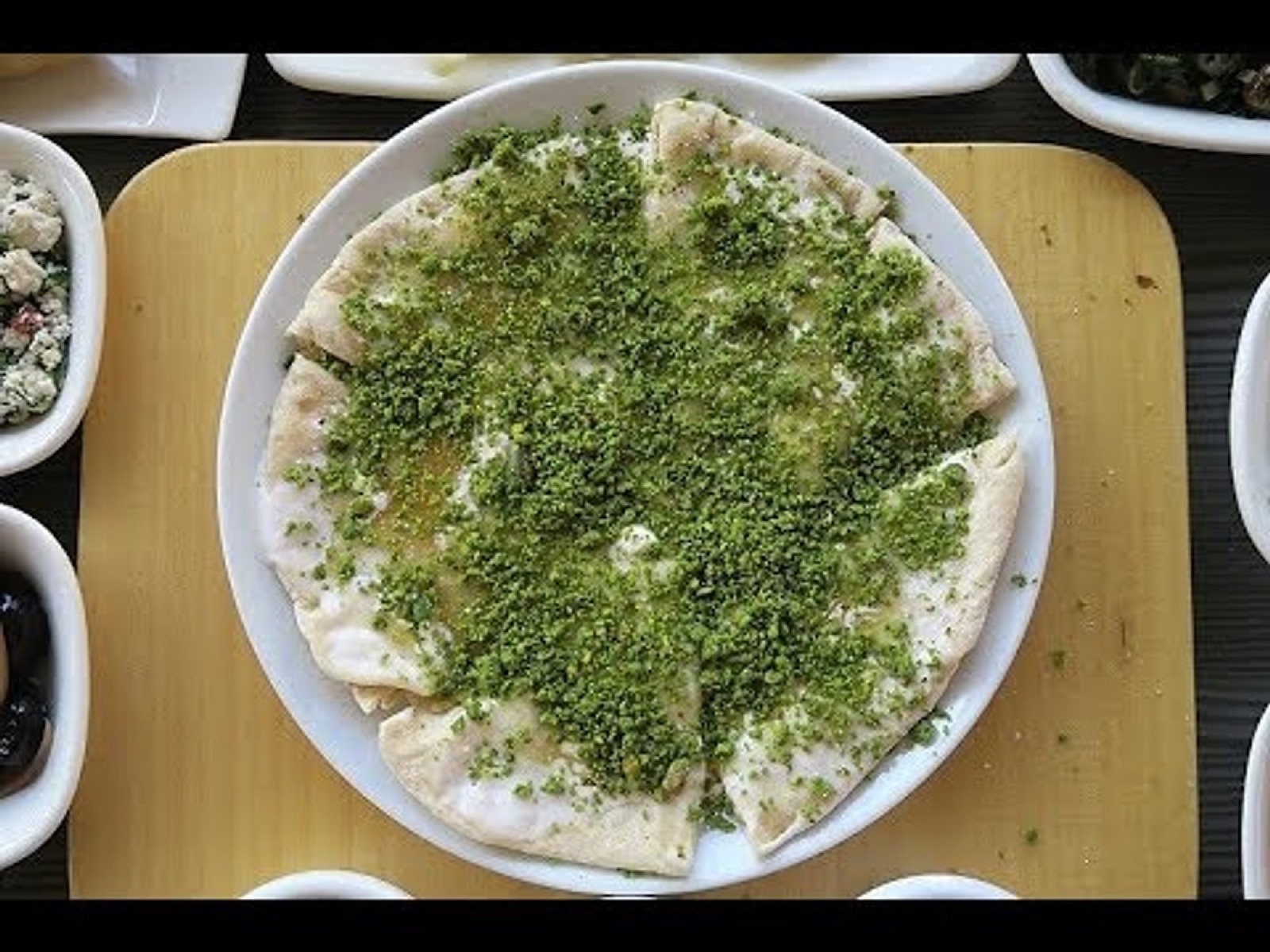
Batma kaymak is a regional treat particular to Gaziantep's sweet breakfast tables: thin, crisp bread dipped into runny milk-cream and finished with honey, sugar and boz-iç Antep pistachio. Also known as "kaymak batırma," the dessert's whole skill is gathered into a single gesture — a bite-sized piece of bread takes up the flowing cream not with a spoon but by being dipped, so that in every mouthful the softness of the cream, the sweetness of honey and sugar and the oily aroma of the pistachio arrive together. The "batma" in its name comes from this very act of dipping, or sinking, the bread into the cream.
The identity of the dessert lies not in an elaborate recipe but in the quality of a few plain elements: fresh milk-cream, traditionally collected before dawn and kept runny; thin, crisp bread; honey; granulated sugar; and powdered or coarsely crushed boz-iç Antep pistachio. This liquid cream is the layer that forms on the surface when milk is left to rest overnight in a wide vessel, and it can be prepared at this consistency only in certain villages around Gaziantep — which is the main reason batma kaymak is rarely found outside the city.
This article explores the world of ingredients that shapes batma kaymak, its simple dipping technique, its roots in Gaziantep's dairy and breakfast culture, and its seasonal place at the city's table.
What Is Batma Kaymak and What Is in It?
Batma kaymak is a sweet breakfast dish made by placing slices of thin bread on a serving plate and pouring runny milk-cream over them — or by dipping the bread directly into that cream — then scattering honey, granulated sugar and powdered Antep pistachio on top. What sets it apart from baked pastry desserts is that it needs neither stove nor oven: there is no cooking in the middle of it, only fresh ingredients meeting on a plate. No syrup is used; its sweetness comes from the honey and sugar added over the cream. In this sense batma kaymak is a table flavour that is quick to assemble but whose raw material is rare.
Core Components
- Liquid Milk-Cream: The base of the dessert is the runny milk-cream that forms on the surface when fatty milk is traditionally left to rest overnight in a wide vessel. Though it resembles sahan kaymak (set clotted cream), it is of a more flowing consistency; this is why it can be taken up by dipping the bread rather than spreading it with a spoon. Reaching its finest state in spring, when milk is abundant, this cream is the most distinctive and the hardest-to-find element of the dessert, since it can be obtained at this consistency only in particular villages.
- Thin Bread: The element that carries the cream is a thin, crisp bread. Described in local accounts as "round, crystal-like," these crisp breads soak up the cream when dipped and take on a bite-sized consistency. At some tables, thin pide taken from the bakery or breads prepared specially for cream are used.
- Honey: The first element to add sweetness to the oily, faintly savoury base of the cream is honey. Drizzled on top, the honey meets the cream to create a balanced sweetness and a flowing texture; it also reinforces the dessert's breakfast identity.
- Granulated Sugar: Scattered in addition to the honey or in its place, granulated sugar completes the sweetness with a grainy texture. In the traditional account, the bread dipped in cream is also described as eaten with only granulated sugar poured over it; the sugar gently brings out the plainness of the cream.
- Boz-iç Antep Pistachio: The signature touch of the dessert is the bright emerald-green boz-iç Antep pistachio. Usually scattered on top in powdered form or coarsely crushed, the pistachio adds a light crispness and its own oily aroma to the softness of the cream. Itself a geographically indicated product, this pistachio gives the dish both its colour and its Gaziantep identity.
The Geography of Its Service
Batma kaymak is a dessert that must be eaten fresh; because the runny cream does not keep, it usually comes to the table cold on the morning it is prepared. In Gaziantep it belongs to the sweet wing of the rich breakfast spread; alongside cheese, olives and hot drinks, it is served almost as a section that crowns the meal with something sweet. Its classic companion is tea, whose warmth and gentle astringency balance the oily, sweet texture of the cream. Because the runny cream is hard to transport out of the city, batma kaymak — unlike gift sweets such as Gaziantep baklava — has largely remained a flavour particular to Gaziantep's own tables.
The History and Cultural Origins of Batma Kaymak
The origins of batma kaymak rest on the deep-rooted dairy culture of Gaziantep and its surroundings and on a plain yet abundant breakfast tradition. Requiring no cooking and bringing fresh cream together with bread and pistachio, this dessert is an example of the approach of carrying the city's freshest produce to the table with the least processing.
A Tradition Built on Liquid Cream
What makes batma kaymak possible is the runny milk-cream traditionally prepared in the region. Resting fatty milk in a wide vessel and lifting off the cream from its surface in the morning is a village practice that has continued across generations. The fact that this cream is obtained at such a consistency only in certain villages and especially in spring, when milk becomes plentiful, has made batma kaymak a regional flavour bound to season and geography.
A Sweet Corner of the Gaziantep Breakfast
Local accounts and artisan memory tie batma kaymak to Gaziantep's older breakfast tables; sources record the dessert as eaten in the 1970s with fresh cream taken early in the morning, the crisp breads dipped into the cream and granulated sugar poured on top. While these accounts show the dessert's deep-rooted place in the city's breakfast culture, a precise starting date is not documented; for this reason batma kaymak is best regarded as part of Gaziantep's deep-rooted dairy and breakfast tradition.
The Meaning of Its Name
The name of the dessert describes its preparing gesture directly: the bread's "sinking," that is, being dipped, into the liquid cream. This is why the dish is known both as "batma kaymak" and as "kaymak batırma." The plainness of the name, like the dessert itself, is free of show; it is the name not of a recipe but of a gesture.
The Batma Kaymak Tradition and Ritual in Gaziantep
In Gaziantep, batma kaymak is not merely a dessert; it is part of the morning, of the season and of sharing. Within the city's sweet breakfast culture it holds a place of its own as an awaited flavour compressed into the short season when fresh cream can be found.
The Sweet of Spring Mornings
Batma kaymak's place at the table depends largely on the season. In the spring months, when milk and therefore cream become plentiful, batma kaymak made with fresh cream becomes the sought-after sweet of Gaziantep's breakfast tables. At a morning breakfast that falls in its season, batma kaymak is one of the seasonal flavours that set the rhythm of the city's table.
The Craft of Dipping
Batma kaymak calls not for cooking but for a touch. The crisp bread is dipped into the runny cream without pressing too hard and lifted slowly, just enough to take the cream onto itself; then honey, granulated sugar and powdered pistachio are scattered over it. The aim is for the bread to soak up the cream without falling apart. This plain gesture brings the flowing quality of the fresh cream and the crispness of the bread together in a single bite. The knowledge of preparing fresh milk-cream and carrying it to the table with this delicacy is part of the rich culinary heritage that was one reason for Gaziantep's admission to the UNESCO Creative Cities Network in the field of gastronomy in 2015.
Its Place at the Table
In Gaziantep, batma kaymak is often the centrepiece of a sweet breakfast; alongside cheese and olives, it is served almost as a section that closes the meal with something sweet. Those curious about the relationship Gaziantep cuisine builds with the pistachio and with cream can follow the journey of the boz-iç Antep pistachio and of cream from dessert to kebab in signature dishes such as Gaziantep katmer and pistachio kebab.
Why You Should Try It
A single plate of batma kaymak carries Gaziantep's plain yet abundant morning culture to the palate in one bite: the crispness of the thin bread, the softness of the liquid cream, the sweetness of honey and sugar and the oily aroma of the boz-iç pistachio all arrive at once. Drenched in no syrup and requiring no stove, it is a balanced flavour rather than a heavy one. And because the runny cream can be found only in certain villages and within a short season, the truest way to taste batma kaymak is to eat it in the city where it was born, with fresh cream on a spring morning.
Frequently Asked Questions
What is batma kaymak and where is it from?
It is a sweet breakfast dish particular to Gaziantep: thin, crisp bread dipped into runny milk-cream and finished with honey, sugar and boz-iç Antep pistachio.
What is in batma kaymak?
It uses runny milk-cream, thin bread, honey, granulated sugar and boz-iç Antep pistachio. No syrup is used; its sweetness comes from the honey and sugar.
Why is it called "batma"?
The name comes from the act of dipping, or sinking, the bread into the runny cream. For this reason the dish is also known as "kaymak batırma."
How and when is batma kaymak eaten?
It is eaten fresh and cold, usually in spring as part of a sweet breakfast and served with tea. It requires no cooking.
Why is batma kaymak hard to find outside the city?
The runny milk-cream at its heart is traditionally prepared at this consistency only in certain villages around Gaziantep and does not keep, so it largely remains particular to Gaziantep.