 Vegetarian
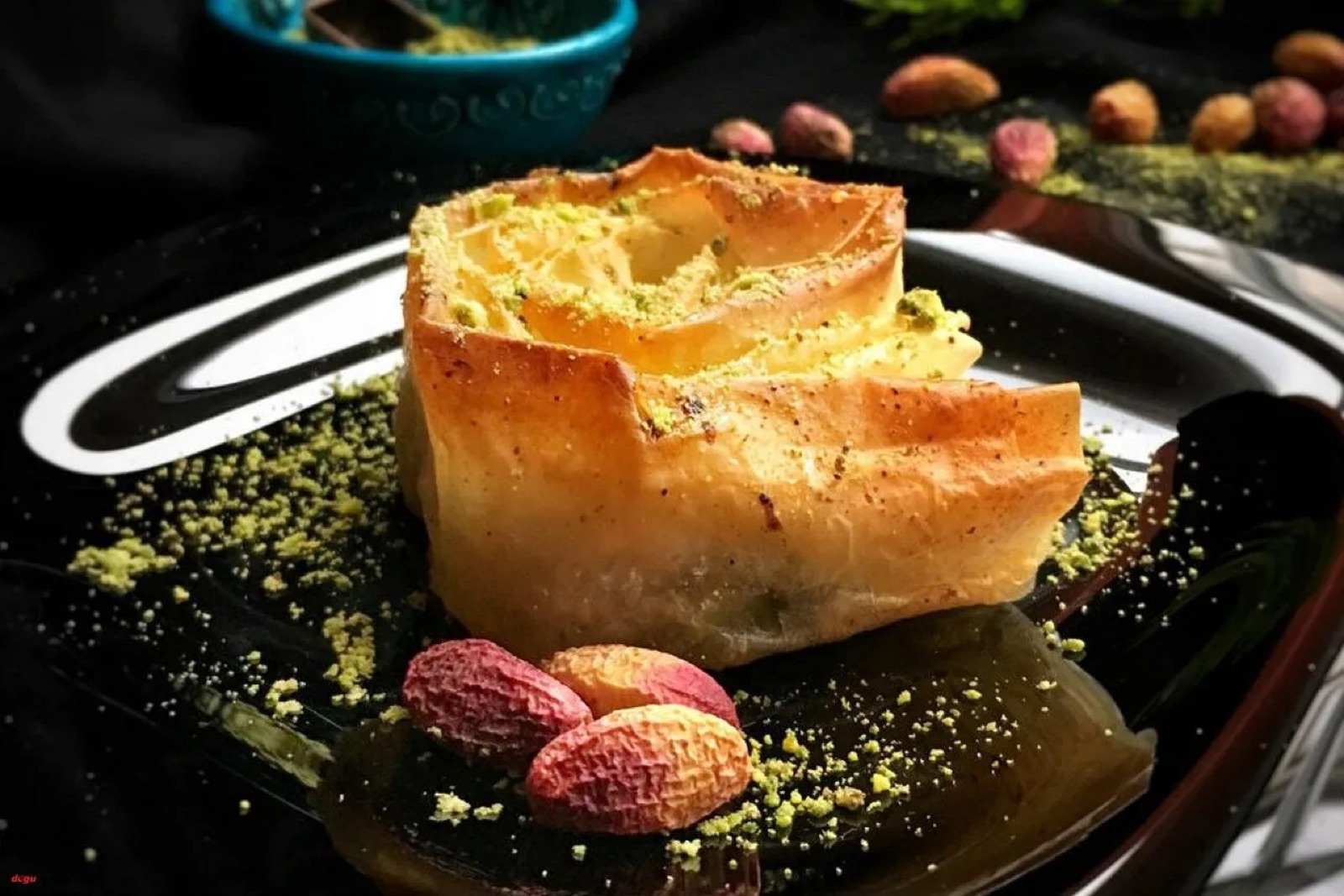
Dolangel dessert (Dolangel Tatlısı) is a syrup-soaked pastry particular to Gaziantep: paper-thin baklava phyllo rolled around a kaymak filling and coarsely crushed Antep pistachio or walnut, turned on its own axis into a cylinder, drizzled with clarified butter and baked, then doused with hot syrup. The crisp folds of the outer phyllo, the creamy filling within and the sweetness of the syrup come together in a single bite. Filed through an application by the Gaziantep Metropolitan Municipality, Gaziantep dolangel dessert was registered as a geographical indication by TÜRKPATENT on 15 November 2021 (Geographical Indication / Mahreç İşareti, Reg. No: 947).
The identity of the dessert springs from a few essentials: baklava phyllo kneaded with egg and starch and opened until almost translucent; a thick kaymak (clotted cream); Antep pistachio or walnut; clarified butter; and a lemon-touched sugar syrup. As the "dolan-" root in its name suggests, the essence of the dessert lies in the winding of the filling within the phyllo — the turning that gives it both its shape and its name.
What Is Dolangel Dessert and What Is in It?
Gaziantep dolangel is a pastry dessert made by spreading a kaymak filling across baklava phyllo, drizzling it with melted clarified butter and scattering Antep pistachio or walnut over it, then — without pressing it tight — turning the phyllo on its own axis into a cylinder roughly 2.5-3 centimetres in diameter, before arranging it on a tray and baking it. Its name describes this winding of the filling within the phyllo. What sets it apart from baklava is that, rather than many stacked layers, a single sheet is wound around the filling to form a hollow roll with a milk-based custard inside. The dessert is doused with boiling syrup the moment it leaves the oven; once it has drunk in the syrup, it is served hot.
Core Components
- Baklava Phyllo: The backbone is baklava phyllo, kneaded from flour, egg, starch, salt and water, rested and then opened to an almost translucent thinness. The geographical indication recipe calls for around twenty sheets for a single tray of dolangel. Opened this thin, the phyllo gives the dessert its ruffled, many-layered look once wound around the filling.
- Kaymak: The soft bed of the filling is kaymak (clotted cream). This creamy filling creates a soft contrast inside the crisp phyllo, turning dolangel from a dry pastry into a milk-based dessert.
- Antep Pistachio or Walnut: The aroma and texture come from coarsely crushed Antep pistachio or walnut scattered over the custard. Antep pistachio — itself a geographically indicated product — lends dolangel its emerald colour and oily aroma, while the walnut version offers a fuller, earthier taste; the registered recipe permits both.
- Clarified Butter (Sadeyağ): The clarified butter brushed between the layers and drizzled over the rolls gives dolangel its crispness and golden colour. In the oven's heat this fat crisps the folds of the phyllo and keeps the outside crisp even after it has drunk in the syrup.
- Sugar Syrup: Dolangel's sweetness comes from a syrup made by boiling water and white sugar with a few drops of lemon juice. Poured boiling over the rolls fresh from the oven, it works into the folds of the phyllo, giving the dessert its balanced sweetness and moist texture.
The Geography of Its Service
With its syrup and milk-based filling, dolangel is generally eaten fresh and hot; once it has drunk in the syrup it is plated and finished with a further scattering of crushed Antep pistachio. In Gaziantep it mostly comes from the benches of baklava makers and master confectioners; once prepared at home, today it more often arrives to order. Because of its milk-based filling, dolangel — unlike long-keeping gift sweets such as baklava or pistachio paste — has remained a flavour particular to the city, suited to being eaten on the day it is made.
The History and Cultural Origins of Dolangel
The origins of Gaziantep dolangel rest both on Anatolia's deep-rooted tradition of thin phyllo and on Gaziantep's abundance of pistachio, walnut and dairy. Although winding phyllo around a filling and soaking it in syrup is a common logic of Turkish pastry-making, the form known today as "Gaziantep dolangel" gained its distinctive identity by meeting the city's pistachio and its creamy custard.
A Deep-Rooted Thin-Phyllo Tradition
The art of opening thin phyllo and winding it around a filling is part of the centuries-old accumulation of Anatolian cuisine. Local accounts position dolangel among Gaziantep's older desserts, and some speak of it as a deep-rooted relative of the baklava family. While these accounts show the dessert's cultural place, a precise starting date is not documented; for this reason dolangel is best regarded, historically, as part of the region's heritage of phyllo and syrup-soaked pastry.
Its Name and Form
The name dolangel is tied directly to the gesture of its making: because the phyllo is turned and "wound" around the filling, it takes this name. The same dessert is also known in some regions by pronunciations such as "dolanger." In Gaziantep it has become identified with the form prepared using the city's pistachio and creamy custard; the crisp folds of the cylindrical roll and the milk-based filling set it in a place of its own within the city's dessert repertoire.
Geographical Indication Registration
Gaziantep dolangel went through an official registration process to protect its region-specific ingredients and method of production. The process, begun through an application by the Gaziantep Metropolitan Municipality, was filed on 16 October 2020 and concluded with a geographical indication registration by TÜRKPATENT on 15 November 2021 (Geographical Indication / Mahreç İşareti, Reg. No: 947). The registration guarantees that the name "Gaziantep dolangel dessert" may be used only for a product tied to the Gaziantep region and made with the defined ingredients and method.
Gaziantep dolangel dessert was entered into the TÜRKPATENT geographical indications register as a Geographical Indication (Mahreç İşareti, Reg. No: 947) on 15 November 2021; the application was made on 16 October 2020 by the Gaziantep Metropolitan Municipality. The registration document defines the method of production, from opening the baklava phyllo and cooking the custard, to winding the phyllo into a cylinder and baking it at around 180 degrees, to bringing it together with hot syrup.
The Dolangel Tradition and Ritual in Gaziantep
In Gaziantep, dolangel is part of the city's culture of syrup-soaked desserts; it finds its place on special days, in welcoming guests and at the dessert table. Alongside the baklava and kadayıf family, its milk-based filling adds a different texture to this repertoire.
A Dessert for the Guest Table
Dolangel is most often prepared in Gaziantep as a dessert for offering and sharing. Served hot and suited to being eaten on the day it is made, it is a guest dessert that comes to the table the day it is prepared. Within the city's confectionery tradition, it is remembered as a flavour that has stood in baklava's shadow yet holds its place on the local palate, offering a different option with its milk-based filling.
The Craft of the Confectioner
Dolangel is defined as much by its winding and baking technique as by the thinness of its phyllo. The phyllo is wound loosely, not pressed tight, so that air remains inside; this lets the folds open and crisp in the oven. The filled rolls are arranged on a tray, drizzled with clarified butter and, according to the registered recipe, baked at around 180 degrees until the tops turn golden, then doused with hot syrup the moment they leave the oven. Opening the phyllo thin and winding it so that it holds air is a skill handed down from master to apprentice — handwork that is part of the diversity of crafts behind Gaziantep's admission to the UNESCO Creative Cities Network in gastronomy in 2015.
Its Place at the Table
In Gaziantep cuisine, dolangel holds a corner of its own, with its milk-based filling, alongside syrup-soaked signature desserts such as baklava and burma kadayıf. Those curious about the relationship Gaziantep cuisine builds with the pistachio can follow the nut's journey from dessert to kebab in signature dishes such as pistachio kebab.
Why You Should Try It
A single slice of fresh dolangel carries Gaziantep's culture of syrup-soaked desserts and its bond with the pistachio to the palate in one bite: the crisp folds of the cylindrical roll, the soft kaymak filling within and the sweetness of the syrup all arrive at once. It is not a dry pastry but a balanced dessert set apart from baklava by its milk-based filling. And because it is at its truest served hot, the best way to taste dolangel is in the city where it was born, fresh from a master's hands.
Frequently Asked Questions
What is dolangel dessert and where is it from?
It is a pastry dessert particular to Gaziantep: baklava phyllo wound around a kaymak filling and Antep pistachio or walnut into a cylinder, baked and then soaked in syrup.
What is in dolangel dessert?
It uses baklava phyllo, a kaymak filling, Antep pistachio or walnut, clarified butter and sugar syrup. Its sweetness comes from the syrup poured over it after baking.
Does dolangel dessert have a geographical indication?
Yes. Gaziantep dolangel dessert was registered as a geographical indication by TÜRKPATENT on 15 November 2021 (Mahreç İşareti, Reg. No: 947).
What is the difference between dolangel and baklava?
Baklava is built from many stacked layers of phyllo, while in dolangel a single sheet is wound around the filling to form a hollow roll, and its filling holds a milk-based custard.
How is dolangel dessert served?
It is served hot once it has drunk in the syrup, finished with a scattering of crushed Antep pistachio. Because of its milk-based filling it is best eaten on the day it is made.