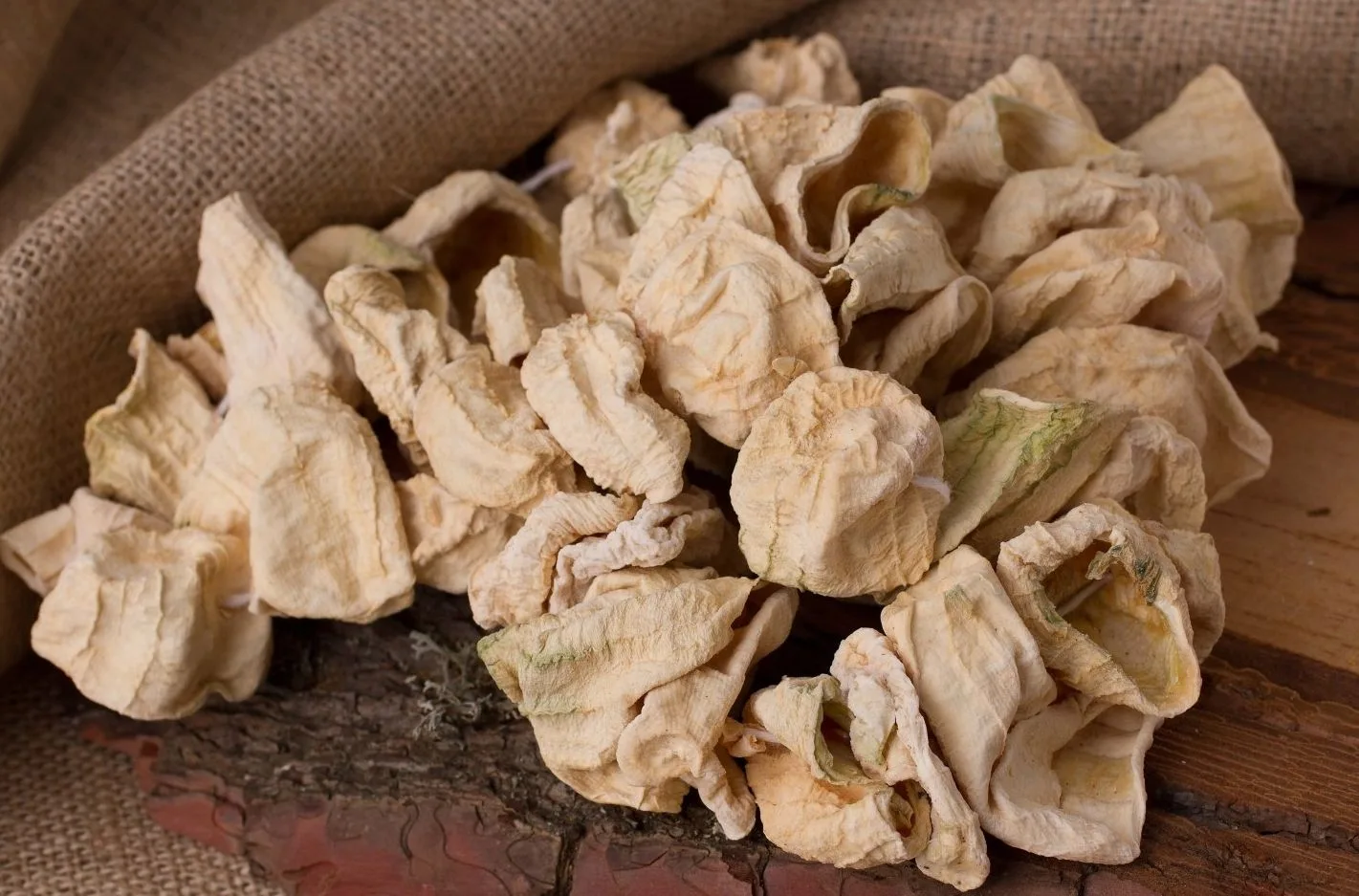
Dried Haylan Squash (in Turkish "Antep Haylan Kabağı Kurusu") is the squash grown in the Haylan locality of Gaziantep's Şahinbey district, hollowed and strung to dry in the sun. Carrying the abundance of summer gardens into winter, this dried stuffing gourd is rehydrated in the cold months and filled to become a winter dolma. One of the most cherished examples of the region's dried-vegetable (kurutmalık) tradition, the product is registered with TÜRKPATENT under the name "Antep Haylan Kabağı Kurusu."
The identity of Dried Haylan Squash rests on two things: the distinctive local type of the squash, and the drying method that prepares it for winter. Thin-skinned and pale, this squash is hollowed out, strung on thread, and dried for days in the sun and wind of Antep. What remains are slender, pale green-yellowish shells swaying on hanging strings. When winter comes, these shells are softened in water and stuffed for the table; thus a flavor that ripened all summer goes on living in Antep cuisine long after its season has closed.
What Is Dried Haylan Squash?
Dried Haylan Squash is a kurutmalık (dried) product made by hollowing out the ripe, harvested fruit of the squash grown in the Haylan locality (botanical name Lagenaria siceraria) and drying it through the natural effect of sun and wind. Used for stuffing, this squash enters the kitchen not in its fresh form but as a thin, durable dried shell. In this state it is neither a spice nor a fresh vegetable but, directly, a stuffing gourd prepared for winter: the inside of the shell is left empty so that, once softened in water in the cold months, it can be filled with a stuffing mixture.
Defining Characteristics
- The Local Squash (Lagenaria siceraria): The product comes from the thin-skinned squash type grown in the Haylan locality, well suited to hollowing. It is not a thick-fleshed table squash but this local type, which gives a thin, sturdy shell once dried.
- Hollowed-Out Shell: The inside of the squash (seeds and core) is scooped out, leaving a thin shell ready to be filled. What is dried is precisely this empty shell.
- Sun and Wind Drying: The hollowed shells are strung on thread and dried for days in the open air, through the combined effect of sun and wind. This natural drying makes the shell durable for a long time.
- Pale Green-Yellowish Color: As it dries, the shell takes on a color shading from pale green to faintly yellowish, and a brittle, thin texture. These pale shells on hanging strings are a familiar sight of the winter preparations in Antep homes.
A Stuffing Gourd Prepared for Winter
In Gaziantep cuisine, the kurutmalık tradition is a deep-rooted way of carrying the taste of the season of plenty into winter, and Dried Haylan Squash is one of its clearest representatives. The squash that ripens in summer becomes storable for months once dried, and waits ready for the winter table's dolma. In this respect the dried squash shares the same logic as the region's other dried goods — from dried eggplant to dried peppers: to tie the season of a fresh product to winter through patient drying.
History and Geographic Origins of Dried Haylan Squash
Haylan is a locality within Gaziantep's Şahinbey district; the squash that bears its name draws its origin from this place's soil and climate. Grown in deep, permeable soils, the squash ripens in late summer; it is then hollowed and dried to be made ready for winter. The tradition of drying vegetables reaches far back in this geography: in periods when keeping fresh produce for long was difficult, sun-drying was one of the most reliable ways of sustaining the winter kitchen. It would not be right to claim a specific date or a "first made in such-and-such year" here; what is known is that drying squash is a settled preparation in this locality, passed down from generation to generation.
The Registration of Dried Haylan Squash
The place of Dried Haylan Squash in Gaziantep cuisine is also visible in the geographical indication the product holds under its own name. "Antep Haylan Kabağı Kurusu," as a product representing a particular growing, hollowing and drying tradition of the region, is registered with TÜRKPATENT as a mark of source (Geographical Indication). An important detail is that the dried form of the squash has its own separate registration: the dolma and the jam made from the same squash are also registered separately. In other words, the dried stuffing gourd is a Gaziantep product protected in its own right.
Dried Haylan Squash is registered with TÜRKPATENT under the name "Antep Haylan Kabağı Kurusu / Gaziantep Haylan Kabağı Kurusu" as a Geographical Indication (mark of source / Mahreç İşareti) — Registration No 1067, 2022. The dried form, the dolma and the jam of the squash each hold separate registrations. This record places the dried stuffing gourd among Gaziantep's geographically indicated products.
Dried Haylan Squash in Gaziantep Cuisine
In Gaziantep cuisine, Dried Haylan Squash is a winter ingredient that comes into play when its season arrives. In the cold months, the dried shells are softened in water and made ready to be filled again; once stuffed with a mixture, the winter counterpart of the summer dolma comes to the table. In this respect the dried squash is a plain but valued cornerstone that lets Antep homes carry on the dolma tradition in the months when fresh vegetables are scarce.
Which Dishes Use It?
The best-known use of the dried shell is Haylan Squash Dolma, made by softening it in water and then filling it; this is also the dish with which the product shares its name and its registration. The dried squash is likewise a constant part of Antep's kurutmalık table; winter dolmas are often brought together in the same pot or at the same table with other dried goods such as Dried Eggplant. This dried-vegetable culture of the region reaches the same root as traditions like Oğuzeli Kurutmalık, where various vegetables are strung and dried together: to carry the season of plenty patiently into winter.
Why It Matters
Dried Haylan Squash is one of the products that best tells of Gaziantep's mastery in preserving the seasons. Within a thin shell, the labor of a whole summer's squash is kept; when winter comes, this shell meets water, comes back to life, and turns into one of the warmest dishes at the table. Both through its registered identity and through its place in the winter preparations of homes, the dried squash is a fundamental kurutmalık that carries the season-spanning memory of Antep cuisine. The truest way to know it is through that autumn sight of shells strung on thread, swaying in the sun.
Frequently Asked Questions
What is Dried Haylan Squash and how is it made?
It is a dried (kurutmalık) stuffing gourd made by hollowing out the squash grown in the Haylan locality (Lagenaria siceraria) and drying it in the sun and wind. The thin dried shell is rehydrated in winter and filled before use.
What is Dried Haylan Squash used for?
It is a winter stuffing gourd. In the cold months the dried shells are softened in water and filled with a stuffing mixture to make a winter dolma; it is the winter counterpart of the dolma made with fresh squash in summer.
Is Dried Haylan Squash registered?
Yes. It is registered with TÜRKPATENT under the name "Antep Haylan Kabağı Kurusu" as a Geographical Indication (mark of source), Registration No 1067, 2022. The dried form, the dolma and the jam of the squash each hold separate registrations.
What is the difference between fresh Haylan squash and the dried form?
The fresh squash is stuffed and cooked directly in season; the dried form is hollowed and sun-dried to be kept for winter. Before use, the dried shell is softened in water and made ready to be filled again.