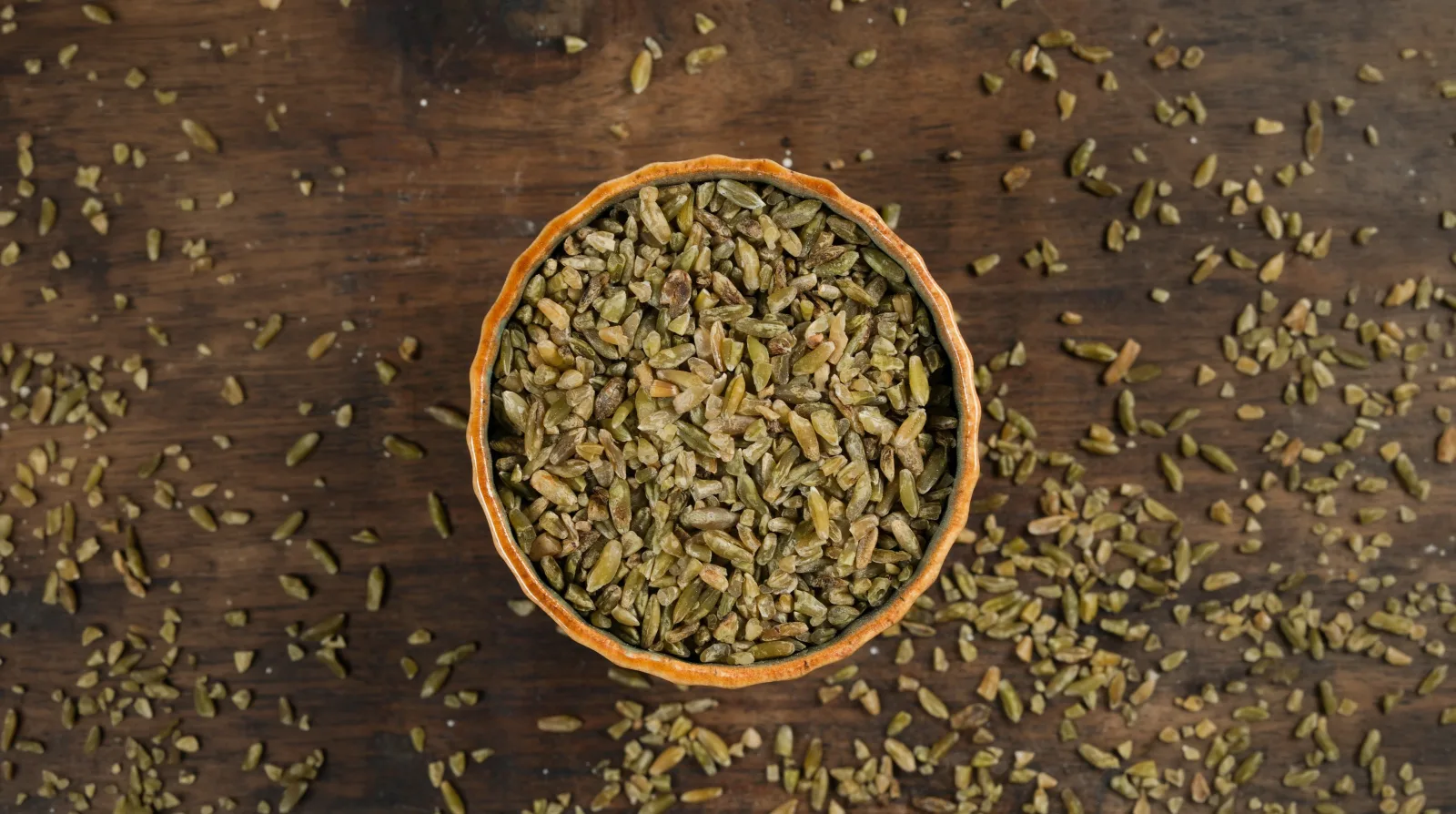
Firik is young durum wheat, harvested early while still green in the field and then fire-roasted. When the ears are set alight with their husks on, only the straw and chaff burn; the moist grain inside roasts in the heat, gaining a distinctive smoky aroma and a chewy bite. Known internationally as freekeh, this grain — locally called "Antep Firiği" (Gaziantep firik) — is a part of the city's deep-rooted cereal culture, alongside ingredients such as Antep bulgur.
Firik is registered by TÜRKPATENT as a Designation of Origin (No 244) under the name "Antep Firiği"; the registration was made in 2017. This page is about the raw material — the grain itself — not a cooked dish. The pilaf made from it, Firik Pilaf, holds a separate geographical indication (Geographical Indication No 728) and is a different entry. From the origin of its name to the registration distinction, this page sets out why firik holds a special place in Gaziantep cuisine.
What Is Firik (Freekeh)?
Firik is a grain obtained when the kernels of durum wheat are still unripe and the ear is green: it is harvested early, while the husks are on, and fire-roasted. Timing is the essence of firik — the grain is cut once it has passed the milky stage and become firm and moist, but before it hardens and dries. During roasting, the outer straw and chaff burn while the moist grain roasts inside; it is then threshed (rubbed) free of its burnt husk and dried. The result is a greenish-brown grain with a smoky aroma, plump and chewy to the bite.
Defining Characteristics
- Young (green) durum wheat: Firik is made from unripe, still-green durum wheat. Being drawn from grain cut early — firm and moist — rather than from fully ripened golden wheat is what sets it apart from ordinary wheat products.
- Field fire-roasting: The signature of firik is the roasting of the cut ears, husks and all, over fire. The fire is managed so that only the outer straw and chaff burn, while the grain inside stays whole and roasts.
- Smoky aroma: This roasting technique gives firik a pronounced smoky scent found in no other grain. The most distinctive trait of firik is precisely this aroma, which lingers on the palate even after cooking.
- Chewy texture: Early harvest and roasting give the grain a firm, plump, slightly chewy structure. Firik does not turn mushy when cooked; it stays grain-by-grain and filling.
Firik or Antep Firiği?
"Firik" is the general name of the grain; "Antep Firiği" is its registered name in Gaziantep, corresponding to the Designation of Origin (No 244) granted to the raw material — the wheat itself. This clears up a point that is often confused: the dish made from firik, Firik Pilaf, holds a separate registration (Geographical Indication No 728) and is a different product. In short, firik is the ingredient and Firik Pilaf is the dish prepared from it; the two are protected by distinct geographical indications.
History and Geographic Origins of Firik
The technique of preserving young wheat by roasting it over fire is an ancient one, long known across the broad region called the Fertile Crescent — the cradle of cereals stretching from the Eastern Mediterranean to Mesopotamia. This is among the lands where wheat was first domesticated; cutting wheat early, before it ripened, and roasting it over fire was a practical way both to save the harvest from rain or possible scarcity and to obtain a usable food. Gaziantep sits squarely within this ancient cereal belt, and the firik tradition settled into the city's cuisine on this deep-rooted foundation.
The Origin of the Name
The names "firik" and its international counterpart "freekeh" come from the Arabic root f-r-k — faraka, "to rub." The name points directly to a production step: once roasted and dried, the ears are rubbed (threshed) to separate the grain from its burnt husk. So what gives firik its name is exactly this "rubbing" motion used to clean the grain after roasting. The same root also reflects the shared memory of this grain across a wide region reaching from the Eastern Mediterranean into Anatolia.
Firik is registered with TÜRKPATENT under the name "Antep Firiği" as Designation of Origin No 244 (registered 2017). This record protects the raw grain. The dish made from firik, Firik Pilaf, is a separate geographical indication (Geographical Indication No 728); the two are distinct registrations and should not be confused with each other.
Firik in Gaziantep Cuisine
In Gaziantep, firik is one of the staple grains of the kitchen. Standing alongside the city's wheat and bulgur culture, firik lends a distinctive character — through its smoky aroma and chewy texture — to many dishes, from pilafs to stuffed vegetables, from soups to fillings. In Antep cuisine an ingredient is prized when it stays grain-by-grain, does not turn mushy, and carries a scent of its own; firik meets all of these expectations.
Which Dishes Use It?
The best-known use of firik in Gaziantep is the dish that bears its name, Firik Pilaf, where the smoky grain sets the pilaf's main character. Firik also finds its place in the fillings of stuffed vegetables and wraps — for example, in Firik Stuffed Acur, the filling placed inside fresh acur is prepared with firik. The city's other deep-rooted grain product, Antep bulgur, is often mentioned together with firik; both carry the whole-grain tradition of the Gaziantep table, yet firik stands apart through its raw material and its smoky aroma.
Why It Is Special
What makes firik special is that, beyond being an ordinary grain, it gathers a whole tradition and technique into a single kernel. The timing of the early harvest, the fire-roasting done in the field, and the rubbing and drying that follow — all of these produce that smoky scent and firm texture found in no other wheat product. That Antep Firiği is registered as a Designation of Origin also formally recognises this grain's local identity and method of production. Firik, in short, is an ingredient both deep-rooted and distinctly its own, carrying Gaziantep's ancient cereal culture into the present day.
Frequently Asked Questions
What is firik (freekeh)?
Firik is young durum wheat harvested early while still green and fire-roasted in the field. The roasting gives it a smoky aroma and a chewy texture; internationally it is known as "freekeh."
Are firik and Firik Pilaf the same thing?
No. Firik is the raw material — the wheat grain itself (Antep Firiği, Designation of Origin No 244). Firik Pilaf is the dish prepared from that grain and holds a separate registration (Geographical Indication No 728).
What is the difference between firik and bulgur?
Both come from wheat, but bulgur is made by boiling, drying and cracking fully ripened wheat; firik is obtained by fire-roasting unripe green wheat and has a smoky aroma that bulgur does not.
Where does the name "firik" come from?
The name comes from the Arabic root f-r-k (faraka, "to rub"). Rubbing the roasted, dried ears to separate the grain from its burnt husk is the key production step, and the name arises from this "rubbing" motion.