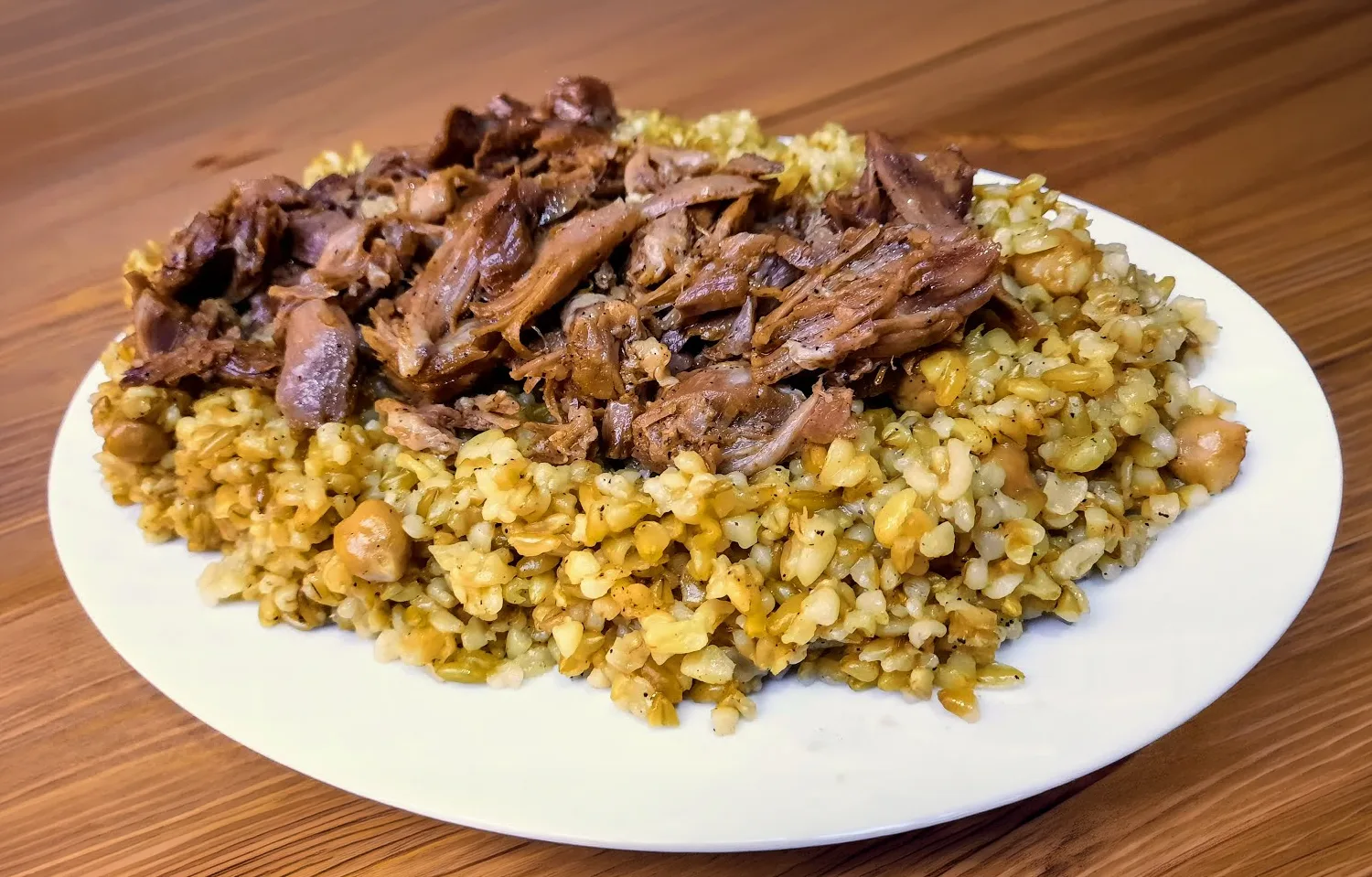
Firik pilaf (Firik Pilavı) is a registered Gaziantep dish made by blending firik — fire-roasted young green durum wheat — with Antep bulgur and cooking it with meat. Firik is the Turkish name for freekeh, and its smoky aroma and chewy, full-bodied bite are what set this dish apart from an ordinary bulgur pilaf. Registered by TÜRKPATENT as a geographical indication (No 728), firik pilaf is one of the strongest expressions of Antep cuisine's distinctive grain-roasting culture.
The identity of firik pilaf springs from a flavour you will not find in ordinary grain: the wheat is turned into firik while still in the field and still green, roasted over fire; this is why the grain both smells smoky and stays firm rather than turning to mush when cooked. It holds a deep-rooted place at the Gaziantep table both as a pilaf served alongside (often meat) mains and, when topped with boiled lamb ("kapamalı"), as a substantial main dish in its own right.
What Is Firik Pilaf and What Is in It?
Firik pilaf is a regional Gaziantep dish made by cooking firik — fire-roasted green wheat — together with Antep bulgur, carried by the flavour of meat and spices. Its character comes from the grain itself: the smoky aroma firik gains in the field and its firm texture. Because it is most often cooked with meat or in the meat's liquid, it is a filling, full-bodied and aromatic pilaf; a version with chickpeas added (nohutlu firik pilavı) is also much loved.
Core Components
- Firik (Antep Firiği): The signature of the dish is firik, fire-roasted young green durum wheat. The registration record specifies that the pilaf is made with Antep Firiği; the firik grain gives the pilaf its smoky aroma and chewy texture.
- Antep Bulgur: The registration lists Antep bulgur alongside firik; the blend of these two grains balances the texture and body of the pilaf.
- Meat: Traditional firik pilaf contains diced or ground meat; the grain is often cooked in the meat's liquid to flavour it. In its festive form, boiled lamb is arranged over the pilaf ("kapamalı").
- Clarified Butter / Butter: The traditional fat of the pilaf is sadeyağ (clarified butter) or butter, used to toast the grain and give it a rich taste. (When a meatless version is wanted, an olive-oil form is also known, but it is not the dish's default state.)
- Onion, Paste and Spices: Onion, tomato or pepper paste, salt and black pepper flavour the base of the meat version; a very common add-in is chickpeas.
What Firik Is — and How It Differs from Bulgur and Rice
Firik (freekeh) is obtained by roasting and charring wheat over fire in the field while it is still young and green, with the ears still on; the grain is then threshed (rubbed) free and dried. It is exactly this roasting step that gives the wheat its smoky aroma and firm texture. Ordinary bulgur, by contrast, is made from fully ripe wheat that is boiled, dried and then cracked — so one is green and roasted, the other ripe and boiled. It also differs from rice in both grain type and texture: firik is firmer, chewier and distinctly smoky. The name "firik" is taken from the Arabic root meaning "to rub" (f-r-k), describing the step of rubbing the grain free of the ear.
The History and Cultural Origins of Firik Pilaf
Firik is an ancient grain-processing technique not of a single cuisine but of the Fertile Crescent and the Eastern Mediterranean: harvesting wheat while green, roasting it over fire in the field, threshing and cleaning it, and drying it. Besides being a practical way of using even unripened wheat in lean times, this method was kept alive over centuries because it yields a smoky, nourishing grain. In Gaziantep and the surrounding Southeast, firik has become deeply rooted in the culinary culture through both this roasting tradition and the pilaf made from it. It would not be correct to tie the origin of firik to a single city or a single date; it is a living technique that has belonged to the region over centuries.
The Dish vs the Grain — Firik Pilaf or Antep Firiği?
Here it is important not to confuse two separate registrations. Firik Pilavı (firik pilaf) is the cooked dish itself, registered with TÜRKPATENT as a geographical indication (No 728). Antep Firiği is a separate registration for the raw grain the pilaf is made from — the freekeh itself — and carries a different registration number. In short, one is the pilaf that comes to the table and the other is the grain that is its raw material; though part of the same flavour family, their official records are separate.
Firik pilaf is registered with TÜRKPATENT under the name "Gaziantep / Antep Firik Pilavı" as a geographical indication (No 728; registered 19.04.2021). The registrant is the Gaziantep Development Foundation (Gaziantep'i Geliştirme Vakfı), and the registration specifies that the pilaf is made with Antep Firiği and Antep Bulgur. This registration is distinct from that of Antep Firiği (a separate record, No 244), the raw grain the pilaf is made from; one is the cooked dish, the other the raw material.
The Firik Pilaf Tradition and Ritual in Gaziantep
In Gaziantep, firik pilaf is the food both of the everyday table and of special occasions. In its plain form it comes to the table as a pilaf, often beside a meat main; in the "kapamalı" form, with boiled lamb arranged on top, it turns into a substantial main dish on its own and belongs more to guests and special days. Its smoky aroma and firm texture make it a filling Antep classic loved throughout the year.
How It Is Served
Firik pilaf is served with many of the Antep table's companions. Traditionally it comes with radish (turp), watercress (tere), shepherd's salad and a glass of ayran; these fresh, sharp-sour companions balance the full, smoky taste of the pilaf. Eaten as a pilaf beside a meat dish on the everyday table, in its kapamalı form it is offered as a main dish in its own right, with boiled lamb arranged on top. Served hot, the aroma and texture of the firik reach their strongest.
Why You Should Try It
A spoonful of firik pilaf carries straight to the palate a flavour you will not find in an ordinary pilaf — the smoky aroma that comes from roasting wheat over fire in the field, and a chewy, firm bite. It sums up, in a single plate, Antep cuisine's ancient mastery of processing grain. The truest way to taste it is in Gaziantep, served hot, with radish, watercress and ayran on the side; and, if possible, in the kapamalı form with boiled lamb arranged on top. Of similar texture, Buhara Pilaf, the firik-filled Firik Stuffed Cucumber, and another Antep classic, Yuvalama, are flavours that complete Antep's grain and stew culture alongside firik pilaf.
Frequently Asked Questions
What is firik pilaf and what is in it?
It is a registered Gaziantep pilaf in which firik — fire-roasted green wheat — is blended with Antep bulgur and cooked with meat (often in the meat's liquid); it contains clarified butter, onion, paste and spices, and chickpeas are often added too.
What is the difference between firik and bulgur?
Firik is obtained by roasting wheat over fire in the field while it is still green, then threshing it; this makes it smoky and keeps it firm. Bulgur is made from fully ripe wheat that is boiled and dried — so one is green and roasted, the other ripe and boiled.
Are Firik Pilaf and Antep Firiği the same thing?
No. Firik Pilaf is the cooked dish itself (geographical indication, No 728); Antep Firiği is a separate registration for the raw grain the pilaf is made from (No 244). One is the pilaf served at the table, the other its raw material.
Does firik pilaf have a geographical indication?
Yes. "Gaziantep / Antep Firik Pilavı" is registered by TÜRKPATENT as a geographical indication (No 728; registered 19.04.2021); the registration specifies that the pilaf is made with Antep Firiği and Antep Bulgur.