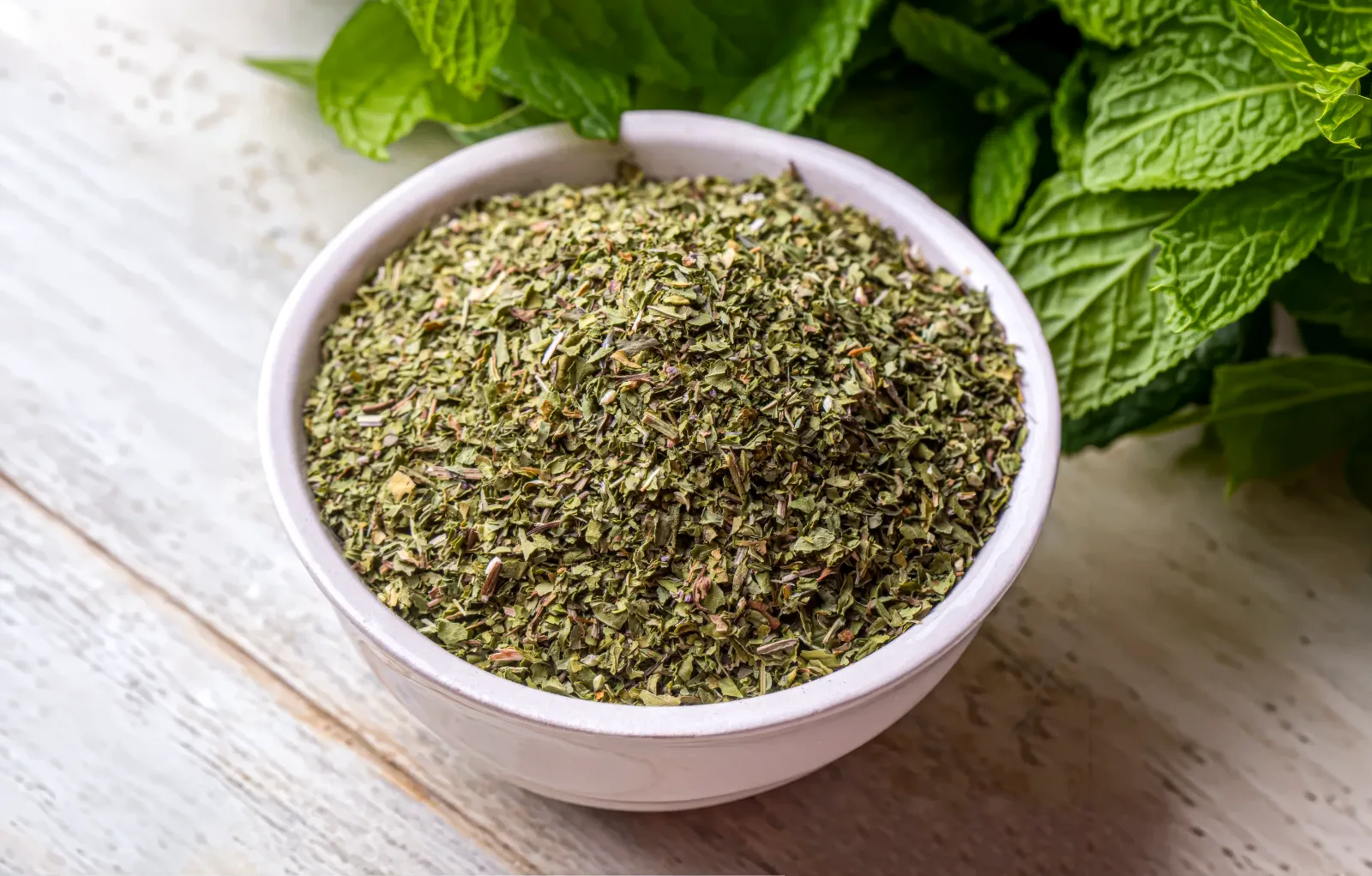
Nizip mint (Nizip nanesi) is a regional mint grown and dried in the Nizip district of Gaziantep, known for its intense aroma. As one of the most used herbs in Antep cuisine, this dried mint lends depth to soups, köfte (meatballs), salads and ayran, carrying a distinctive aroma shaped by the district's climate and soil. That pronounced scent and flavour make it an indispensable finishing touch on the Gaziantep table.
The identity of Nizip mint is inseparable from where it grows: the lands watered by the Euphrates, the temperature difference between day and night, and the long sunny days all shape the mint's aroma and oil content. Harvested at the right time and dried by proper technique, the mint enters the kitchen once its leaves are separated from the stems and crumbled. In this respect Nizip mint is not merely a herb but a registered agricultural product of Gaziantep and a deep-rooted part of its culinary heritage.
What Is Nizip Mint?
Nizip mint is a type of mint (Mentha spicata) grown in the Nizip district of Gaziantep, harvested during its flowering period, dried, and used with its leaves crumbled. It is used both fresh and dried; in Antep cuisine, however, it takes its true place in the form of dried mint, which can be stored year-round and whose aroma intensifies. Its character comes from the pronounced, fresh and lasting scent that the soil it grows in and the drying technique give it.
Defining Characteristics
- Intense, Fresh Aroma: The most pronounced trait of Nizip mint is its strong, fresh scent, which does not fade even once dried. This aroma comes from the volatile oils the plant contains and gives the product its distinctive flavour.
- Dried and Crumbled Use: Harvested during the flowering period, the mint is dried by proper technique; its leaves are separated from the stems and crumbled. This dried form allows it both to be stored for a long time and to be added easily to dishes.
- Flavour Tied to Geography: The mint's aroma and quality are directly linked to Nizip's climate, soil structure, number of sunny days, and harvest–drying conditions. The same seed does not yield the same aroma elsewhere; the flavour is specific to the region.
The Dried Mint of Nizip
Nizip is a district in the east of Gaziantep, close to the Euphrates, and a region long associated with mint farming. For the producers here, mint is more than an everyday crop — it is one of the district's important sources of livelihood. The harvested mint is dried in the shade or under suitable conditions; the dried leaves are crumbled and sifted until they are ready for the kitchen. This dried mint is a durable and powerful herb that, when opened, carries the scent of an entire season.
History and Geographic Origins
Nizip mint is a deep-rooted part of the district's farming tradition. Mint farming has been carried on in Nizip for many years and has come, over time, to be identified with the region's character. Behind the mint taking hold here so firmly lie the fertile lands watered by the Euphrates, the day–night temperature difference brought by the continental climate, and the long sunny days. These natural conditions strengthen the mint's volatile-oil content and therefore its aroma.
The Mark of Geography
The distinctive aroma of Nizip mint arises not from a single factor but from all the region's natural conditions coming together: the structure of the soil, the abundance of water, the length of sunshine, the timing of the harvest and the drying method. For this reason the mint is named after the place it grows; the phrase "Nizip mint" expresses both the product's quality and its origin together. That the same plant does not yield the same intensity of aroma under other conditions is the clearest sign of this geographic bond.
Nizip mint is registered by the Turkish Patent and Trademark Office (TÜRKPATENT) as a Designation of Origin (Menşe Adı) (No 491, registered 2020). A designation-of-origin registration means that all the qualities of the product derive from the natural and human conditions of a specific geography and that production takes place within the boundaries of that region. This registration protects Nizip mint both by its geographic origin and by its quality.
Nizip Mint in Gaziantep Cuisine
In Gaziantep cuisine, mint is not merely a garnish or a scent but one of the founding elements of flavour. Nizip mint, in its dried form, is on hand in the kitchen year-round and forms the finishing touch of many dishes. A pinch of dried mint, added to a soup or to köfte, markedly changes the dish's scent and character; this is why it is one of the most frequently reached-for herbs on the Antep table.
Which Dishes Use It?
Nizip mint appears in a great many dishes of Antep cuisine. In soups — especially yoghurt-based and lentil ones — the mint-infused oil drizzled on top gives the dish its scent. It balances the taste of appetizers and salads such as spicy paste (acılı ezme), and lends depth to köfte mixtures, to the filling of stuffed köfte, and to many meat dishes. Even the mint sprinkled over a plain glass of ayran shows the place of this regional herb in daily life. Nizip mint often meets, at the same table, with other products native to the region such as Nizip olive oil.
Why It Matters
Nizip mint is one of the products that bind Gaziantep's agriculture to its cuisine. Coming from the region's soil, this dried mint, once brought to the table, gives a dish a regional identity while carrying on the district's tradition of production. Like Nizip eggplant, which grows in the same lands, mint is a registered value that bears the name of Nizip and enriches Gaziantep cuisine. In this respect Nizip mint is, beyond a simple herb, a heritage that carries a region's labour and scent into the kitchen.
Frequently Asked Questions
What is Nizip mint and where does it grow?
It is an intensely aromatic regional mint grown and dried in the Nizip district of Gaziantep. It is used as a herb in many places — soups, köfte, salads and ayran.
Does Nizip mint have a geographical indication?
Yes. It is registered by TÜRKPATENT as a Designation of Origin (No 491, 2020). This registration documents that the product's qualities come from the natural and human conditions of the Nizip region.
Why is Nizip mint so aromatic?
Its aroma comes from Nizip's climate, soil, number of sunny days and drying conditions. These conditions raise the mint's volatile-oil content, giving it a strong and lasting aroma.
Which dishes use Nizip mint?
It is used in yoghurt-based and lentil soups, in köfte mixtures, in appetizers, in salads and in ayran. It is most often added to dishes in its dried, crumbled form.