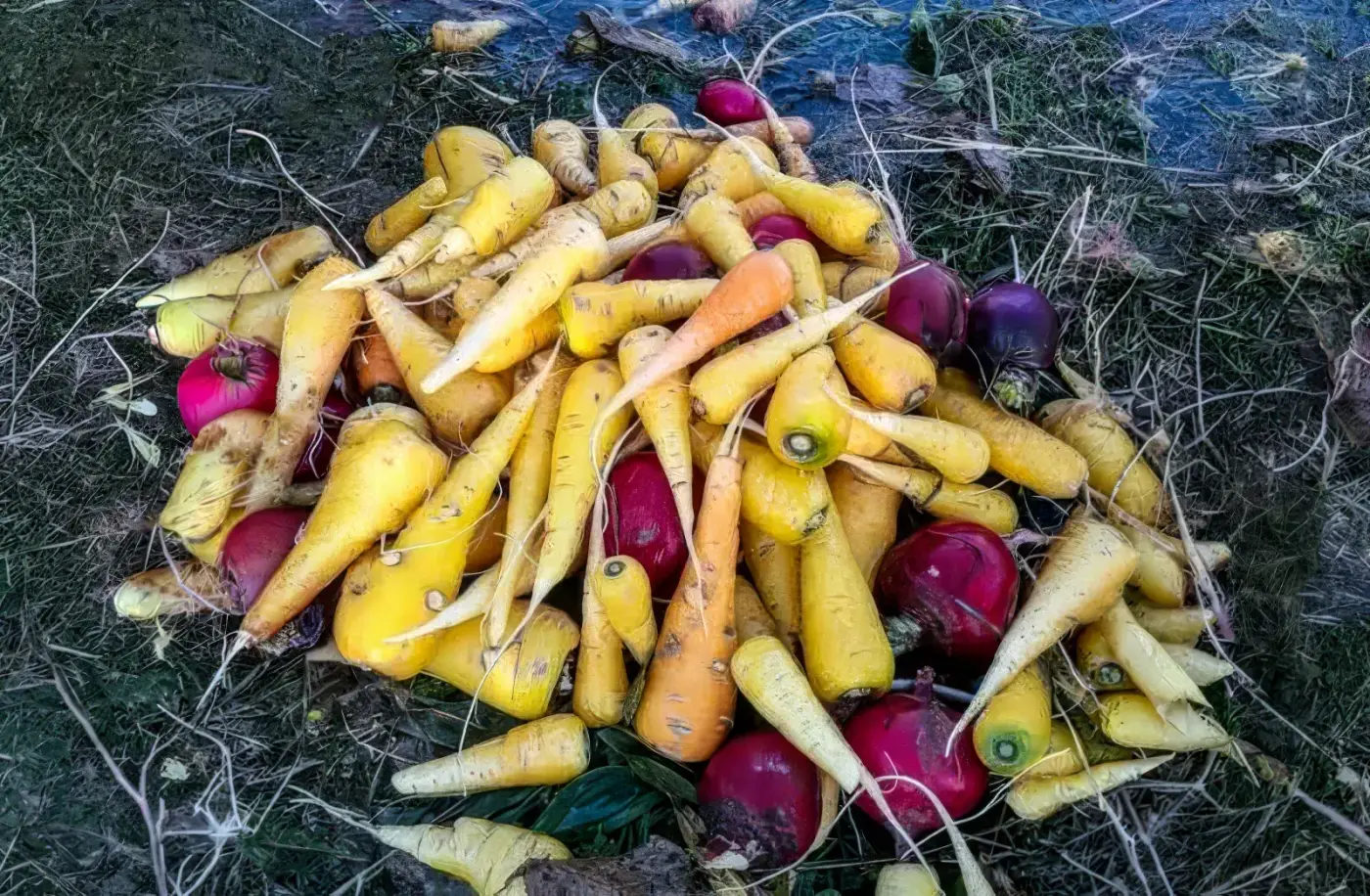
The Nizip Mızar Carrot (in Turkish "Nizip Mızar Havucu") is a large, conical, sweet, yellow local carrot grown in the Nizip district of Gaziantep — a district also famed for its olives and olive oil. Far more than an ordinary carrot, it is the product of a particular soil and a long cultivation tradition, and it is registered with TÜRKPATENT under the name "Nizip Mızar Havucu."
The identity of this carrot is hidden in the word "Mızar" in its name: Mızar is the former name of the Uluyatır neighborhood where the carrot is grown. In other words, the Nizip Mızar Carrot is a product that carries the very name of the place it comes from, fully identified with that geography. With its large body, its conical shape that narrows to a point at the bottom, its distinct sweetness and its yellow color, the Nizip Mızar Carrot is a particular part of the region's farming and its table.
What Is the Nizip Mızar Carrot?
The Nizip Mızar Carrot is a local carrot of the species Daucus carota L. var. sativus, grown in the Nizip district of Gaziantep. What sets it apart from an ordinary carrot is both the distinctive soil and climate of the place it grows in and the carrot's own physical traits: a large body, a conical shape, a sweet taste and a yellow color. These are the defining qualities that place the carrot among Nizip's geographically indicated products.
Defining Characteristics
- Large, Conical Shape: The Nizip Mızar Carrot is large in structure; its lower part is thin and pointed while its upper part is thick, giving the carrot a distinct conical form.
- Sweet Taste: The carrot's high sugar content gives it a pronounced sweetness. This sweet character is one of the best-known features of the Nizip Mızar Carrot.
- Yellow Color: The carrot is yellow in color, a trait that also sets it apart visually from many common carrot varieties.
- Place-Bound Cultivation: The growing area's slightly alkaline (pH 7.5), clay-loamy soil, rich in phosphorus and potassium, positively affects the root development of this carrot, which is sensitive to high acidity.
A Carrot Identified With Nizip's Soil
The way to understand the Nizip Mızar Carrot is never to separate it from the soil it grows in. The carrot's large, well-formed root development, its sweetness and its overall character are directly linked to the soil structure of a particular part of Nizip. In this respect the Nizip Mızar Carrot is not merely a vegetable; it is a region-specific product that emerges from the meeting of a particular geography, soil and growing knowledge.
History and Geographic Origins of the Nizip Mızar Carrot
Nizip is a district of Gaziantep with deep-rooted agriculture, known above all for its olives and olive oil. The Mızar Carrot is one of the products of this farming tradition, grown for many years in a particular part of the district. The word "Mızar" in the carrot's name is the former name of the Uluyatır neighborhood where it grows; this shows how strongly the product is identified with a specific place. It would not be right to claim a specific date or a "first grown in such-and-such year" here; what is known is that this carrot has a long-established, deeply rooted history of cultivation in this part of Nizip.
The Registration of the Nizip Mızar Carrot
This bond between the Nizip Mızar Carrot and its region also becomes officially visible in the geographical indication the product holds under its own name. The carrot, as a product representing a particular production and cultivation tradition of the region, is registered with TÜRKPATENT as a mark of source (Mahreç İşareti). This registration places the carrot among the geographically indicated products of Nizip and Gaziantep and protects its name.
The Nizip Mızar Carrot is registered with TÜRKPATENT under the name "Nizip Mızar Havucu" as a Geographical Indication (mark of source / Mahreç İşareti) — Registration No 1527, 2024. "Mızar" is the former name of the Uluyatır neighborhood where the carrot is grown. This record places the carrot among Gaziantep's geographically indicated products.
The Nizip Mızar Carrot in Gaziantep Cuisine
The Nizip Mızar Carrot is most often eaten fresh in the region, yet its place in the kitchen is not limited to that. Within its geographic boundary the carrot also reaches the table roasted, boiled or pickled. With its sweetness and yellow color, the carrot contributes to many dishes both raw and cooked, which makes it a versatile ingredient of Nizip and Gaziantep cuisine.
Which Dishes Use It?
In Gaziantep cuisine the carrot is a colorful, sweet component of the pilaf and stuffed-rice tradition in particular; for example Buhara Pilaf, which includes carrot, is a well-known example of this use. The Nizip Mızar Carrot, together with another deep-rooted product of the same district, Nizip Olive Oil, and the likewise region-specific Nizip Eggplant, is part of a rich picture made up of Nizip's geographically indicated farm products.
Why It Matters
The Nizip Mızar Carrot is a fine example of how a region's soil, water and cultivation tradition can produce a product all its own. With its large body, sweet taste and yellow color, the carrot carries Nizip's agricultural heritage both at the everyday table and through its registered identity. To know this carrot from Nizip, the olive country of Gaziantep, is to see that the city's gastronomy is not made of kebab and baklava alone; it is a local, varied whole, bound to the land.
Frequently Asked Questions
What is the Nizip Mızar Carrot?
The Nizip Mızar Carrot is a large, sweet, yellow local carrot grown in the Nizip district of Gaziantep, with a conical shape that narrows to a point at the bottom (Daucus carota L. var. sativus).
What does "Mızar" in the name mean?
"Mızar" is the former name of the Uluyatır neighborhood where the carrot is grown. In other words, the Nizip Mızar Carrot is a product that carries the very name of the place it comes from.
Is the Nizip Mızar Carrot registered?
Yes. It is registered with TÜRKPATENT under the name "Nizip Mızar Havucu" as a Geographical Indication (mark of source), Registration No 1527, 2024.
How is the Nizip Mızar Carrot eaten?
It is most often eaten fresh in the region; it is also roasted, boiled or pickled, and it lends color and sweetness to pilafs such as Buhara Pilaf.