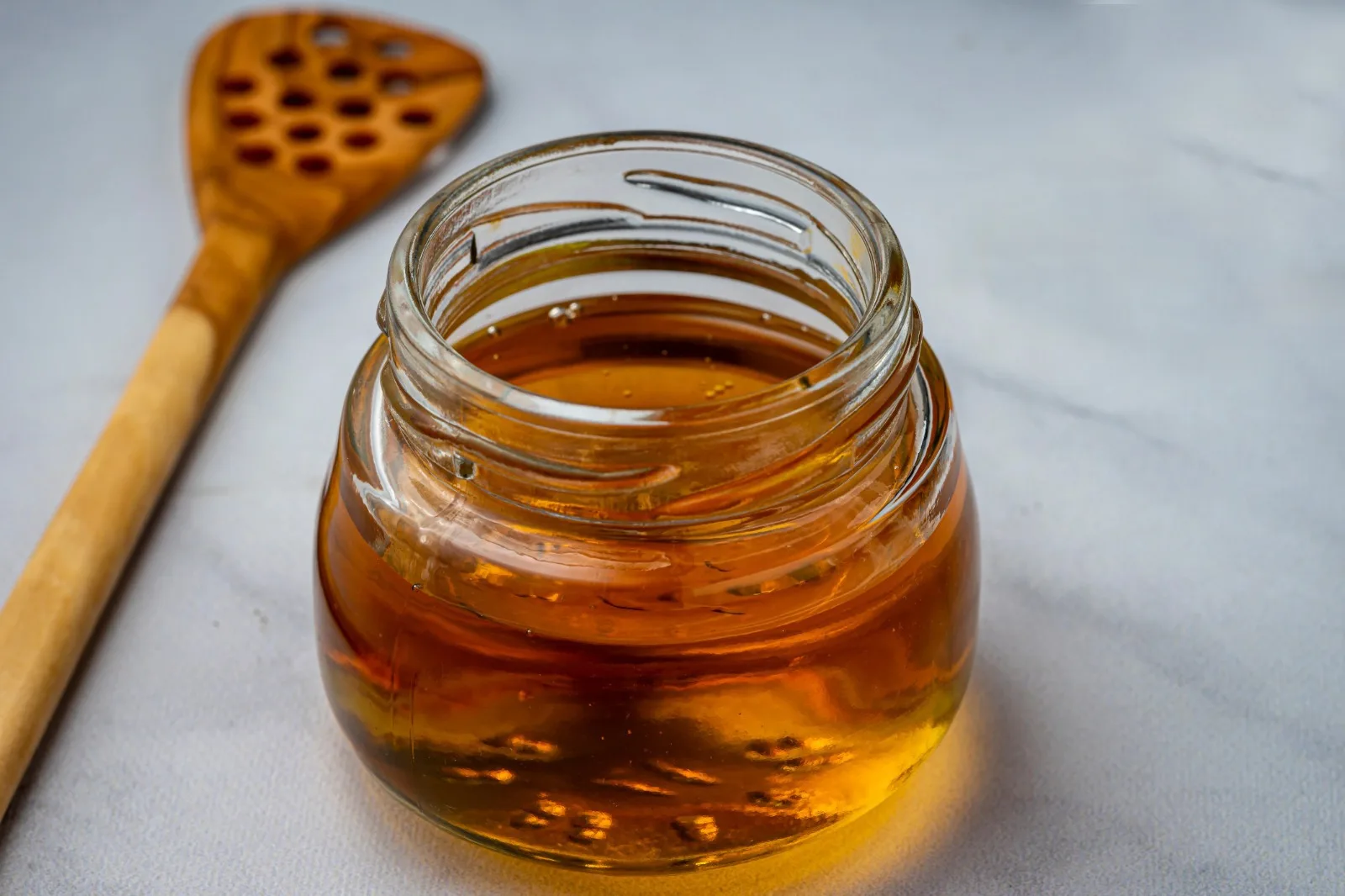
Thyme honey (glossed locally as Antep Zahter Balı) is a monofloral honey produced by bees foraging the wild zahter (Thymbra spicata) blossom that grows naturally across Gaziantep's mountainous areas. A deep-rooted part of Antep's zahter culture and breakfast table, this honey is known and prized for its distinctive herbaceous, mildly spicy aroma. It is registered with TÜRKPATENT as a Designation of Origin under the name "Antep Zahter Balı", No 1054, in 2022.
The identity of this honey springs from a single plant at its source: the wild zahter that carpets the region's mountain scrubland. Because the bees feed predominantly on the nectar of this one blossom, the resulting honey is "monofloral" — single-flower — and the herbaceous, faintly spicy aroma of zahter passes distinctly into it. In this respect thyme honey is one of Gaziantep's registered raw materials, gathering the city's beekeeping know-how and its zahter heritage in a single jar.
What Is Thyme Honey?
Thyme honey is a honey with a dominant zahter aroma, formed from the nectar that bees gather from the blossom of the wild zahter (Thymbra spicata) plant. In the Antep dialect "zahter" refers to the wild thyme species that grows naturally in the region; the same plant has a place in the city's cuisine both as a breakfast herb and as the source of this honey. Thyme honey is not made by adding anything afterwards — it emerges directly as honey from the nectar of this blossom, taking its character from the plant at its source.
Defining Characteristics
- Monofloral (single-flower) honey: Because the bees feed predominantly on the zahter blossom, the honey carries the dominant trace of a single plant. This means a clear, consistent character distinct from multi-flower (polyfloral) blossom honeys.
- Thymbra spicata blossom: The honey's main nectar source is the wild zahter that grows on its own across Gaziantep's mountainous scrubland. The honey is obtained in the areas where this plant is dominant, during its flowering season.
- Herbaceous, mildly spicy aroma: The distinctive herbaceous, faintly spicy scent of zahter passes clearly into the honey. The region's hot, dry summers cause the plant's aromatic compounds to concentrate around harvest time, and this concentration strengthens the zahter aroma felt in the honey.
Thyme Honey vs Zahter Tea
Although the two products share the same plant (zahter), they are distinct. Thyme honey is a bee product: bees gather the nectar of the zahter blossom, and the honey forms from that nectar. Zahter tea, by contrast, is a beverage prepared from the zahter plant itself. The two fall into different product groups and are registered under separate geographical indications: thyme honey under Designation of Origin No 1054, and zahter tea under Geographical Indication No 1110. In short, one is a honey and the other a tea; the common thread is that both come from Antep zahter.
History and Geographic Origins
Thyme honey is a meeting point of both Gaziantep's deep-rooted beekeeping know-how and its zahter heritage. Wild zahter is one of the plants best suited to the region's geographic conditions, spreading naturally across the city's mountainous and scrubland (fundalık) areas. This broad cover of zahter makes it possible for bees to feed predominantly on a single blossom during a given period, and thus for a honey with a dominant zahter aroma to form. The honey is the product of this natural cycle; its production is a seasonal pursuit, confined to the flowering period of zahter.
The Role of Geography and Climate
Gaziantep's position in a transition zone between the Mediterranean and East Anatolian climates directly shapes the character of thyme honey. The region's hot, dry summer months, together with the low humidity that coincides with the harvest season, cause the aromatic compounds of the zahter plant to concentrate. This low humidity ratio is what lets the scent of zahter be distinctly felt in the honey. Harvest is generally carried out in early summer, after zahter has flowered; the honey's aroma is largely bound to this narrow seasonal window and to the region's dry climate.
"Antep Zahter Balı / Gaziantep Zahter Balı" is registered with TÜRKPATENT as a Designation of Origin under No 1054, in 2022. A designation-of-origin registration indicates that all of the product's qualities are owed to a specific geography (here, Gaziantep). This record is separate from and independent of the registration of its beverage counterpart, Zahter Tea (Geographical Indication No 1110); the two products should not be confused.
Thyme Honey in Gaziantep Cuisine
Thyme honey's real place at the Antep table is breakfast. The Gaziantep breakfast is a rich and lengthy table culture, and thyme honey represents both its sweet and its aromatic side. Sharing the same root as the city's zahter culture makes it a flavour bound up with the very identity of the Antep breakfast: the herb of the same plant takes its place on the table, while its honey takes its place in the jar.
How It Is Used
Thyme honey is used most of all at breakfast, on bread on its own or together with butter. At the Antep table you will usually find it alongside the regional breads, cheese and other breakfast fare; it shares the same spread, for instance, with Nizip olive oil and olives. Like the Antep pistachio, another emblematic raw material of the city, thyme honey is most often enjoyed plainly, with nothing added, so that its own aroma comes to the fore.
Why It Is Prized
The value of thyme honey comes from both the scarcity of its source and the clarity of its aroma. Being a monofloral honey obtained from the blossom of a single wild plant, within a limited seasonal window, sets it apart from ordinary blossom honeys. The aroma that the region's dry climate concentrates in the plant shows itself clearly in the honey. The designation-of-origin registration, in turn, formally recognises that this distinctive quality is bound to a specific geography, Gaziantep — making thyme honey not merely a honey but a product of the city's nature and heritage.
Frequently Asked Questions
What is thyme honey?
It is a monofloral (single-flower) honey with a dominant zahter aroma, produced by bees foraging the wild zahter (Thymbra spicata) blossom that grows in Gaziantep's mountainous areas.
Are thyme honey and zahter tea the same thing?
No. Thyme honey is a bee product (bees make honey from the nectar of the zahter blossom), whereas zahter tea is a beverage prepared from the zahter plant. They are separate products and are registered under separate geographical indications.
Does thyme honey have a geographical indication?
Yes. "Antep Zahter Balı" is registered with TÜRKPATENT as a Designation of Origin under No 1054, in 2022. Zahter tea is separately registered under Geographical Indication No 1110.
How is thyme honey used?
It is used mostly at breakfast, on bread on its own or with butter; it takes its place at the Antep table alongside cheese, olives and other breakfast fare.