In Gaziantep, gold and silver are not merely an investment or an ornament; they are a craft shaped with the hammer, the file and the breath. In this ancient city on the Silk Road, working with precious metal has deep roots, yet the goldsmithing tradition known today lives on in the gold threads that masters thin and beat at the bench, in rings set with colored stones and in carefully hallmarked bracelets. On this page you will find what Gaziantep goldsmithing is, which techniques and metals it relies on, how it has reached the present day and where it is kept alive.
Goldsmithing, in its simplest definition, is the craft of working gold, silver and precious stones to make jewelry and ornamental objects. In Gaziantep this craft developed hand in hand with the city's identity as a Silk Road crossroads, in other words as a trade center where precious metal was bought and sold, melted down and reshaped. The historic city's position on the road to Aleppo created, over centuries, a setting where merchants gathered and where many goods, from cotton and leather to copper and precious metal, were processed and traded.
This page tells the story of a single craft, goldsmithing, yet in Gaziantep's world of crafts it does not stand alone. Like coppersmithing, mother-of-pearl inlay and the local weaving traditions, gold and silver work is part of the same bazaar culture and the same master-apprentice schooling.
Gold, Silver and Stone: Material and Technique
In Gaziantep goldsmithing, the work often begins with the purity of the gold. The city's traditional stance is to work with high-karat gold, that is the 22-karat (916 fine) gold popularly known as solid gold. This shows in both the color and the weight of a piece; even in periods when lower-karat production became widespread, Antep workmanship has been remembered for keeping to its high-karat habit. To reinforce consumer confidence, today's manufacturers stamp their pieces with the karat hallmarks of the national standards institution.
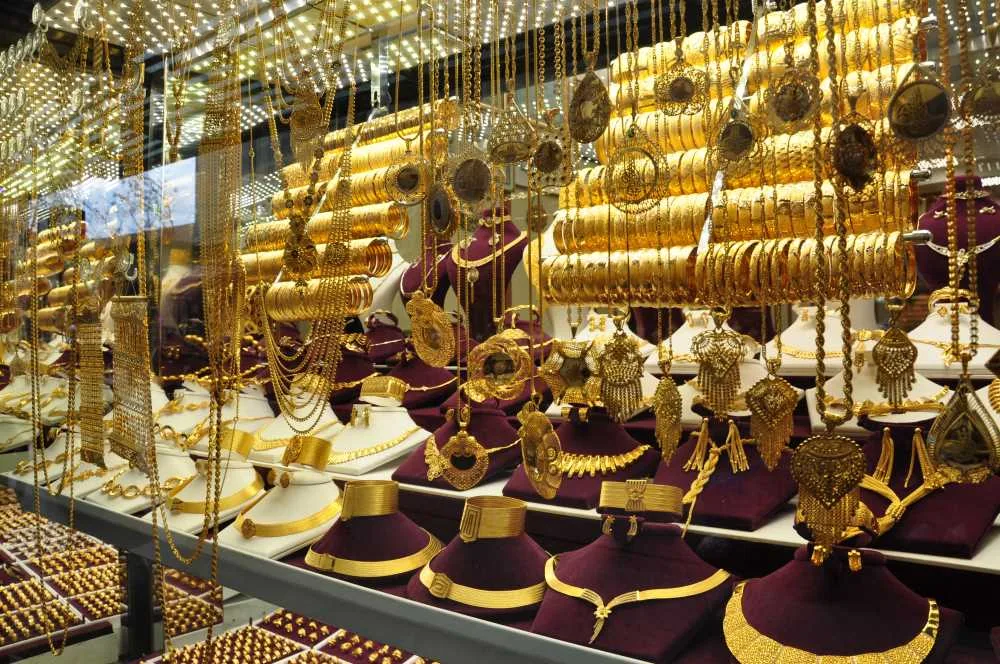
The range of products is broad: plain band rings; rings set with colored stones such as ruby, emerald and turquoise; bracelets; belts; and various ornamental items. Several core techniques stand out in bracelet-making. Filigree (telkâri) is a patience-demanding craft in which fine gold or silver threads are woven like lace and soldered together. The snake (yılanlı) technique gives a flexible texture in which links interlock like the scales of a serpent; twisted (burmalı) work coils the threads into a spiral; and inlay (çakma) is a method of working patterns onto the metal surface. In the master's hand, each of these techniques complements the others as though drawn from a single pen.
The Place of Filigree in Anatolia
Filigree is a deep-rooted tradition spread across centuries in Anatolia, and its name comes from the combination of the words for thread and work, that is thread-work. Among its principal centers in Anatolia are Mardin, especially the district of Midyat, the Beypazarı district of Ankara, and Trabzon; today filigree is most strongly identified with these regions. In Gaziantep, filigree appears as one of the techniques drawn upon in silver and gold work. It would therefore be inaccurate to identify Antep goldsmithing with filigree alone; the city's real strength lies in a broad gold-and-silver tradition in which several techniques live side by side.
The Rise and Fall of a Craft: History
Traces of working precious metal in the Gaziantep region reach far back in time. Silver objects unearthed from nearby ancient settlements such as Karkamış, Dülük and Belkıs show that this metal has long been used in the area. Even so, the known course of the craft has not run in a straight line; goldsmithing has passed through periods of decline and revival.
Before the Republic, the city's gold and jewelry trade was driven by the well-known artisan families of the time; when these families left the region during the War of Independence, the profession came close to disappearing. According to accounts, the revival of the craft began in 1918 through the efforts of a master originally from Turkistan, Sait Türkistanlı, who arrived from Medina. Starting first with silverwork, this master later moved into gold and, with the apprentices he trained around him, led the profession back to its feet.
Gaziantep goldsmithing is remembered for its habit of working with high-karat gold. The 22-karat (916 fine) gold gives a piece both a warm yellow tone and lasting value; this is one of the distinctive qualities that sets Antep workmanship apart.
Master and Apprentice: Passing On the Craft
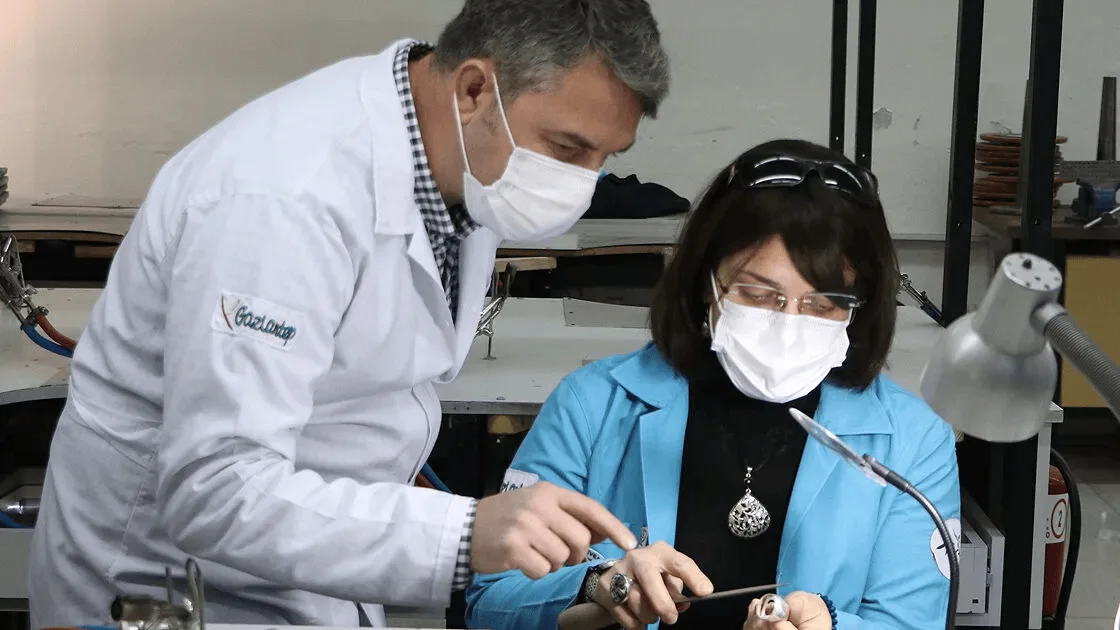
Goldsmithing is a profession learned not from books but at the bench. An apprentice who works for years alongside a master first learns the simple tasks, how the threads are drawn, how the flame is regulated, how a solder is made to hold; only over the years does the hand begin to feel sure of itself. Like the generations Sait Türkistanlı trained, the craft in Gaziantep has been carried to the present largely through this chain of master and apprentice. This transmission involves not only technical knowledge but also patience, proportion and a sense of beauty.
Geographical Indication and the Present Day
Many Gaziantep products are registered as geographical indications with the Turkish Patent and Trademark Office; copper handcraft, mother-of-pearl inlay and various woven goods are among them. However, there is no separate geographical indication registered in Gaziantep's name for goldsmithing or for silver or gold work. The value of the craft therefore comes not from registration but from its living production and its weight in the city's economic fabric.
Today, goldsmithing remains a vibrant sector in Gaziantep. Hundreds of registered jewelers, a large number of retail shops and manufacturing workshops operate in the city, providing a livelihood for thousands of people. The growing number of silver workshops shows that traditional workmanship has gained fresh breath through tourism and gift products.
Where to See It and Where It Lives On
For those who wish to see the world of gold and jewelry in Gaziantep, the bazaars in the city center form a natural route. The historic Coppersmiths' Bazaar and the neighboring jewelers' lanes are places where traditional crafts breathe together; right beside the sounds of copper being beaten with the hammer, shop windows line up with handmade bracelets and rings set with colored stones. To explore Gaziantep's other handicrafts together, you can also visit the Crafts page.
Sources
- Gaziantep İl Kültür ve Turizm Müdürlüğü, Kuyumculuk.
- Gaziantep İl Kültür ve Turizm Müdürlüğü, Gümüş İşlemeciliği.
- T.C. Kültür ve Turizm Bakanlığı, Kültür Portalı, Altın Takı İşlemeciliği (Gaziantep).
- Gaziantep İl Kültür ve Turizm Müdürlüğü, İlimize Ait Tescillenmiş Coğrafi İşaretli Ürünler.
- Türk Patent ve Marka Kurumu, Coğrafi İşaretler Portalı.
- Kars, R. (2018). XVIII. Yüzyılın İlk Yarısında Ayntablı Tüccarların Faaliyetleri Kapsamında İç Ticarete Konu Olan Emtia. Gaziantep Üniversitesi Ayıntâb Araştırmaları Dergisi, 1(1), 36-48.
Frequently Asked Questions
What makes Gaziantep goldsmithing special?
In Gaziantep, goldsmithing is remembered for its tradition of working with high-karat gold; the 22-karat (916 fine) gold popularly called solid gold is widely used. Alongside this, there is a broad handcraft tradition in which different techniques such as filigree, snake, twisted and inlay work live side by side.
Is filigree unique to Gaziantep?
No. Filigree is a tradition spread across centuries in Anatolia, and its principal centers include Mardin (especially Midyat), the Beypazarı district of Ankara, and Trabzon. In Gaziantep, filigree is one of the techniques used in gold and silver work; the city's real strength is that several techniques live side by side.
How far back does Gaziantep goldsmithing go?
Silver objects unearthed from nearby ancient settlements such as Karkamış, Dülük and Belkıs show that working precious metal in the region reaches far back. Even so, the craft passed through periods of decline and revival; the revival of the known goldsmithing tradition began in 1918 through the efforts of the master Sait Türkistanlı, who arrived from Medina.
Does Gaziantep goldsmithing have a geographical indication?
Gaziantep's copper handcraft, mother-of-pearl inlay and various woven goods are registered as geographical indications; however, there is no separate geographical indication registered in Gaziantep's name for goldsmithing or for silver or gold work.
Where can I see goldsmithing in Gaziantep?
The area around the historic Coppersmiths' Bazaar in the city center and the neighboring jewelers' lanes are a natural route where traditional crafts live together. Those who want to see the cultural background of traditional jewelry can also visit the Hasan Süzer Ethnography Museum.
What products are made in Gaziantep goldsmithing?
Plain band rings; rings set with colored stones such as ruby, emerald and turquoise; bracelets; belts; and various ornamental items are produced. In bracelet-making, the filigree, snake, twisted and inlay techniques stand out.