Step off the narrow lanes of Gaziantep's old quarters into a courtyard hidden behind stone walls, and the noise of the city suddenly falls away. For close to four centuries, this place has echoed with the sound of the reed flute, the turning of the sema and the quiet prayers of dervishes. This is the Gaziantep Mevlevi Lodge, founded in 1638 as a Mevlevi dervish lodge, opening a doorway into the city's Sufi tradition through its semahane, its dervish cells and its courtyard with a cool pool. Today visited as a waqf museum, the building keeps both Mevlevi culture and Antep's refined stone craftsmanship alive under one roof.
A Mevlevihane is a lodge that brought together the worship, education and daily-life needs of the Mevlevi Sufi order under one roof. As in many Anatolian cities, in Gaziantep too dervishes gathered here, performed the sema ceremony to the sound of the reed flute, studied spiritual knowledge and welcomed guests. The building was never only a place of worship; it was also a school, a place of lodging and one of the centers of the city's spiritual life.
The Gaziantep Mevlevi Lodge is regarded as one of the most comprehensive examples of this tradition in Southeastern Anatolia. With both its architectural richness and its function that continued unbroken for centuries, it is a living witness to Antep's Sufi culture.
What it is and where it stands
The Gaziantep Mevlevi Lodge sits in the city center, in the Kozluca neighborhood of Sahinbey district, between the Buğday Arastası (Wheat Market) and the Kozluca and Şehit streets. Set within the fabric of the old city, it is within walking distance of the historic bazaars and other monumental buildings.
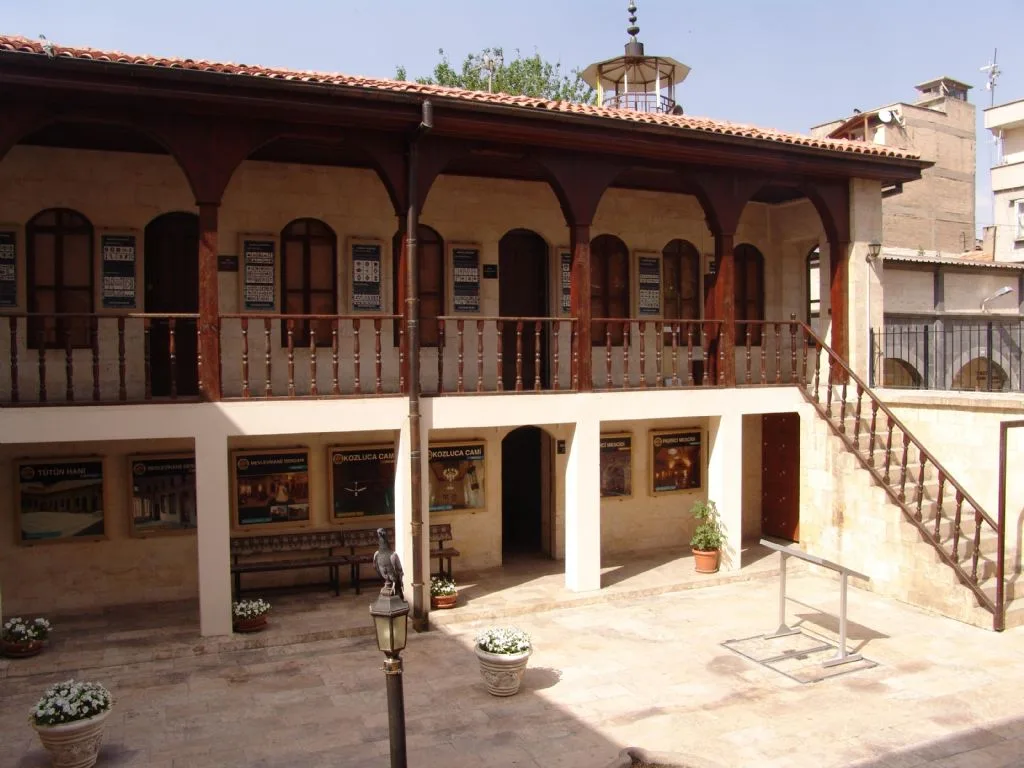
The complex is arranged around a courtyard and has served as both a dervish lodge and a mosque. For this reason it is also known locally as the Tekke Mosque, or after its founder, the Mustafa Ağa Mosque. Today the semahane and prayer hall continue to serve as the Tekke Mosque, while the remaining sections of the lodge are open to visitors as the Gaziantep Mevlevi Lodge Waqf Museum.
History: the gift of a provincial governor
According to the Persian ta'lik inscription above the main gate of the semahane, the lodge was built in 1048 AH (1638 CE) by Türkmen Mustafa Ağa bin Yûsuf, the sancak bey (provincial governor) of Ayıntab, for the worship of Mevlevi dervishes. The most reliable information about its founding comes from this inscription together with its protected waqf deeds.
Sources point to an even older Mevlevi presence on the same site: the phrase "mevlevîhâne-i cedîd" (the new mevlevihane) in the waqf deed, together with early seventeenth-century records, suggests that a lodge may have stood here before this one. The founder stipulated that the office of sheikh continue within the lineage of Sheikh Şâban Dede; in this way the building lived on with an unbroken succession of sheikhs until 1925, when the dervish lodges were closed.
Within its first decades the lodge took on a dual identity: records indicate that from around 1675 onward, Friday sermons were delivered in the semahane and the structure also functioned as a mosque. This explains why the lodge survived for centuries as a shared space for both the dervishes and the people of the neighborhood.
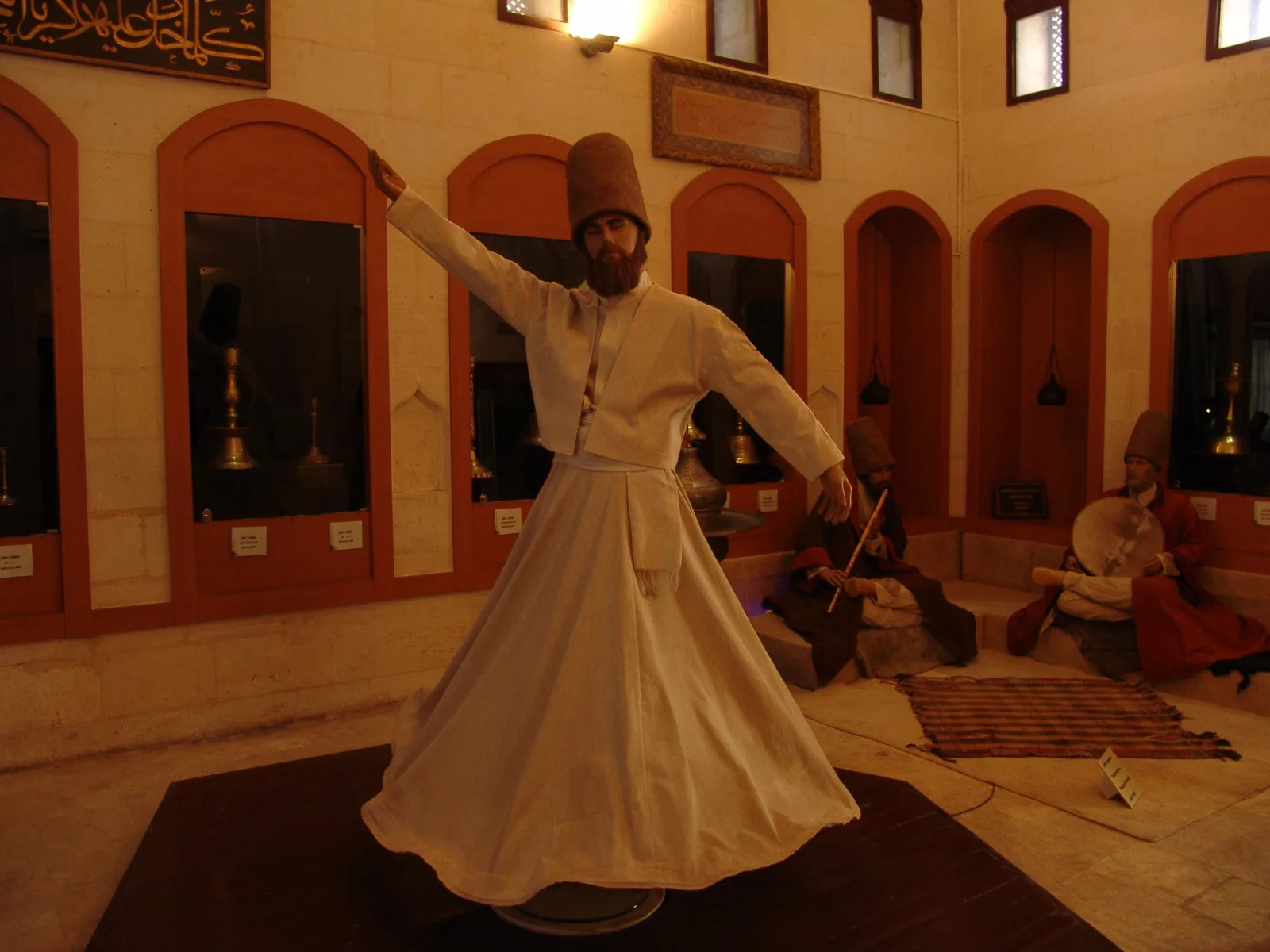
Mevlevism is a Sufi path that took shape around the teachings of the great poet and thinker Mevlana Celaleddin-i Rumi. The world-famous sema ceremony symbolizes the dervishes setting out on a spiritual journey, turning to the accompaniment of the reed flute and frame drum. The Gaziantep Mevlevi Lodge is one of the deep-rooted representatives of this tradition in the land of Antep.
What to see: architecture and details
The heart of the building is the square-plan semahane, measuring about 11.30 × 11.30 meters. It is covered by a central dome roughly 6.50 meters in diameter, resting on pointed arches. This is the space where the sema ceremony once turned and where Friday prayers later came to be held.
Its waqf deed lists the sections the lodge contained at its founding one by one: a room reserved for the sheikh, the semahane, a mosque, nine cells for the dervishes, ablution areas, a pool, and orchards with and without fruit trees. This program shows that the Mevlevihane was designed not merely as a place of worship but as a small, self-sufficient spiritual settlement.
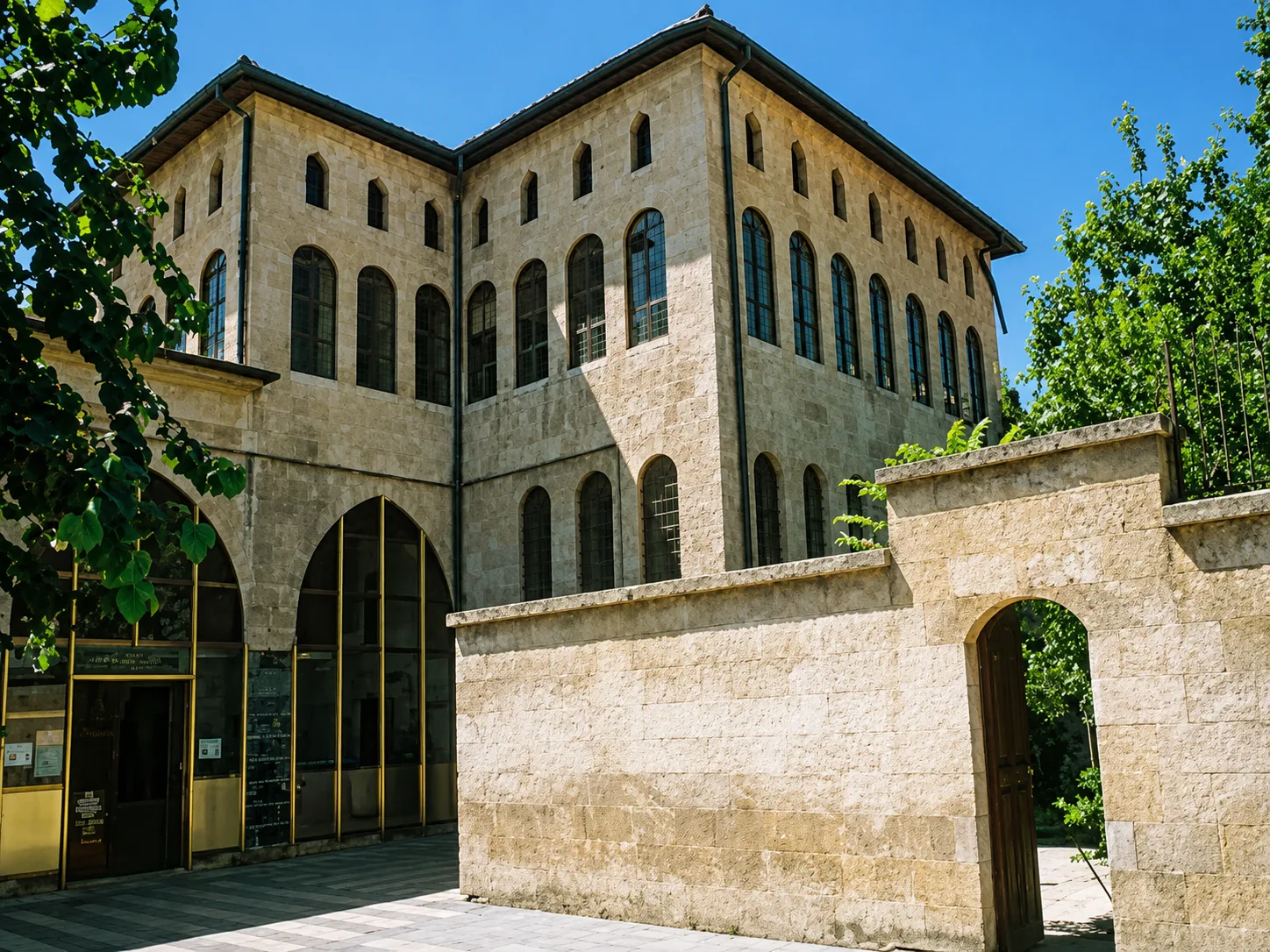
The lodge was built in keeping with Gaziantep's traditional architectural language. The structures are arranged on either side of a courtyard; finely worked ashlar stone walls, rows of shallow-arched windows and the small "bird windows" on the façades reflect the refinement of Antep stone craftsmanship. The pool at the center of the courtyard belongs to that familiar Antep courtyard tradition that brought coolness to such spaces on hot summer days.
Its place in the life of the city
Since the day it was founded, the Gaziantep Mevlevi Lodge has been part of the city's cultural life, not only its religious one. Values such as the reed flute and the sema; a love of calligraphy, illumination and books; and traditions of hospitality and learning were all kept alive within these walls. That a lodge could be open to dervishes and the neighborhood alike is a typical reflection of Antep's interwoven fabric of mosque, bazaar and quarter.
The building's survival across nearly four centuries is a story in itself. Its stone body endured despite the major fires the city experienced in the past, and it has reached our day through later restorations. This durability shows just how robust a tradition Antep's stone architecture rests upon.
Today and how to visit
After the dervish lodges were closed in 1925, the building took on various functions before being restored by the Gaziantep Regional Directorate of Foundations and opened to visitors as the Gaziantep Mevlevi Lodge Waqf Museum on 7 May 2007. The museum displays Mevlevi culture together with選 selected waqf works: metalwork, handwritten copies of the Qur'an, examples of Turkish calligraphy, and carpets and kilims are among the highlights of the collection.
You enter the courtyard through the mosque section; inside, displays arranged across different rooms bring to life the way dervishes lived in past centuries. As you move among the sema, the musical instruments, the books and the elegant examples of Islamic art, you can still sense the calm, spiritual atmosphere of the place.
The Mevlevi Lodge makes an ideal starting point for exploring the historic buildings of the old city. It can be combined on the same route with the stone mansions of the nearby Historic Bey Quarter, with the Sheikh Fethullah Mosque and Complex as another stop in the city's tradition of Sufism and learning, and with the Hasan Süzer Marriage and Life Culture Museum, which lays out the daily life of Antep house architecture. To see the whole of the city's museum map, take a look at the Museums page.
Frequently Asked Questions
When and by whom was the Gaziantep Mevlevi Lodge built?
According to the Persian inscription above the semahane gate, the lodge was built in 1048 AH (1638 CE) by Türkmen Mustafa Ağa bin Yûsuf, the provincial governor of Ayıntab, for Mevlevi dervishes. Records also suggest an earlier lodge may have stood on the same site.
Where is the Gaziantep Mevlevi Lodge?
It is in the city center, in the Kozluca neighborhood of Sahinbey district, between the Buğday Arastası and the Kozluca and Şehit streets. It is within walking distance of the historic bazaars and other monuments.
What function does the Mevlevi Lodge serve today?
The building was restored and opened to visitors as the Gaziantep Mevlevi Lodge Waqf Museum on 7 May 2007. The semahane and prayer hall still serve as the Tekke Mosque, while the lodge's other sections can be visited as a museum.
What is on display in the museum?
The museum presents Mevlevi culture together with selected waqf works. Metalwork, handwritten copies of the Qur'an, examples of Turkish calligraphy, and carpets and kilims are among the highlights of the collection.
What are the architectural features of the Mevlevi Lodge?
At its center is a square-plan semahane of about 11.30 × 11.30 meters, covered by a dome resting on pointed arches. According to its waqf deed, the lodge included a sheikh's room, the semahane, a mosque, nine dervish cells, a pool and gardens. Its finely worked ashlar stone walls are a typical example of Antep architecture.
Why is the Mevlevi Lodge known as both a lodge and a mosque?
According to records, from around 1675 Friday sermons began to be delivered in the semahane and the building also functioned as a mosque. For this reason it is locally known as the Tekke Mosque, and the semahane section remains open for worship today.