In the heart of Gaziantep, wandering the tight lanes of the old city, time seems to pause: high stone walls, carved wooden doors, cool rooms opening onto inner courtyards, and a cafe or museum around every corner. This is the Historic Bey Quarter, one of the city's oldest and today best-preserved neighborhoods. Lined with centuries-old Antep mansions, the quarter has been brought back to life through careful restoration, transforming into a kind of open-air museum and one of the first stops for anyone visiting Gaziantep.
The Bey Quarter lies in Gaziantep's Şahinbey district, at the historic core of the city. Just steps from the castle and the old bazaars, this neighborhood of maze-like lanes hemmed in by high stone walls is a doorway into the city's past. Best explored on foot, it is one of the places where the texture of old Antep can be felt most vividly.
The quarter's most beloved quality is its distinctive "open-air museum" atmosphere: on nearly every corner a mansion has become a museum, and on every lane a house has turned into a cafe or an art studio. Visitors can take in the historic architecture and, in the shade of a courtyard mansion, sample the flavors of Antep.
History of the Quarter
The Bey Quarter is regarded as one of Gaziantep's oldest settled areas. Sixteenth-century Ottoman tax registers describe it as a small settlement of only a few dozen households; over the centuries it grew into one of the city's leading neighborhoods. Sources note that the quarter took its name from the nearby Bey Mosque. In Antep, neighborhoods were usually named after their local mosque, and this case follows that tradition.
The exact origin of the name is given differently across sources. One account traces it directly to the Bey Mosque; another links it to the "Bey Palace," the residence of the provincial governor (sancak beyi) during the Ottoman period. The founding date of the Bey Mosque is likewise not certain in the records; some place the structure in the 16th century, in the era of the provincial governor. The mosque was heavily damaged during the defense of Antep and later rebuilt; today it is known as the Çınarlı Mosque.
From the second half of the 1800s, prosperous families—and the Armenian community in particular—built grand stone mansions here. This was an era when Muslim, Armenian and Jewish residents lived side by side, and it left the neighborhood the rich architectural heritage we admire today.
Architecture and Mansions Worth Seeing
The true stars of the quarter are the rows of traditional Antep houses. These mansions are usually two storeys, built from local soft and hard limestone and basalt. The rooms face the inner courtyard rather than the street, and upper-floor windows are screened with lattice for privacy. Cool courtyards and iwans in summer, and the insulation of thick stone walls in winter, made these homes livable in Antep's demanding climate.
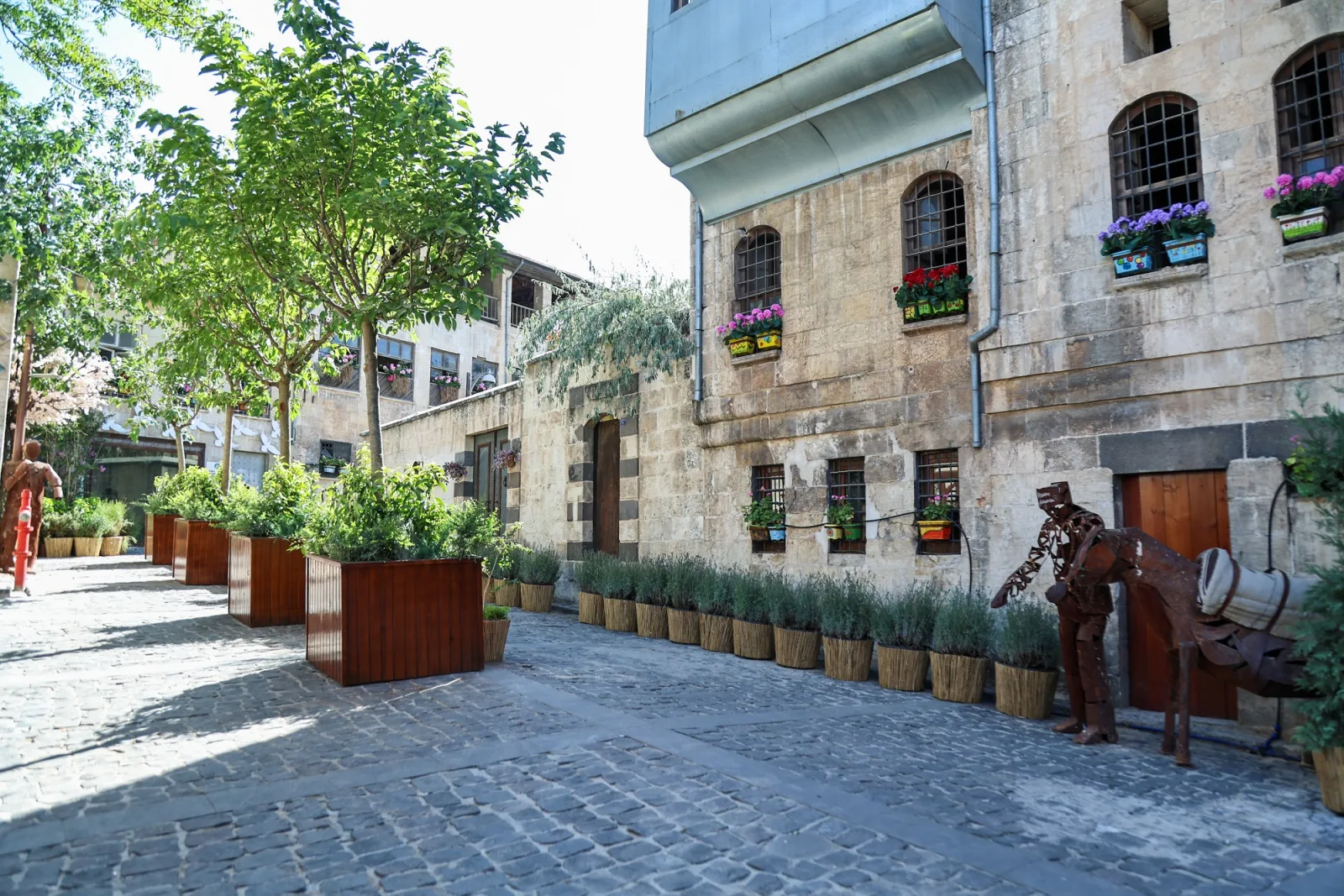
The mansions' doors, stone-carved door frames and wooden ceilings inside are well worth seeing. One of the most impressive buildings in this historic fabric is the Hasan Süzer Marriage and Life Culture Museum, housed in an Antep mansion. Rising three storeys above a cellar carved into the bedrock, the mansion served for many years as an ethnography museum before being restored once again and reopening under its new identity in 2026. Today its rooms tell the story of Antep's marriage traditions floor by floor, from the first visit to the bride's family to the wedding, and from the bridal bath to the dowry, along with the family and social life shaped around them. The quarter is also home to other mansion museums, such as the Game and Toy Museum, the Atatürk Memorial Museum and the Ali İhsan Göğüş Museum.
The quarter holds one more special place in the city's history: during his visit to Gaziantep on 26 January 1933, Mustafa Kemal Atatürk was, at his own wish, officially entered into the population registry of the Bey Quarter, and his official civil record is still tied to this neighbourhood today. You can read the details of this special bond on the Atatürk and Gaziantep page.
Art Streets and the Life of the Quarter
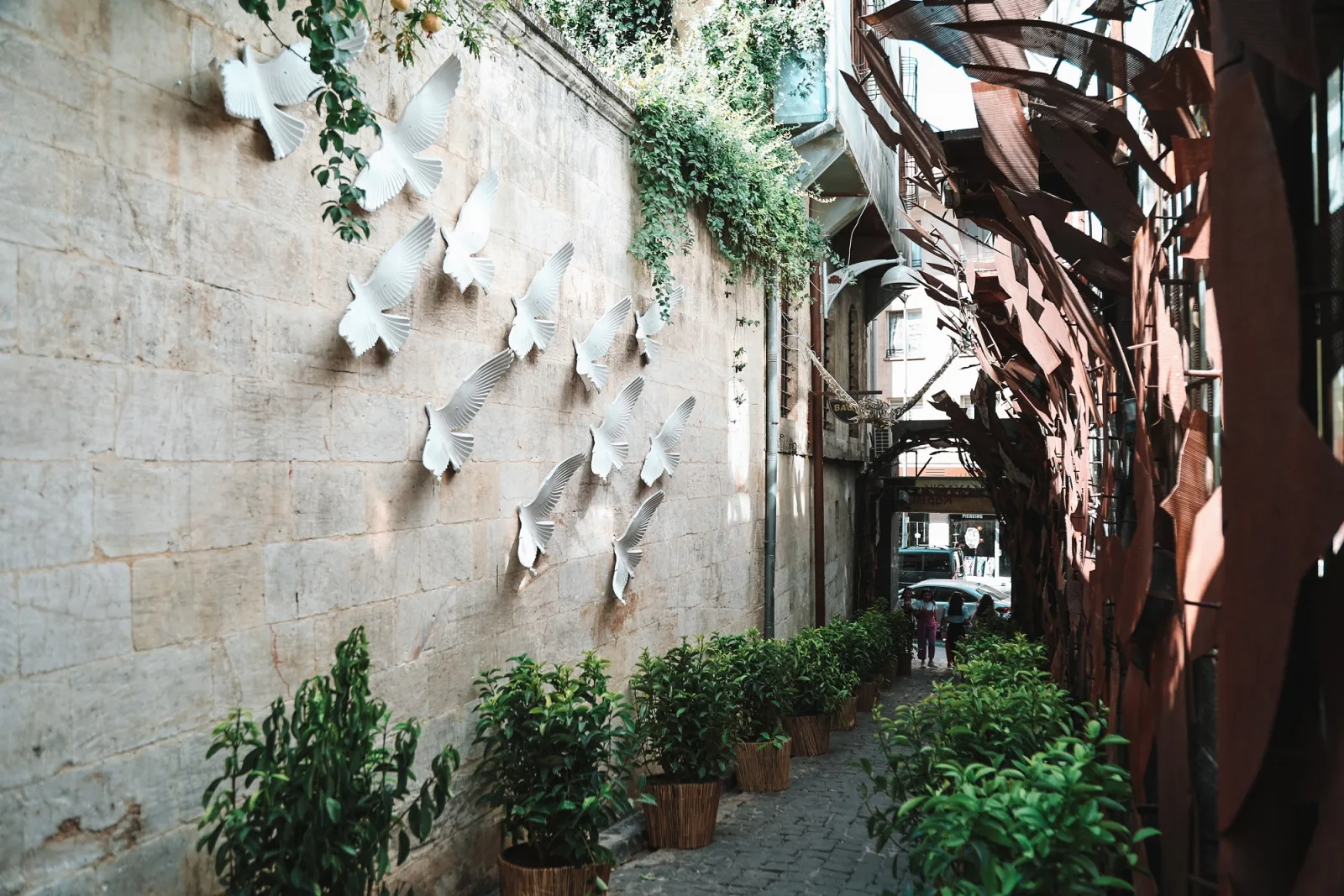
After restoration the neighborhood became more than an architectural showcase; it grew into a living center of culture and the arts. Certain routes, such as Hanifioğlu and Noter streets, were arranged as "art streets," lined with sculptures, three-dimensional designs, art workshops and exhibitions by local artists. Activities ranging from painting and music to traditional handicrafts and folk dancing keep the quarter lively year-round.
Many of the old mansions now serve as boutique cafes, restaurants and hotels. Sipping menengiç coffee in the cool of a mansion courtyard, or relaxing to old records in a nostalgic venue, doubles the pleasure of a visit. The photogenic lanes of the quarter have also served as a backdrop for numerous television series and films.
Restoration and the Quarter's Rebirth
After long years of neglect and disuse, the quarter was brought back to life through a comprehensive street rehabilitation project launched in 2007 under the Metropolitan Municipality's conservation office (KUDEB). The project renewed the facades of nearly 200 houses while staying faithful to their original stone texture; concrete additions were removed, and wooden joinery and roofs were repaired. Water and sewage infrastructure was renewed, the streets were paved with cut basalt, and modern lighting gave the quarter a fresh appearance.
During the project, five registered Ottoman-era stone mansions were also fully restored and opened to tourism. Thanks to this work, the Bey Quarter became a vibrant center that both showcases Gaziantep's traditional way of life and breathes new energy into the city's tourism.
The Quarter Today and How to Visit
The best way to experience the Bey Quarter is to wander lane by lane without rushing. Because the neighborhood is walkable in scale, it is easily reached on foot from the old bazaars and the castle. Set aside about half a day to tour a few of the mansion museums, stroll the art streets and pause in a courtyard.
It is easy to combine a visit here with Gaziantep's other historic stops. To get closer to Antep house architecture, the Hasan Süzer Marriage and Life Culture Museum and the Traditional Antep Houses pages make a good starting point. Just a few steps beyond the quarter, the Coppersmiths' Bazaar and the historic covered markets round out the walk. Layered religious buildings in the neighbouring Tepebaşı quarter, such as the Kurtuluş Mosque (the former St. Mary Church), also reveal Antep's long tradition of coexistence.
Frequently Asked Questions
Where is the Historic Bey Quarter?
The Bey Quarter is in Gaziantep's Şahinbey district, at the historic core of the city. It sits very close to the castle and the old bazaars and is easily explored on foot.
How did the Bey Quarter get its name?
Sources say the quarter is named after the nearby Bey Mosque; some records also suggest the name derives from the 'Bey Palace,' the residence of the Ottoman provincial governor. The Bey Mosque is known today as the Çınarlı Mosque.
Which museums are in the Bey Quarter?
Several museums occupy historic mansions in the quarter, including the Hasan Süzer Ethnography Museum, the Toy and Game Museum, the Atatürk Memorial Museum and the Ali İhsan Göğüş Museum.
When was the Bey Quarter restored?
The quarter was revived through a street rehabilitation project launched in 2007 under the Metropolitan Municipality's conservation office (KUDEB). The project renewed the facades of nearly 200 houses and restored five registered Ottoman mansions.
How long does it take to visit the Bey Quarter?
Allow about half a day to stroll the lanes, see a few mansion museums and the art streets, and pause in a courtyard. The neighborhood is walkable in scale, so everything is within walking distance.
What are the architectural features of Antep houses in the Bey Quarter?
The houses are usually two storeys, built from local limestone and basalt. Rooms face the inner courtyard rather than the street, upper-floor windows are screened with lattice for privacy, and the thick stone walls keep interiors cool in summer and warm in winter.