The Zeugma Mosaic Museum, opened on 9 September 2011, is a museum of Türkiye's Ministry of Culture and Tourism that houses the Roman-era floor mosaics recovered from the ancient city of Zeugma on the banks of the Euphrates River. The mosaics gathered here were lifted from their original settings during rescue excavations, before the rising waters of the Birecik Dam could submerge them; in its early years the museum was cited as the largest mosaic museum in the world, and today it still presents one of the most comprehensive collections of Roman mosaics anywhere.
Zeugma Ancient City, the source of the works displayed here, is included on Türkiye's UNESCO World Heritage Tentative List. The museum itself carries no designation; but its collection constitutes the movable heritage of an archaeological site on that list.
This article covers the museum's architectural concept and exhibition logic, the masterpieces that must be seen, the craft of restoration, and a practical discovery guide for visitors.
Architecture and Curatorial Concept
The museum was built in central Gaziantep, on the grounds of a former Tekel tobacco factory. Of the roughly 30,000 square metres of total area, 25,000 square metres are enclosed; the structure consists of three main blocks divided by function. Block A is devoted to the floor mosaics lifted from Zeugma's Roman houses, Block B to floor mosaics from Eastern Roman (Byzantine) churches in Gaziantep and its surroundings, and Block C to administrative units, a conference hall and temporary exhibitions.
The museum's true architectural subtlety is that it displays the mosaics not at random but by reconstructing the real topography of the ancient city. Zeugma was a terraced city that began at the bank of the Euphrates and rose along the slopes. The museum carries this gradation into the building: mosaics from the houses closest to river level — from the twin Poseidon and Euphrates villas — are exhibited at the entrance and lower level, while works rescued from the elite houses higher up the slopes are placed toward the upper levels. The visitor thus does not merely tour a museum; they make a virtual climb from Zeugma's riverside quarters up to the mansions on its hilltops.
The exhibition uses low-level, directed lighting that brings out the depth of colour in the mosaics; certain masterpieces are presented alone in separate, dimly lit rooms. Many floor mosaics are laid on the ground like the floor of the villa room they came from, so they can be read within their original spatial context.
Masterpieces You Must See
The Gypsy Girl Mosaic
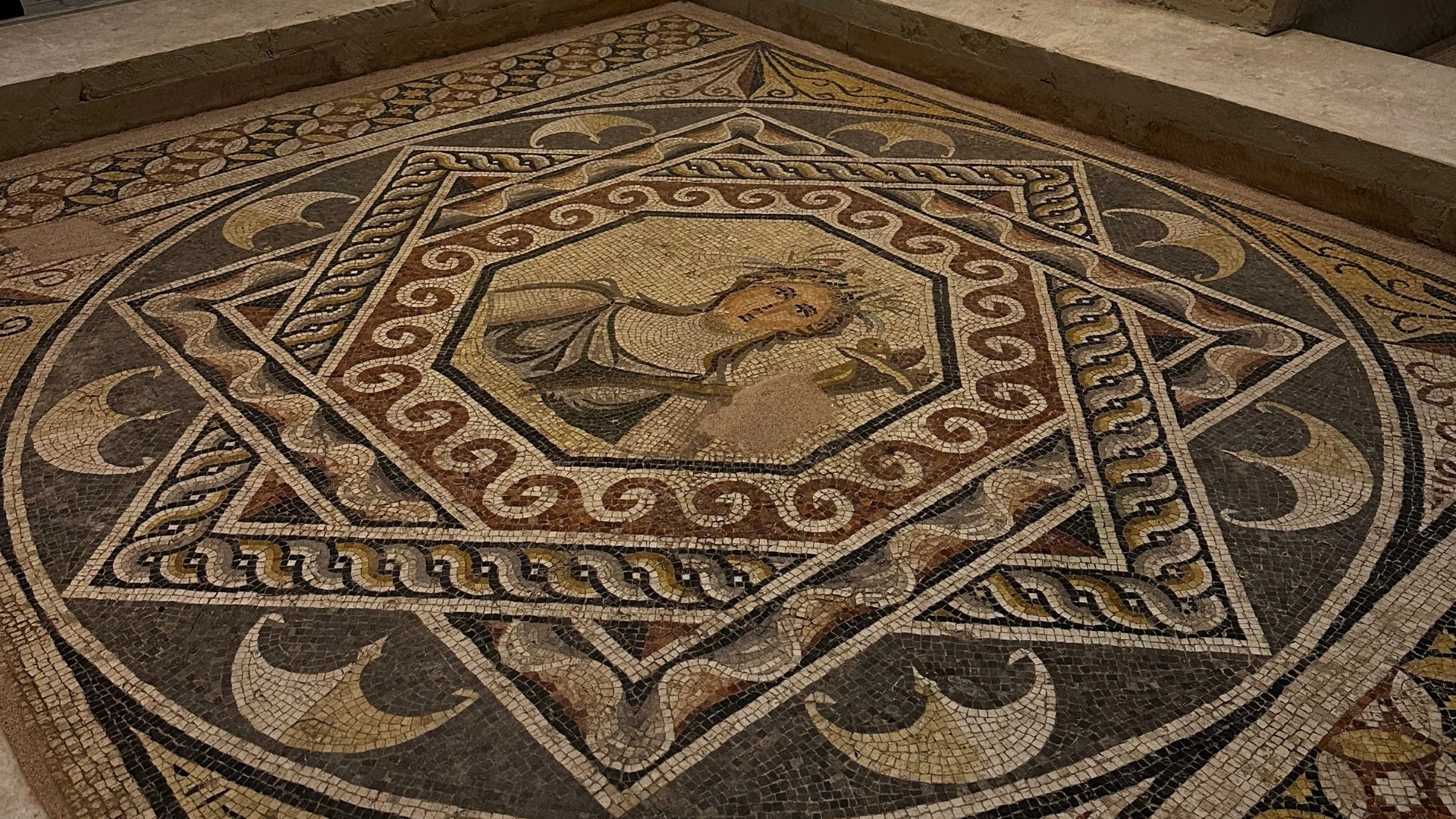
The Gypsy Girl (Çingene Kızı), which has become the emblem of both the museum and the city, is part of a large composition — roughly 9.25 by 13.50 metres — that covered the dining-room (triclinium) floor of the Maenad Villa in Zeugma and was uncovered during the 1998 rescue excavations. The most widely accepted reading is that this female head depicts a Maenad, one of the female followers in the cult processions of Dionysus, the god of wine. Although part of the face is damaged, the remaining gaze gives the impression of following the viewer from every angle of the room, which is why the work is so often called "the Mona Lisa of mosaics." This effect comes from the way the eyes and face are worked with extremely small coloured stone cubes (tesserae) in soft transitions.
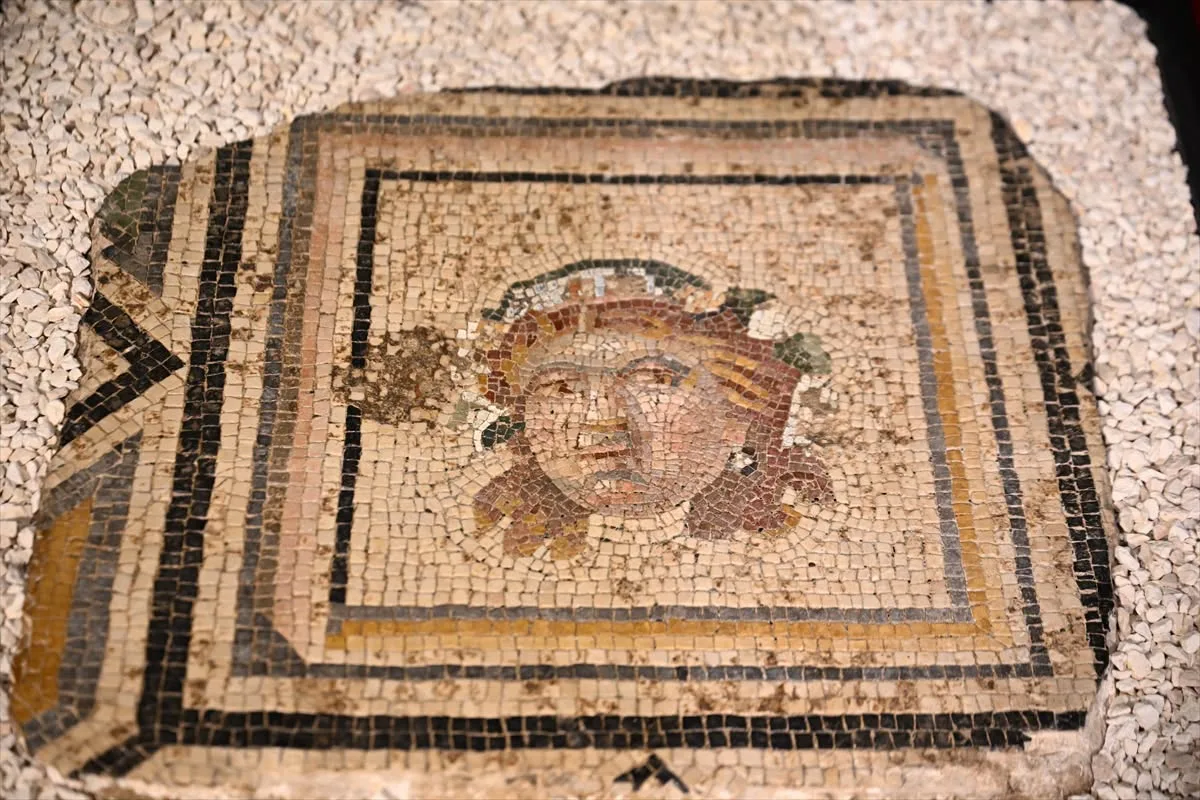
The most striking story of the mosaic, however, concerns the lost pieces that formed its border. Smuggled abroad in the past and held for many years at Bowling Green State University in the United States, 12 pieces were returned to Gaziantep in December 2018 following scientific study and diplomatic efforts; they were carefully set back into the missing places around the main panel in the dim exhibition room. In the years since, further fragments belonging to the composition have continued to be repatriated.
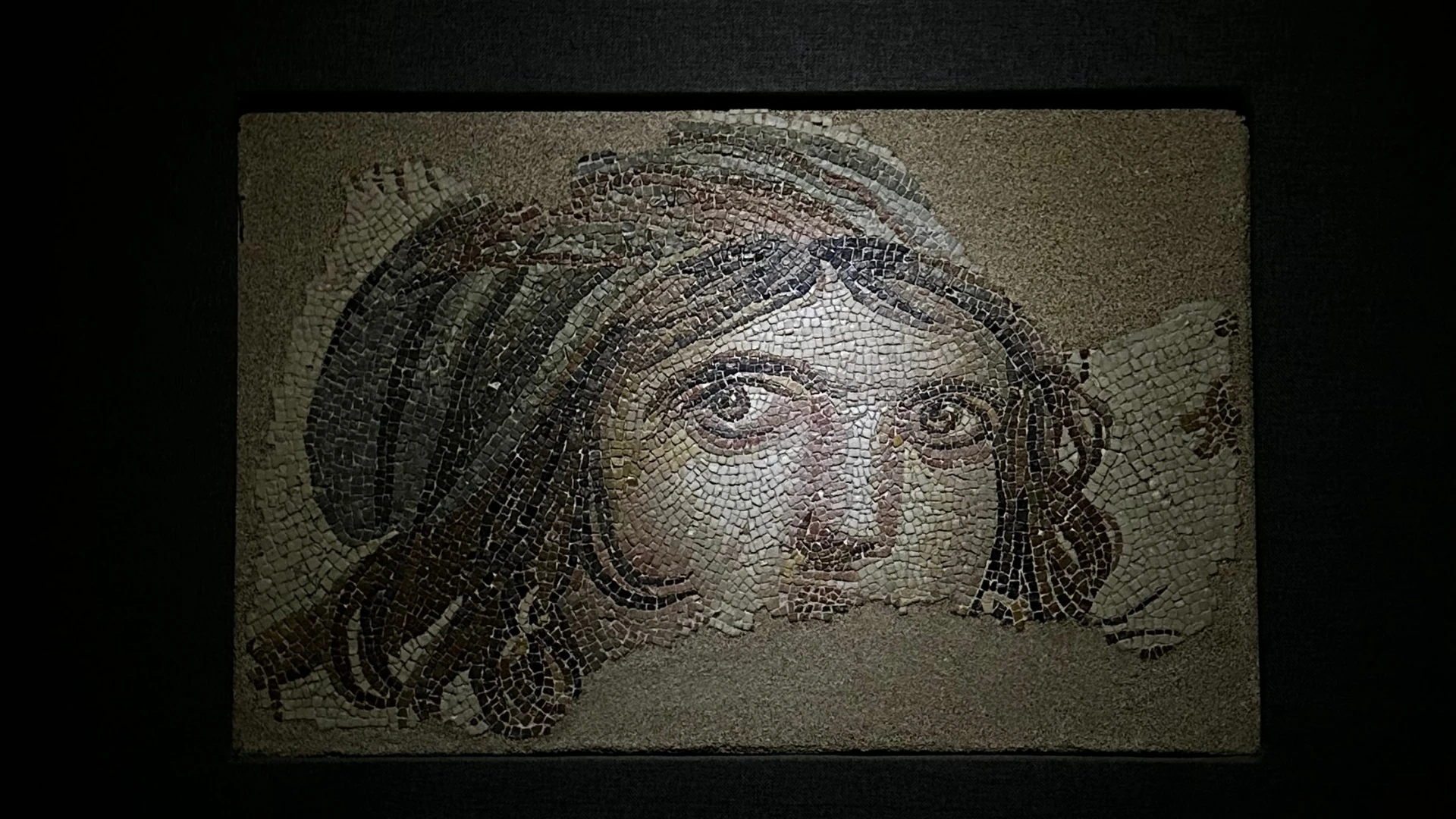
Twelve sections of the floor, removed during the illicit digs of the 1960s and taken abroad, were returned from Bowling Green State University in the United States in 2018; one more panel — confirmed by its tessera colours, border scheme and removal marks to belong to the same composition — came home in 2026 and took its place in the museum. Tracing and reuniting the scattered pieces remains one of the museum's ongoing efforts.
The Mars (Ares) Bronze Statue
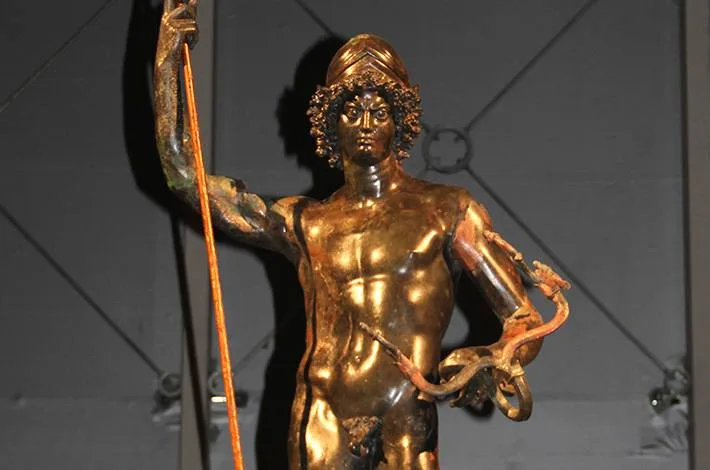
The most important work in the collection apart from the mosaics is the bronze statue of Mars, the god of war, found in excavations at the Poseidon Villa. The reason the statue survived almost intact is that, ahead of a Sasanian raid, it had been carefully hidden among storage jars in the villa's cellar. That a war god should stand out in Zeugma — a frontier garrison city and base of the Legio IV Scythica (Fourth Scythian Legion) — is no historical accident. About 1.5 metres tall, this life-size statue holds a spear in one hand and flowering branches in the other, uniting war and spring — destruction and abundance — in a single figure. Its most distinctive feature is the gold and silver inlay in the pupils of its eyes; this technique makes it one of the most magnificent examples of bronze casting in the world.
The Oceanus and Tethys Mosaic
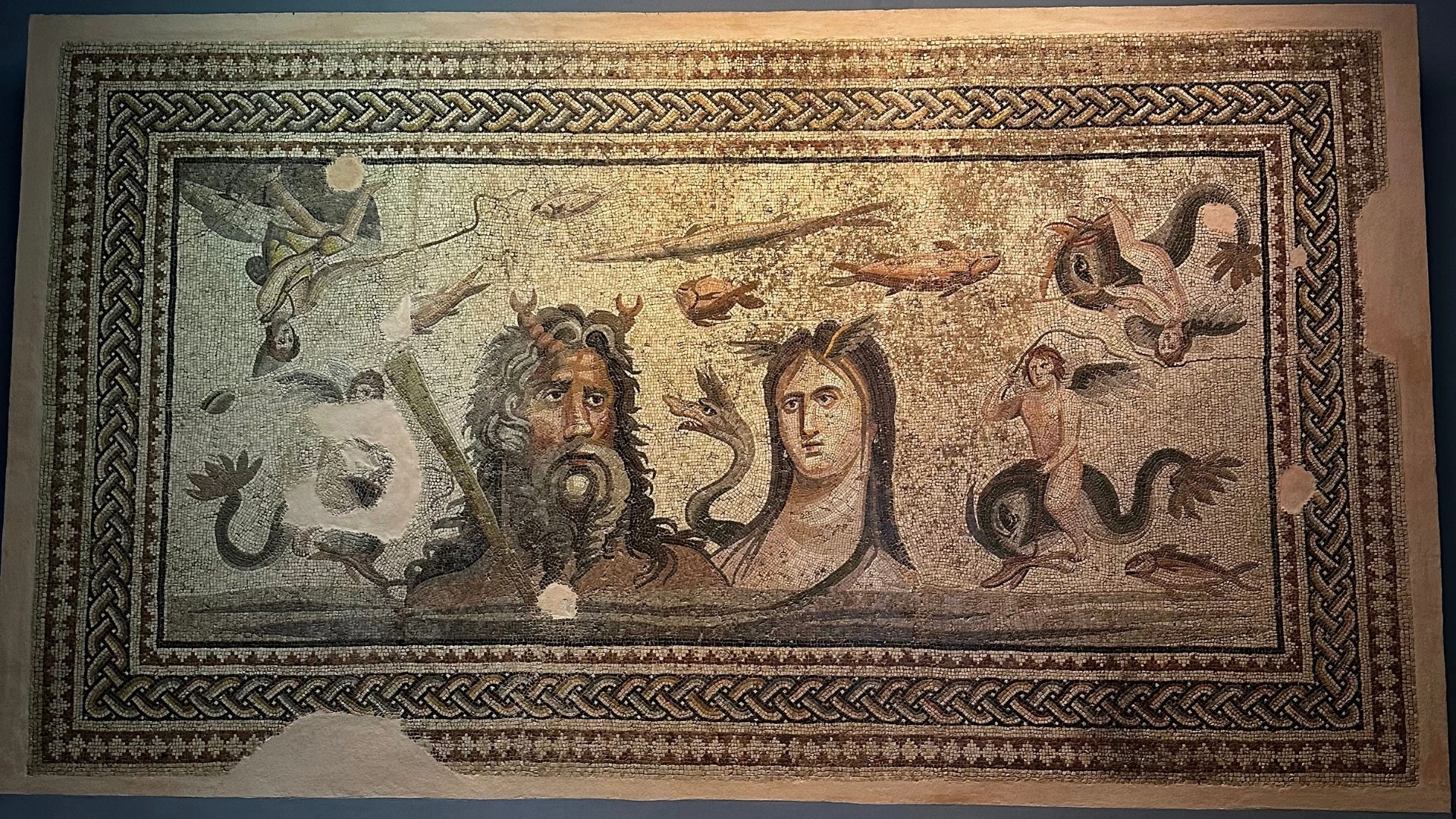
The mosaic depicting Oceanus and Tethys, the divine couple of the sea and fresh waters, once adorned the centre of a villa floor. The fish and sea-creature figures surrounding the composition are a typical example of how Zeugma's masters built up colour transitions and a sense of movement in stone. The water theme is a direct geographic reference for a city on the bank of the Euphrates.
Villa Mosaics with Mythological Scenes
The museum brings together many floor mosaics from Zeugma's wealthy houses, each treating a scene from mythology. The story of Achilles, Acratus and Euphrosyne around the wine god, the abduction of Europa, and the mosaics of the houses that take their names from figures such as Dionysus and Danaë show how the elite families of the era turned their homes into galleries of myth. These scenes were not merely decorative; they were declarations of the owner's cultural sophistication and social standing.
Zeugma stands at the Belkıs locality in the Nizip district, on the bank of the Euphrates. When, in the late 1990s, the rising waters of the Birecik Dam threatened to submerge part of the city, an intensive rescue excavation was launched. The year 2000, when the water reached the lower sections of the ancient city, was the most critical period of these excavations. Many mosaics, including the Gypsy Girl, were carefully lifted from their settings during exactly this process and later gathered in the museum.
The Funerary Stele of Satornila
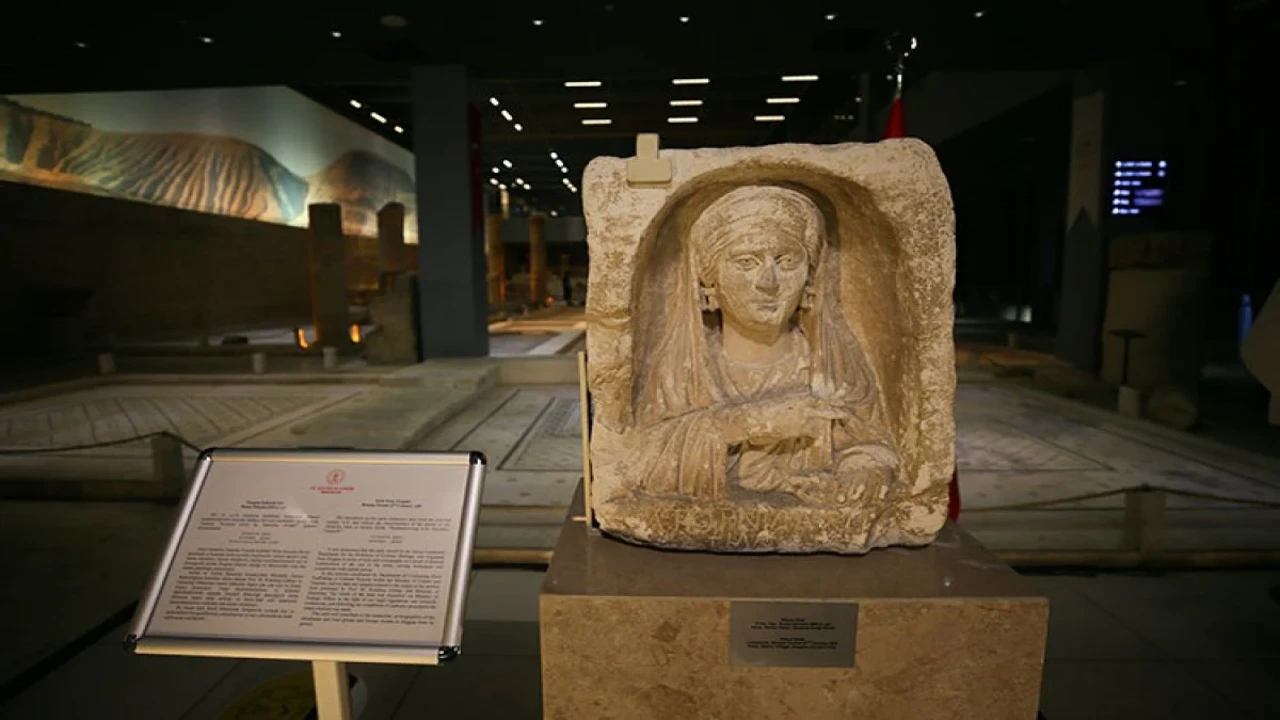
One of the museum's most striking non-mosaic works is a funerary stele smuggled out of Zeugma, recovered years later in Italy and returned to Türkiye in 2023. Dated to the mid-2nd century AD, the Antonine period, the stele bears a relief of a woman and an inscription meaning "Farewell, Satornila, wife who loved her husband!" Found in a house in Florence, the piece — thanks to the cooperation of the Italian carabinieri and Turkish authorities — is today displayed in its home region, in a case at the museum.
The Craft of Restoration and Conservation
The museum's least visible yet most critical area of expertise is the craft of mosaic restoration and conservation, which extends the life of the archaeological heritage. Often emerging from rescue excavations scattered and in fragments made up of thousands of stone cubes, the mosaics demand a precision that is at once archaeological and a matter of fine handwork to reassemble.
This work is carried out by a team of expert conservators at the Gaziantep Restoration and Conservation Regional Laboratory. These specialists use special techniques to repair the wear caused in the mosaics by climate conditions, visitor circulation and building movement; in periodic maintenance, they clean without harming the texture of the work, using damp sponges and soft-tipped brushes. Often described as work of "a surgeon's precision," this patient labour is what truly allows the Zeugma mosaics to be passed on to future generations.
A Visitor's Discovery Guide
Because most visitors head straight for the Gypsy Girl, touring the museum as it deserves takes a conscious plan.
- The overlooked section: Most visitors see the famous mosaics in Block A and leave, skipping the Byzantine-era church mosaics in Block B. Yet this is the best place to follow the transition of the city's mosaic tradition from the pagan world to Christianity, and it is often far quieter.
- The Gypsy Girl room: The work is displayed in a separate, dimly lit room with controlled lighting. As you move around the room, you will see the figure's gaze "follow" you; this is an effect the curation deliberately foregrounds.
- Follow the topography: If you move through the mosaics from the lower level up to the upper floor — that is, from Zeugma's riverbank up to its hills — you reconstruct the real fabric of the city.
The museum gains meaning when visited together with the city's other archaeological collections; for the pre-Roman periods and the wider regional history, the Gaziantep Archaeology Museum is a complementary stop. For those who want to see where the mosaics came from on site, Zeugma Ancient City and the region's other ancient cities are complementary destinations. To follow the place of the Hellenistic and Roman age that Zeugma belongs to within the city's history, see the History of Gaziantep page.
Museum Shop and Souvenir Culture
The exhibition shop reached at the end of the visit is a fitting place to acquire keepsakes inspired by Zeugma's floor art. Visitors can choose among mosaic panels bearing the Gypsy Girl figure, scaled-down casts of the Mars statue, replica jewellery inspired by antiquity, and academic publications about the museum's collection. To carry home a small piece of an ancient city's floor art has become a common ritual of the city's tourism.
Summary and Cultural Value
The Zeugma Mosaic Museum is not only an aesthetically outstanding body of works; it is the concrete result of a rescue operation. A significant part of the floor art of an ancient city otherwise doomed to be submerged has been preserved here together with its context. In this sense the museum represents two layers in Gaziantep's collective memory: the grandeur of a Roman city on the bank of the Euphrates, and the will to rescue that heritage. For everyone who visits the city, this museum is, among Gaziantep's museums, the most direct way to read Gaziantep's ancient depth under a single roof.
Frequently Asked Questions
Where is the Zeugma Mosaic Museum and when did it open?
The museum stands in central Gaziantep, on the grounds of a former Tekel tobacco factory, and opened to visitors on 9 September 2011.
What is the Gypsy Girl mosaic and what does it represent?
It is part of a large composition that covered the dining-room floor of the Maenad Villa in Zeugma. The most widely accepted reading is that the figure is a Maenad, a female follower of the cult of Dionysus; because its gaze appears to follow the viewer, it is often called "the Mona Lisa of mosaics."
Where were the lost pieces of the Gypsy Girl brought back from?
The mosaic's 12 pieces, which had been smuggled abroad and held at Bowling Green State University in the United States, were returned to Gaziantep in December 2018 and set back into their places around the main panel. One more panel, scientifically confirmed to belong to the same composition, was returned from the United States in 2026 and now stands in the museum.
What is special about the Mars statue?
It is a bronze statue of the war god found in the Poseidon Villa, which survived almost intact because it had been hidden among storage jars in the cellar ahead of a Sasanian raid. It is about 1.5 metres tall and is considered unique for the gold-and-silver inlay in the pupils of its eyes.
Where did the museum's mosaics come from?
Most of the mosaics come from the Zeugma Ancient City at the Belkıs locality in the Nizip district. They were rescued during excavations carried out when the rising waters of the Birecik Dam threatened the city, especially in the critical period of 2000.