 Vegetarian
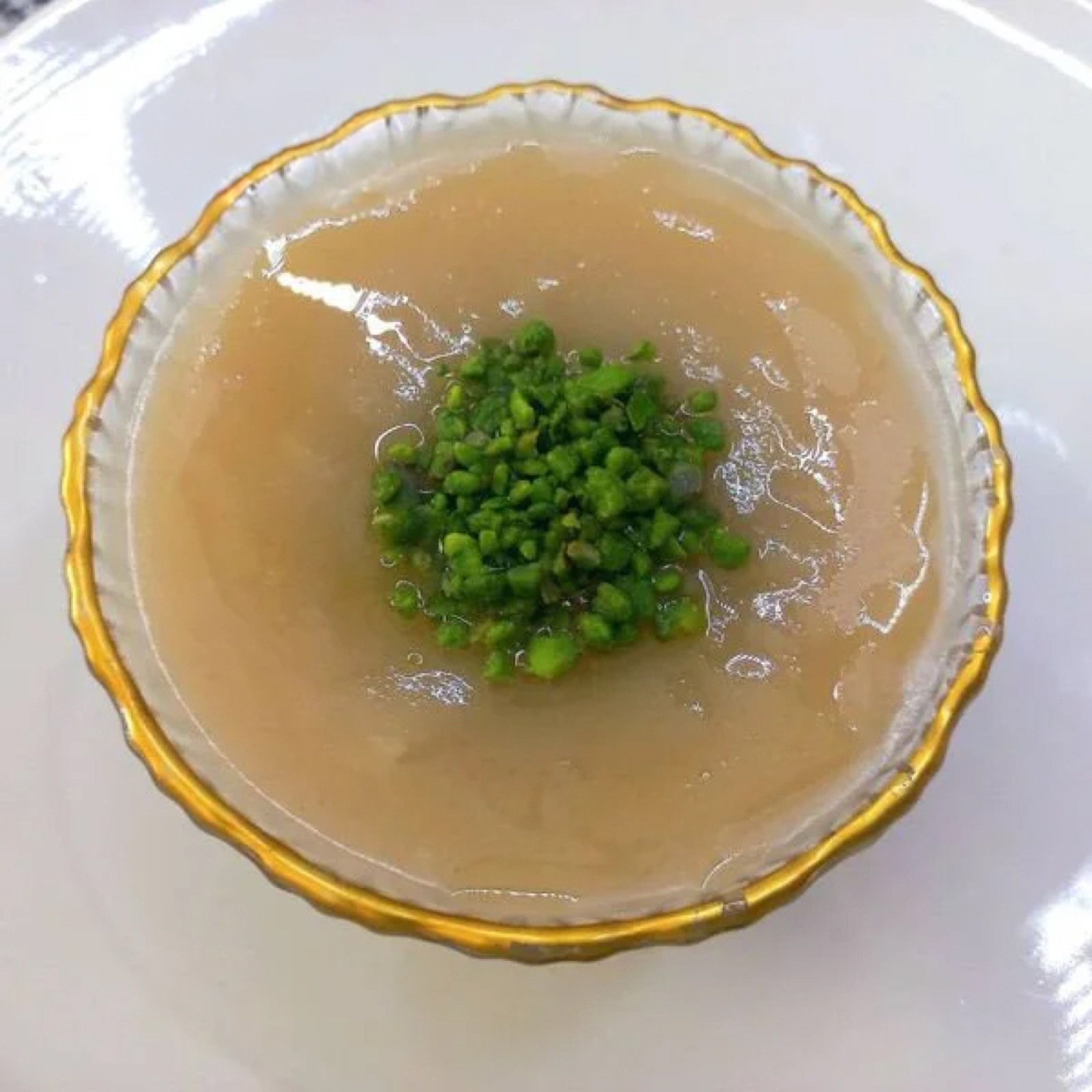
Gaziantep kuymak, known locally as un kuymağı (flour kuymak), is a flour-based dessert in which fine wheat flour is roasted in clarified butter until it turns pink, then cooked with sweetened or grape-molasses water into a smooth, pourable hot pudding served in bowls. Melted clarified butter is drizzled over the top, and cinnamon, walnuts or boz-iç Antep pistachio may be scattered on as desired. With no syrup, no rolled dough and no oven, this dessert is prepared in minutes by bringing together only flour, fat, water and a sweetener in a pan; it is best known for being cooked for women who have just given birth — the lohusa, or postpartum mother. Gaziantep kuymak was registered as a geographical indication by TÜRKPATENT on 7 December 2020 through an application by the Gaziantep Development Foundation (Geographical Indication / Mahreç İşareti, Reg. No: 620).
The identity of the dessert springs from the harmony of a simple quartet: roasted flour, clarified butter (or ordinary butter), water, and a sweetener of either sugar or grape molasses. Behind these lies not a process spread over days but a short, continuous cycle at the stove that demands attention — roasting the flour in fat, loosening it with sweetened water, and thickening it with constant stirring. Entirely separate from the Black Sea kuymak (muhlama) made with cornmeal and melted cheese, this dessert sits at the warm, soft end of Antep cuisine's family of flour sweets.
What Is Gaziantep Kuymak and What Is in It?
Gaziantep kuymak is a hot flour dessert created by roasting wheat flour in fat and then cooking it with sweetened or molasses water until it turns into a smooth, flowing porridge. The name "kuymak" describes bringing the mixture, through constant stirring, to a pourable consistency; the dessert rests on a balance that is soft enough to pour yet thick enough to hold on a spoon. What sets it apart from dough- and syrup-based sweets such as baklava or katmer is that there is neither dough to open nor syrup to pour: its sweetness comes directly from the sugar or molasses added to the cooking water, and its body from the starch of the flour. When made with molasses it is known in Antep as "un kuymağı" (flour kuymak), and similar sweets carry other names in other regions; in Gaziantep this hot flour dessert has settled under the name kuymak. Once ladled from the pan into bowls, kuymak is finished with a drizzle of melted fat and served hot.
Core Components
- Fine Flour: The body of kuymak is built from wheat flour; in the traditional measure, about one cup of flour is cooked with four to five cups of water to give the dessert its consistency. The starch in the flour is what binds the water and turns the mixture into a boza-like, flowing porridge; for this reason cooking it with constant stirring, free of lumps, is decisive.
- Clarified Butter or Butter: Clarified butter (sade yağ) or ordinary butter is used both to roast the flour and to drizzle over the dessert at serving; the recipe divides roughly two tablespoons of fat into two stages. Part of the fat gives the flour its aroma and colour as it roasts, while the rest is melted and poured over the kuymak in the bowl, adding sheen and richness.
- Sugar or Molasses: The sweetness comes from the sweetener added to the cooking water; the traditional measure uses about one cup of sugar or half a cup of liquid grape molasses (pekmez). Made with molasses, kuymak gains both a darker colour and a deeper, more mineral taste; made with sugar, it is lighter in colour and plainer in flavour.
- Water: The liquid that sets kuymak's consistency is water; the sweetened water is added gradually to the roasted flour. As the water reduces the dessert thickens, and as more is added it loosens; the cook's hand adjusts this balance through stirring.
- The Topping (Optional): At serving, cinnamon is usually scattered over the kuymak along with the melted fat; walnuts or boz-iç Antep pistachio may be added as desired. At some tables a fine touch of black pepper is also added. These additions do not change the essence of the dessert but lend it aroma and texture.
The Geography of Its Service
Gaziantep kuymak is eaten fresh and hot; because its consistency stiffens and its texture hardens as it cools, it is usually ladled into bowls and brought to the table the moment it is cooked. Drizzling the melted fat over it at the last moment is part of this hot service. Traditionally prepared at home — especially as a postpartum treat and on winter tables — kuymak has over time also taken its place at dessert shops and breakfast benches in Gaziantep. Eaten hot and with a spoon, it belongs above all to the home and the family table, to a culture of shared treats.
The History and Cultural Origins of Gaziantep Kuymak
The origins of Gaziantep kuymak rest on Anatolia's deep-rooted tradition of flour-based sweets and on the practice of making halva from roasted flour. Although hot sweets bringing together flour, fat and a sweetener are common in Turkish cuisine, what is today called "Gaziantep kuymak" gained its distinctive place by meeting the city's traditions of postpartum hospitality and the winter table.
A Deep-Rooted Tradition of Flour Sweets
Roasting flour in fat and thickening it with a sweetened liquid is an old method belonging to the halva family and part of the centuries-old accumulation of Anatolian cuisine. Kuymak sits within this tradition as an element of the city's material cultural heritage; in local sources it is often spoken of as one of Gaziantep's deep-rooted home desserts. While these accounts show the dessert's deep cultural place, a precise starting date is not documented; for this reason kuymak is best regarded, historically, as part of the region's deep-rooted heritage of flour-based sweets.
Its Identity as a Postpartum Dessert
The strongest bond that identifies kuymak with Gaziantep is its role as a postpartum dessert. By local belief, kuymak is cooked to help the new mother recover the strength lost in childbirth and to support her milk; it is also offered to visitors who come to see the mother and the baby. Thus kuymak has become a dessert that both nourishes the mother and symbolises sharing within the city's customs surrounding birth. In this role it is woven into Gaziantep's everyday culture of solidarity and hospitality, and is also known in the city as "lohusa kuymağı" (the postpartum kuymak).
Geographical Indication Registration
Gaziantep kuymak went through an official registration process to protect its region-specific ingredients and method of production. The process, begun through an application by the Gaziantep Development Foundation, was filed on 7 July 2020 and concluded with a geographical indication registration by TÜRKPATENT on 7 December 2020 (Geographical Indication / Mahreç İşareti, Reg. No: 620). The registration guarantees that the name "Gaziantep Kuymağı / Antep Kuymağı" may be used only for a product tied to the Gaziantep region and made with the defined ingredients and method.
Gaziantep Kuymağı / Antep Kuymağı was entered into the TÜRKPATENT geographical indications register as a Geographical Indication (Mahreç İşareti, Reg. No: 620) on 7 December 2020; the application was made on 7 July 2020 by the Gaziantep Development Foundation. The registration document defines the method of production, from roasting the flour in fat, to cooking it with sweetened or molasses water, to serving it hot with melted fat drizzled over the top.
The Kuymak Tradition and Ritual in Gaziantep
In Gaziantep, kuymak is not merely a dessert; it is part of birth, of winter and of sharing. It holds a place of its own in the city's everyday fabric, especially in postpartum hospitality and at cold-season tables.
The Treat of the Postpartum Table
Kuymak's best-known place in Gaziantep culture concerns the postpartum tradition. Cooked to help the mother recover after birth, kuymak is both offered to the mother within the home and served to neighbours and relatives who come to congratulate the family on the baby and the new mother. Hot, rich and sweet, kuymak is seen as a dessert that gives energy in the postpartum period; in this role it is known in the city as "lohusa kuymağı." Thus kuymak has become a wish for recovery and welcome conveyed not in words but through the table.
The Craft of the Stovetop
Kuymak is defined as much by its cooking technique as by the simplicity of its ingredients. First the flour is roasted in fat over medium-low heat, stirred constantly until it turns pink and the raw smell of flour disappears; it is then taken off the heat and cooled slightly. Water sweetened with sugar or molasses is added to the roasted flour little by little and whisked until no lumps remain. The mixture is returned to the heat and stirred without pause until it reaches a boza-like, pourable consistency. This constant stirring both prevents lumps and sets the dessert's smooth texture; catching the right consistency demands, as the local saying goes, a skilled hand at the stove. The handing down of this hot flour-sweet tradition through the generations is also part of the culinary diversity that was one reason for Gaziantep's admission to the UNESCO Creative Cities Network in the field of gastronomy in 2015.
Its Place at the Table
In Gaziantep, kuymak is often the dessert of warmth and recovery; on cold winter days a hot bowl of kuymak comes to the table as a treat that both warms and satisfies. Meeting the wish for something warm and sweet at breakfast or during the day, kuymak is a flavour eaten slowly with a spoon and shared. Those curious about the relationship Gaziantep cuisine builds with roasted flour and hot sweets can follow a similar texture in the hot-halva tradition of cheese semolina halva, and the nut's journey from dessert to kebab in signature dishes such as pistachio kebab and Gaziantep baklava.
Why You Should Try It
A single bowl of hot kuymak carries Gaziantep's plain yet deep-rooted home-dessert tradition to the palate in one spoonful: the nutty aroma of the roasted flour, the richness of the melting fat and the soft sweetness of the molasses or sugar all arrive at once. Built from only four basic ingredients, with no syrup to drench it and no dough to open, kuymak is a warm, plain dessert rather than a heavy one. And because it loses its consistency as it cools, the truest way to taste kuymak is to eat it hot, fresh from the pan with melted fat drizzled over the top.
Frequently Asked Questions
What is Gaziantep kuymak?
It is a flour dessert particular to Gaziantep: flour roasted in clarified butter, then cooked with sweetened or molasses water into a smooth, pourable hot pudding served in bowls.
What is in Gaziantep kuymak?
It uses flour, clarified butter or butter, water and a sweetener of sugar or grape molasses; cinnamon, walnuts or Antep pistachio may be scattered on top. There is no syrup and no dough.
Is Gaziantep kuymak the same as Black Sea kuymak?
No. Gaziantep kuymak is a sweet dish made with flour, fat and sugar or molasses; Black Sea kuymak (muhlama) is a savoury dish made with cornmeal and melted cheese.
Does Gaziantep kuymak have a geographical indication?
Yes. Gaziantep Kuymağı / Antep Kuymağı was registered as a geographical indication by TÜRKPATENT on 7 December 2020 (Mahreç İşareti, Reg. No: 620).
Why is Gaziantep kuymak made for postpartum mothers?
It is cooked because it is believed to help the mother recover her strength after birth and support her milk; it is also offered to visitors who come to see the mother and baby.