 Vegetarian
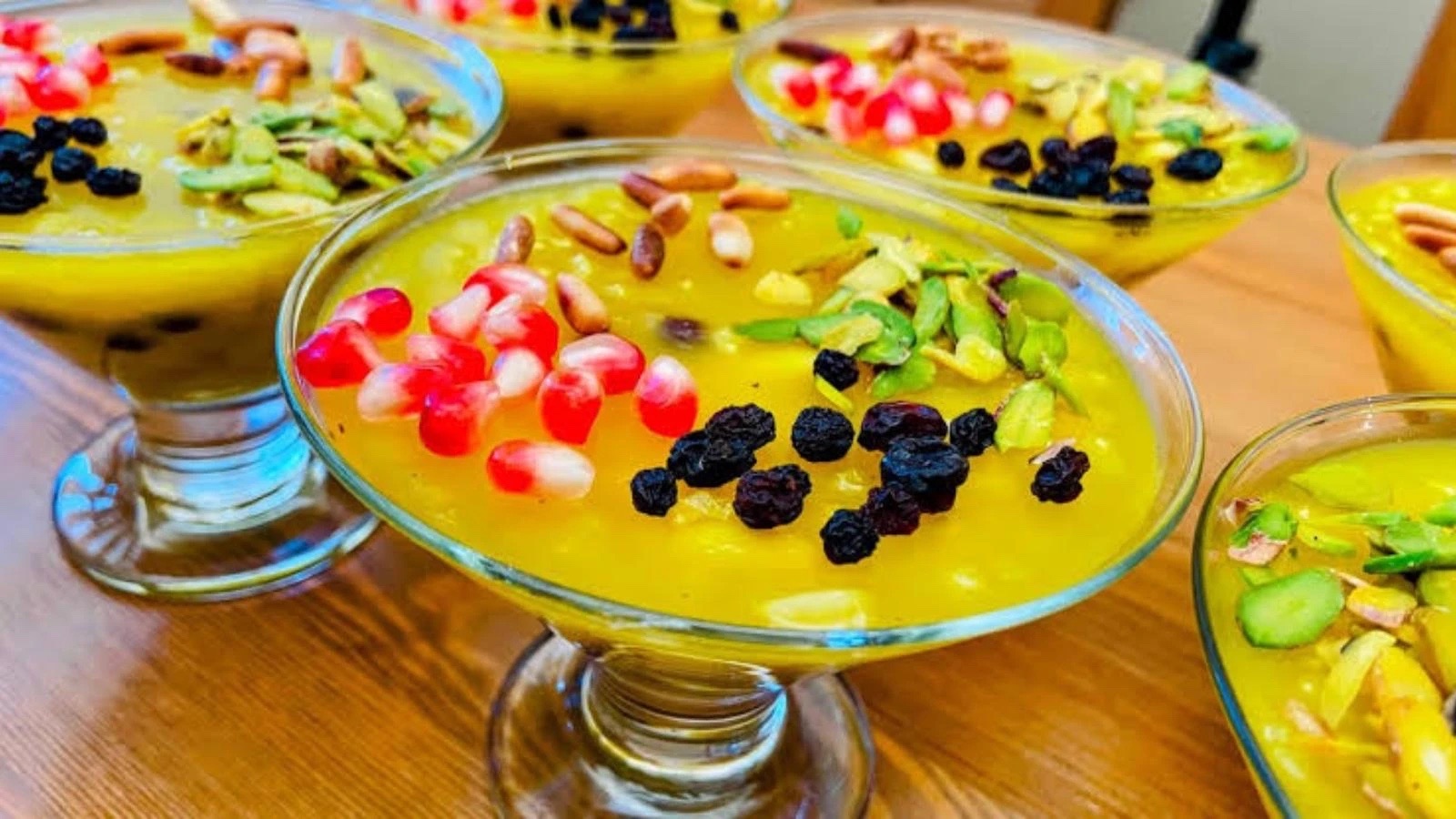
Gaziantep milky zerde, known locally as astarlı sütlaç ("lined rice pudding"), is a milk dessert in which two layers are presented one above the other in the same bowl: at the bottom, a plain rice pudding (sütlaç) made without any sugar; on top, a sweet zerde layer dyed a natural yellow with the petals of the haspir (safflower) flower. As it cools, the zerde sets to a jelly-like consistency and covers the pudding beneath it like a lining, cutting off its contact with the air; this is what gives the dessert both its two-coloured appearance and its name, "astarlı" (lined). Filed on 9 March 2020 through an application by the Gaziantep Development Foundation, Gaziantep milky zerde / Gaziantep astarlı sütlaç was registered as a geographical indication by TÜRKPATENT on 26 November 2020 (Geographical Indication / Mahreç İşareti, Reg. No: 610).
The identity of the dessert springs from the contrast of its two layers: on one side the rice pudding, cooked plain and unsweetened, with the simplicity of milk and rice; on the other the region's yellow zerde, made with sugar and haspir. When the two layers meet in a single bowl, the spoon touches first the sweetness of the zerde and then the soft plainness of the pudding. Astarlı sütlaç is not a heavy baked dessert but a light, balanced bowl dessert served cold.
This article explores the world of ingredients that shapes Gaziantep milky zerde, its two-layer technique, its origins in zerde's long history and in Gaziantep cuisine, its geographical indication protection, and its place at the city's festive table.
What Is Milky Zerde and What Is in It?
Milky zerde is a milk dessert created by layering two separately cooked sweets — rice pudding (sütlaç) and zerde — in the same bowl. First the cooled rice pudding is placed at the bottom of the bowl, then the zerde, also cooled and set, is poured over it; in the geographical indication recipe this proportion is defined as two measures of pudding to one measure of zerde. The word "zerde" comes from the Persian "zerd" (yellow) and refers to the yellow layer on top; "astarlı" points to the way the zerde covers the pudding like a lining. What sets the dessert apart from syrup-soaked pastries is that no sugar at all is added to the rice pudding, and its sweetness comes only from the zerde layer above. Astarlı sütlaç is served not hot but cooled.
Core Components
- Milk and Rice (Pudding Layer): The bottom layer is the rice pudding that lays the dessert's plain foundation. According to the geographical indication recipe, around 50-70 grams of rice go into roughly one litre of milk; the rice is first boiled in water to soften it, then added to the boiling milk and cooked. The most distinctive feature of this layer is that it contains no sugar; the pudding therefore brings forward not sweetness but the soft texture of milk and rice.
- Haspir (Safflower) Flower: The zerde's signature colour comes not from saffron but from the dried petals of the safflower (Carthamus tinctorius L.), known locally as "haspir." The recipe uses about 2-3 grams of haspir per litre of water; the petals are passed through warm water, strained and added to the zerde, giving the dessert an accessible, natural yellow tone in place of costly saffron. Using haspir as the source of this yellow is one of the dessert's distinctive, region-specific features.
- Sugar (Zerde Layer): The sugar that gives the whole dessert its balanced sweetness goes only into the zerde layer on top. According to the recipe, around 250-400 grams of sugar are used per litre of water; added to the cooked rice-and-water mixture, the sugar lets the zerde set into a glossy, firm layer as it cools. With unsweetened pudding below and sweet zerde above, the bowl achieves a balanced sweetness.
- Rice (Zerde Layer): The zerde contains rice of its own as well; according to the recipe, about 40-60 grams of rice are cooked in water to form the body of the zerde. Both layers of the dessert are thus rice-based; the difference is that one is made with milk and without sugar, while the other is made with water, sugar and haspir.
- Rose Water: A little rose water may optionally be added to the pudding layer; the recipe suggests around 5-10 grams per litre of milk. Rose water is not a required ingredient; when chosen, it lends the pudding a faint floral scent and is added before the layer is portioned out and left to cool.
The Geography of Its Service
Astarlı sütlaç is a bowl dessert served cold; both layers are cooked and cooled separately, then placed one above the other, and the dessert comes to the table well chilled after resting in the refrigerator. The way the zerde on top sets to the shape of the bowl as it cools and covers the pudding beneath gives the dessert both its visual presentation and a longer-lasting freshness — a practical feature that matters for a festive dessert prepared in advance for crowded tables. The geographical indication registration requires that production take place within the boundaries of Gaziantep province. Unlike the city's syrup-soaked, pistachio-rich signature sweets, milky zerde is mostly a dessert of homes and local tables, belonging to everyday life and special days; those seeking a similar lightness can find the same coolness in Gaziantep's starch-based cold dessert haytalya.
The History and Cultural Origins of Milky Zerde
The origins of Gaziantep milky zerde rest both on the long history of zerde in Anatolia and on the creativity Gaziantep cuisine shows with milk desserts. Zerde has been known for centuries in Turkish and Iranian cuisine; Gaziantep's contribution was to bring this yellow dessert together with plain rice pudding in the same bowl, turning it into a distinctive, two-layer sweet.
The Deep-Rooted Past of Zerde
Zerde is a deep-rooted dessert that takes its name from the Persian word "zerd" ("yellow"), made with rice and sugar and dyed yellow. Traditionally coloured with saffron, zerde has been one of the classic desserts of weddings, religious holidays and charitable meals in Anatolian cuisine. In regions where saffron was not always easy or affordable to obtain, cooks turned to producing a similar yellow tone with the more accessible safflower (haspir) flower; the colouring of the zerde with haspir in Gaziantep's milky zerde is an extension of this practical tradition.
How It Became a Two-Layer Dessert in Gaziantep
What makes milky zerde particular to Gaziantep is the idea of serving the zerde not on its own but layered with an unsweetened rice pudding. According to local accounts, the zerde layer on top was favoured because, as it cools, it covers the pudding and reduces its contact with the air, helping it last longer; for this reason the dessert is called astarlı sütlaç in the sense of pudding that has been "lined," and, because of the second layer that appears from beneath when it reaches the table, it is also known among locals as "sürprizli sütlaç" (surprise pudding). A practical means of keeping the dessert thus turned, over time, into a distinctive two-coloured presentation particular to the region.
Geographical Indication Registration
Milky zerde went through an official registration process to protect its region-specific ingredients and presentation. The process, begun through an application by the Gaziantep Development Foundation, was filed on 9 March 2020 and concluded with a geographical indication registration by TÜRKPATENT on 26 November 2020 (Geographical Indication / Mahreç İşareti, Reg. No: 610). The registration guarantees that the name "Gaziantep milky zerde / Gaziantep astarlı sütlaç" may be used only for a product tied to the Gaziantep region and made with the defined ingredients and method.
Gaziantep milky zerde / Gaziantep astarlı sütlaç was entered into the TÜRKPATENT geographical indications register as a Geographical Indication (Mahreç İşareti, Reg. No: 610) on 26 November 2020; the application was made on 9 March 2020 by the Gaziantep Development Foundation. The registration document defines the method of production, from adding no sugar to the rice pudding, to colouring the zerde with the haspir (safflower) flower, to layering it in a proportion of two measures of pudding to one measure of zerde.
The Milky Zerde Tradition and Ritual in Gaziantep
In Gaziantep, milky zerde is not merely a dessert; it is part of religious holidays, memorial gatherings (mevlit) and the welcoming of guests. With its two-layer presentation and its lightness, it has found a place of its own as a refreshing close to the meal alongside heavier sweets.
A Dessert of the Festive and Memorial Table
Astarlı sütlaç is among the milk desserts prepared and offered in Gaziantep especially at special times such as religious holidays (bayram) and Ramadan. Because the bowls can be prepared and chilled in advance and the zerde layer on top protects the pudding, the dessert suits crowded tables of guests; the host can prepare it days ahead. Milky zerde, likewise cooked for memorial (mevlit) and charitable meals, is part of a dessert tradition built on sharing and hospitality.
The Craft of the Two-Coloured Presentation
Milky zerde is defined by the harmonious layering of two separate sweets. The pudding and the zerde are cooked and cooled separately; then the pudding is laid down first and the zerde poured over it, creating a two-coloured appearance in the bowl. Getting the zerde on top to set to a firm, even layer as it cools and to cover the pudding like a clean lining is a matter of balance that takes experience; the aim is that, when the spoon goes in, the plain pudding from below and the sweet zerde from above come up together. The handing down through generations of such local milk desserts is also part of the culinary diversity that was one reason for Gaziantep's admission to the UNESCO Creative Cities Network in the field of gastronomy in 2015.
Its Place at the Table
At the Gaziantep table, milky zerde often appears as a light alternative beside heavy, syrup-soaked sweets; the plainness of the milk and the cold service rest the palate after a spiced, rich meal. Those curious about the relationship Gaziantep cuisine builds with milk and light desserts can follow this coolness in cold sweets such as haytalya; while those who wish to know the city's syrup-soaked, pistachio-rich signature flavours can discover another side of the cuisine in Gaziantep baklava and pistachio paste.
Why You Should Try It
A single bowl of milky zerde carries to the palate, in one go, the idea of balance that Gaziantep finds in its milk desserts: the yellow colour and measured sweetness the zerde gets from haspir on top meet the soft plainness of the unsweetened pudding below. It is not a heavy dessert drenched in syrup but a light, two-coloured table sweet served cold. Together with the small surprise of the second layer that appears from beneath when the spoon goes in, astarlı sütlaç is well worth tasting as a flavour particular to Gaziantep's festive and guest tables.
Frequently Asked Questions
What is milky zerde (astarlı sütlaç) and where is it from?
It is a two-layer milk dessert particular to Gaziantep, served cold in one bowl: unsweetened rice pudding at the bottom and sweet zerde dyed yellow with haspir on top.
What is in milky zerde?
The pudding layer uses milk, rice and optional rose water; the zerde layer uses rice, sugar, water and haspir (safflower). No sugar is added to the pudding.
Does saffron give the zerde its colour?
No. In Gaziantep milky zerde the zerde's yellow colour comes not from saffron but from the dried petals of the safflower (Carthamus tinctorius L.), known locally as haspir.
Does milky zerde have a geographical indication?
Yes. Gaziantep milky zerde / astarlı sütlaç was registered as a geographical indication by TÜRKPATENT on 26 November 2020 (Mahreç İşareti, Reg. No: 610).
Why is milky zerde called "astarlı" and "sürprizli"?
It is called astarlı (lined) because the zerde sets as it cools and covers the pudding like a lining, and sürprizli (surprise) because the pudding appears from beneath when the spoon goes in.