 Vegetarian
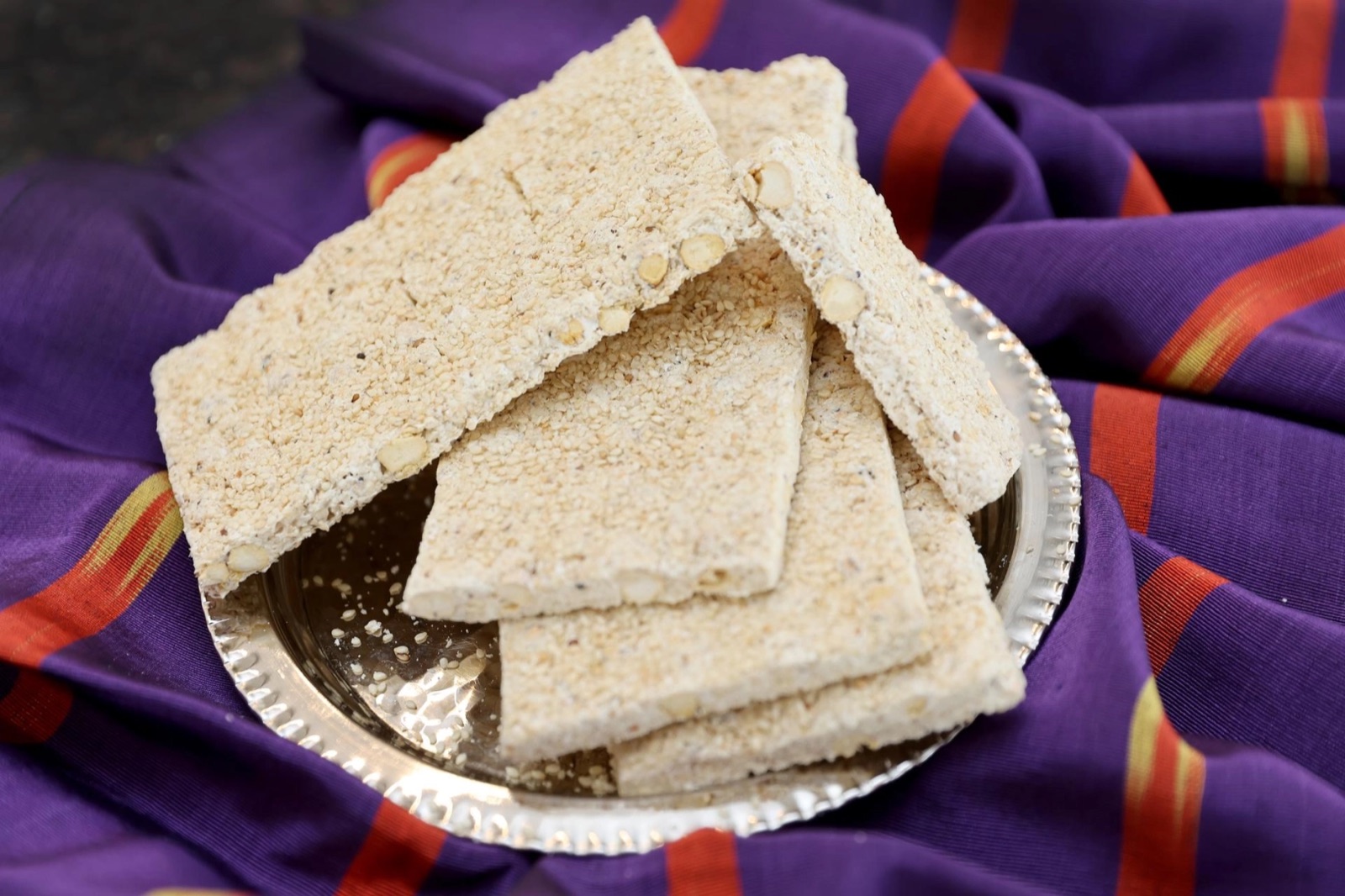
Crunchy roasted chickpea halva (leblebili kıtır helva) is a brittle Gaziantep halva, partly hard and crisp, made by boiling a white sugar syrup in a cauldron, whipping it with soapwort (çöven) until it whitens into a pulled, taffy-like mass, then working it with roasted chickpeas (leblebi) and sesame and leaving it to cool and set. The sweetness of the pulled sugar, the dry, floury texture of the roasted chickpea and the oily aroma of the sesame come together in a single bite. One of the deep-rooted flavours of Gaziantep cuisine, it has been registered as a geographical indication by TÜRKPATENT.
The identity of the halva springs from the masterful meeting of a few plain ingredients: white sugar, water, roasted chickpeas (leblebi), sesame, and the soapwort (çöven) extract that aerates the mixture and lightens its colour. Behind these lies a cycle that demands timing and arm strength — boiling the sugar to the right temperature and whipping it at length, then folding in the chickpeas and sesame and cutting it before the heat drops.
What Is Crunchy Roasted Chickpea Halva and What Is in It?
Crunchy roasted chickpea halva is made by boiling white sugar and water in a cauldron, whipping the mixture with soapwort (çöven) into a white, taffy-like sugar mass, then working that mass while hot with roasted chickpeas (leblebi) and sesame and letting it cool and harden. The "crunchy" (kıtır) in its name comes from the dry, brittle snap it gives when bitten; "leblebili" points to the roasted chickpea that sets it apart from its sesame-only relative. What distinguishes it from syrup-soaked or oil-and-flour halvas is its texture: it is not dipped in syrup or softened in a pot but stays dry, hard and crisp. Once set, it is broken or cut and usually served in small bites alongside tea.
Core Components
- White Sugar: The main ingredient that builds the body and sweetness of the halva is sugar, boiled with water in a cauldron. In the geographical indication recipe the mixture is boiled to around 120 degrees on average to reach the desired sugar-syrup consistency. Pulled at this temperature, the sugar reaches a glassy hardness as it cools and forms the skeleton that gives the halva its crunchy structure.
- Leblebi (Roasted Chickpeas): The component that gives the halva its name and character is roasted chickpea, or leblebi. Folded into the taffy-like sugar, it gives the halva a dry, faintly floury texture and a dominant roasted aroma; the grainy taste that balances the intense sweetness of the sugar comes from here. The chickpea is sometimes added whole and sometimes coarsely broken.
- Sesame: The sesame folded into the mixture gives the halva an oily depth and a roasted scent, while its seeds scattered over the surface complete its grainy, white-cream-toned appearance. In Gaziantep, sesame — known in the local dialect as "künç" — is a raw material rooted in the city's sweet culture.
- Soapwort (Çöven) Extract: The natural foaming agent that gives the halva its white colour and light, porous structure is soapwort (çöven). Added while the boiling sugar is whipped, it traps air in the mass, whitens it, and turns it into the pullable, brittle texture the teeth meet — the backbone of traditional pulled-sugar halvas and the secret behind crunchy halva's signature texture.
- Citric Acid (Limon Tuzu): A small amount of citric acid (limon tuzu) is used as an acidity regulator. Added while the sugar boils, it prevents the syrup from crystallising and turning grainy, so that when the halva cools it sets as an even, crisp mass rather than a sandy one.
The Geography of Its Service
This halva is not a pastry eaten fresh and hot; it is durable, reaching its true consistency only as it cools and keeping its crunch for a long time. So it finds its place at the Gaziantep table mostly as a snack and a thing to offer: during the welcoming of guests it is served in small pieces alongside tea and coffee, its dry structure giving a balanced sweetness that dissolves in the mouth beside a hot drink. It can also be carried as a gift; unlike fresh sweets such as Gaziantep katmer that are eaten only where they are baked, it holds a long-lived place in Gaziantep's pantry and tray of offerings.
The History and Cultural Origins of Crunchy Roasted Chickpea Halva
The origins of crunchy roasted chickpea halva rest both on Anatolia's deep-rooted tradition of pulled-sugar halva and on the everyday relationship Gaziantep builds with sugar, sesame and roasted chickpea. Although making halva from pulled sugar is a widespread craft in Turkish cuisine, the addition of roasted chickpea to this brittle mass is a regional interpretation that brings the halva together with the city's palate.
A Deep-Rooted Pulled-Sugar Halva Tradition
Turning boiled sugar into halva by whipping and whitening it with soapwort is a centuries-old technique of Anatolian cuisine; pişmaniye and various pulled-sugar halvas are different branches of this tradition. Crunchy roasted chickpea halva settles into a brittle consistency by adding chickpea and sesame on top of this pulled-sugar craft. While local accounts position the halva as an offering long present in the city's culture, a precise starting date is not documented; for this reason it is best regarded as part of the region's deep-rooted sweet heritage.
How It Became an Offering Sweet of Gaziantep
What identifies crunchy roasted chickpea halva with Gaziantep is the ingredients in the city's hands and its tradition of mastery. When the sesame rooted in the region's sweet culture, the roasted chickpea, and the knowledge of pulled sugar come together, the halva becomes an offering belonging to the city's tea and coffee tables. Catching the boiling sugar at the right consistency and working it with the chickpea before it cools makes the halva a craft product that cannot be easily imitated at home.
Geographical Indication Registration
Crunchy roasted chickpea halva went through an official registration process to protect its region-specific ingredients and method. Following work carried out by the Gaziantep Metropolitan Municipality, Gaziantep Leblebili Kıtır Helva was registered as a geographical indication by TÜRKPATENT and joined the city's registered products. The registration guarantees that the name "leblebili kıtır helva" may be used only for a product tied to the Gaziantep region and made with the defined ingredients and method, putting its traditional production on record.
The Crunchy Roasted Chickpea Halva Tradition and Ritual in Gaziantep
In Gaziantep, crunchy roasted chickpea halva finds its place not at the head of the table but beside the tea, the conversation and the welcoming of guests — a small sweetness of everyday life. Its durable structure and dry sweetness make it a natural part of the city's culture of offerings and snacking.
Beside the Tea and the Conversation
The halva's best-known place in Gaziantep culture is the table of guest hospitality. As tea or coffee is brewed for a guest, crunchy halva broken into small pieces is offered alongside. Its dry, hard structure dissolves slowly in the mouth with the hot drink, turning it into an offering eaten without haste, accompanying long conversations. Suited to sharing and keeping, it also becomes a modest offering sent to a neighbour or a relative.
The Craft of Pulled Sugar
This halva is defined as much by its technique as by its ingredients. The sugar-and-water mixture in the cauldron is boiled to around 120 degrees on average, then soapwort is added and the mixture whipped with a mixer for roughly half an hour; this long whipping aerates the mass, whitens it and turns it into a pullable taffy. The chickpeas and sesame are folded into the hot taffy, which is spread or shaped and left to cool, reaching a glassy hardness and its signature crunch. Catching the sugar's temperature and the moment to add the chickpea demands mastery; the handing down of pulled-sugar techniques through generations is part of the craft diversity behind Gaziantep's 2015 admission to the UNESCO Creative Cities Network in gastronomy.
Its Place at the Table
In Gaziantep, this halva is one of the unchanging parts of the tray of offerings, especially in winter and during religious holidays when guests come more often; it is broken and eaten with pleasure by child and elder alike. Those curious about the broad relationship Gaziantep cuisine builds with halva — a range that runs from sesame and sugar to cheese and semolina — can follow it in tea-time flavours such as cheese semolina halva and Antep cookie; sakız halva is another example of this tradition, with a soft and elastic texture.
Why You Should Try It
A single piece carries Gaziantep's culture of offerings, and the craft of drawing a brittle sweet from plain ingredients, to the palate in one bite: the glassy crunch of the pulled sugar, the floury texture of the roasted chickpea and the oily aroma of the sesame all arrive at once. Sweetened only by the pulled sugar itself rather than drenched in syrup, it is a dry, balanced sweet rather than a heavy one. And thanks to its durability, it is as easy to take with you as a gift as it is to taste beside a glass of tea in the city where it was born.
Frequently Asked Questions
What is crunchy roasted chickpea halva and where is it from?
It is a brittle Gaziantep halva, partly hard and crisp, made by working pulled white-sugar taffy whipped with soapwort together with roasted chickpeas (leblebi) and sesame, then letting it set.
What is in crunchy roasted chickpea halva?
It uses white sugar, water, roasted chickpeas (leblebi), sesame, soapwort (çöven) extract and citric acid as an acidity regulator. No syrup is used; its sweetness comes from the pulled sugar.
Does crunchy roasted chickpea halva have a geographical indication?
Yes. Gaziantep Leblebili Kıtır Helva was registered as a geographical indication by TÜRKPATENT through an application by the Gaziantep Metropolitan Municipality.
How and when is crunchy roasted chickpea halva eaten?
It is broken and eaten after it has cooled and hardened; it is usually offered alongside tea and coffee. It is eaten as a snack especially in winter and during religious holidays.
Why is the halva hard and free of syrup?
Its sweetness comes from sugar boiled at a high temperature and pulled; this sugar reaches a glassy hardness as it cools. That is why it is not dipped in syrup but stays dry and crunchy.