 Vegetarian
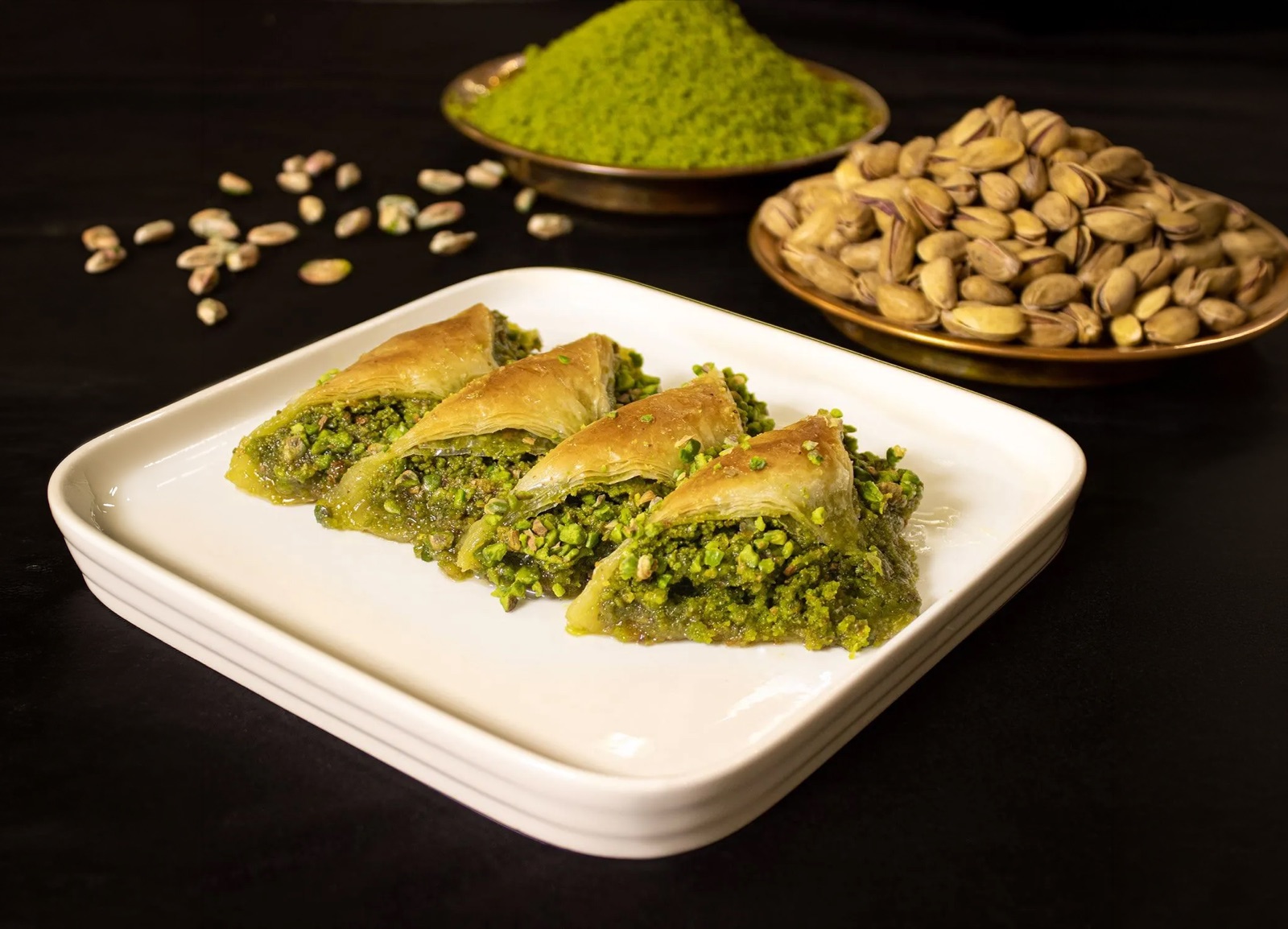
Şöbiyet is a Gaziantep dessert of the baklava family, in which layers of thin, hand-rolled phyllo are filled with boz-iç Antep pistachio and kaymak, folded closed into triangles, baked with clarified butter and sweetened with syrup. What sets it apart from classic baklava is the soft kaymak filling spread between the layers and the closed triangular shape; a creamy centre hides beneath the crisp phyllo. Registered on 6 April 2022 under the name "Gaziantep Şöbiyeti / Antep Şöbiyesi," it received a geographical indication from TÜRKPATENT (Geographical Indication / Mahreç İşareti, Reg. No: 1062) and joined the city's registered regional desserts.
The dessert's identity springs from the harmony of a few essentials: thin baklava phyllo opened in the master's hands, emerald-green boz-iç Antep pistachio, a kaymak filling, sheep-and-goat clarified butter, and a measured sugar syrup. Şöbiyet is a distinctive in-between form that unites the crispness of baklava with the softness of a milk-based dessert in a single bite.
This article explores the world of ingredients that shapes the identity of şöbiyet, its origins in Gaziantep cuisine, its geographical indication protection, and its place at the city's table.
What Is Şöbiyet and What Is in It?
Şöbiyet is a pastry dessert in which a layer of kaymak and fresh boz-iç Antep pistachio is placed between stacked thin baklava phyllo sheets, covered with phyllo, cut into triangular pieces, baked with clarified butter and then syruped. Two features set it apart from baklava: the soft kaymak filling spread between the layers and the closed triangular shape that keeps the filling from spilling. Whereas in baklava the pistachio stays a dry filling between the sheets, in şöbiyet the pistachio and kaymak together form a creamy centre; this is why şöbiyet's texture is softer and milkier than baklava's.
Core Components
- Hand-Rolled Phyllo: The backbone of şöbiyet, as with baklava, is thin phyllo opened paper-thin from a dough made of high-gluten hard-wheat flour. The sheets are stacked with wheat starch dusted between them and thinned with long rolling pins. This handwork gives the shell that covers the filling şöbiyet's characteristic lightness and crispness.
- Kaymak (Filling): This is the very element that distinguishes şöbiyet from baklava. This soft kaymak is spread as a layer over the base phyllo, building a milky, aromatic bed between the pistachio and the pastry.
- Antep Pistachio: The colour and aroma come from the bright emerald-green Antep pistachio, harvested early — before it fully ripens — and known locally as "boz iç." Scattered into and over the kaymak filling, this is the geographically indicated pistachio; it is not ground to a flour but kept so that it is felt in each bite.
- Clarified Butter (Sadeyağ): The clarified butter that gives şöbiyet its golden colour, aroma and crispness is traditionally made by purifying butter from sheep and goat milk of its water and sediment. Margarine and vegetable oils are not used in the traditional recipe.
- Sugar Syrup: The syrup poured over the baked şöbiyet is made with sugar, water and a little lemon juice to prevent crystallisation. In the Antep manner, the şöbiyet meets cold syrup the moment it comes hot from the tray; this contrast helps the phyllo stay crisp rather than turning soggy. The syrup is kept measured so it does not overpower the milky taste of the filling.
The Geography of Service
As part of Gaziantep's tradition of baklava and syrup-soaked desserts, şöbiyet sits side by side with baklava on the city's pastry counters. Its triangular shape makes it easy to pick out on a baklava tray, and it is often served on the same plate as baklava and other pistachio sweets. Because of its milk-based filling, şöbiyet is not a long-keeping dessert like dry baklava; it is at its best fresh, eaten shortly after baking. In this respect it stands out as a dessert eaten mostly on the spot, while still warm.
The History and Cultural Origins of Şöbiyet
The origins of şöbiyet rest both on the deep-rooted thin-pastry tradition of Anatolian and Ottoman cuisine and on Gaziantep's abundance of pistachio and clarified butter. The idea of meeting thin phyllo with a milk-based filling matured at the crossroads of two separate dessert traditions: baklava and muhallebi (custard).
A Tradition of Thin Pastry and Milky Filling
The art of rolling thin phyllo is part of the centuries-old accumulation of Anatolian cuisine, while baklava earned a place as a respected dessert in the Ottoman court kitchen. Şöbiyet is described as a form born when this thin-pastry culture met the milky dessert tradition of kaymak and muhallebi. The approach of placing a milk-based filling within layered phyllo developed as an extension of baklava-making and, over time, became a separate type known by its own name.
How It Became a Variety of Baklava in Gaziantep
What gave şöbiyet its present identity is Gaziantep's tradition of baklava mastery and the unique ingredients in its hands. The city's boz-iç pistachio, its fine sheep-and-goat clarified butter, and the master-apprentice discipline handed down through generations allowed thin-phyllo desserts to diversify. Within this accumulation, şöbiyet matured alongside baklava and took its place in Gaziantep's pastry tradition as a variety distinguished by its kaymak filling. Today şöbiyet is counted as an inseparable part of the city's baklava culture.
Geographical Indication Registration
Şöbiyet went through an official registration process to protect its region-specific ingredients and method of production. Through an application by the Gaziantep Metropolitan Municipality, the product received a geographical indication registration from TÜRKPATENT on 6 April 2022. This registration guarantees that the name "Gaziantep Şöbiyeti / Antep Şöbiyesi" is used only for a product made with the defined ingredients and method.
Gaziantep şöbiyet is registered by TÜRKPATENT under the name "Gaziantep Şöbiyeti / Antep Şöbiyesi," as a Geographical Indication (Mahreç İşareti) with Registration No 1062. The registration date is 6 April 2022, and the applicant is the Gaziantep Metropolitan Municipality. The product falls under the category "bakery and pastry products, pastry, desserts."
The Tradition and Ritual of Şöbiyet in Gaziantep
In Gaziantep, şöbiyet finds its place at the table of special days and hospitality as an extension of the baklava culture. Its milk-based filling brings it closer to the identity of a "plate dessert" than baklava.
At the Table of Special Days
At religious holidays, weddings, engagements and important gatherings, şöbiyet is among the desserts offered alongside the baklava tray. Serving a guest a few pieces of şöbiyet together with baklava is considered a refinement that enriches the range of sweets. Thanks to its kaymak filling, şöbiyet is a choice favoured by those seeking a lighter, milkier taste.
The Craft of the Stone Oven
Like baklava, şöbiyet is baked not over open fire but by the oven's indirect heat. In traditional workshops, the şöbiyet — arranged on heavy copper trays lined with pure tin — is baked in the oven's balanced heat until it takes on a golden colour. Because it contains a milk-based filling, baking demands more careful heat control than baklava so that the filling does not scorch. Cold syrup is drizzled over the hot şöbiyet straight from the oven; this is the secret to the phyllo staying crisp and the filling keeping its consistency. This thin-pastry craft is technically distinct from regional products cooked over open fire such as Gaziantep lahmacun, and contributes to the diversity of crafts that was among the reasons Gaziantep was admitted to the UNESCO Creative Cities Network in the field of gastronomy in 2015.
Its Place at the Table and Its Relationship to Other Sweets
Because şöbiyet is at its best eaten fresh, it is mostly served on the spot and while still warm. In Gaziantep table etiquette, syrup-soaked desserts are usually accompanied by a plain coffee or a glass of water. Among the pistachio delicacies people wish to take out of the city, products that keep longer and contain no milk-based filling — such as pistachio paste — are preferred, while şöbiyet remains a dessert tasted mostly in the city. For those who want to see how the pistachio stands out not only in baklava and şöbiyet but in the world of kebabs as well, pistachio kebab is the savoury counterpart of the same ingredient.
Why You Should Try It
A single bite of şöbiyet carries both the crispness of baklava and the softness of a milk-based dessert to the palate: the crunch of the thin phyllo on top, the creamy texture of the kaymak inside, the aroma of the boz-iç pistachio and the measured sweetness of the syrup all arrive together. For palates accustomed to baklava this is a familiar yet different experience; the kaymak filling gives the dessert a softer character. To taste şöbiyet in the city where it was born, in the atmosphere of freshly rolled phyllo and the stone oven, while still warm, is to share in a part of Gaziantep's registered dessert heritage. For those who love baklava, şöbiyet is the next stop that must be tried in Gaziantep.
Frequently Asked Questions
What is Şöbiyet?
Şöbiyet is a Gaziantep dessert of the baklava family: thin phyllo filled with kaymak and boz-iç Antep pistachio, folded into triangles, baked with clarified butter and syruped.
What is in Şöbiyet?
Five essentials: hand-rolled thin phyllo, a kaymak filling, boz-iç Antep pistachio, sheep-and-goat clarified butter, and a sugar syrup.
Is Şöbiyet a geographically registered product?
Yes. On 6 April 2022 şöbiyet received a geographical indication (Mahreç İşareti, Registration No 1062) from TÜRKPATENT under the name "Gaziantep Şöbiyeti / Antep Şöbiyesi."
When and how is Şöbiyet eaten?
Because of its milk-based filling it does not keep long; it is best fresh and still warm. It is offered alongside baklava at holidays, weddings and special days.
How can I tell an authentic Şöbiyet?
An authentic şöbiyet is recognised by its closed triangular shape and the creamy centre of kaymak and pistachio beneath crisp phyllo; the traditional recipe uses pure clarified butter.