 Vegetarian
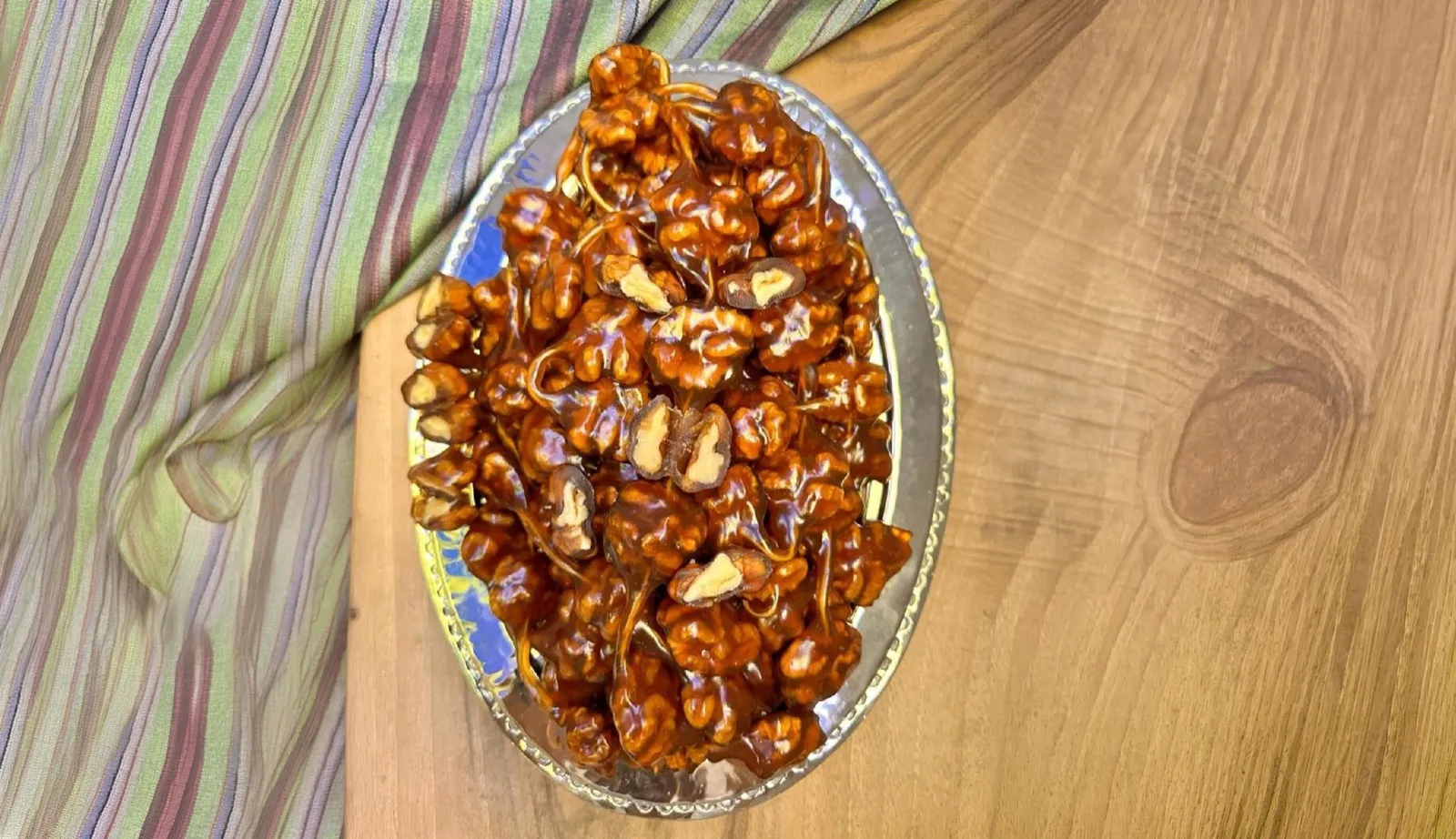
Walnut sujuk (cevizli sucuk) is a traditional grape-molasses sweet made by threading walnut kernels one by one onto a string and dipping them repeatedly into a thick pudding (köme) boiled from grape molasses with starch and flour, drying the strand between each dip and finally slicing it like a sausage. The "sujuk" (sucuk) in its name refers only to its long, cylindrical shape; it has nothing to do with meat. In Gaziantep this sweet is made after the grape harvest as a way to turn the gathered grapes into molasses, and it is a durable, nourishing winter treat eaten with tea on long winter nights.
Walnut sujuk is known across Anatolia under different names: "orcik" in the Elazığ region, "köme" in and around Gümüşhane, and "bandırma," "şeker sucuk" (sugar sujuk) or "kedi bacağı" (cat's leg) in various places. What they all share is the same method: threading nuts on a string and building up a thick crust by dipping them again and again into a molasses pudding. In Gaziantep's cuisine this sweet meets the city's viticulture tradition and abundant molasses to become a deep-rooted part of the tables of winter preparation.
This article explores the ingredients inside walnut sujuk, the stringing and "bandırma" (dipping) technique, the sweet's origins reaching to the Caucasus, and the relationship it builds with the grape harvest in Gaziantep.
What Is Walnut Sujuk and What Is in It?
Walnut sujuk is a sweet that emerges from the cycle of dipping string-threaded walnut kernels into a thick pudding made from grape molasses and then drying them. The pudding (also called "köme" in some regions) is made by boiling grape molasses with water, starch and flour to a pudding consistency; the string of walnuts is plunged into this hot mixture, hung to dry, and the process is repeated several times. Each dip lays a new coat over the walnuts, and the result is a cylindrical stick clad in a glossy, pliable molasses crust. Once fully dry, the string is pulled out and the sujuk is cut into diagonal slices. Because it is sweetened not with syrup or refined sugar but with the fruit's own sugar in the form of molasses, its sweetness is natural.
Core Components
- Grape Molasses: The main element that determines the sweet's flavour and colour is grape molasses (pekmez) thickened by boiling; in some regions mulberry molasses is used instead. The molasses gives both the pudding its sweetness and the crust around the walnuts its deep amber colour. In traditional measures, about two and a half cups of molasses are boiled, thinned with an equal amount of water.
- Walnut Kernels: The large, whole walnut kernels that form the body of the sujuk are soaked in water overnight before stringing, so that when pierced through the centre with a needle and threaded onto the string they do not break. About 200 grams of walnuts are used for one string. In some regions hazelnuts, almonds or Antep pistachios are threaded instead of walnuts.
- Starch and Flour: The glue-like body that molasses alone cannot create is provided by wheat starch and flour. Roughly half a cup each of starch and flour, stirred into the molasses-and-water, thicken the pudding as the mixture boils; this thickness forms the pliable crust that clings to the walnuts and turns chewy as it dries.
- Water: Water is added to the pudding to adjust the flow of the molasses and the smooth dispersal of the starch. The right water ratio keeps the pudding neither so thin that it runs and drips nor so stiff that it will not cling to the walnut.
The Geography of Its Service
Unlike pastry desserts that must be eaten fresh, walnut sujuk is a long-keeping winter provision; because it can be stored for weeks or even months once dried, it is a preparation that enriches the pantry. In Gaziantep it is usually made at home during the grape-harvest season alongside the boiling of molasses, then hung to dry in a cool place. In winter it is cut into diagonal slices and offered; its classic companion on long nights is strong brewed tea. Thanks to its durable nature, walnut sujuk also takes its place among long-lasting, giftable sweets such as pistachio paste.
The History and Cultural Origins of Walnut Sujuk
The origins of walnut sujuk rest on the tradition of turning grape molasses and nuts together into a durable food. This method is not unique to Anatolia; it is a close relative of "churchkhela" in the Caucasus, especially in Georgian cuisine, and is prepared similarly by dipping string-threaded walnuts into a pudding made from grape must.
Spread Across the Caucasus and Anatolia
Molasses-dipped nut sweets are historically associated with the Caucasus and Central Asia; it is recounted that, through migration and cultural exchange, they spread to different regions of Anatolia and, thanks to their durable and high-energy nature, were used as provisions on long journeys. While these accounts show the sweet's deep-rooted past, a precise starting date is not documented; for this reason walnut sujuk is best regarded as part of a shared molasses-and-nut heritage spread across a wide geography.
The Sweet of the Grape Harvest
What ties walnut sujuk to the calendar of production is the grape harvest. The molasses boiled in autumn, when the grapes are gathered, forms the basis of the foods to be stored for winter; walnut sujuk is one of the best-loved ways to make use of this molasses. The abundance of the harvest turns into molasses, and the molasses into a sweet that will last through the long winter. Thus walnut sujuk has taken shape as a traditional winter preparation tied to the cycle of the season and to an understanding that the harvest at hand should not be wasted.
Its Names by Region
The same sweet is called by different names across Anatolia, and some of these names are protected by a geographical indication in their own region — "orcik" in Elazığ, "köme" in Gümüşhane, "yayla bandırması" in Tarsus, and others. Despite this variety, the method is almost the same everywhere. In Gaziantep the sweet is mostly known as "cevizli sucuk" (walnut sujuk) and is made as a natural extension of the city's viticulture and molasses tradition.
The Walnut Sujuk Tradition and Ritual in Gaziantep
In Gaziantep, walnut sujuk is not merely a sweet; it is a preparation and a household tradition that carries autumn's harvest into winter. The process, which begins with the boiling of molasses, is a seasonal task that readies the pantry for winter.
The Craft of Stringing and Dipping
Walnut sujuk is defined by its technique as much as by its ingredients. First the walnut kernels, softened in water, are patiently threaded onto a string; then molasses, water, starch and flour are boiled together to obtain a thick pudding. The string of walnuts is dipped into this hot pudding and hung to dry; once the pudding clings to the surface and dries slightly, it is dipped again. As this "bandırma" (dipping) cycle is repeated several times, the crust thickens. After the final dip the sujuk hangs in the open air, usually for several days, until it is completely dry. The knack of the work lies in the consistency of the pudding and the patience of the drying; this handwork is part of household knowledge handed down through generations.
Its Place at the Winter Table
In Gaziantep, walnut sujuk is the sweet of winter evenings. Cut into diagonal slices, the sujuk is offered with strong brewed tea after the evening meal; the dense sweetness of the molasses and the oily texture of the walnut strike a filling balance on cold nights. Thanks to its durable nature, it is a flavour that can be offered to guests, snacked on by children, and regarded as a symbol of preparing for winter. Those curious about the relationship Gaziantep builds with molasses and nuts can also follow the city's syrup-soaked and pistachio sweets in signature flavours such as Gaziantep baklava and Gaziantep katmer.
Why You Should Try It
A single slice of walnut sujuk carries Gaziantep's grape-harvest culture and its tradition of preparing for winter to the palate in one bite: the natural sweetness of the molasses, the chewy texture of the pliable crust and the oily aroma of the walnut inside all arrive at once. Sweetened only by the fruit's own sugar rather than refined sugar or syrup, walnut sujuk is a balanced and filling sweet rather than a heavy one. The truest way to taste it is to eat a sujuk made the traditional way after the grape harvest, patiently dried, alongside tea in winter.
Frequently Asked Questions
What is walnut sujuk?
It is a grape-molasses sweet made by repeatedly dipping string-threaded walnut kernels into a thick pudding boiled from grape molasses, starch and flour, then drying and slicing it like a sausage. It contains no meat.
What is in walnut sujuk?
It uses grape molasses (mulberry molasses in some regions), walnut kernels, water, starch and flour. Its sweetness comes not from syrup or refined sugar but directly from the molasses.
Does walnut sujuk have other names?
Yes. In Anatolia it is also known as orcik (Elazığ), köme (Gümüşhane), bandırma, şeker sucuk and kedi bacağı. All are made by the same method of stringing nuts and dipping them in molasses.
When is walnut sujuk made and how is it eaten?
It is usually made after the grape harvest, alongside the boiling of molasses. It is cut into diagonal slices and eaten in winter, mostly with strong brewed tea after the evening meal.
Why is it called "sujuk"?
Only because of its long, cylindrical shape; it has nothing to do with meat. The walnut-filled stick resembling a sausage gave it this name.