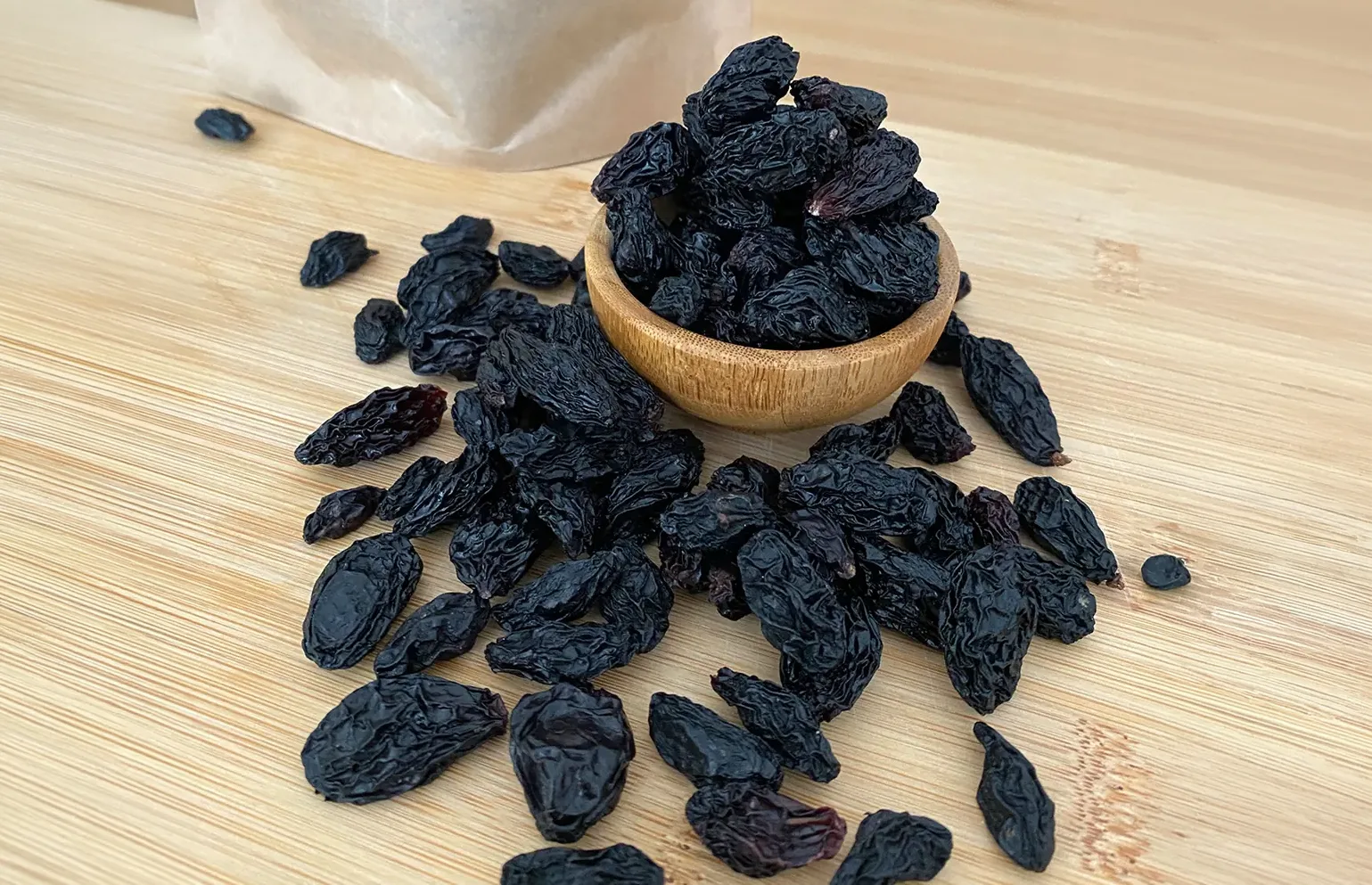
The Antep Karası raisin (Turkish: Antep Karası Kuru Üzümü) is a matte-black, sweet regional raisin made by drying Gaziantep's dark Antep Karası grape. A concrete product of the city's deep-rooted vineyard (bağ) culture and its grape-drying tradition, this raisin is eaten fresh as a grape but, above all, kept and brought to the table dried. Antep Karası is a large-grained, blackish grape variety grown around Gaziantep; in the region it is also known as Horoz Karası.
The Antep Karası raisin is a reminder that Gaziantep is a city known not only for its kebabs and sweets but also for its vineyards and grapes. The city's hot, dry late-summer climate offers favourable conditions for drying grapes naturally, which explains the region's deep-rooted place in raisin production. This raisin has been registered with a TÜRKPATENT geographical indication, placing its name and geographic origin under protection and adding it to Gaziantep's registered products.
What Is Antep Karası Raisin?
The Antep Karası raisin is a raisin obtained by drying the fresh grains of the Antep Karası (Horoz Karası) grape grown within the borders of Gaziantep. It is recognised by its matte-black skin, its dark-brown flesh, and its large, plump grains. It is a sweet dried fruit with a distinctive grape aroma; what makes it special is not how it is made but which grape it comes from and the geography in which it is dried. The Antep Karası raisin is the region's vineyard heritage carried directly to the table.
Defining Characteristics
- Antep Karası (Horoz Karası) Grape: The source of the raisin is a dark, blackish local grape variety grown around Gaziantep. In the region the names "Antep Karası" and "Horoz Karası" point to the very same grape.
- Matte-Black Colour and Large Grains: The skin of the dried grains carries a distinctive, matte blackness; the flesh is dark brown. The grains are large and plump, which makes the Antep Karası raisin recognisable by its appearance as well.
- Sweet, Grape-Aromatic Dried Fruit: As its sugar concentrates during drying, the grain's taste is distinctly sweet, and it keeps the grape aroma characteristic of the variety. It contains seeds and presents the flavour of the fresh grape in a concentrated form.
Antep's Vineyard and Grape Heritage
The Antep Karası raisin is part of Gaziantep's viticulture (bağ) and grape-growing tradition. The city is known for the various grapes grown in its surrounding vineyards and for turning them — beyond eating them fresh — into products such as grape molasses, grape must and raisins to keep through the year. Antep Karası is one of the dark, table-and-drying grapes of this vineyard culture. Drying grapes into raisins is a deep-rooted method that lets the harvest be stored for a long time after the vintage.
History and Geographic Origins of Antep Karası Raisin
The Antep Karası raisin springs from Gaziantep's deep-rooted vineyard and grape-drying tradition. The Antep Karası grape, grown in the vineyards around the city, ripens in the late-summer months and is well suited to being dried naturally in the region's hot, dry and windy weather. Gaziantep's late-summer and early-autumn climate offers conditions suited to drying the grains without spoilage; these geographic conditions directly shape the raisin's colour, texture and taste. The geography and climate in which the grape is dried are an inseparable part of the product's identity.
Its Name and Grape Variety
The "Antep Karası" in the product's name refers to the grape variety from which the raisin is made: a dark, blackish grape grown in the Gaziantep region. The same variety also appears, in the region and in the records, under the name Horoz Karası; "Antep Karası" is the grape's regional name, identified with Gaziantep. This is why the raisin too is naturally called "Antep Karası Kuru Üzümü" (Antep Karası raisin). Because the name carries both the variety and the geography, it ties the product directly to the region's vineyard heritage.
The Antep Karası raisin is registered by the Turkish Patent and Trademark Office (TÜRKPATENT) as a geographical indication (Registration No 1066; registered 2022). The registration places the product's name and its geographic link with Gaziantep under protection and requires production to take place within the borders of Gaziantep. No invented date or attribution to a person is claimed for the product on this page; the information rests on the official registration record.
Antep Karası Raisin in Gaziantep Cuisine
In Gaziantep cuisine, the Antep Karası raisin finds its place both as a dried fruit eaten on its own and as an ingredient that adds flavour and texture to dishes. Its matte-black, sweet grains are served alongside nuts and dried fruits; they are also used in regional recipes that call for a balance of sweet and savoury, such as rice pilafs, stuffed dishes and pastries. As a product of the city's vineyard culture, it ensures that the dried grape, as well as the fresh one, has a place at the table throughout the year.
How It Is Used
At its simplest, the Antep Karası raisin is snacked on its own, on a plate of nuts, or together with other dried fruits and nibbles. Added to dishes such as rice pilaf and stuffed vegetables, its sweet grain lends them a gentle sweetness and fullness. Considered alongside the other products of the same vineyard heritage — Grape Must, Pekmez and Unripe Grape Sour — the place of the Antep Karası raisin in Gaziantep's culture of making the most of the grape becomes clearer: the same vineyard yields the fresh grape, the must, the molasses and the raisin alike.
Why It Matters
The Antep Karası raisin shows that Gaziantep is a city known not only for its meat-rich and sweet tables but also for its vineyards and grapes. Dried with the region's own climate from a grape native to the region, this raisin is at once an agricultural product and a living cultural heritage. The geographical-indication registration secures the product's link with Gaziantep officially, protecting the name and the geographic origin of this heritage.
Frequently Asked Questions
What is the Antep Karası raisin?
It is a matte-black, large-grained, sweet regional raisin obtained by drying the dark Antep Karası (Horoz Karası) grape grown in Gaziantep.
Are the Antep Karası grape and Horoz Karası the same grape?
Yes. "Antep Karası" and "Horoz Karası" refer to the same dark grape variety grown in the Gaziantep region; "Antep Karası" is the grape's name identified with the region.
Does the Antep Karası raisin have a geographical indication?
Yes. It is registered by TÜRKPATENT as a geographical indication (Registration No 1066, 2022); the registration requires production within the borders of Gaziantep and protects the product's link with the region.
How is the Antep Karası raisin used?
It is most often snacked on its own as a dried fruit; it is also used as an ingredient in regional recipes that call for a sweet note, such as rice pilafs, stuffed dishes and pastries.