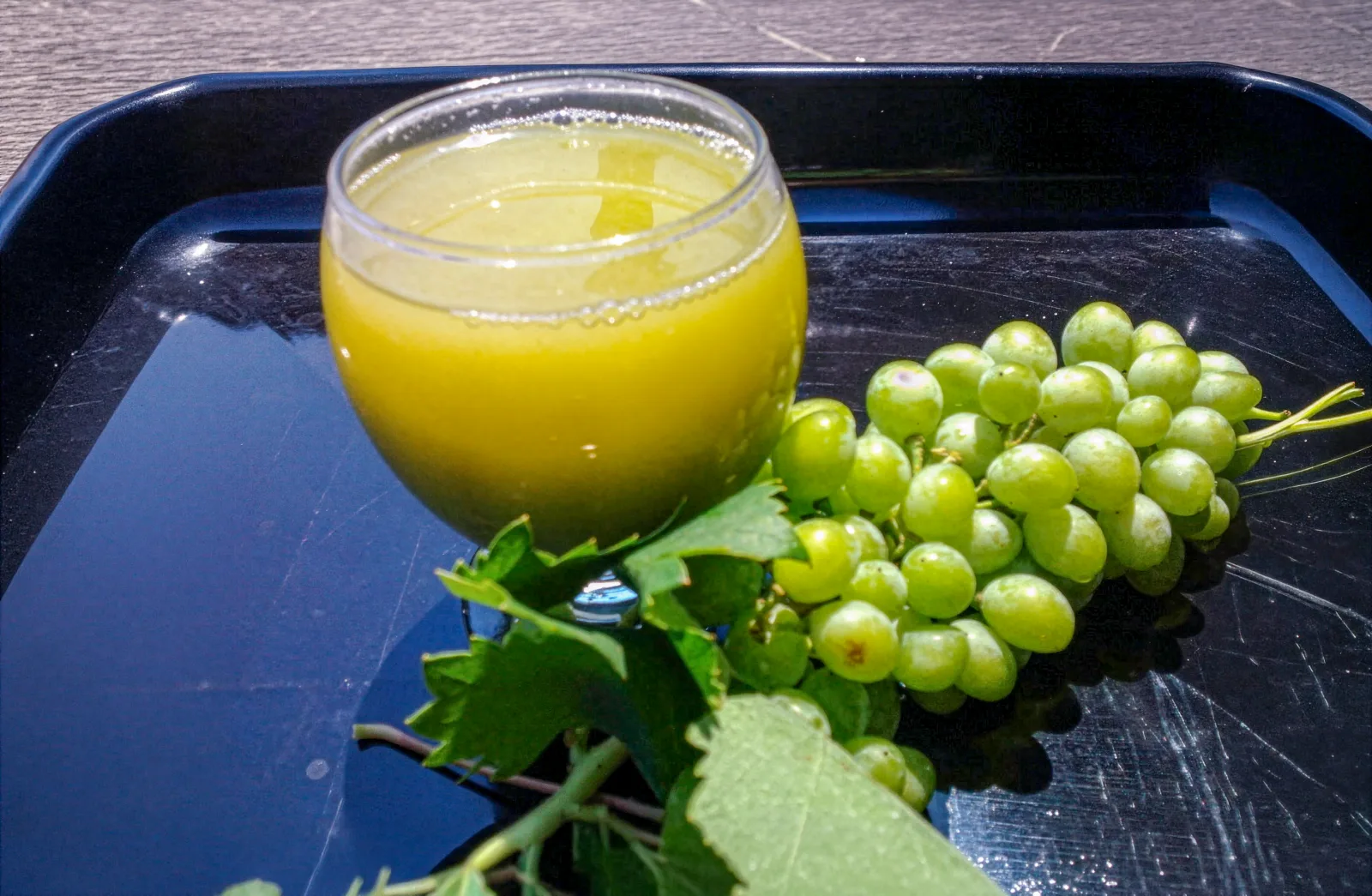
Unripe grape sour (in Turkish, "Koruk Ekşisi") is a tart souring liquid from Gaziantep, made from the pressed and strained juice of koruk — unripe, green, sour grapes picked before they ripen. "Koruk" means a grape that has not yet ripened: green and sour; so unripe grape sour is, at its simplest, "the sour juice of unripe grapes." In the kitchen it is used like lemon or vinegar, lending a dish a fresh, sharp sourness. From salads to dolmas, from soups to stews, this liquid balances the taste of many dishes and is a direct product of the city's deep-rooted viticulture.
The identity of unripe grape sour springs from a single quality: the natural, sharp tartness of the unripened grape. Behind it lies Gaziantep's centuries-old tradition of viticulture and grape processing; the same vineyard that gives molasses (pekmez) and grape must from ripe grapes also offers this souring liquid from unripe koruk. In this respect it is a living part of a culinary outlook in which no grape goes to waste, and of the city's souring tradition. It is registered by TÜRKPATENT under the name "Gaziantep Koruk Ekşisi" as a Geographical Indication.
What Is Unripe Grape Sour?
Unripe grape sour is a tart liquid obtained by crushing and pressing grapes (koruk) picked from the vine while still green and firm, before they ripen, then straining the juice and concentrating it. Its character comes not from an added ingredient but from the natural acidity of the unripe grape itself; it is neither fermented nor sweetened. It does the work of lemon juice or vinegar: it adds sourness and freshness to a dish, balances richness, and brings flavours into focus.
Defining Characteristics
- Koruk (Unripe Grape): Koruk is the grape that has not yet ripened — green and sour. It is picked before ripening, before its sugar rises; this is why it is not sweet but distinctly tart. This is the single essential raw material of unripe grape sour.
- Sharp, Fresh Sourness: The signature of the product is the natural acidity of the unripened grape. This sourness is softer than the sharpness of vinegar and more grape-like, with a gentler edge than lemon; it lends a dish a fresh, distinctive note.
- Plain and Additive-Free: Unripe grape sour is made by straining and concentrating the pressed juice of koruk; no sugar, additive or flavouring is added. This simplicity makes it a natural souring agent used with confidence in the kitchen.
Antep's Souring Tradition
Gaziantep cuisine leans on a rich tradition of souring agents to balance flavours; the sourness given to a dish is one of this cuisine's most distinctive signatures. Unripe grape sour is the summer, grape-borne branch of that tradition. Just as Oğuzeli Pomegranate Molasses, made from pomegranate, is another deep-rooted souring agent of the city, unripe grape sour is the vineyard's counterpart within the same balancing logic. These souring agents are used in the Antep kitchen alongside, or in place of, lemon and vinegar; each lends a dish a different sourness carrying the character of its own fruit.
History and Geographic Origins
Unripe grape sour is part of Gaziantep's centuries-old tradition of viticulture and grape processing. The city's vineyards yield not only table grapes or products made from ripe grapes; before the harvest, when the grape is still unripe and sour, the koruk is put to use as well. In this way a single vineyard offers different products across the season: a souring liquid from unripe koruk, and sweet products such as Grape Must Drink and molasses from ripe grapes. Unripe grape sour is a direct result of this "waste no grape" culture of the vine.
A Souring Agent Born of the Grape
The idea of using the sour juice of koruk rests on a deep-rooted culinary logic that draws on the grape in every state. The juice of the unripened grape, with its high acidity not yet turned to sugar, offers a natural souring agent; once strained and concentrated, this juice becomes a product that can be kept for a long time and used in the kitchen throughout the year. Thus a flavour gathered only in the short koruk season is carried to the table all year round. In Gaziantep, unripe grape sour is a form of this tradition that survives to the present day and has also been recorded under registration.
Unripe grape sour is protected by TÜRKPATENT as a Geographical Indication under the name "Gaziantep Koruk Ekşisi", with No 1072 (2022). This registration officially records the product's geographic link to Gaziantep and its traditional method of production.
Unripe Grape Sour in Gaziantep Cuisine
In Gaziantep cuisine, unripe grape sour is a natural flavour turned to for adding sourness to a dish. A spoonful balances the taste of a rich or heavy dish, lending it freshness and lightness. Because it gives a more grape-like, gentler sourness than lemon and vinegar, it stands in for them in many dishes; it is used especially in summer cooking, in dishes that meet vegetables and yoghurt.
Which Dishes Use It?
Unripe grape sour has a broad range of uses in the kitchen. It is drizzled directly over salads to give a fresh sourness; added to the filling or the cooking liquid of dolmas and wrapped dishes, it brings balance. In Antep's summer dolmas such as Nakışlı Dolma, for instance, it finds its place as a souring agent that balances flavours. To soups and stews it is added before serving to lend a sharp freshness. In short, wherever lemon or vinegar comes to mind in a dish, unripe grape sour can take its place too.
Why It Matters
Unripe grape sour brings together Gaziantep's viticulture and its souring tradition in a single liquid. Turning the short season of the unripened grape into a culinary value reflects the city's "waste no grape" outlook on the vine. Both its function in the kitchen as a natural souring agent and its registered geographic link to Gaziantep give it a meaningful place within the city's gastronomic heritage. A drop of unripe grape sour carries to a dish the raw, fresh tartness of the Antep vineyards.
Frequently Asked Questions
What is unripe grape sour?
It is a tart souring liquid from Gaziantep, made from the pressed and strained juice of unripe, green grapes (koruk); in the kitchen it is used like lemon and vinegar to add sourness to a dish.
What does "koruk" mean?
Koruk means a grape that has not yet ripened — green and sour. Because it is picked before its sugar rises, it is not sweet but distinctly tart; it is the single essential raw material of unripe grape sour.
Which dishes use unripe grape sour?
It is used as a souring agent in salads, in dolmas and wrapped dishes, and in soups and stews. It balances the taste of rich or heavy dishes and adds a fresh sourness; it can stand in for lemon or vinegar.
Does unripe grape sour have a geographical indication?
Yes. It is protected by TÜRKPATENT as a Geographical Indication under the name "Gaziantep Koruk Ekşisi", with No 1072 (2022).