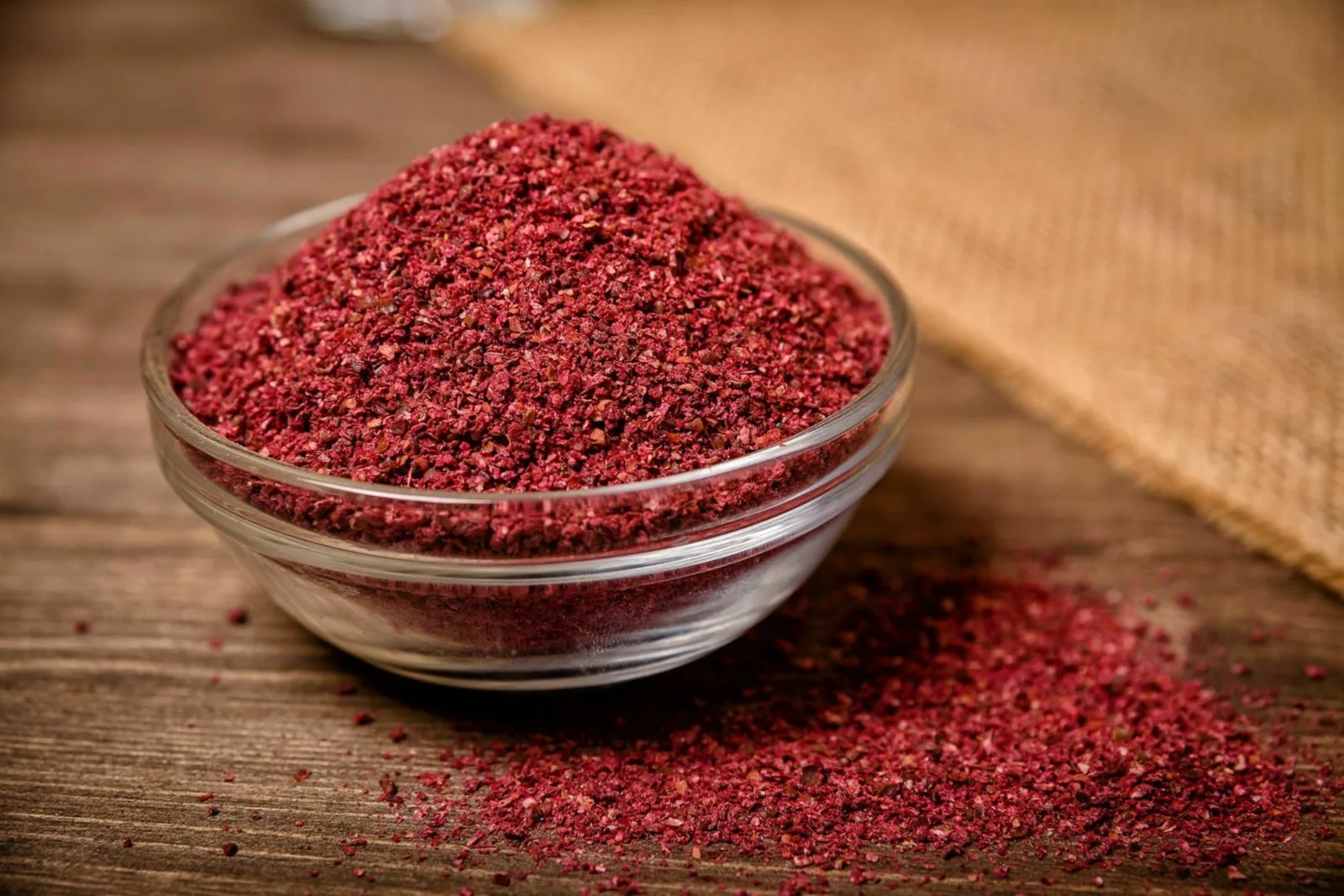
Sumac (in Turkish "Antep Sumağı") is the dried, ground deep-red berries of the sumac shrub (Rhus coriaria). With its tart, lemony, sharp flavor it is the key souring and garnish spice of Gaziantep cuisine; sprinkled on salads, kebabs, onions and ezme, it brings dishes a bright acidity and a vivid color. Much loved across the region, this spice is registered with TÜRKPATENT under the name "Antep Sumağı."
The identity of sumac is plain but distinct: a deep red shading into burgundy, and a refreshing, mouth-puckering tartness. Used for centuries in regional cooking as a natural source of acidity that can stand in for lemon, sumac is an inseparable part of Antep's kebab, meze and salad culture. By softening the onion it is dusted over, lending freshness to ezme and balancing the richness of a kebab, it plays a small but indispensable role at the city's table.
What Is Sumac?
Sumac is a deep-red, distinctly tart spice made by drying and grinding the ripe berries (drupes) of the sumac shrub. Its flavor profile comes from the fruit's natural acids; this is why it gives a dish a bright, lemon-like sourness. In Antep, sumac enters the kitchen both as a fine powder used as a spice and as a tart extract pressed from its berries (sumac sour); its most common use, however, is as a ground garnish spice.
Defining Characteristics
- The Plant (Rhus coriaria): Sumac is obtained from the fruit of the shrub Rhus coriaria, which grows naturally in Anatolia. Culinary sumac comes from this species and should not be confused with ornamental or certain wild sumac species.
- Dried and Ground Berries: The ripe red berries are gathered, dried and ground into a spice. The deep-red powder that reaches the table is precisely this ground fruit.
- Tart and Lemony Taste: The signature of sumac is its refreshing, mouth-puckering tartness. This lemony, faintly astringent taste makes it a natural souring agent that adds acidity and balance to a dish.
- Deep Red Color: Its vivid color, ranging from deep red to burgundy, adds a visual accent to the dish it is scattered over; it stands out especially on onions and salads.
Antep's Souring Spice
In Gaziantep cuisine, acidity is an important flavor line that balances the fat and richness of a dish, and sumac is one of its plainest and most deep-rooted carriers. Often used in place of the sourness given by lemon or tomato, sumac provides a refreshing acidity without adding heaviness. In this respect sumac is a way of souring that serves the same purpose as the city's other natural souring methods — such as unripe-grape juice — yet has its own distinctive dry, spice-like character.
History and Geographic Origins of Sumac
Sumac is a deep-rooted souring ingredient of the cuisines of Southeast Anatolia — including Gaziantep — and of the wider Middle East. The sumac shrub grows naturally in the region; the spice made by drying and grinding its fruit has long been used to give dishes sourness. In periods when lemon was not always or everywhere easy to find, sumac served as a reliable, local source of acidity in regional cooking. It would not be right to claim a specific date or a "first used in such-and-such year" here; what is known is that sumac has a long-established, deeply rooted use in this geography.
The Registration of Antep Sumac
Sumac's place in Gaziantep cuisine is also visible in the geographical indication the product holds under its own name. "Antep Sumağı," as a product representing a particular production and processing tradition of the region, is registered with TÜRKPATENT as a mark of source (Geographical Indication). This registration places sumac among the city's geographically indicated products and protects the product's name. The registered name is not the bare word "sumac" but "Antep Sumağı."
Sumac is registered with TÜRKPATENT under the name "Antep Sumağı" as a Geographical Indication (mark of source / Mahreç İşareti) — Registration No 797, 2021. The registered name is "Antep Sumağı," not the bare word "sumac." This record places sumac among Gaziantep's geographically indicated products.
Sumac in Gaziantep Cuisine
In Gaziantep cuisine, sumac is most often a finishing and garnish spice that comes into play at the end of cooking or at the table. Scattered over a dish, sumac both makes a visual accent with its deep-red color and pulls the flavor together with its refreshing tartness. Especially at kebab and grill tables, in salads and in mezes, sumac is a plain touch that strikes the balance between acidity and fat.
Which Dishes Use It?
The best-known use of sumac is the sumac onion served alongside kebabs: thinly sliced onion is rubbed with sumac, so the onion's sharpness softens and it gains a fresh tartness. Beyond this, sumac is a constant part of Antep's salad and meze culture; for example, it is used to add acidity over Gavurdağı Salad and into the mixture of Spicy Paste. Like Unripe Grape Sour, another natural souring method in the regional kitchen, sumac balances a dish by lending it a lemon-like acidity.
Why It Matters
Sumac is one of those ingredients that does a great deal at the Gaziantep table with only a small amount. A pinch of sumac freshens a heavy kebab, brightens a salad, and makes an onion fit for the table. Representing the city's love of acidity in its plainest form, sumac is a fundamental spice that carries the character of Antep cuisine both in everyday cooking and through its registered identity. The truest way to know it is to see the moment the deep-red powder is scattered over a kebab or an onion.
Frequently Asked Questions
What is sumac and what is it made from?
Sumac is a deep-red, tart spice made by drying and grinding the ripe red berries of the sumac shrub (Rhus coriaria).
What does sumac taste like and what is it used for?
Its taste is tart, lemony and faintly astringent. As a natural souring agent and garnish spice it adds a bright acidity and balance to a dish; it is used especially on kebabs, salads, onions and ezme.
Is Antep Sumac registered?
Yes. It is registered with TÜRKPATENT under the name "Antep Sumağı" as a Geographical Indication (mark of source), Registration No 797, 2021. The registered name is "Antep Sumağı," not the bare word "sumac."
Where is sumac used in Gaziantep cuisine?
Most of all in the sumac onion served beside kebabs; it is also scattered over salads and mezes such as Gavurdağı Salad and Spicy Paste to add acidity and color.